Jack-o'-lantern pumpkin 'Howden'
Cucurbita pepo 'Howden'. Family Cucurbitaceae. Annual.
Also called Howden pumpkin, Howden field pumpkin.
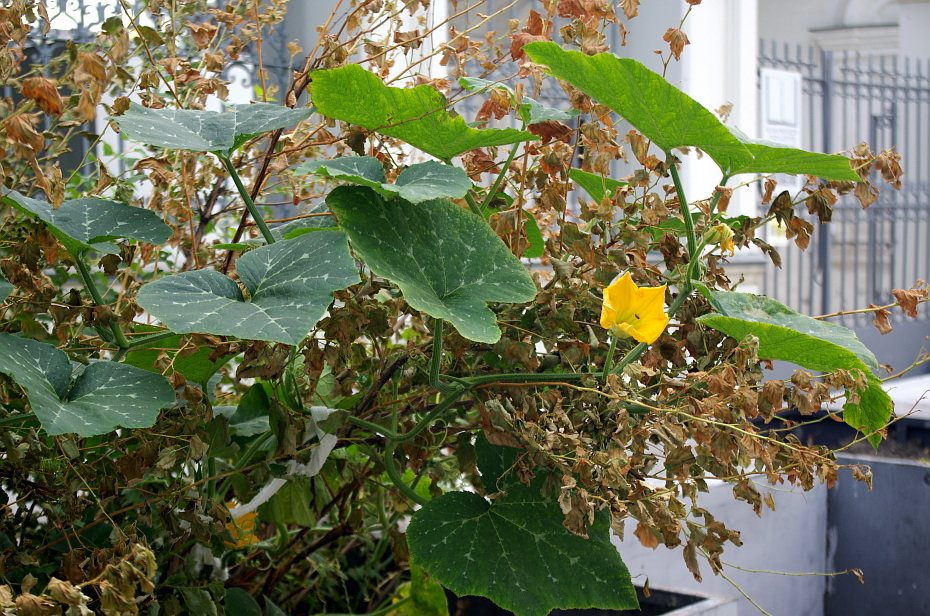
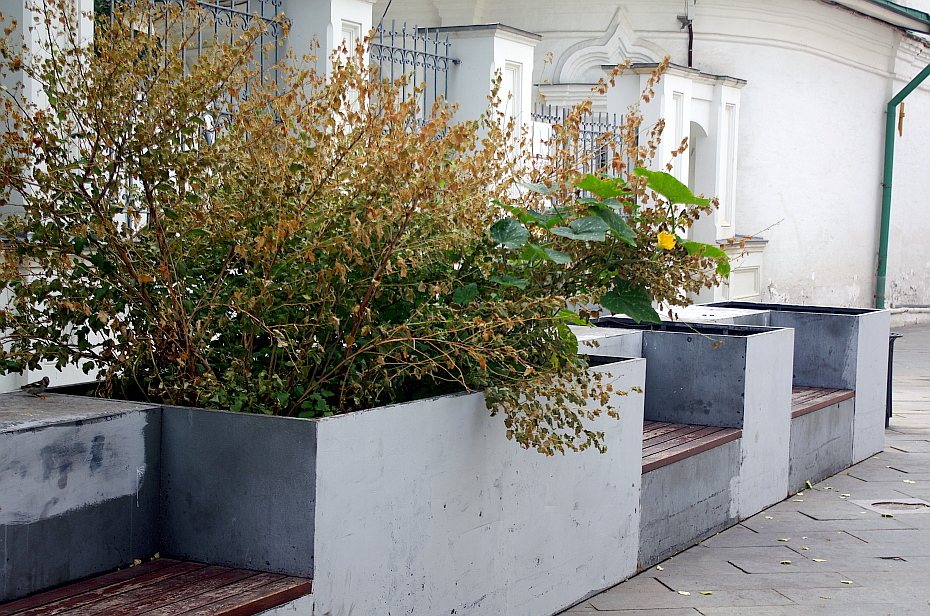
'Howden' is a vigorous, trailing pumpkin grown as an annual for its large, ribbed, orange fruits with sturdy handles. Gardeners mainly grow it for autumn carving and decoration; its flesh and seeds are edible, though smaller culinary pumpkins usually have better texture for cooking.
At a glance
- Sun
- Full sun; at least 6-8 hours of direct sunlight daily.
- Water
- Keep soil evenly moist, supplying about 1-2 in (2.5-5 cm) of water weekly, including rain, and more during hot weather on freely draining soil.
- Soil
- Deep, fertile, well-drained soil enriched with compost; ideally pH 6.0-7.0.
- Height
- 1-2 ft (0.3-0.6 m)
- Spread
- 10-20 ft (3-6 m)
- Flowers
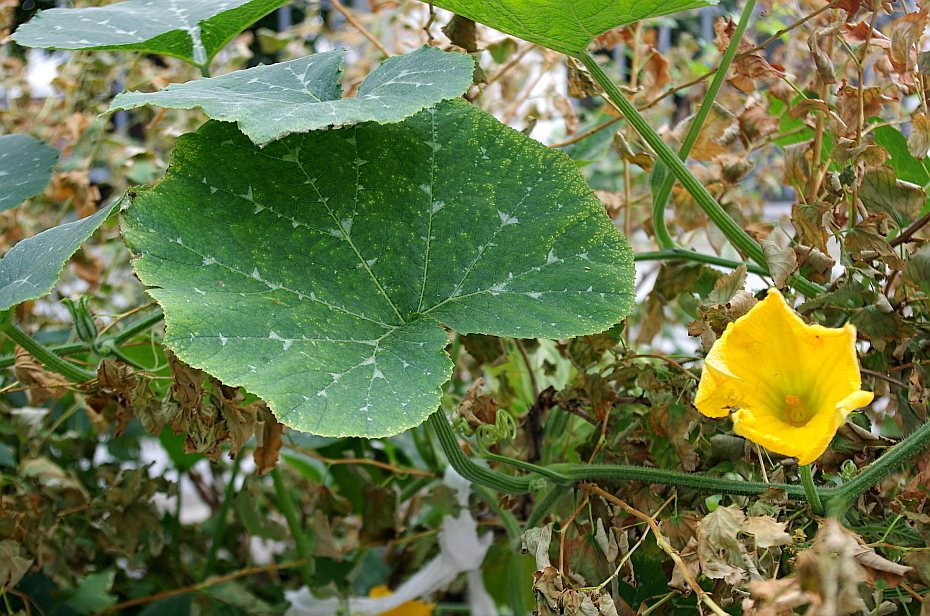
- Large yellow flowers from summer into early autumn; separate male and female flowers grow on the same plant.
- Foliage
- Large, rough, green, shallowly lobed leaves on prickly stalks and trailing stems.
- Growth
- Fast; usually about 110-120 days from sowing to mature fruit, depending on warmth and growing conditions.
- Care needed
- Medium
The year at a glance
- Pollinators
- Heat tolerant
- Low allergen
- Edible
| J | F | M | A | M | J | J | A | S | O | N | D | |
|---|---|---|---|---|---|---|---|---|---|---|---|---|
| Flowers | ||||||||||||
| Fruit | ||||||||||||
| Plant |
Northern hemisphere months. In Australia, shift them by six.
- Difficulty
- Moderate
- Toughness
- Needs looking after
Will it suit your garden?
Pick your zone, country, light and whether you have pets.
Full sun is 6 or more hours of direct sun a day, part shade 3 to 6 hours, shade under 3.
How it grows
Planting day
0.5 ft (0.15 m)
After 1 year
1.5 ft (0.45 m)
full size
Full size in one season.
From a typical nursery size, at an average rate for this kind of plant. A rule of thumb, not a forecast.
Good to know
- Cats and dogs
- Safe
- Native to
- the US
- Growth rate
- Fast
Care
Jobs through the year
- WaterMay–Jun, every 7 days
- Water ground-grown plants deeply if rain is insufficient; keep seedlings evenly moist.
- WaterJul–Aug, every 3 days
- Supply 2.5–5 cm weekly including rain, split between soakings; keep leaves dry.
- WaterSep–Oct, every 7 days
- Water while vines remain active if soil is dry; avoid saturating ripening fruit.
- FeedMay–Jun
- Incorporate compost before planting and apply balanced vegetable fertilizer at label rates.
- FeedJul
- Feed only if needed as fruit develops; avoid excessive nitrogen.
- MulchJun
- Mulch after soil warms, leaving space around the main stem.
- ProtectMay–Jun
- Protect seedlings from slugs and cold; remove insect mesh when flowers open.
- ProtectJul–Sep
- Rest developing pumpkins on dry boards or straw to prevent soil contact.
- HarvestSep–Oct
- Cut fully orange, hard-rinded fruit before frost, leaving 8–10 cm of stalk; cure under cover.
- Plant out only after frost risk has passed and soil has warmed to at least 65°F (18°C); allow generous room for spreading vines.
- Water deeply at soil level, especially during flowering and fruit enlargement; avoid repeatedly wetting the leaves.
- Work compost into the bed before planting, then use a balanced vegetable fertilizer at the label rate; avoid excessive nitrogen.
- Mulch after the soil warms to retain moisture and suppress weeds, keeping mulch away from the main stem.
- Place developing fruit on a dry board or a bed of straw, and leave flowers accessible to pollinating insects.
Pruning. Routine pruning is unnecessary; guide young vines into the available space rather than cutting them heavily. Remove diseased leaves with clean tools, but retain healthy foliage to feed and shade the fruit.
Harvest
Harvest mature pumpkins when they are fully orange, the rind resists a thumbnail, and the stalk is becoming dry and corky, usually about 110-120 days after sowing. Cut rather than pull them from the vine, leaving 3-4 in (8-10 cm) of stalk, and bring them in before frost. Cure sound fruit in a warm, dry, ventilated place for about 10 days, then store somewhere cool and frost-free;
Through the year
- Early spring
- Choose a sunny bed with room for long vines and incorporate well-rotted compost.
- Mid to late spring
- In short-season areas, sow indoors in individual pots 2-4 weeks before the expected last frost.
- Late spring
- Harden off seedlings and plant after frost, or direct-sow once the soil is warm.
- Early summer
- Mulch warm soil, establish deep watering, and guide vines away from paths and nearby crops.
- Mid to late summer
- Monitor pollination and leaf health, feed if needed, and support developing pumpkins on dry boards or straw.
- Autumn
- Harvest mature fruit before frost, cure it under cover, and remove spent vines.
In the garden
- Let vines spread through a large kitchen-garden bed for an autumn harvest.
- Grow along the sunny edge of a vegetable plot, directing vines into an open mulched area.
- Combine with nearby flowering annuals to soften a productive garden and provide forage for insects.
- Use in a spacious family growing area where developing pumpkins remain visible from an accessible path.
Garden styles it suits: Potager (kitchen garden), Farmhouse, Homestead, Edible landscape, Family-friendly and Autumn colour.
Plant it with: Borage, Nasturtiums, Sweet alyssum and Calendula.
Wildlife: Flowers provide pollen and nectar for bees, including specialist squash bees where these occur in North America. Bees are important for reliable fruit set; avoid insecticide use on open flowers.
Problems to watch for
- Powdery mildew causes white patches on leaves, especially later in the season; provide full sun and airflow, remove badly affected leaves, and use a locally approved treatment if it starts early.
- Squash bugs and squash vine borers can cause wilting or collapse, particularly in North America; inspect regularly, remove bug eggs and young bugs, and use insect mesh before flowering, removing it when pollination is needed.
- Slugs and snails damage seedlings and young fruit; protect transplants, remove nearby hiding places, and use locally approved controls where necessary.
- Poor fruit set can follow cold weather, extreme heat or inadequate pollination; keep watering steady and, if needed, transfer pollen from a freshly opened male flower to a female flower during the morning.
Safety
Normal, non-bitter pumpkin flesh and seeds are not known to be toxic to people, cats, dogs or horses. Rare, unusually bitter fruits can contain high levels of cucurbitacins and cause serious vomiting and diarrhoea; discard them, as cooking does not make them safe. Hard rind, tough stalks and large pieces can cause choking or digestive blockage in pets.
Easily confused with
Connecticut Field pumpkin (Cucurbita pepo 'Connecticut Field')
Another large orange field pumpkin with considerable overlap in appearance; 'Howden' was selected for more consistent carving shape and sturdy handles, but fruit alone cannot reliably confirm the cultivar.
Small Sugar pumpkin (Cucurbita pepo 'Small Sugar')
Produces much smaller orange pumpkins, usually with finer-textured flesh suited to cooking rather than large-scale carving.
Atlantic Giant pumpkin (Cucurbita maxima 'Atlantic Giant')
Can produce enormous, often pale orange fruit with a rounded, corky stalk; 'Howden' has a hard, distinctly angled stalk and a more typical upright carving-pumpkin shape.
The name
'Howden' is named after its breeder, John Howden, while jack-o'-lantern refers to the traditional carved pumpkin lantern.
Propagation. Grow from seed, sown about 1 in (2.5 cm) deep in warm soil or individual pots. Buy fresh seed for plants true to 'Howden': saved seed may cross with other flowering Cucurbita pepo varieties, including courgettes, and produce different fruit.
Checked against open data
- Accepted botanical name
- Cucurbita pepo
- In the US and Canada
- Native in the lower 48 states. Introduced in the lower 48 states, Pacific Basin and Puerto Rico.
- Native range
- Mexico Central, Mexico Gulf, Mexico Northeast, Mexico Northwest, Mexico Southeast and Mexico Southwest.
- Measured
- Average height 63 cm.
Sources: GBIF (CC BY 4.0), USDA PLANTS and Trefle (CC BY 4.0). The care and design notes are LandscapeGPT's own.
See it in your own yard.
Upload a photo of your yard and see it redesigned with plants that suit your climate, each checked against your zone.