Jacob Cline bee balm
Monarda didyma 'Jacob Cline'. Family Lamiaceae. Perennial.
Also called Monarda didyma 'Jacob Cline', Jacob Cline bergamot, Scarlet bee balm, Oswego tea.
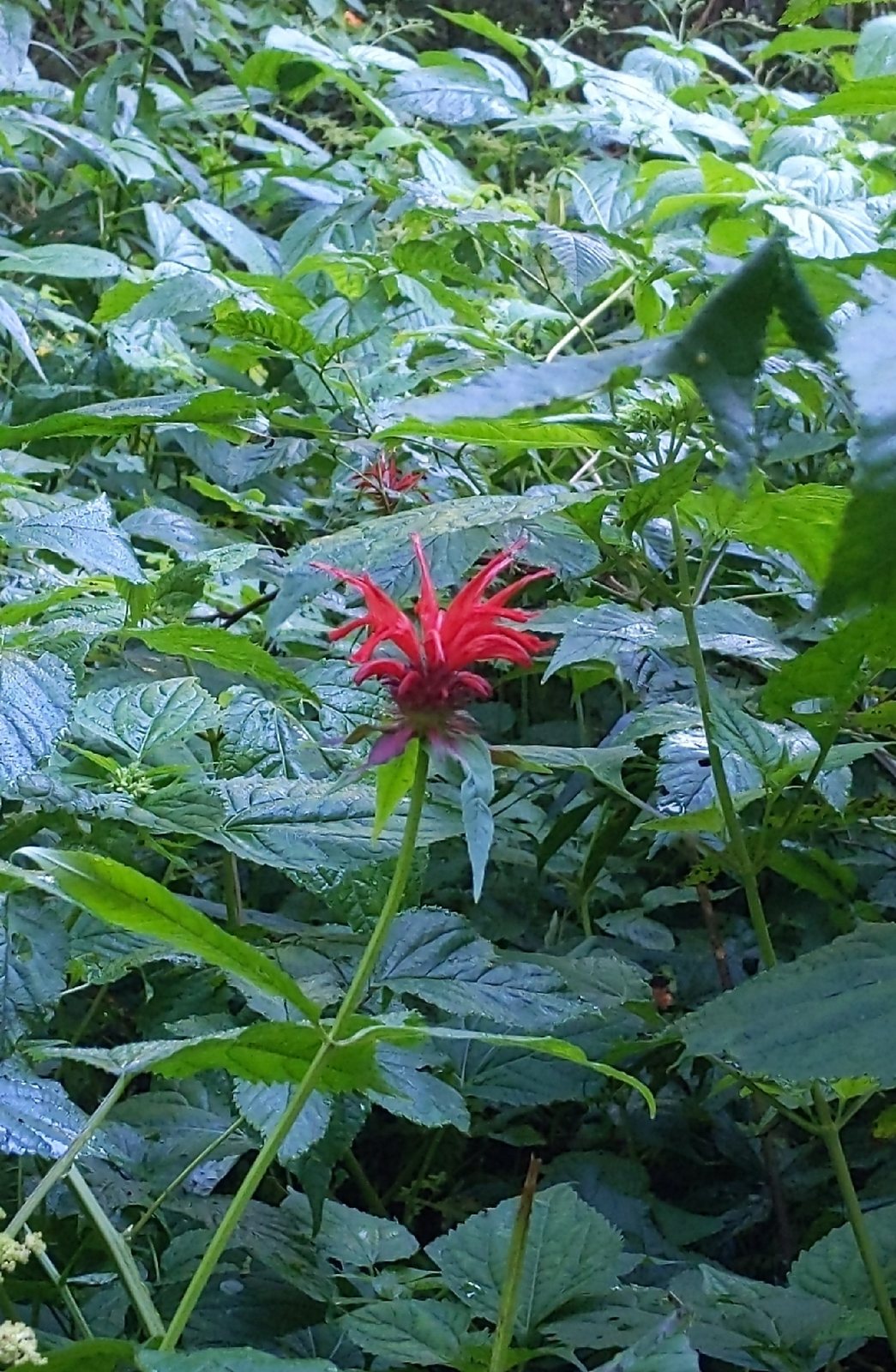
Jacob Cline bee balm is a tall, clump-forming perennial with shaggy scarlet flowers and aromatic leaves. Gardeners grow it for its strong summer colour and nectar-rich flowers; it has better powdery mildew resistance than many older bee balms, but is not immune.
At a glance
- Sun
- Full sun to partial shade; afternoon shade helps in hot climates, provided the planting has good airflow.
- Water
- Keep the root zone consistently moist, especially during summer. It tolerates brief wet spells better than drought, but not prolonged stagnant water.
- Soil
- Humus-rich, moisture-retentive soil with good drainage; tolerates clay improved with organic matter and a range of soil pH.
- Height
- 3-5 ft (0.9-1.5 m)
- Spread
- 2-3 ft (0.6-0.9 m), spreading farther over time through underground stems
- Flowers
- Mid- to late summer; bright scarlet-red tubular flowers in shaggy terminal heads.
- Foliage
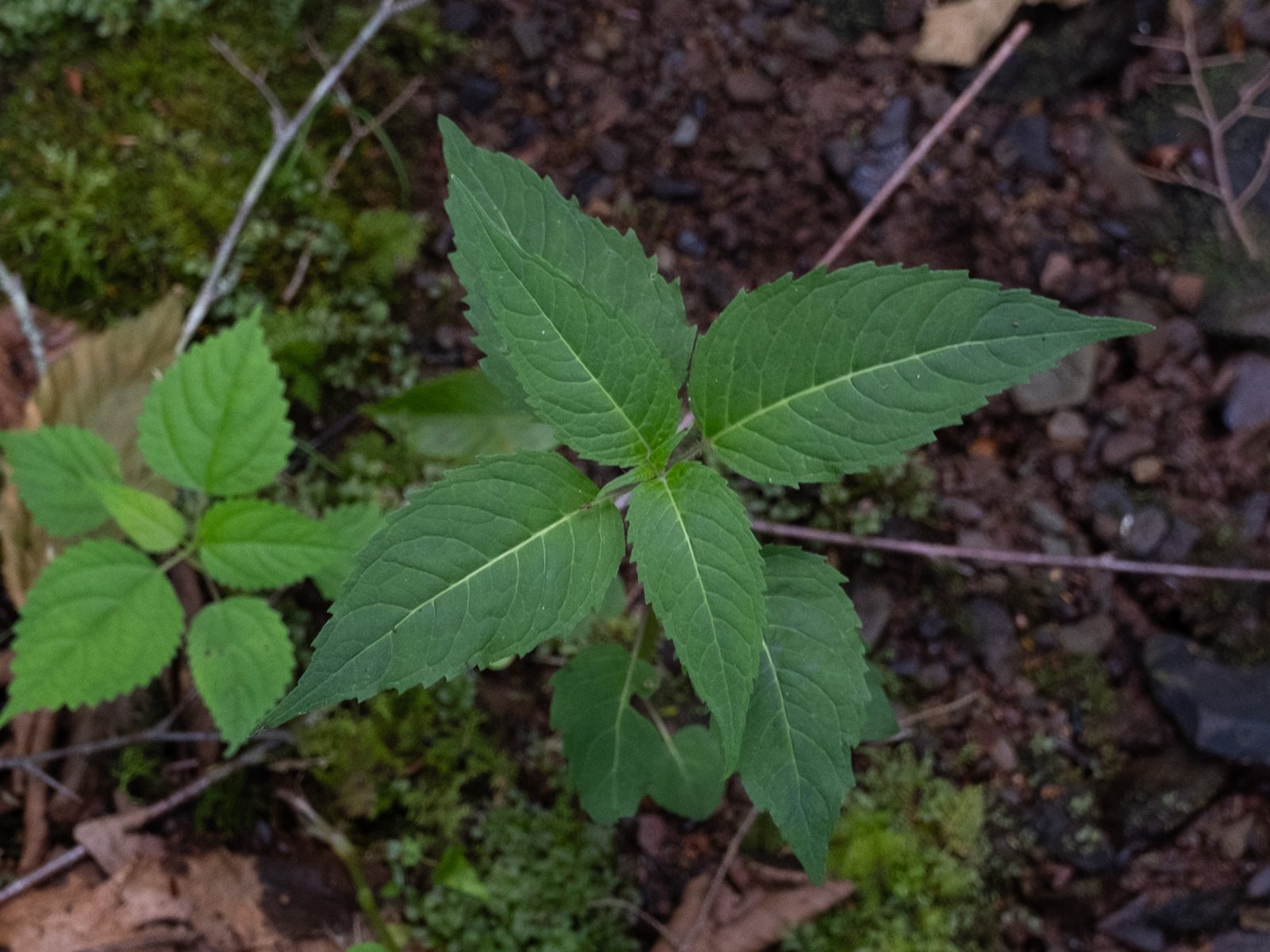
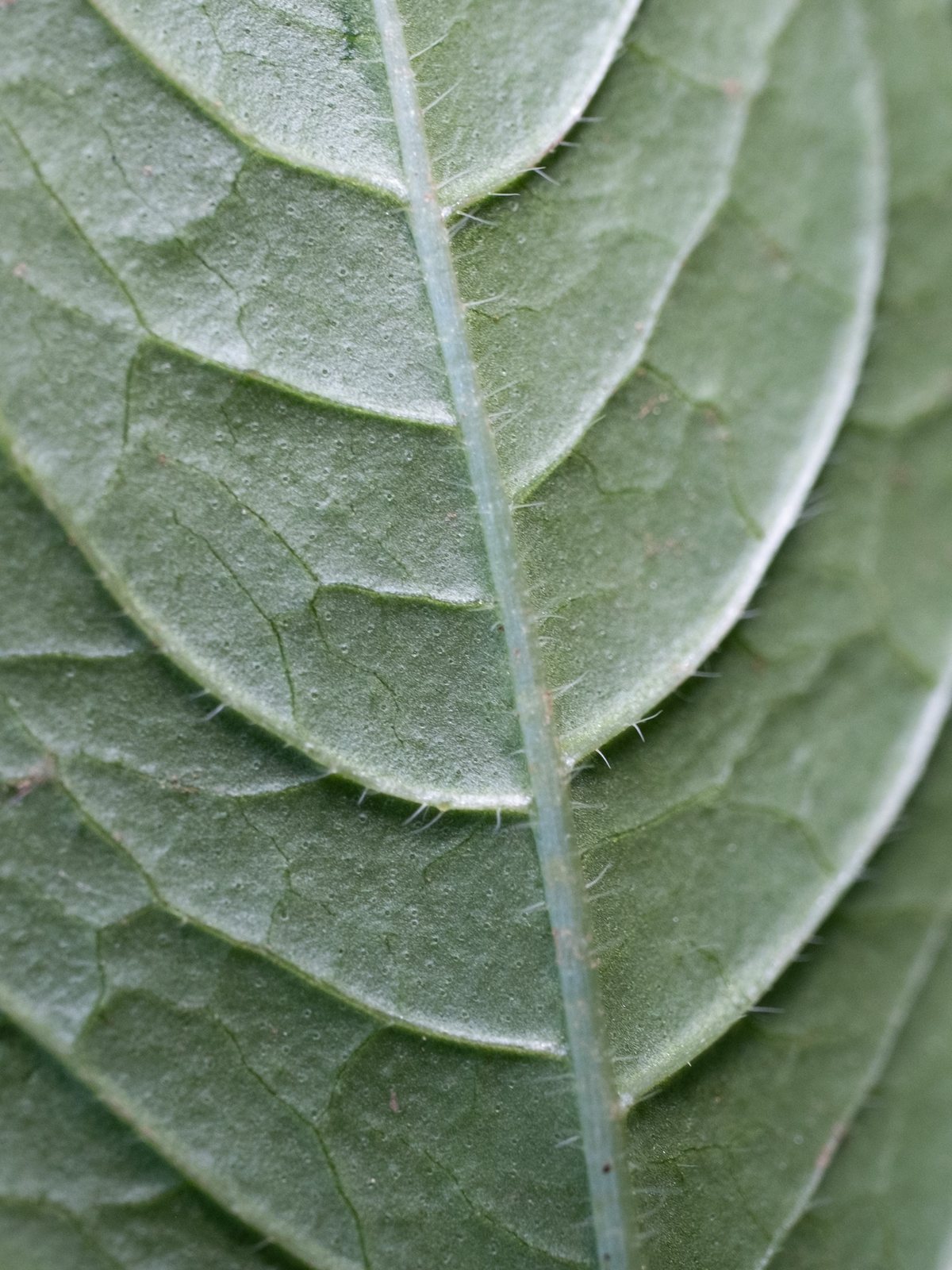
- Opposite, pointed, toothed green leaves on square stems; strongly aromatic when crushed. Top growth dies back in winter.
- Growth
- Fast in moist, fertile soil
- Care needed
- Medium
The year at a glance
- Pollinators
- Deer resistant
- Cold hardy
- Heat tolerant
- Disease resistant
- Wildlife
- Low allergen
- Fragrant
| J | F | M | A | M | J | J | A | S | O | N | D | |
|---|---|---|---|---|---|---|---|---|---|---|---|---|
| Flowers | ||||||||||||
| Fruit | ||||||||||||
| Plant |
Northern hemisphere months. In Australia, shift them by six.
- Difficulty
- Moderate
- Toughness
- Fairly tough
Will it suit your garden?
Pick your zone, country, light and whether you have pets.
Full sun is 6 or more hours of direct sun a day, part shade 3 to 6 hours, shade under 3.
How it grows
Planting day
1 ft (0.3 m)
After 1 year
2.5 ft (0.76 m)
After 2 years
4 ft (1.2 m)
full size
About 2 years to full size.
From a typical nursery size, at an average rate for this kind of plant. A rule of thumb, not a forecast.
Good to know
- Cats and dogs
- Safe
- Native to
- the US and Canada
- In the garden
- Spreads vigorously: plan to contain it.
- Growth rate
- Fast
Care
Jobs through the year
- WaterApr–May, Sep–Oct, every 7 days
- Water established clumps if rainfall is insufficient to keep roots moist; new plants need closer attention.
- WaterJun–Aug, every 3 days
- In dry weather, water deeply at soil level to maintain even moisture without waterlogging.
- FeedMar–Apr
- Apply a thin compost dressing; avoid heavy nitrogen feeding.
- MulchApr–May
- Apply about 5 cm of organic mulch, keeping emerging shoots clear.
- DivideMar–Apr
- Every 2–3 years, replant vigorous outer sections and discard exhausted centres.
- PruneFeb–Mar
- Cut old stems near ground level before new growth develops.
- PruneApr–May
- Remove runners spreading beyond the allotted space.
- DeadheadJul–Sep, every 7 days
- Remove faded flower heads to encourage further bloom; retain some if winter seedheads are wanted.
- ProtectSep–Oct
- Remove badly mildewed foliage; leave healthy stems for overwintering insects.
- Water deeply during dry spells rather than allowing the soil to dry out between waterings.
- Apply a thin layer of compost in spring; avoid heavy nitrogen feeding, which encourages floppy growth.
- Mulch with 2 in (5 cm) of organic material, keeping it clear of emerging shoots.
- Allow space between clumps for airflow and use a discreet support if stems lean in exposed positions.
- Divide every 2-3 years, keeping vigorous outer sections and discarding tired centres.
- Remove unwanted runners each spring to keep the clump within its allotted space.
Pruning. Remove spent flower heads to encourage further flowering. Cut dead stems to near ground level in late winter or early spring; remove badly mildewed growth in autumn instead.
Through the year
- Early spring
- Cut down remaining dead stems before new shoots grow tall.
- Spring
- Plant or divide clumps, water thoroughly, and add compost and mulch.
- Late spring
- Remove wandering shoots and install supports where needed.
- Summer
- Water during dry weather and check lower leaves for powdery mildew.
- Mid- to late summer
- Deadhead faded blooms if you want to encourage additional flowers.
- Autumn
- Remove diseased foliage; leave healthy stems standing for winter habitat if desired.
In the garden
- Plant in groups through the middle or back of a mixed border for a strong band of summer red.
- Combine with purple coneflowers and tall garden phlox in a sunny, moisture-retentive cottage border.
- Use beside a pond or rain garden on moist ground above the permanently waterlogged margin.
- Place near a seat or path where you can watch visiting pollinators, leaving room for its spreading clumps.
Garden styles it suits: Cottage garden, English country, Pollinator garden, Wildlife garden, Hot border and New perennial (prairie).
Plant it with: Purple coneflower, Tall garden phlox, Joe-Pye weed, Culver's root, Black-eyed Susan and Switchgrass.
Wildlife: Flowers attract bees, butterflies and, in North America, hummingbirds. Retained stems can provide shelter for overwintering insects.
Problems to watch for
- Powdery mildew: allow good airflow, keep roots evenly moist, and remove badly affected foliage; this cultivar is resistant rather than immune.
- Drought stress and scorched leaves: water deeply and mulch; provide afternoon shade in hot districts.
- Flopping stems: avoid rich nitrogen feeds, give adequate sunlight, and support exposed clumps before flowering.
- Crowded clumps with bare centres: divide in spring and replant healthy outer sections.
Safety
Not known to be toxic to people, cats, dogs or horses. No part is recognised as seriously poisonous, although eating large quantities may cause digestive upset; avoid giving pets concentrated essential oils.
Where it spreads. Can spread aggressively by underground stems in moist, fertile gardens in the United States, Canada, the United Kingdom and temperate Australia. This is primarily a garden-containment issue, not a claim that the cultivar is officially listed as invasive; remove runners or grow it in a contained bed.
Easily confused with
Wild bergamot (Monarda fistulosa)
Usually has lavender to pink flowers rather than scarlet and is generally better suited to drier soil.
Spotted bee balm (Monarda punctata)
Has tiers of pale yellow, purple-spotted flowers surrounded by conspicuous pinkish bracts, rather than large scarlet terminal heads.
Other scarlet bee balm cultivars (Monarda didyma cultivars)
Several have very similar red flowers. Height and mildew resistance offer clues, but a reliable nursery label is usually needed to confirm 'Jacob Cline'.
The name
Monarda honours the Spanish physician and botanist Nicolás Monardes, while the common name bergamot refers to the foliage's citrus-like scent.
Propagation. Divide clumps in spring or take basal cuttings from young shoots in spring. Seedlings will not reliably retain the characteristics of 'Jacob Cline'.
Checked against open data
- Accepted botanical name
- Monarda didyma
- In the US and Canada
- Native in Canada and the lower 48 states.
- Native range
- Alabama, Connecticut, Georgia, Kentucky, Maine, Maryland, Masachusettes, Michigan, Mississippi, New Hampshire, New Jersey and New York.
Sources: GBIF (CC BY 4.0), USDA PLANTS and Trefle (CC BY 4.0). The care and design notes are LandscapeGPT's own.
See it in your own yard.
Upload a photo of your yard and see it redesigned with plants that suit your climate, each checked against your zone.