Japanese black pine
Pinus thunbergii. Family Pinaceae. Tree.
Also called Black pine, Japanese coastal pine.
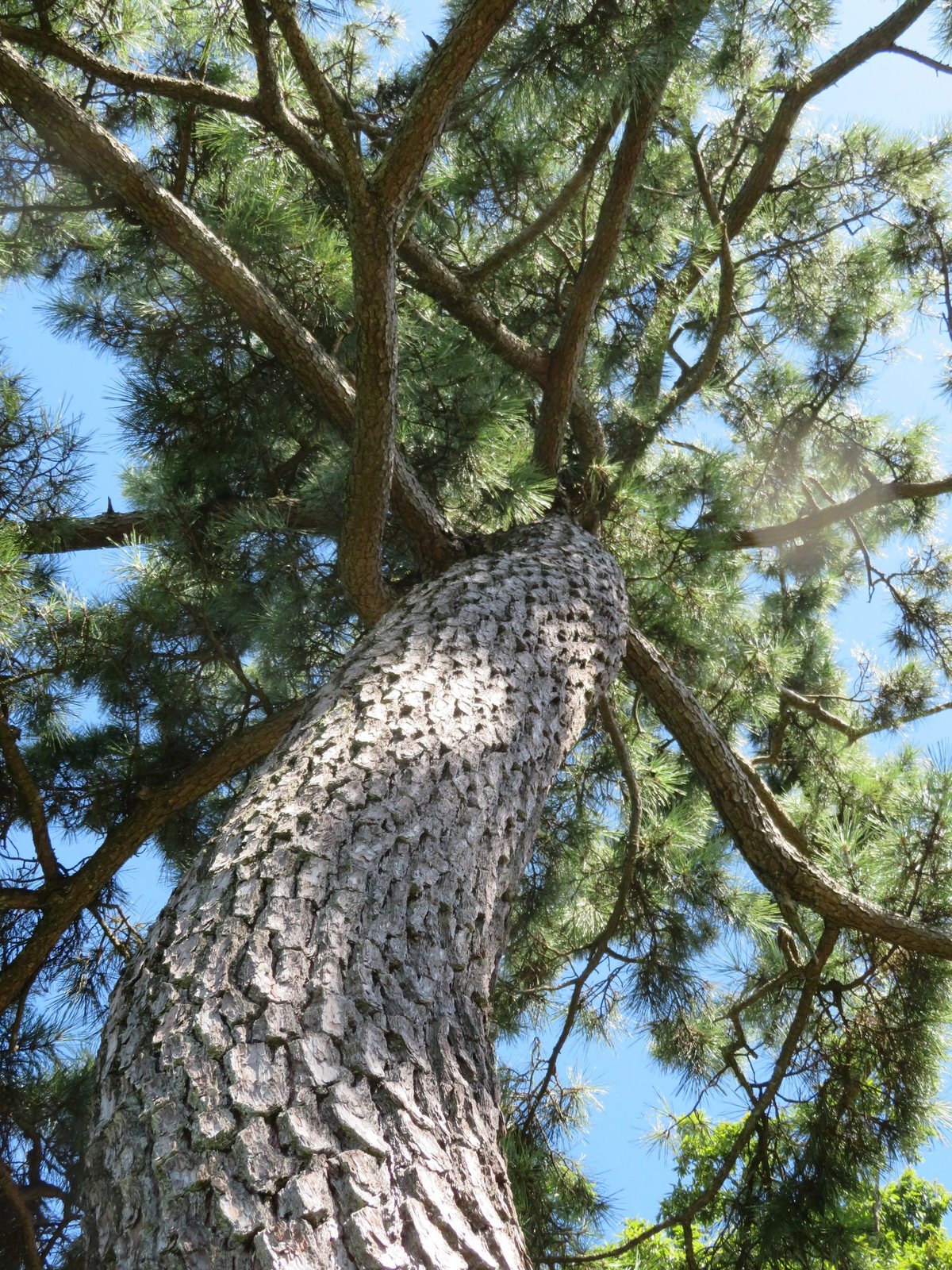
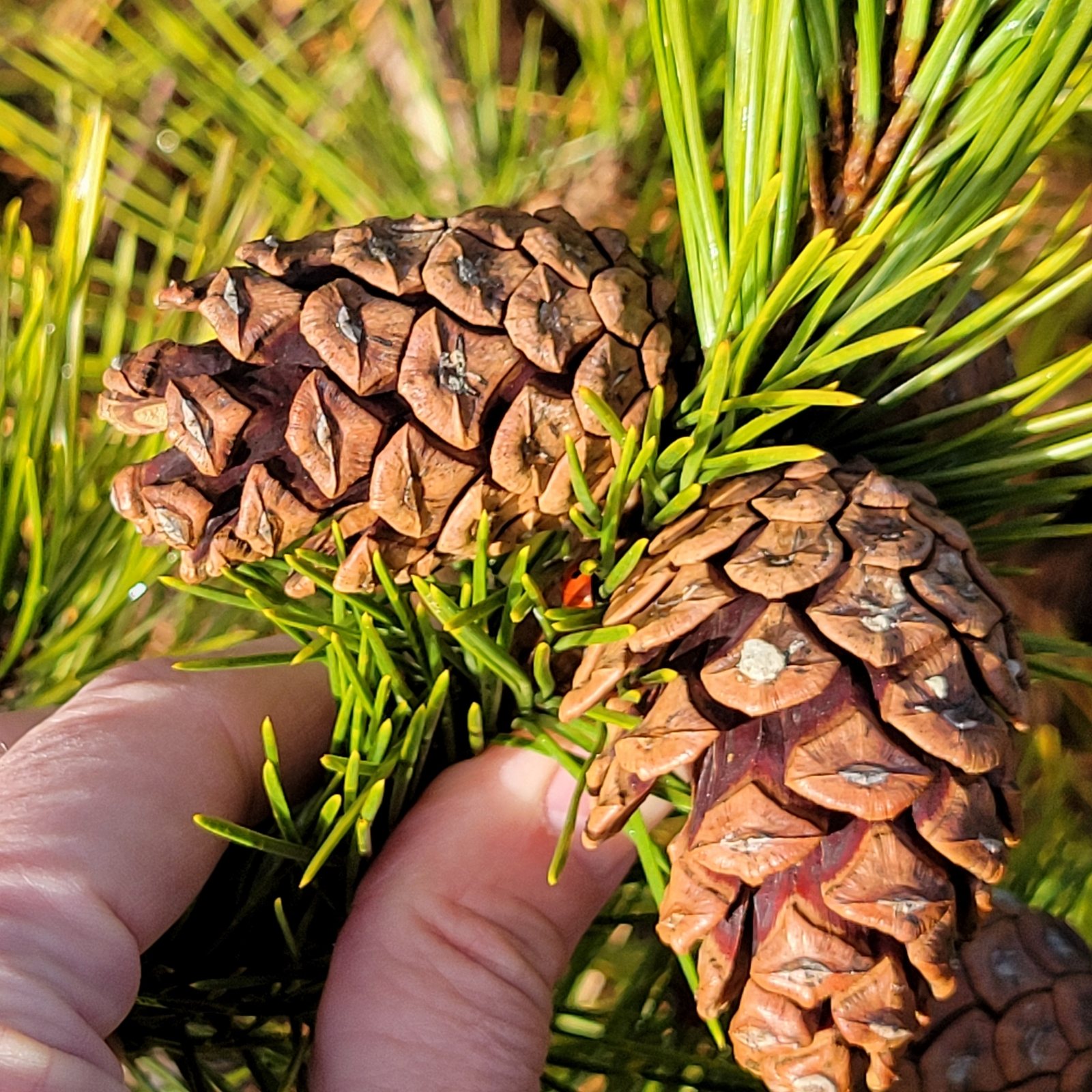
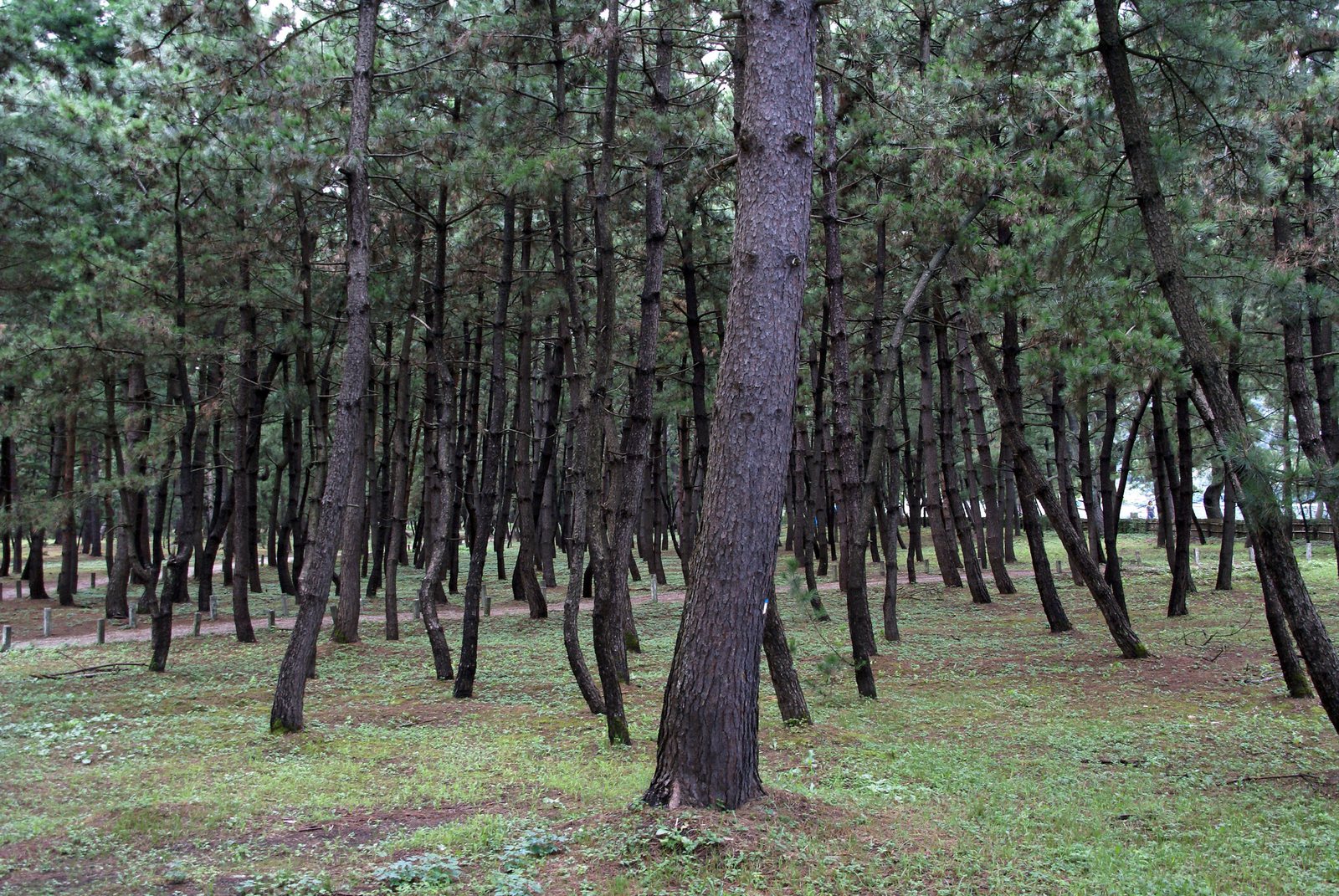
Japanese black pine is an evergreen tree with stiff, dark green needles, pale buds and deeply fissured bark as it ages. Gardeners grow it for its rugged outline, tolerance of coastal exposure and suitability for Japanese-style training, but an untrained tree needs generous space.
At a glance
- Sun
- Full sun; shade produces thin growth and a less compact crown.
- Water
- Water regularly while establishing; moderately drought-tolerant once rooted. Avoid soil that stays wet.
- Soil
- Well-drained sandy or loamy soil, preferably acidic to neutral; tolerates poor soil and salt spray but not waterlogging.
- Height
- 30-60 ft (9-18 m), occasionally taller
- Spread
- 20-40 ft (6-12 m)
- Foliage
- Evergreen. Stiff, pointed, dark green needles, usually 3-5 in (7.5-13 cm) long, carried in pairs; conspicuous silvery-white buds.
- Growth
- Moderate, often 12-24 in (30-60 cm) a year when young and well established.
- Care needed
- Medium
The year at a glance
- Deer resistant
- Drought tolerant
- Wildlife
| J | F | M | A | M | J | J | A | S | O | N | D | |
|---|---|---|---|---|---|---|---|---|---|---|---|---|
| Fruit | ||||||||||||
| Plant |
Northern hemisphere months. In Australia, shift them by six.
- Difficulty
- Moderate
- Toughness
- Fairly tough
Will it suit your garden?
Pick your zone, country, light and whether you have pets.
Full sun is 6 or more hours of direct sun a day, part shade 3 to 6 hours, shade under 3.
How it grows
Planting day
7 ft (2 m)
After 1 year
8 ft (2.6 m)
After 2 years
10 ft (3.2 m)
After 3 years
12 ft (3.7 m)
After 5 years
16 ft (4.9 m)
About 20 years to full size.
From a typical nursery size, at an average rate for this kind of plant. A rule of thumb, not a forecast.
Good to know
- Cats and dogs
- Safe
- Invasive in
- the US
- Growth rate
- Moderate
Care
Jobs through the year
- WaterApr–May, Sep–Oct, every 21 days
- Water established trees deeply only during dry spells; young trees need more frequent watering.
- WaterJun–Aug, every 14 days
- During prolonged drought, soak the root zone and let the surface dry between waterings.
- MulchMar–Apr
- Maintain 5–8 cm of organic mulch, keeping the trunk base clear.
- PruneFeb–Mar
- Remove dead, damaged or crossing branches in dry weather; never top or cut into bare old wood.
- PruneMay–Jun
- Only if shaping is needed, shorten soft candles before their needles fully expand.
- ProtectJan–Feb, Nov–Dec
- Check young trees for wind-rock and loosen rubbing or constricting ties.
- Water deeply during dry spells for the first two growing seasons, allowing the surface soil to dry between waterings.
- Spread 2-3 in (5-8 cm) of organic mulch over the root area, keeping it clear of the trunk.
- Do not fertilise routinely; feed lightly in spring only if growth is weak and a soil test indicates a deficiency.
- Stake only if the root ball moves in wind, and remove supports after the first growing season.
- Keep lawn equipment away from the trunk and avoid digging or compacting soil over the roots.
Pruning. Remove dead, damaged or crossing branches in late winter during dry weather. For a denser outline, shorten soft new shoots, called candles, in late spring before the needles fully expand; do not cut back into bare old wood or top the tree.
Through the year
- Late winter
- Check branch structure and remove dead or damaged wood during dry weather.
- Spring
- Plant where drainage is good, water thoroughly and mulch without covering the trunk base.
- Late spring
- Shorten soft candles only if you want to control growth or maintain a trained shape.
- Summer
- Water young trees during dry spells and check for scale insects, shoot dieback or sudden browning.
- Autumn
- Expect some older inner needles to yellow and fall; investigate browning that also affects shoot tips.
- Winter
- Check young trees for wind-rock and loosen ties that rub or constrict the trunk.
In the garden
- Use as a specimen in an open lawn or gravel garden where its irregular crown has room to develop.
- Plant in a coastal garden as a salt-spray-tolerant structural tree, away from sensitive natural dunes.
- Train as a sculptural focal point in a Japanese garden with rocks, gravel and low planting.
- Contrast its coarse, dark needles with fine grasses and low, rounded shrubs.
Garden styles it suits: Japanese, Zen dry garden, Coastal, Architectural minimal, Dry gravel garden and Winter interest.
Plant it with: Japanese maple, Shore juniper, Japanese forest grass, Mondo grass, Azalea and Bearberry.
Wildlife: Provides evergreen shelter and nesting cover for birds; its seeds are eaten by birds and small mammals. Pollen is wind-dispersed rather than a significant food source for pollinating insects.
Problems to watch for
- Pine wilt can cause rapid browning and death, especially in hot-summer regions. Seek a prompt diagnosis; infected trees cannot usually be saved and should be removed and disposed of according to local advice.
- Diplodia tip blight causes stunted, brown new shoots, often on stressed trees. Prune affected shoots in dry weather, remove fallen cones and reduce drought stress.
- Pine needle scale appears as small white coverings on needles and can weaken growth. Encourage beneficial insects and, if needed, use a locally approved treatment timed to the crawler stage.
- Poor drainage can cause root decline and sparse, yellowing foliage. Correct drainage before planting; established trees in persistently wet sites may need replacement.
Safety
Not known to be toxic to people, cats, dogs or horses. Needles and resin may irritate the mouth or stomach if eaten, and stiff needles can cause physical injury; discourage chewing.
Where it spreads. Can escape cultivation and spread into coastal dunes in the northeastern United States, including Long Island, New York. Avoid planting beside sensitive dune habitats and check local invasive-plant guidance.
Easily confused with
Japanese red pine (Pinus densiflora)
Has softer, more slender needles and orange-red upper bark; Japanese black pine has stiffer needles, pale buds and darker bark.
Austrian pine (Pinus nigra)
Also has stiff needles in pairs, but its buds are generally brown and resinous rather than conspicuously silvery white.
Japanese white pine (Pinus parviflora)
Has shorter, often bluish needles in bundles of five rather than the long, dark green pairs of Japanese black pine.
The name
The species name thunbergii honours Swedish botanist Carl Peter Thunberg, while 'black pine' refers to its dark bark.
Propagation. Usually grown from seed sown in spring; a short period of cold, moist stratification can improve germination. Named cultivars are generally propagated by grafting to preserve their characteristics.
Checked against open data
- Accepted botanical name
- Pinus thunbergii
- In the US and Canada
- Introduced in the lower 48 states.
Sources: GBIF (CC BY 4.0) and USDA PLANTS. The care and design notes are LandscapeGPT's own.
See it in your own yard.
Upload a photo of your yard and see it redesigned with plants that suit your climate, each checked against your zone.