Jerusalem sage
Phlomis fruticosa. Family Lamiaceae. Shrub.
Also called Shrubby Jerusalem sage.
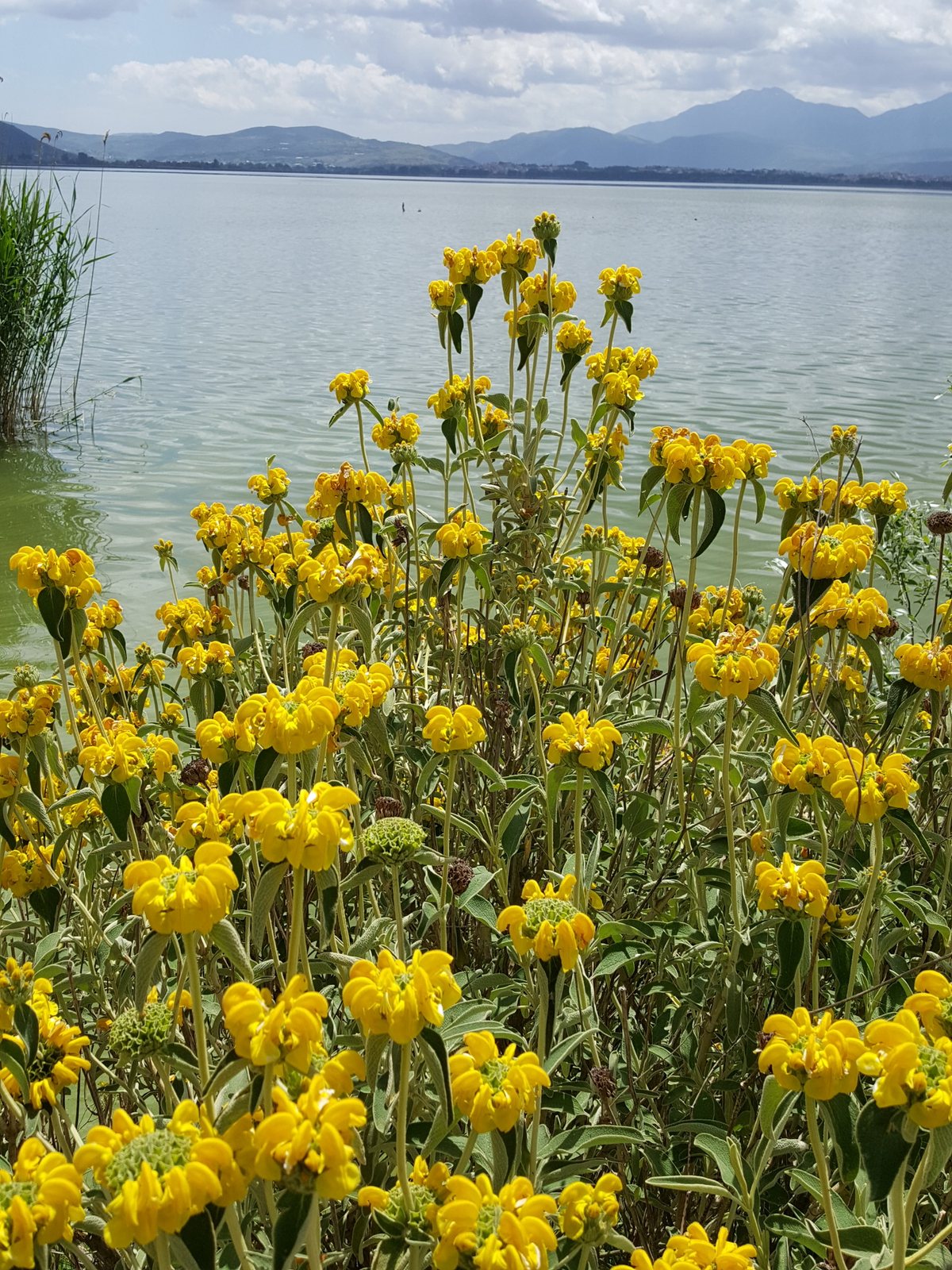
Jerusalem sage is a drought-tolerant Mediterranean shrub with woolly grey-green leaves and whorls of yellow flowers. Grow it for its rounded shape, bee-friendly flowers and contrasting foliage in sunny, well-drained borders; cold, wet winters are its main weakness.
At a glance
- Sun
- Full sun; light shade is tolerated, but flowering and growth are better in sun.
- Water
- Water regularly during establishment, allowing the soil to dry somewhat between waterings. Once established, water deeply only during prolonged dry spells.
- Soil
- Well-drained sandy, gravelly or loamy soil; tolerates chalk and poor soil. Avoid waterlogged ground, especially in winter.
- Height
- 3-4 ft (0.9-1.2 m)
- Spread
- 3-5 ft (0.9-1.5 m)
- Flowers
- Bright yellow, hooded flowers in stacked whorls from late spring through early summer, sometimes continuing into midsummer.
- Foliage
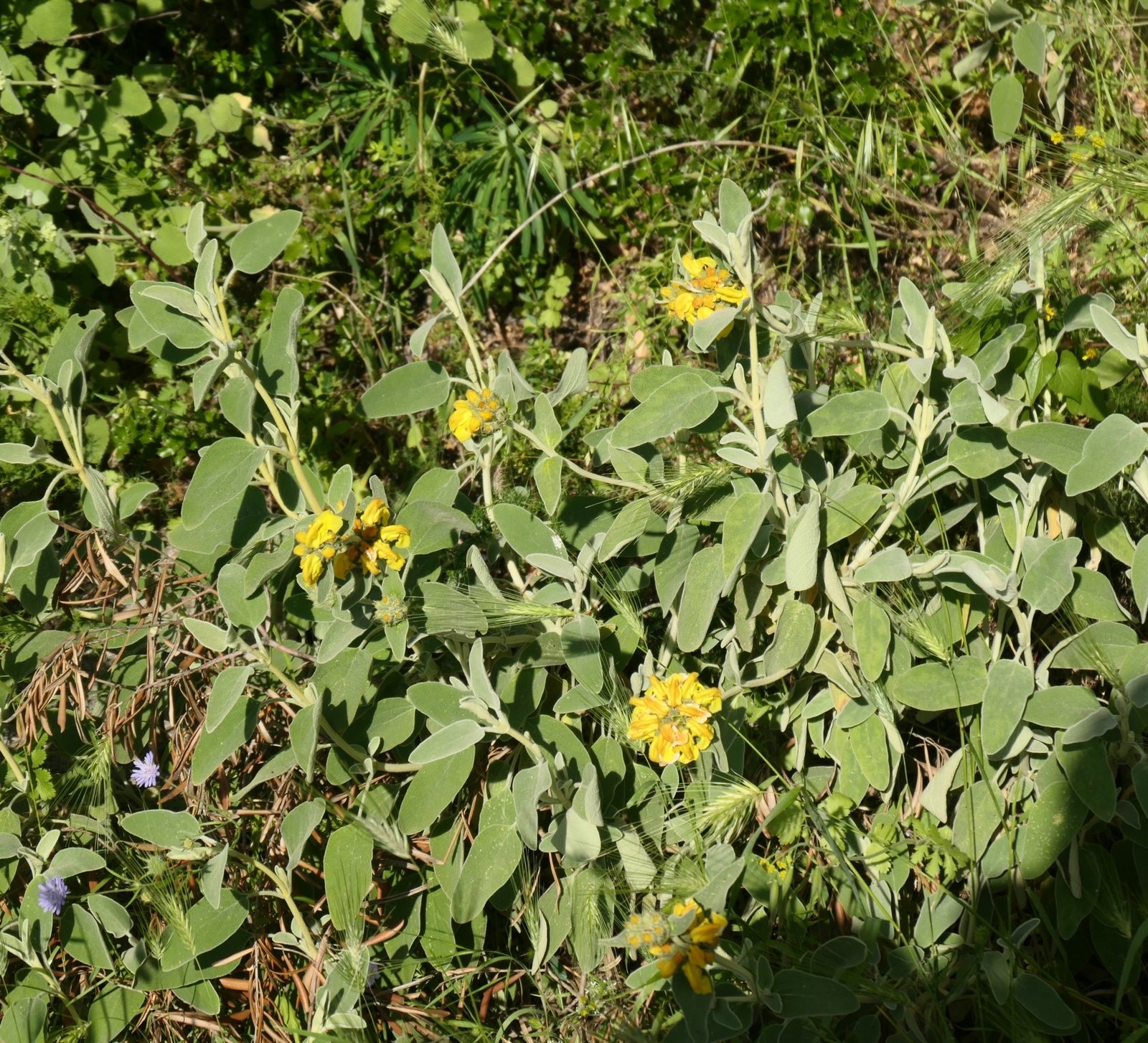
- Opposite, wrinkled, grey-green leaves with a soft, woolly covering. Usually evergreen in mild climates, but may lose leaves or suffer shoot dieback in cold winters.
- Growth
- Moderate
- Care needed
- Low
The year at a glance
- Pollinators
- Deer resistant
- Drought tolerant
- Heat tolerant
- Wildlife
- Low allergen
| J | F | M | A | M | J | J | A | S | O | N | D | |
|---|---|---|---|---|---|---|---|---|---|---|---|---|
| Flowers | ||||||||||||
| Fruit | ||||||||||||
| Plant |
Northern hemisphere months. In Australia, shift them by six.
- Difficulty
- Moderate
- Toughness
- Fairly tough
Will it suit your garden?
Pick your zone, country, light and whether you have pets.
Full sun is 6 or more hours of direct sun a day, part shade 3 to 6 hours, shade under 3.
How it grows
Planting day
1.6 ft (0.5 m)
After 1 year
2 ft (0.61 m)
After 2 years
2.4 ft (0.72 m)
After 3 years
2.7 ft (0.83 m)
After 5 years
3 ft (1.1 m)
full size
About 5 years to full size.
From a typical nursery size, at an average rate for this kind of plant. A rule of thumb, not a forecast.
Good to know
- Cats and dogs
- Safe
- Growth rate
- Moderate
Care
Jobs through the year
- WaterApr–May, Sep, every 21 days
- For established in-ground shrubs, water only during prolonged dryness; new plants need watering whenever the root zone dries.
- WaterJun–Aug, every 21 days
- Water established shrubs deeply only in prolonged drought, allowing soil to dry between waterings.
- PruneApr–May
- After severe frosts, remove dead shoots and shorten straggly stems to healthy leafy growth.
- PruneJul–Aug
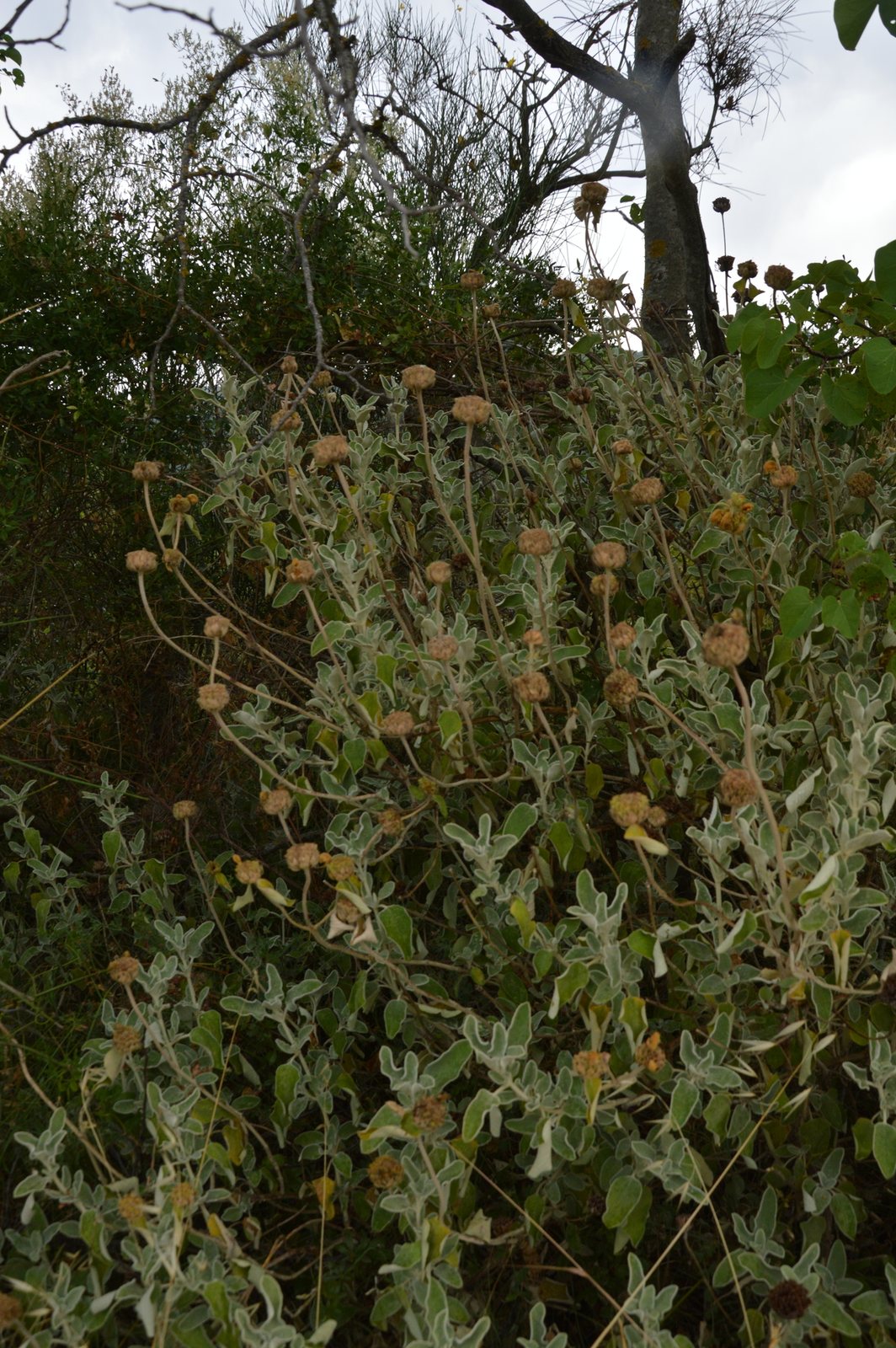
- If shaping is needed, trim lightly after flowering; retain seed stems for winter interest and avoid bare old wood.
- MulchApr–May
- Use a light gravel mulch if needed, keeping woody stem bases clear.
- ProtectJan–Mar, Nov–Dec
- Hardiness is marginal in zone 7 and inadequate in zone 6; provide frost-free shelter for pots or substantial protection in mild sites.
- ProtectOct–Nov
- Clear leaves from the crown and ensure winter rain drains freely away.
- Plant in a sunny position with free drainage; use a raised bed if your soil stays wet.
- Water through the first growing season whenever the root zone becomes dry.
- Once established, avoid frequent irrigation and allow the soil to dry between deep waterings.
- Do not routinely feed; rich soil and heavy feeding encourage loose growth.
- Use gravel mulch if needed, keeping it clear of the woody stem bases.
Pruning. In spring, once severe frosts have passed, remove dead or damaged shoots and lightly shorten straggly growth to leafy shoots. After flowering, trim lightly for shape if needed, avoiding hard cuts into bare old wood.
Through the year
- Spring
- Plant once severe frosts have passed, choosing a sunny site with excellent drainage.
- Spring
- Check for winter damage and prune back affected shoots to healthy growth.
- Late spring
- Water new plants during dry weather; avoid routinely watering established shrubs.
- Summer
- After the main flowering flush, trim lightly or leave the dry flower stems for structure.
- Summer
- Take semi-ripe cuttings from healthy, non-flowering shoots.
- Autumn
- Clear fallen leaves from around the crown and check that water drains away freely.
In the garden
- Use as a rounded structural shrub in gravel gardens, paired with lavender and rock roses.
- Repeat along a sunny path or terrace edge for a loose, informal rhythm.
- Combine with purple-flowered salvias for a strong yellow-and-purple contrast.
- Plant among ornamental grasses so its broad, woolly leaves contrast with fine foliage.
- Leave selected dry flower stems standing to add shape to a Mediterranean-style winter border.
Garden styles it suits: Mediterranean, Modern Mediterranean, Dry gravel garden, Desert / xeriscape, Pollinator garden and Low-maintenance.
Plant it with: Lavender, Rock rose, Rosemary, Purple sage, Yarrow and Blue oat grass.
Wildlife: The flowers attract bees, especially bumblebees. Its dense, evergreen growth also provides cover for small garden wildlife.
Problems to watch for
- Root rot and winter losses in wet soil: improve drainage or move the plant to a raised, gravelly bed; reduce irrigation.
- Frost-damaged leaves and shoots: choose a sheltered position and wait until spring growth appears before removing dead wood.
- Sparse flowering and floppy growth: provide more sun, stop nitrogen-rich feeding and avoid excessive watering.
- Leafhoppers may cause pale stippling on leaves: tolerate minor damage and encourage predators; extensive treatment is rarely needed.
Safety
Not known to be toxic to people, cats, dogs or horses; no plant parts are established as poisonous. It is not a culinary sage, and safety information for substantial ingestion is limited.
Easily confused with
Turkish sage (Phlomis russeliana)
A herbaceous perennial with large, greener, heart-shaped basal leaves and tall flowering stems; Jerusalem sage forms a woody shrub with smaller, grey-green leaves.
Woolly Jerusalem sage (Phlomis lanata)
Usually a smaller, more compact shrub with shorter, rounder, densely woolly leaves; Jerusalem sage has longer, more pointed leaves.
Common sage (Salvia officinalis)
Has strongly aromatic culinary leaves and usually violet-blue flowers in spikes, rather than yellow flowers arranged in distinct whorls.
The name
The botanical epithet fruticosa means shrubby, describing its woody growth; despite its common name, Jerusalem sage is not a true sage of the genus Salvia.
Propagation. Take semi-ripe cuttings in summer and root them in a free-draining medium. Seed can also be sown in spring, but seedlings take longer to reach flowering size.
Checked against open data
- Accepted botanical name
- Phlomis fruticosa
- In the US and Canada
- Introduced in the lower 48 states.
- Native range
- Albania, Cyprus, East Aegean Is., Greece, Italy, Kriti, Sardegna, Sicilia, Transcaucasus, Turkey and Yugoslavia.
- Measured
- Average height 80 cm.
Sources: GBIF (CC BY 4.0), USDA PLANTS and Trefle (CC BY 4.0). The care and design notes are LandscapeGPT's own.
See it in your own yard.
Upload a photo of your yard and see it redesigned with plants that suit your climate, each checked against your zone.