Purple sage
Salvia leucophylla. Family Lamiaceae. Shrub.
Also called California purple sage, Gray sage.
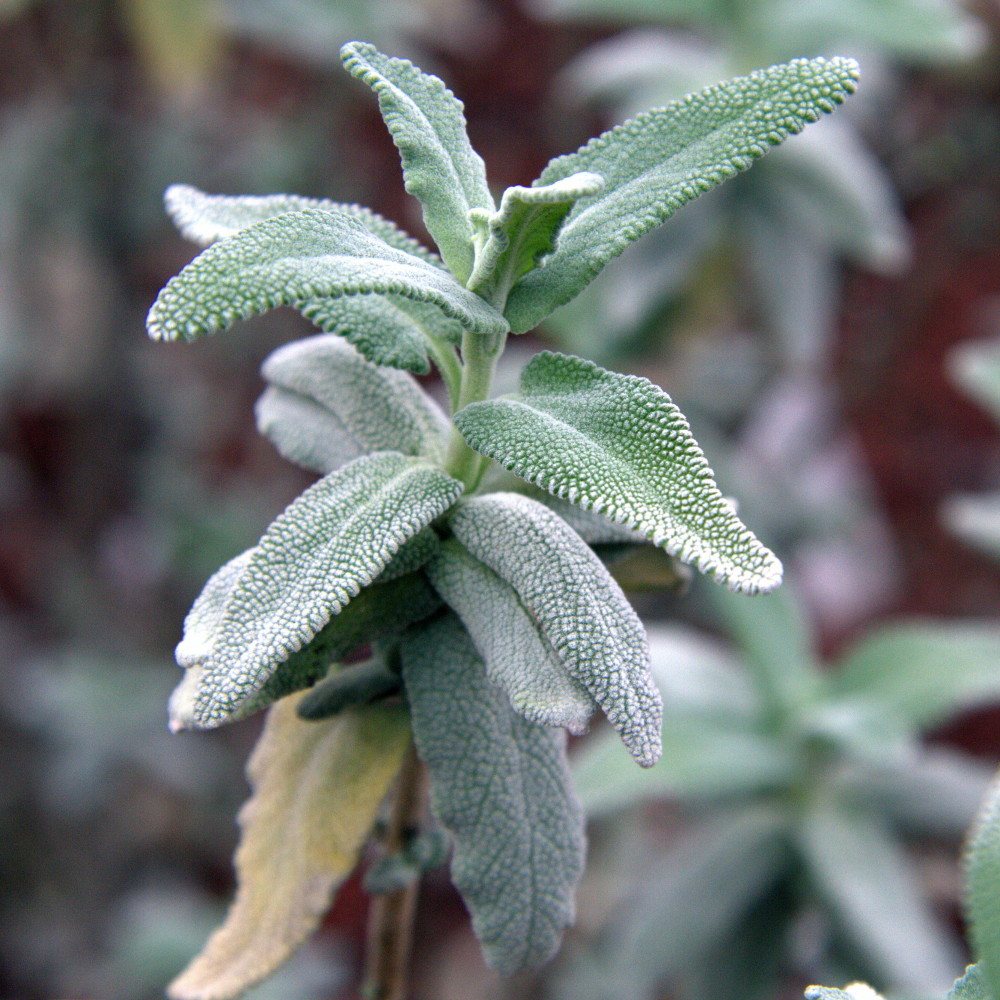
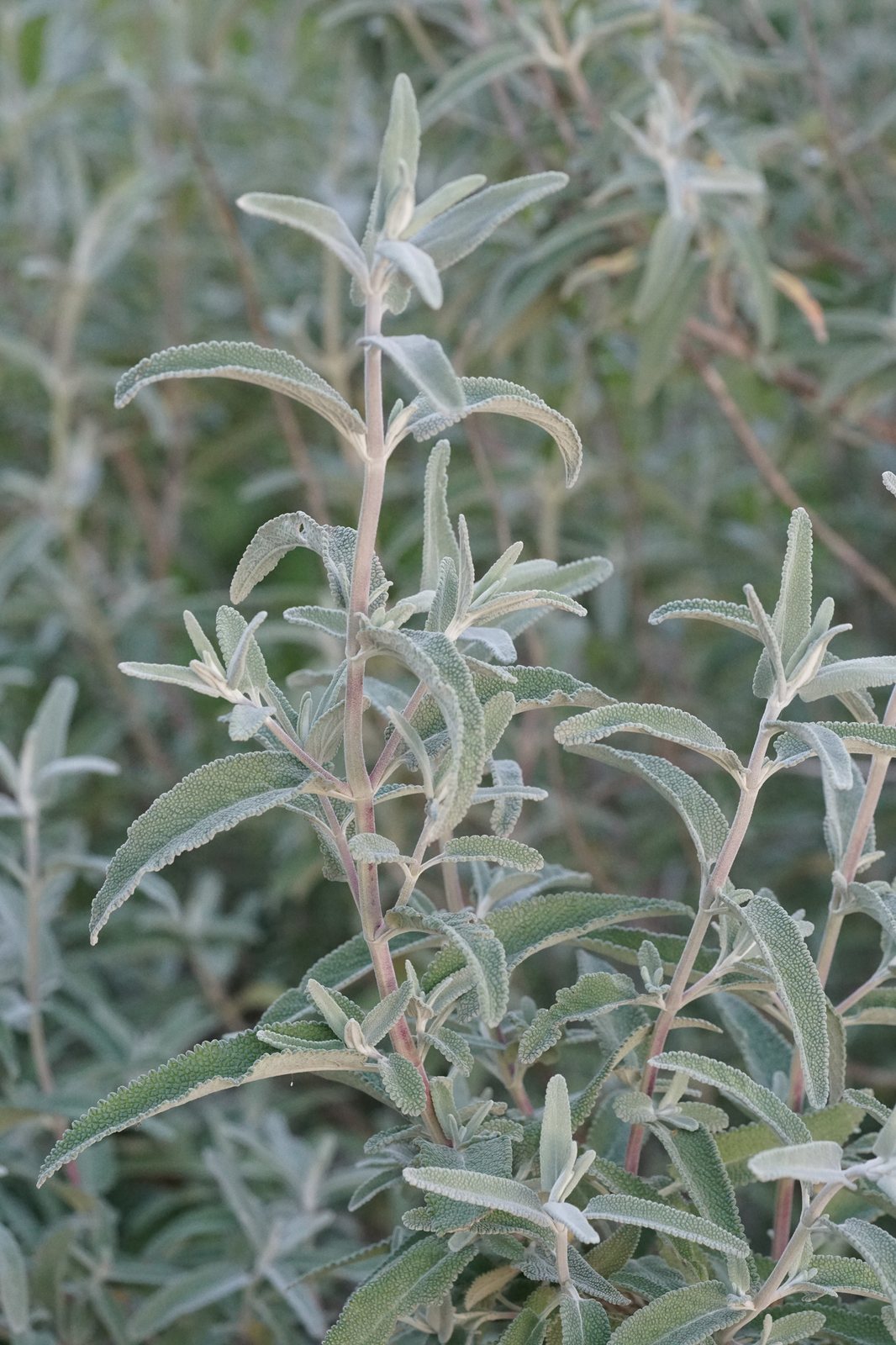
Purple sage is a spreading, aromatic shrub native to coastal southern California and Baja California, grown for silvery foliage and tiers of lavender-pink flowers. It suits sunny, dry gardens with excellent drainage, but struggles in wet winters and humid conditions.
At a glance
- Sun
- Full sun; tolerates light shade but flowers less and grows more loosely.
- Water
- Low once established. Water young plants deeply, then let the soil dry between waterings; established plants usually need little or no summer irrigation in Mediterranean climates.
- Soil
- Well-drained sandy, gravelly or loamy soil, including alkaline soils. Avoid heavy, waterlogged ground and rich, moisture-retentive planting mixes.
- Height
- 3-5 ft (0.9-1.5 m)
- Spread
- 5-8 ft (1.5-2.4 m)
- Flowers
- Spring to early summer; pale lavender-pink to purple flowers in spaced whorls along upright stems.
- Foliage
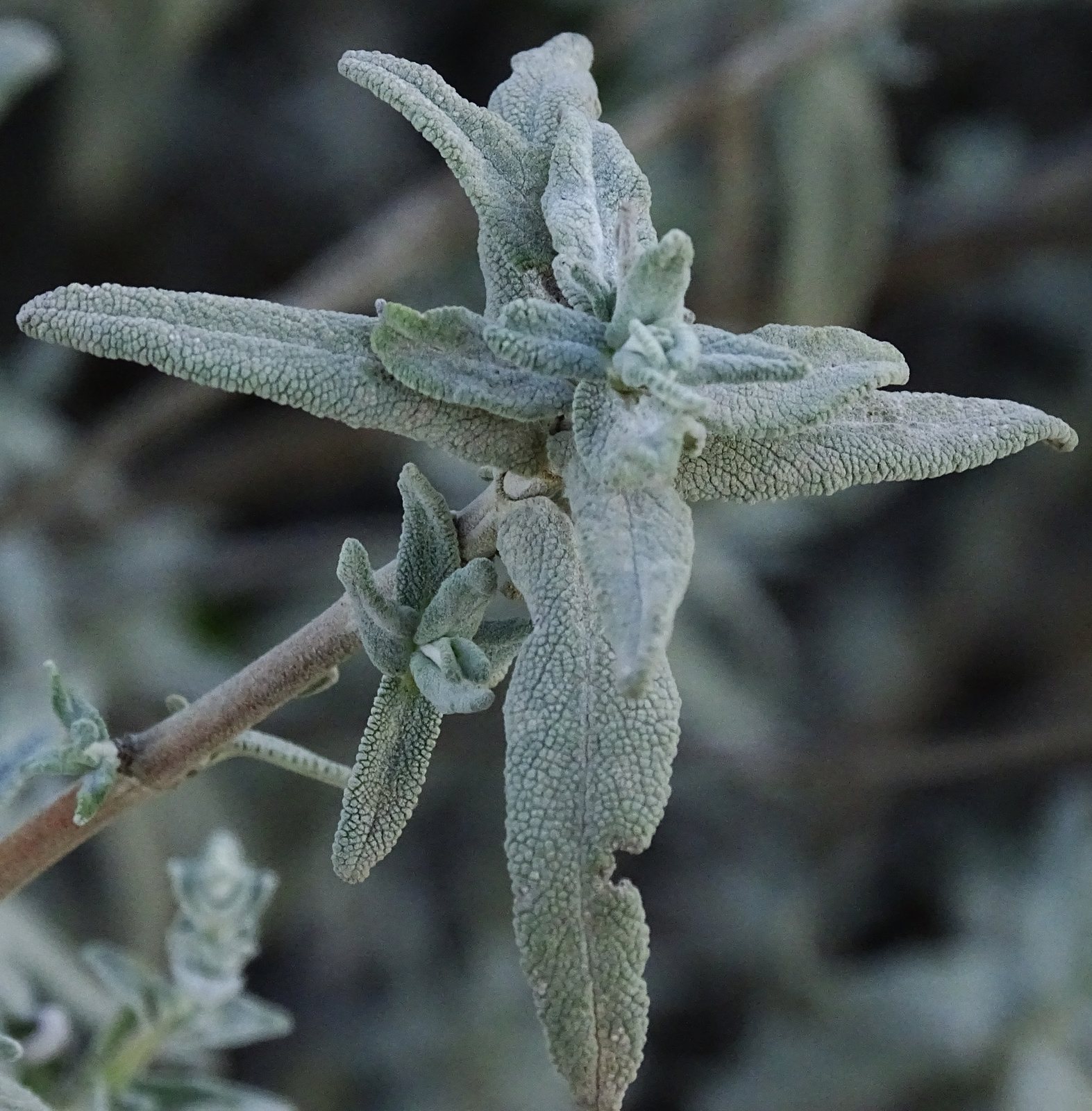
- Fragrant, softly hairy, gray-green to silvery leaves. Usually evergreen in mild climates, but may shed many leaves during prolonged summer drought or cold.
- Growth
- Moderate to fast in suitable conditions.
- Care needed
- Low
The year at a glance
- Pollinators
- Deer resistant
- Drought tolerant
- Heat tolerant
- Wildlife
- Low allergen
- Fragrant
| J | F | M | A | M | J | J | A | S | O | N | D | |
|---|---|---|---|---|---|---|---|---|---|---|---|---|
| Flowers | ||||||||||||
| Fruit | ||||||||||||
| Plant |
Northern hemisphere months. In Australia, shift them by six.
- Difficulty
- Moderate
- Toughness
- Fairly tough
Will it suit your garden?
Pick your zone, country, light and whether you have pets.
Full sun is 6 or more hours of direct sun a day, part shade 3 to 6 hours, shade under 3.
How it grows
Planting day
1.6 ft (0.5 m)
After 1 year
2.2 ft (0.68 m)
After 2 years
2.8 ft (0.85 m)
After 3 years
3 ft (1 m)
After 5 years
4 ft (1.2 m)
full size
About 4 years to full size.
From a typical nursery size, at an average rate for this kind of plant. A rule of thumb, not a forecast.
Good to know
- Cats and dogs
- Safe
- Native to
- the US
- Growth rate
- Fast
Care
Jobs through the year
- WaterApr–May, Sep, every 28 days
- Water established plants only if soil is dry throughout the root zone; young plants need more frequent watering.
- WaterJun–Aug, every 30 days
- Water established plants only in exceptional drought; avoid routine summer irrigation and wet crowns.
- PruneJun–Jul
- After flowering, shorten spent stems and lightly trim leafy shoots; never cut hard into bare wood.
- MulchMay
- Use a thin gravel mulch if needed, leaving the woody crown clear.
- ProtectJan–Apr, Oct–Dec
- Not reliably hardy in zones 6–7; overwinter containers in bright, frost-free shelter with excellent drainage.
- Plant with the root crown at soil level and leave room for its broad spread.
- Water deeply during establishment, allowing the soil to dry between soakings.
- Avoid frequent summer watering once established, especially in heavy soil.
- Do not routinely fertilize; rich feeding encourages weak, sprawling growth.
- Use a thin gravel mulch if needed, keeping it clear of the woody crown.
Pruning. After flowering, shorten spent flower stems and lightly trim leafy shoots to maintain a broad, compact shape. Avoid cutting hard into old, bare wood, which may not reshoot.
Through the year
- Autumn
- Plant in mild, dry-summer climates so roots establish during cooler weather.
- Winter
- Check drainage and keep fallen leaves or damp mulch away from the crown.
- Spring
- Plant in colder areas after severe frost has passed; water new plants deeply.
- Late spring
- Enjoy flowering and avoid shearing while bees are using the blooms.
- Summer
- Trim lightly after flowering; leave some seed heads if wanted for wildlife.
- Late summer
- Take semi-ripe cuttings from healthy, nonflowering shoots.
In the garden
- Mass on a sunny, well-drained slope for broad silver foliage and seasonal flower colour.
- Combine with California buckwheat and other dryland shrubs in a California-native border.
- Use behind low succulents or gravel-garden perennials, allowing space for its arching branches.
- Place near a path where its scent can be enjoyed, without letting mature growth obstruct access.
Garden styles it suits: California native, Mediterranean, Desert / xeriscape, Dry gravel garden, Pollinator garden and Coastal.
Plant it with: California buckwheat, California sagebrush, Deer grass, California poppy, Rockrose and Lavender.
Wildlife: Flowers provide nectar and pollen for bees and other pollinating insects; hummingbirds visit in its native region. Seed-eating birds may use the seed heads.
Problems to watch for
- Root and crown rot in wet soil: improve drainage, reduce irrigation and keep mulch away from the crown.
- Leggy or floppy growth in shade or rich soil: provide full sun, stop feeding and trim lightly after flowering.
- Cold damage in exposed sites: choose a sheltered position and remove dead shoots once new growth shows what has survived.
- Leaf drop during summer drought: some shedding is normal; check soil moisture before assuming the plant needs more water.
Safety
Not known to be toxic to people, cats, dogs or horses, although species-specific safety information is limited. No part is established as poisonous; this is an ornamental sage, not a substitute for culinary sage.
Easily confused with
Cleveland sage (Salvia clevelandii)
Usually has darker gray-green, more wrinkled leaves and deeper violet-blue flowers; purple sage has paler, more woolly foliage and generally pinker flowers.
White sage (Salvia apiana)
Has larger, conspicuously whitish leaves and tall, open, branching sprays of mostly white flowers rather than compact tiers of lavender-pink blooms.
Purple-leaved culinary sage (Salvia officinalis 'Purpurascens')
A smaller culinary plant with purple-tinted young leaves; Salvia leucophylla has silvery foliage, a much broader shrubby habit and is not the usual cooking sage.
The name
The species name leucophylla means 'white-leaved', referring to its pale, hairy foliage, while purple sage refers to the flowers.
Propagation. Take semi-ripe cuttings in summer and root them in a sharply drained medium. Seed can also be sown, but seedlings may vary and can hybridize where other compatible sages grow nearby.
Checked against open data
- Accepted botanical name
- Salvia leucophylla
- In the US and Canada
- Native in the lower 48 states.
- Native range
- California and Mexico Northwest.
- Measured
- Average height 150 cm.
Sources: GBIF (CC BY 4.0), USDA PLANTS and Trefle (CC BY 4.0). The care and design notes are LandscapeGPT's own.
See it in your own yard.
Upload a photo of your yard and see it redesigned with plants that suit your climate, each checked against your zone.