California buckwheat
Eriogonum fasciculatum. Family Polygonaceae. Shrub.
Also called Eastern Mojave buckwheat.
California buckwheat is a spreading evergreen shrub native to California and nearby parts of the southwestern United States and northwestern Mexico. Gardeners grow it for its drought tolerance, long-lasting cream to pink flowers, and value to native insects. It needs excellent drainage and is poorly suited to cold, wet gardens or humid sites with regular summer irrigation.
At a glance
- Sun
- Full sun; tolerates light shade but flowers best in an open position.
- Water
- Low once established. Water young plants deeply, then let the soil dry between waterings; established plants usually need little or no summer irrigation in suitable climates.
- Soil
- Well-drained sandy, gravelly or rocky soil, including poor and alkaline soils. Avoid waterlogged ground and heavily enriched planting holes.
- Height
- 2-5 ft (0.6-1.5 m)
- Spread
- 3-6 ft (0.9-1.8 m)
- Flowers
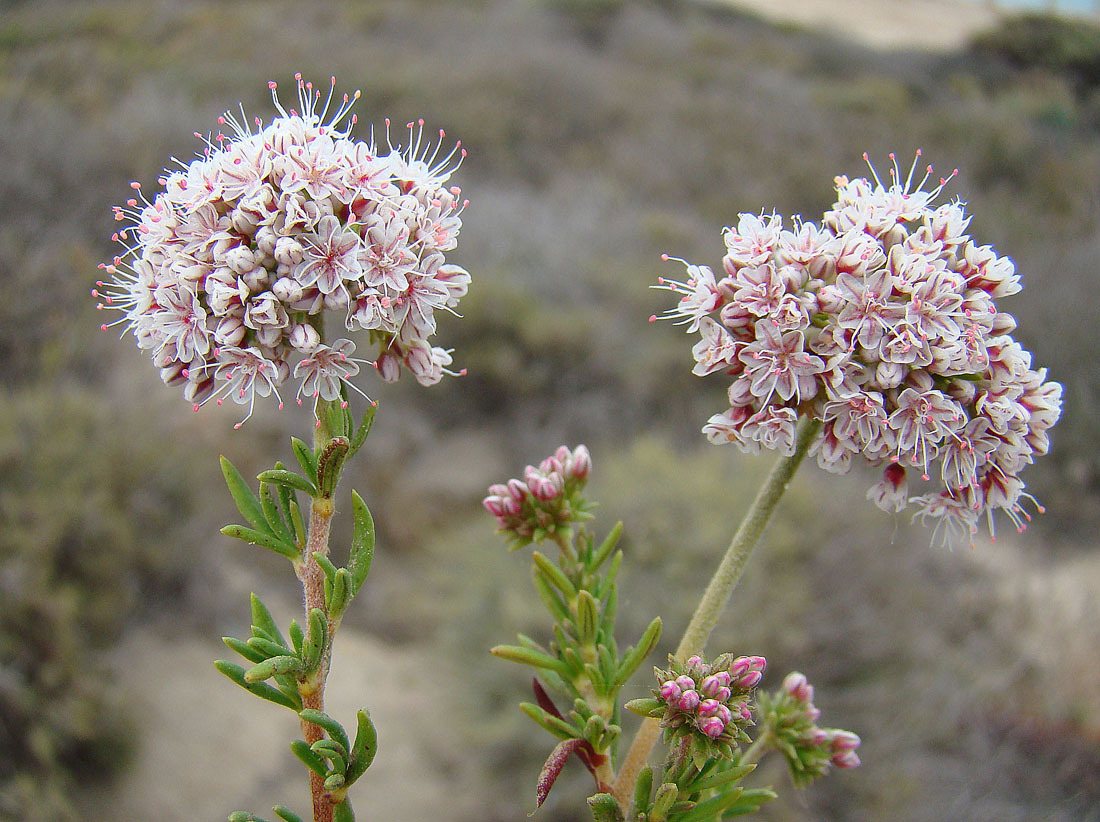
- Late spring through summer, sometimes into autumn; small white to pale pink flowers in dense clusters, aging to rusty brown.
- Foliage
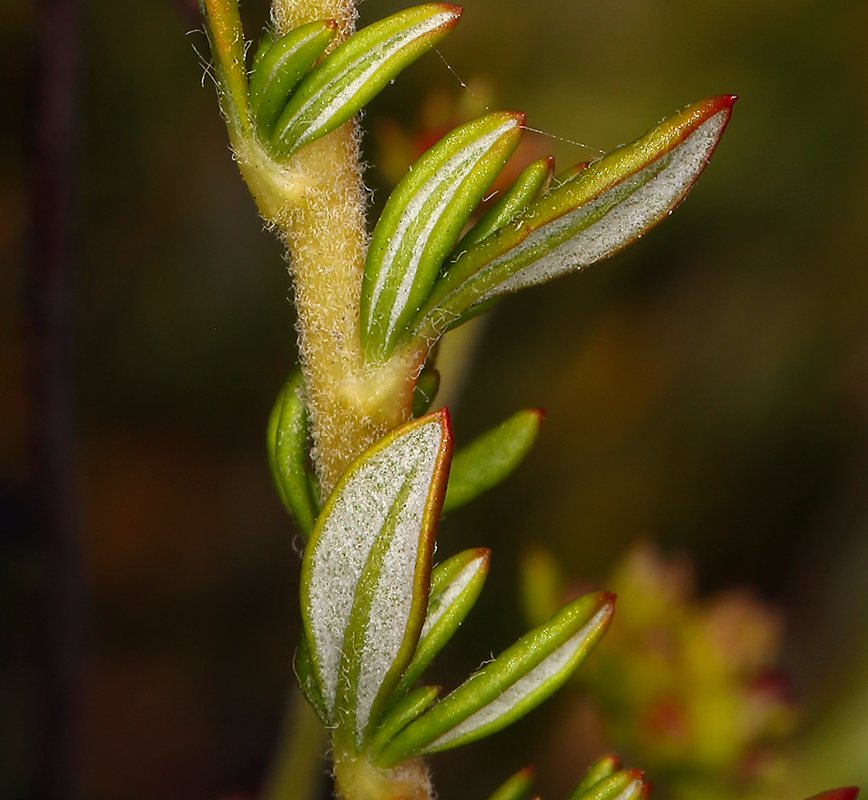
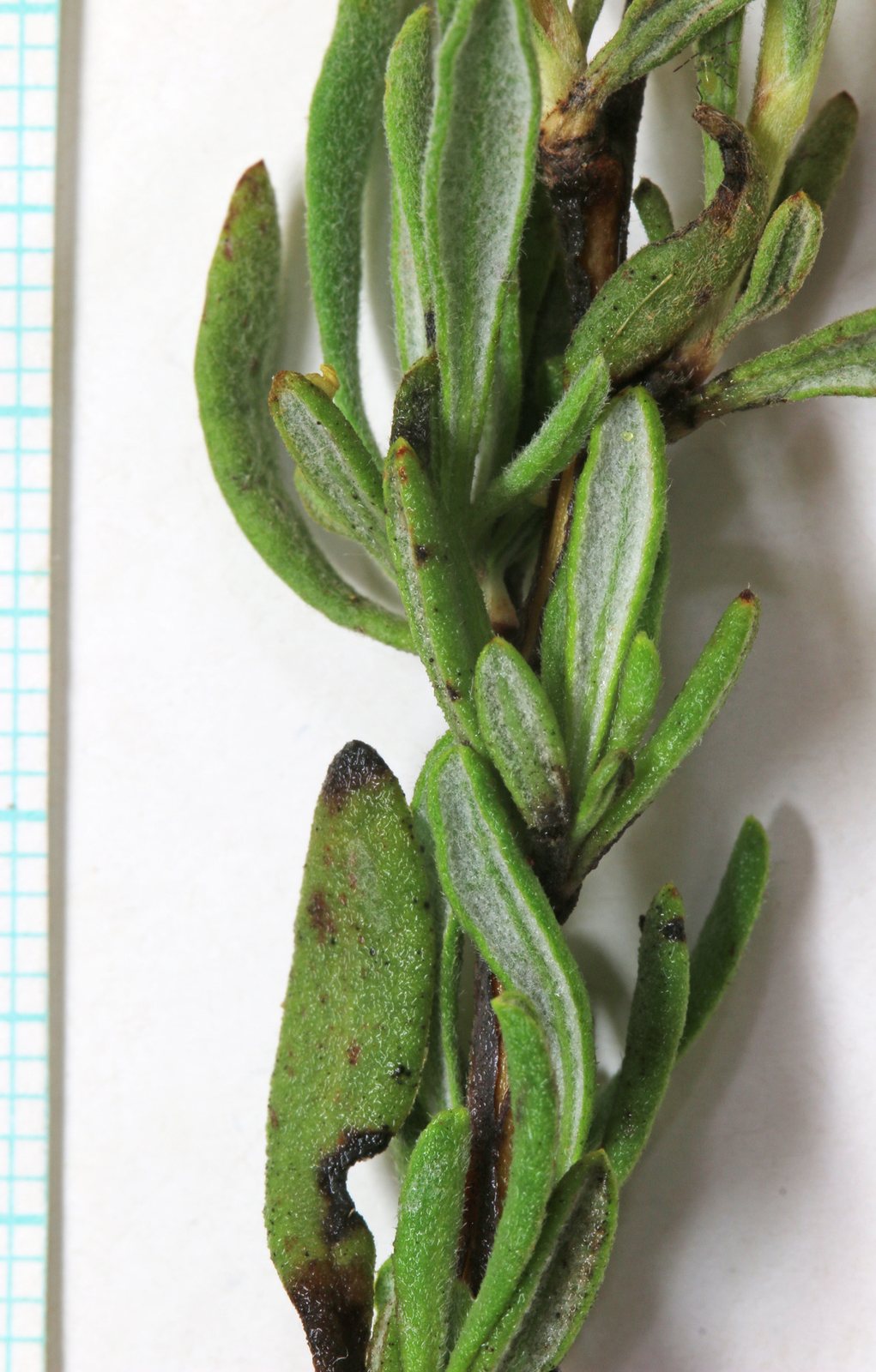
- Small, narrow, dark green to gray-green leaves clustered along woody stems, often with pale, hairy undersides. Usually evergreen, but may shed some leaves during severe drought or cold.
- Growth
- Moderate to fast in suitable conditions.
- Care needed
- Low
The year at a glance
- Pollinators
- Deer resistant
- Drought tolerant
- Heat tolerant
- Wildlife
- Low allergen
| J | F | M | A | M | J | J | A | S | O | N | D | |
|---|---|---|---|---|---|---|---|---|---|---|---|---|
| Flowers | ||||||||||||
| Fruit | ||||||||||||
| Plant |
Northern hemisphere months. In Australia, shift them by six.
- Difficulty
- Hard
- Toughness
- Needs looking after
Will it suit your garden?
Pick your zone, country, light and whether you have pets.
Full sun is 6 or more hours of direct sun a day, part shade 3 to 6 hours, shade under 3.
How it grows
Planting day
1.6 ft (0.5 m)
After 1 year
2.1 ft (0.64 m)
After 2 years
2.5 ft (0.78 m)
After 3 years
3 ft (0.91 m)
After 5 years
3 ft (1.1 m)
full size
About 4 years to full size.
From a typical nursery size, at an average rate for this kind of plant. A rule of thumb, not a forecast.
Good to know
- Cats and dogs
- Safe
- Native to
- the US
- Growth rate
- Fast
Care
Jobs through the year
- WaterApr–May, Sep, every 30 days
- Water established ground plants only during prolonged drought; young plants need more while rooting.
- WaterJun–Aug, every 30 days
- Deeply water established ground plants only during extended drought; keep water off the crown.
- PruneApr–May
- Remove frost-killed or dead branches after severe frost risk has passed.
- PruneAug–Sep
- Lightly shape after flowering, retaining rusty seed heads; avoid cuts into bare old wood.
- MulchMay
- Apply a light gravel mulch if needed, leaving stem bases uncovered.
- ProtectJan–Apr, Oct–Dec
- Not reliably hardy here: grow in a draining pot and overwinter bright and frost-free, away from winter rain.
- Plant in autumn where winters are mild, or in spring where frost is a concern.
- Water deeply during establishment, allowing the root zone to dry between waterings.
- Keep established plants away from frequently irrigated lawns and thirsty border plants.
- Skip routine fertilizer; rich feeding encourages soft, sprawling growth.
- Use a light gravel mulch if needed, keeping the stem bases uncovered.
Pruning. After the main flowering period, lightly trim shoots if shaping is needed, leaving some rusty seed heads for wildlife and winter structure. Remove dead branches in late winter or spring, and avoid cutting hard into bare old wood.
Through the year
- Spring
- Plant in colder parts of its range once severe frost has passed; check drainage before planting.
- Late spring
- Check newly planted shrubs for dry root balls and water deeply when needed.
- Summer
- Keep routine irrigation low once plants are established, and avoid watering the crown.
- Late summer
- Lightly shape after the main flowering flush, retaining some seed heads.
- Autumn
- Plant in mild-winter climates so roots can establish during cooler weather.
- Winter
- Check for standing water around the roots and improve drainage where necessary.
In the garden
- Mass on sunny, freely draining slopes for a low-water planting with a long season of flower and seed-head interest.
- Combine with California sagebrush and black sage in a coastal-scrub-style garden.
- Use beside paths in gravel gardens, allowing room for its broad, informal outline.
- Plant in sunny wildlife borders where its flowers can support insects and its seeds can feed birds.
Garden styles it suits: California native, Desert / xeriscape, Dry gravel garden, Wildlife garden, Pollinator garden and Coastal.
Plant it with: California sagebrush, Black sage, White sage, Deergrass, California poppy and Sticky monkeyflower.
Wildlife: Flowers provide nectar and pollen for native bees, butterflies, flies and other beneficial insects. It is a larval host for several butterflies, including some blues and hairstreaks; birds eat the seeds.
Problems to watch for
- Root and crown rot in wet soil: improve drainage, keep the crown uncovered, and avoid frequent summer irrigation.
- Frost damage near its cold limit: choose a sheltered, sunny site and remove dead growth after frost risk has passed.
- Sparse flowering or floppy growth in shade: move young plants to full sun and avoid nitrogen-rich fertilizer.
- Occasional aphids on tender shoots: leave minor colonies for predators or rinse them off with water.
Safety
Not known to be toxic to people, cats, dogs or horses. No part is recognized as a serious poisoning hazard, although species-specific veterinary information is limited; it is not recommended as food or fodder.
Easily confused with
Ashyleaf buckwheat (Eriogonum cinereum)
Has broader, rounded to oval, distinctly gray leaves rather than the narrow, clustered leaves of California buckwheat.
Red-flowered buckwheat (Eriogonum grande var. rubescens)
Forms a lower clump with broad leaves concentrated near the base and usually much deeper pink to red flowers on upright stalks.
The name
The epithet fasciculatum means bundled or clustered, referring to the clustered leaves, while California buckwheat names its principal native region and its relationship to other members of the buckwheat family.
Propagation. Sow ripe seed in autumn in a freely draining mix; germination can be variable. Take semi-ripe cuttings in summer to preserve the form of a selected plant.
Checked against open data
- Accepted botanical name
- Eriogonum fasciculatum
- In the US and Canada
- Native in the lower 48 states.
- Native range
- Arizona, California, Mexico Northwest, Nevada and Utah.
- Measured
- Soil pH 7.5 to 8.5. Average height 91 cm.
Sources: GBIF (CC BY 4.0), USDA PLANTS and Trefle (CC BY 4.0). The care and design notes are LandscapeGPT's own.
See it in your own yard.
Upload a photo of your yard and see it redesigned with plants that suit your climate, each checked against your zone.