White sage
Salvia apiana. Family Lamiaceae. Shrub.
Also called California white sage, Bee sage.
White sage is an evergreen shrub from southern California and northern Baja California, grown for its strongly aromatic, silvery-white leaves and tall, bee-attracting flower stems. It suits sunny, dry gardens with excellent drainage; cold, wet winters are its main limitation, particularly in the UK and much of Canada.
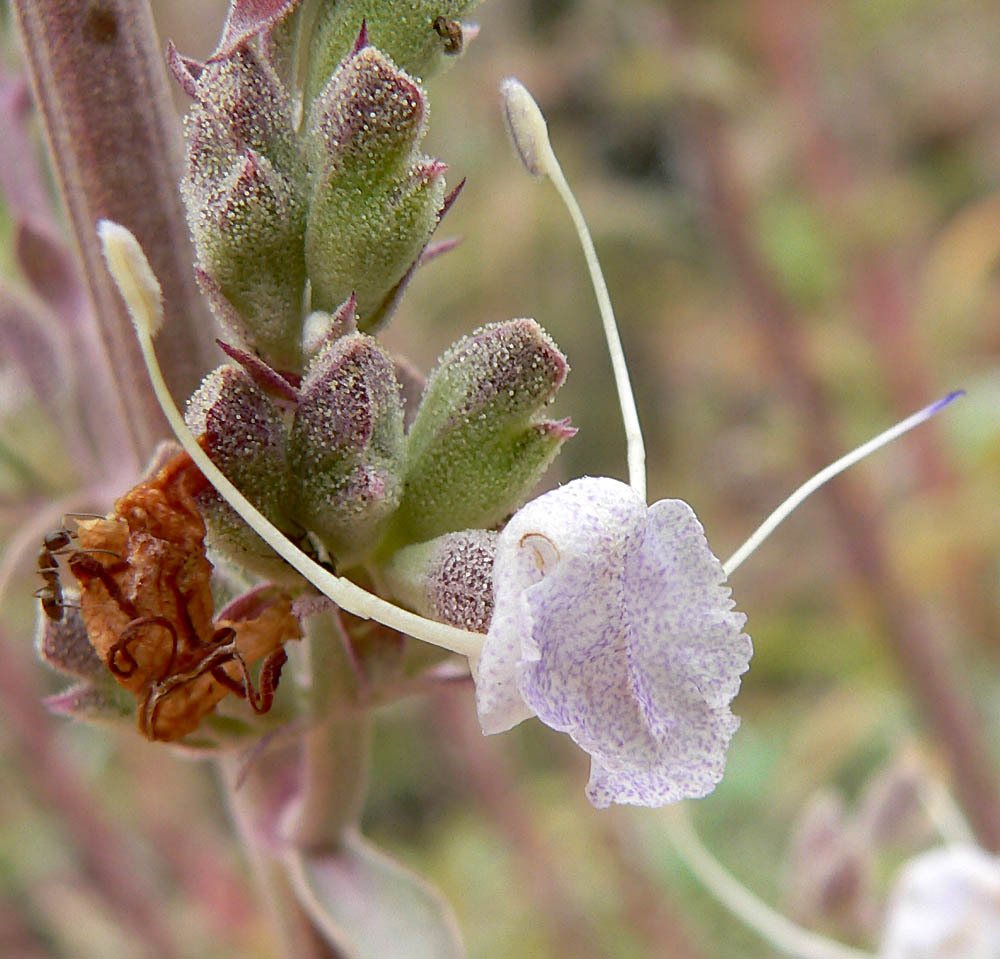
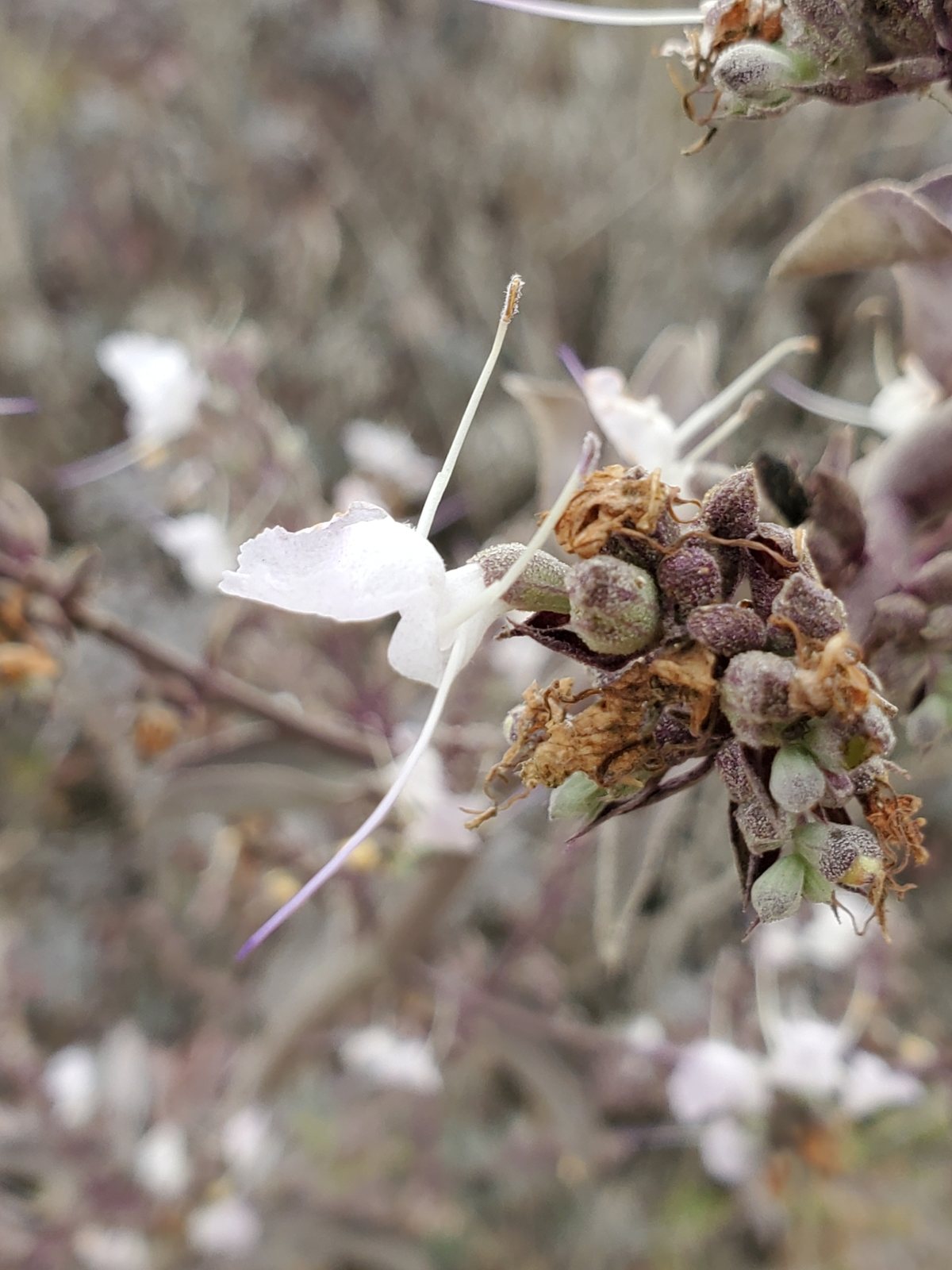
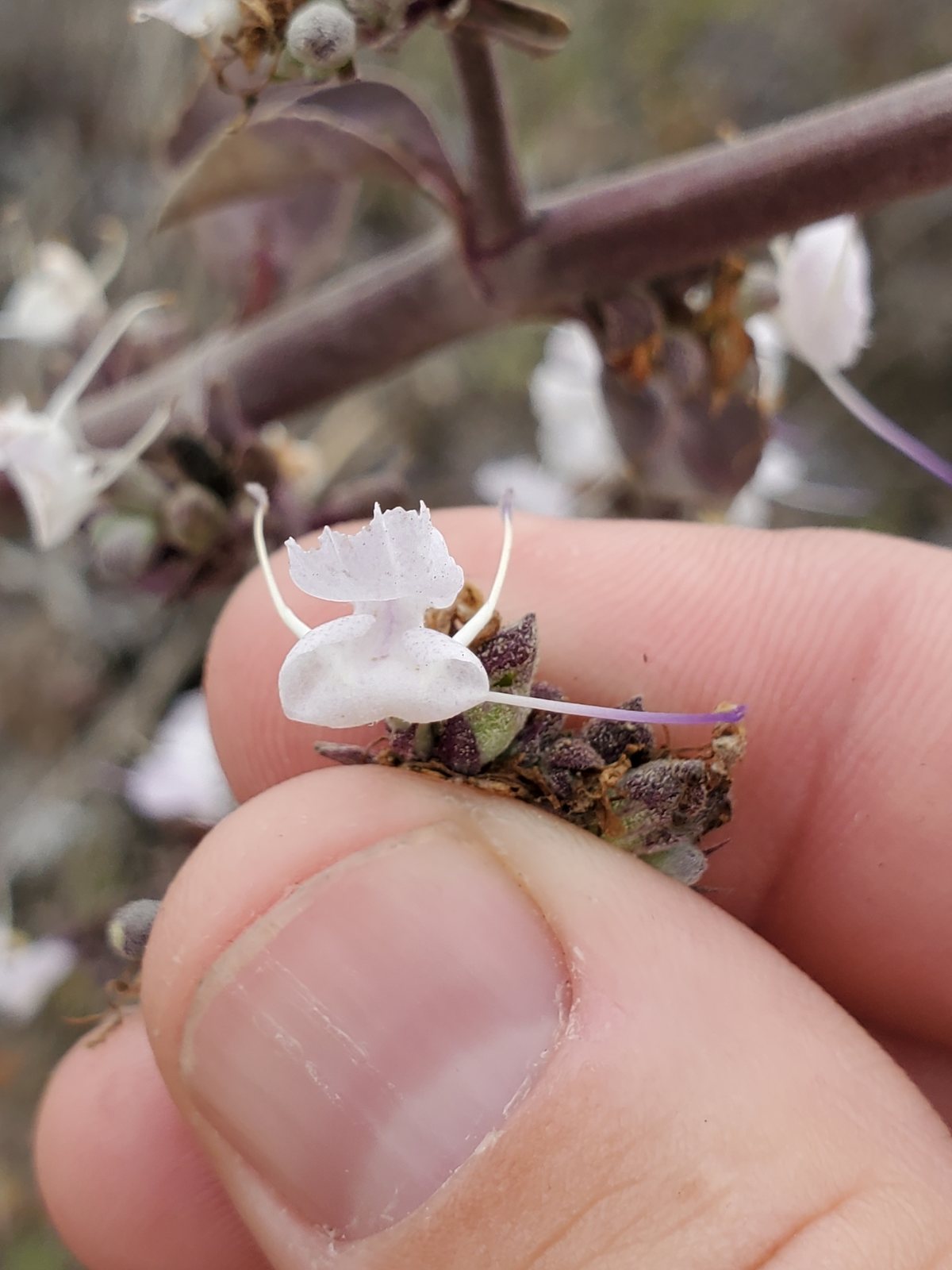
At a glance
- Sun
- Full sun; avoid shade and poorly ventilated sites.
- Water
- Low once established. Water young plants deeply but infrequently, letting the soil dry between waterings; established plants usually need little summer irrigation.
- Soil
- Lean, sharply drained sandy, gravelly or rocky soil. Avoid heavy clay, waterlogged ground and rich, moisture-retentive compost.
- Height
- 3-5 ft (0.9-1.5 m), with flower stems sometimes reaching 6 ft (1.8 m)
- Spread
- 3-5 ft (0.9-1.5 m)
- Flowers
- Late spring to summer; small white to very pale lavender flowers in open clusters on tall, branching stems.
- Foliage
- Evergreen. Broad, lance-shaped leaves covered in fine white hairs, giving a silvery-white appearance; strongly aromatic when brushed. Plants may shed some leaves during severe drought or cold.
- Growth
- Moderate to fast in suitable warm, dry conditions.
- Care needed
- Low
The year at a glance
- Pollinators
- Deer resistant
- Drought tolerant
- Heat tolerant
- Low allergen
- Fragrant
| J | F | M | A | M | J | J | A | S | O | N | D | |
|---|---|---|---|---|---|---|---|---|---|---|---|---|
| Flowers | ||||||||||||
| Fruit | ||||||||||||
| Plant |
Northern hemisphere months. In Australia, shift them by six.
- Difficulty
- Moderate
- Toughness
- Fairly tough
Will it suit your garden?
Pick your zone, country, light and whether you have pets.
Full sun is 6 or more hours of direct sun a day, part shade 3 to 6 hours, shade under 3.
How it grows
Planting day
1.6 ft (0.5 m)
After 1 year
2.2 ft (0.68 m)
After 2 years
2.8 ft (0.85 m)
After 3 years
3 ft (1 m)
After 5 years
4 ft (1.2 m)
full size
About 4 years to full size.
From a typical nursery size, at an average rate for this kind of plant. A rule of thumb, not a forecast.
Good to know
- Cats and dogs
- Safe
- Native to
- the US
- Growth rate
- Fast
Care
Jobs through the year
- WaterApr–May, Sep–Oct, every 21 days
- For established ground plants in suitable climates, water only when soil is dry; young plants and pots need closer checks.
- WaterJun–Aug, every 30 days
- Water established ground plants only during extended drought, keeping the crown dry.
- PruneApr–May
- Remove frost-damaged shoots once healthy new growth is visible; avoid bare old wood.
- PruneAug–Sep
- Remove finished flower stems and lightly shape leafy shoots.
- MulchMay
- Use a thin gravel mulch and keep it clear of the woody crown.
- ProtectJan–Apr, Oct–Dec
- Not reliably hardy in zones 6–7; overwinter a sharply drained pot in bright, frost-free shelter.
- Plant in full sun on a raised mound or gravelly slope if drainage is uncertain.
- Water deeply during establishment, then let the root zone dry before watering again.
- Avoid frequent summer irrigation, especially in heavy soil.
- Usually do not feed; rich soil and heavy fertilizing encourage weak, excessive growth.
- Use a light gravel mulch and keep it clear of the woody crown.
- In cold or wet-winter regions, grow in a freely draining pot and overwinter under bright, frost-free cover.
Pruning. After flowering, remove spent flower stems and lightly shorten leafy shoots to maintain shape. Remove frost-damaged growth in spring once new growth is visible, and avoid cutting hard into bare old wood.
Through the year
- Spring
- Once hard frosts have passed, plant nursery-grown stock and check that water drains freely from the planting area.
- Spring
- Remove winter-damaged shoots back to healthy leafy growth; avoid hard renovation pruning.
- Late spring
- Check newly planted shrubs and water deeply when the root zone has dried.
- Summer
- Keep established plants on the dry side and avoid watering foliage or the crown.
- Late summer
- Remove finished flower stems, leaving some seedheads if you want to collect seed.
- Autumn
- In mild, dry-summer climates, plant early enough for roots to establish before winter; elsewhere, wait until spring.
- Winter
- Keep container plants bright, cool and frost-free where outdoor conditions are too cold or persistently wet.
In the garden
- Use as a silver-leaved focal shrub in a sunny gravel garden.
- Combine with California buckwheat and deer grass in a California-native planting with little summer irrigation.
- Pair with purple-flowered, drought-tolerant shrubs for contrast against its pale foliage.
- Plant on a sunny, well-drained bank where its loose shape and tall flower stems have room to develop.
- Grow in a large, freely draining container near a sitting area where its foliage can be appreciated without frequent handling.
Garden styles it suits: California native, Mediterranean, Desert / xeriscape, Dry gravel garden, Pollinator garden and Sensory garden.
Plant it with: California buckwheat, Deer grass, Cleveland sage, California sagebrush, Woolly bluecurls and Rockrose.
Wildlife: Flowers provide nectar and pollen for native bees, honeybees and other insects; hummingbirds may also visit. Its strongest habitat value is within its native range.
Problems to watch for
- Root or crown rot in wet soil: improve drainage, keep mulch away from the crown and reduce watering; replace badly affected plants.
- Winter dieback from frost and wet: choose a sheltered, sharply drained site or overwinter a container plant under frost-free cover.
- Aphids on tender shoots: wash off small colonies with water and encourage natural predators.
- Leggy growth or collapse in shade or rich soil: provide full sun, stop feeding and lightly prune leafy shoots after flowering.
Safety
Not known to be toxic to people, cats, dogs or horses, but species-specific safety information is limited. Do not treat this as proof that eating large quantities is safe; avoid ingestion of concentrated essential oil, and keep smoke away from people and animals with breathing problems.
Easily confused with
Purple sage (Salvia leucophylla)
Usually has greyer, more wrinkled leaves and pinkish-purple flowers in conspicuous, separated whorls; white sage has paler foliage and loose, tall sprays of mostly white flowers.
Common sage (Salvia officinalis)
Generally smaller, with distinctly wrinkled grey-green leaves and shorter spikes of violet-blue flowers; white sage has larger, whiter leaves and much taller flower stems.
White sagebrush (Artemisia ludoviciana)
A spreading herbaceous perennial with narrow, sometimes lobed silver leaves and tiny, inconspicuous flower heads; white sage is woody and bears recognizable two-lipped sage flowers.
The name
The epithet apiana means 'of bees', referring to the bees attracted to its flowers, while 'white sage' describes its pale, hairy foliage.
Propagation. Sow seed in a freely draining seed mix in spring with warmth and good light; germination can be uneven. Take softwood or semi-ripe cuttings from non-flowering shoots in late spring or summer. Buy nursery-propagated plants or seed rather than collecting from wild populations.
Checked against open data
- Accepted botanical name
- Salvia apiana
- In the US and Canada
- Native in the lower 48 states.
- Native range
- California and Mexico Northwest.
- Measured
- Average height 66 cm.
Sources: GBIF (CC BY 4.0), USDA PLANTS and Trefle (CC BY 4.0). The care and design notes are LandscapeGPT's own.
See it in your own yard.
Upload a photo of your yard and see it redesigned with plants that suit your climate, each checked against your zone.