Cleveland sage
Salvia clevelandii. Family Lamiaceae. Shrub.
Also called California blue sage, Fragrant sage.
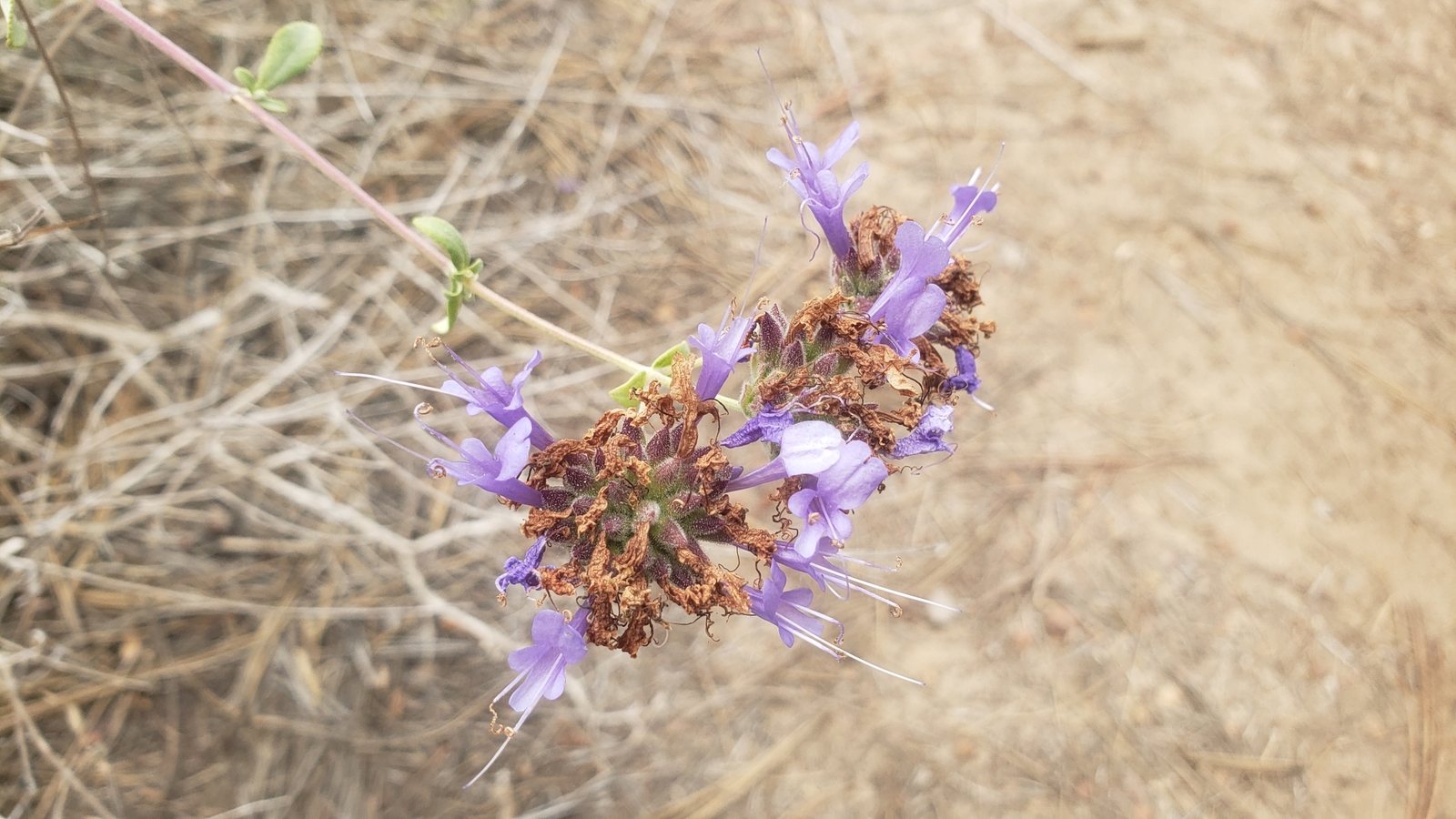
Cleveland sage is an aromatic, evergreen shrub native to southern California and northern Baja California, grown for its grey-green leaves and tiers of blue-violet flowers. It suits sunny, dry gardens with excellent drainage, but struggles in wet winters and humid conditions.
At a glance
- Sun
- Full sun; tolerates light afternoon shade in very hot inland gardens.
- Water
- Low once established. Water young plants deeply, then let the soil dry between waterings; established plants usually need little summer irrigation in suitable climates.
- Soil
- Well-drained sandy, gravelly or rocky soil. Tolerates lean soil and some clay if drainage is excellent; avoid persistently wet ground.
- Height
- 3-5 ft (0.9-1.5 m)
- Spread
- 4-6 ft (1.2-1.8 m)
- Flowers
- Late spring to early summer; blue-violet flowers in spaced whorls along upright stems.
- Foliage
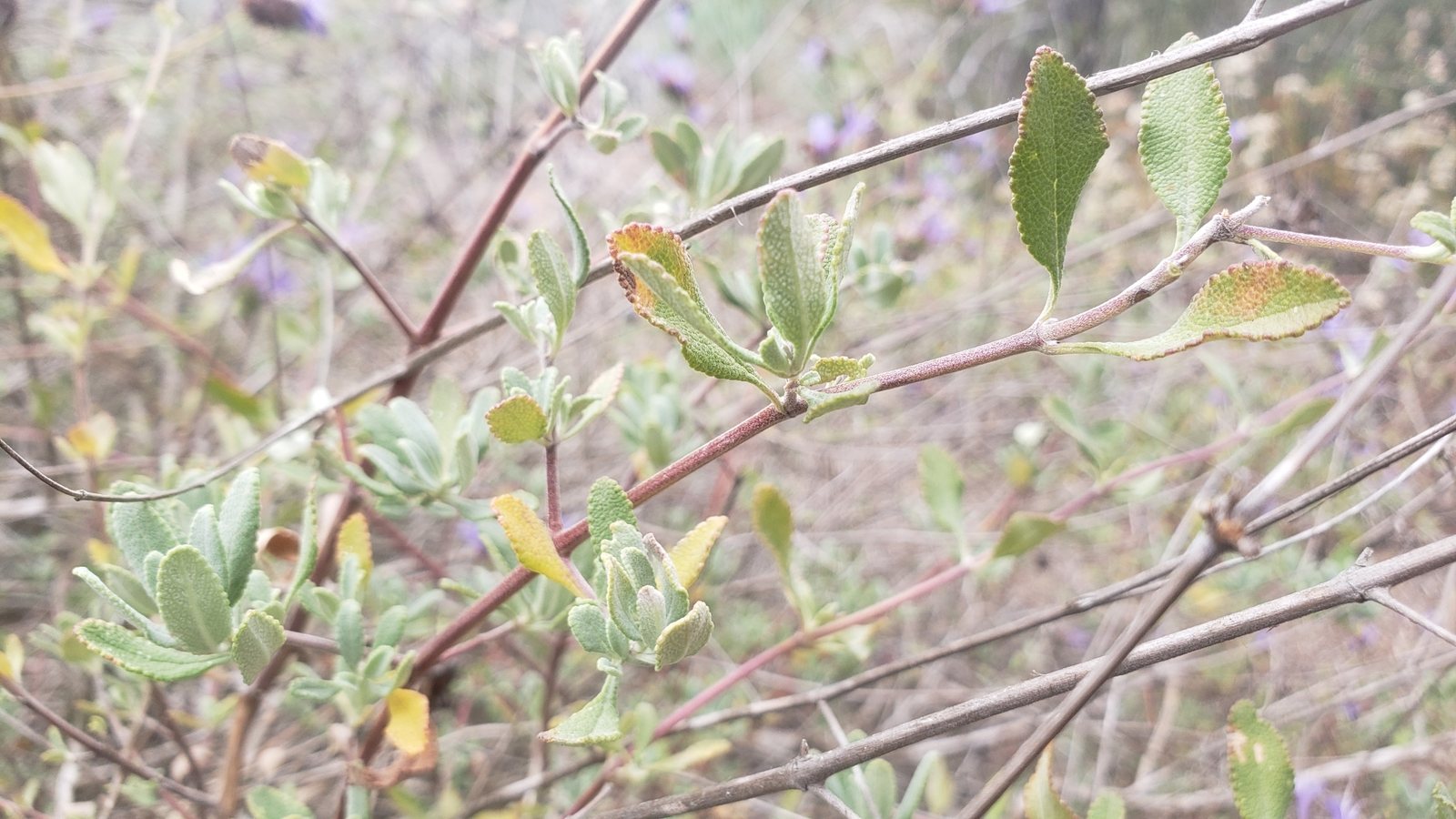
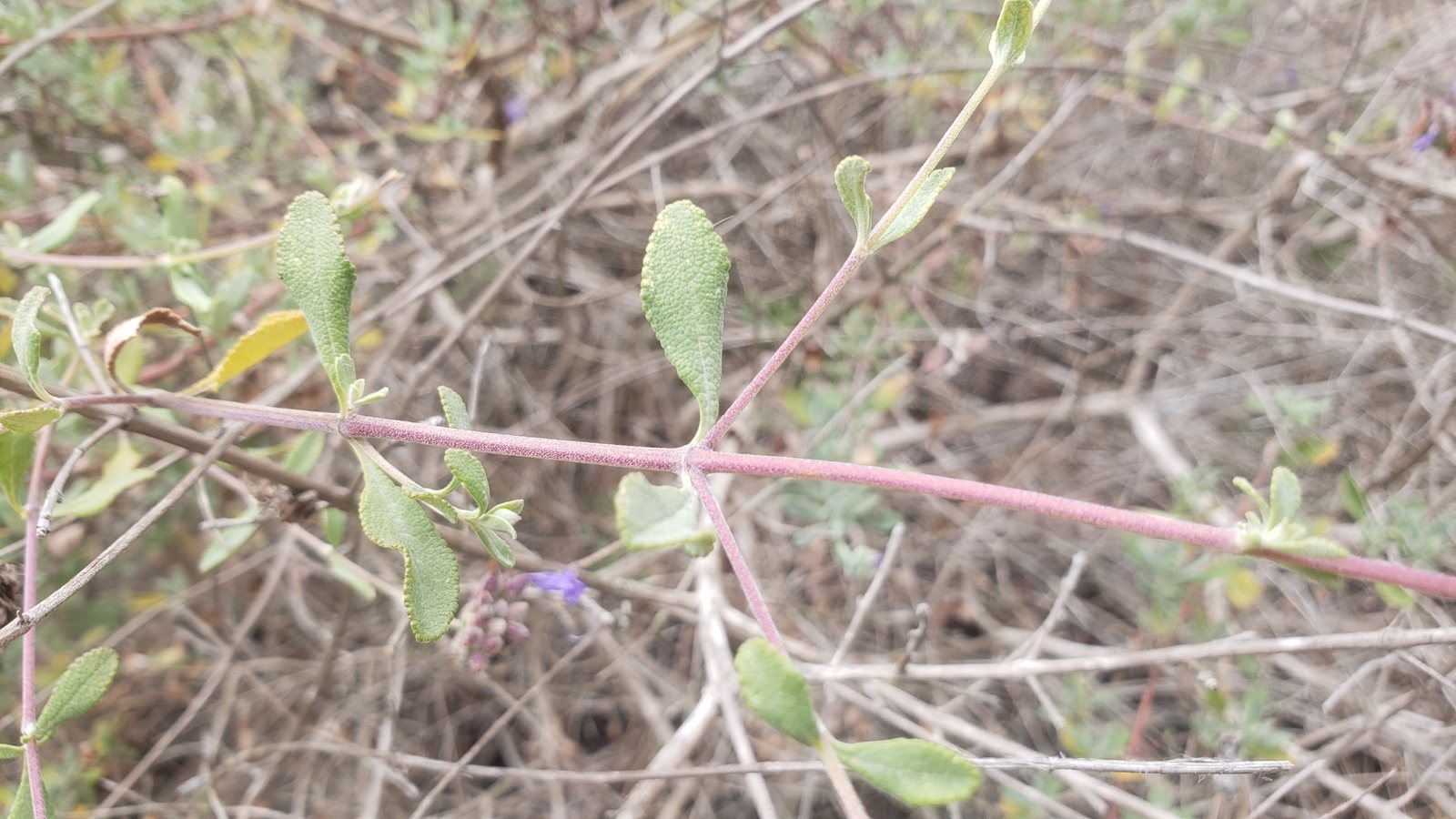
- Evergreen. Strongly aromatic, grey-green, wrinkled leaves with finely toothed edges; may thin or partly drop during severe drought or cold.
- Growth
- Moderate to fast in suitable conditions.
- Care needed
- Low
The year at a glance
- Pollinators
- Deer resistant
- Drought tolerant
- Heat tolerant
- Wildlife
- Low allergen
- Fragrant
| J | F | M | A | M | J | J | A | S | O | N | D | |
|---|---|---|---|---|---|---|---|---|---|---|---|---|
| Flowers | ||||||||||||
| Fruit | ||||||||||||
| Plant |
Northern hemisphere months. In Australia, shift them by six.
- Difficulty
- Moderate
- Toughness
- Fairly tough
Will it suit your garden?
Pick your zone, country, light and whether you have pets.
Full sun is 6 or more hours of direct sun a day, part shade 3 to 6 hours, shade under 3.
How it grows
Planting day
1.6 ft (0.5 m)
After 1 year
2.2 ft (0.68 m)
After 2 years
2.8 ft (0.85 m)
After 3 years
3 ft (1 m)
After 5 years
4 ft (1.2 m)
full size
About 4 years to full size.
From a typical nursery size, at an average rate for this kind of plant. A rule of thumb, not a forecast.
Good to know
- Cats and dogs
- Safe
- Native to
- the US
- Growth rate
- Fast
Care
Jobs through the year
- WaterApr–May, Sep–Oct, every 21 days
- For established ground plants in suitable climates, water only if the root zone is dry; young plants and pots need closer checks.
- WaterJun–Aug, every 30 days
- Water established ground plants only during prolonged drought; let soil dry fully and avoid wetting the crown.
- PruneApr–May
- Remove winter damage once growth resumes, cutting only to healthy leafy wood.
- PruneJul–Aug
- After flowering, remove spent stems and lightly shorten leafy shoots; avoid bare old wood.
- MulchMay
- Apply a thin gravel mulch, leaving the woody crown exposed.
- ProtectJan–Apr, Oct–Dec
- Not reliably hardy in zones 6–7; overwinter a freely draining pot in bright, frost-free shelter.
- Plant with the crown at soil level in a freely draining bed; use a mound where drainage is marginal.
- Water deeply during establishment, allowing the root zone to dry between waterings.
- Avoid frequent summer watering once established, especially in heavy soil.
- Use a light gravel mulch and keep it clear of the woody crown.
- Do not routinely fertilize; rich feeding encourages soft, sprawling growth.
- In cold or winter-wet climates, grow in a well-drained container and overwinter in a bright, sheltered, frost-free place.
Pruning. After flowering, remove spent flower stems and lightly shorten leafy shoots to maintain a rounded shape. Remove dead or frost-damaged growth in spring, but avoid hard cuts into bare old wood, which may not resprout.
Through the year
- Spring
- Check for winter damage and prune back to healthy leafy growth once severe frosts have passed.
- Spring
- Plant in colder suitable regions so roots can establish before winter.
- Late spring
- Take softwood cuttings from healthy, non-flowering shoots.
- Early summer
- After flowering, trim spent stems and lightly shape the shrub.
- Summer
- Check new plants for dry roots; water deeply when needed rather than giving frequent light sprinklings.
- Autumn
- Plant in mild, dry-summer climates as cooler weather and seasonal rain return.
- Winter
- Keep drainage outlets clear and protect container plants from prolonged freezing and excessive rain.
In the garden
- Group on sunny slopes with California buckwheat and manzanita for a dry, wildlife-friendly planting.
- Use as a loose, aromatic edging beside a wide path, allowing room for its mature spread.
- Combine with lavender and rockrose in gravel gardens with similar low watering needs.
- Repeat among boulders and open gravel to give structure and blue-violet seasonal colour.
Garden styles it suits: California native, Mediterranean, Desert / xeriscape, Dry gravel garden, Pollinator garden and Sensory garden.
Plant it with: California buckwheat, Manzanita, Deer grass, California poppy, Lavender and Rockrose.
Wildlife: Flowers attract bees, butterflies and hummingbirds where these occur. Seed heads can provide food for small birds; the aromatic foliage is often avoided by deer, though browsing is still possible.
Problems to watch for
- Root and crown rot in wet soil: improve drainage, keep mulch away from the crown and stop frequent irrigation; replace badly affected plants.
- Cold damage: choose a sheltered position and remove damaged growth in spring; use containers where winters are too cold.
- Leggy growth or splitting: provide full sun, avoid rich feeding and trim lightly after flowering rather than cutting hard into old wood.
- Aphids on young shoots: dislodge with a gentle jet of water and leave minor infestations for natural predators.
Safety
Not known to be toxic to people, cats, dogs or horses, although species-specific safety information is limited. No part is established as poisonous; do not assume it is an edible substitute for culinary sage, and keep concentrated oils away from pets.
Easily confused with
Purple sage (Salvia leucophylla)
Usually has paler pink-lavender flowers and broader, greyer leaves with conspicuously whitish undersides; Cleveland sage generally has deeper blue-violet flowers.
Black sage (Salvia mellifera)
Has darker green foliage and usually white to very pale lavender flowers, rather than Cleveland sage's richer blue-violet flowers.
The name
The botanical epithet clevelandii honours Daniel Cleveland, a nineteenth-century San Diego naturalist, not the city of Cleveland.
Propagation. Take softwood or semi-ripe cuttings from non-flowering shoots in late spring or summer. Seed can also be sown, but plants may vary and can hybridize with other nearby sages; use cuttings to preserve a named selection.
Checked against open data
- Accepted botanical name
- Salvia clevelandii
- In the US and Canada
- Native in the lower 48 states.
- Native range
- California and Mexico Northwest.
Sources: GBIF (CC BY 4.0), USDA PLANTS and Trefle (CC BY 4.0). The care and design notes are LandscapeGPT's own.
See it in your own yard.
Upload a photo of your yard and see it redesigned with plants that suit your climate, each checked against your zone.