Sticky monkeyflower
Diplacus aurantiacus. Family Phrymaceae. Shrub.
Also called Bush monkeyflower, Orange bush monkeyflower, Mimulus aurantiacus.
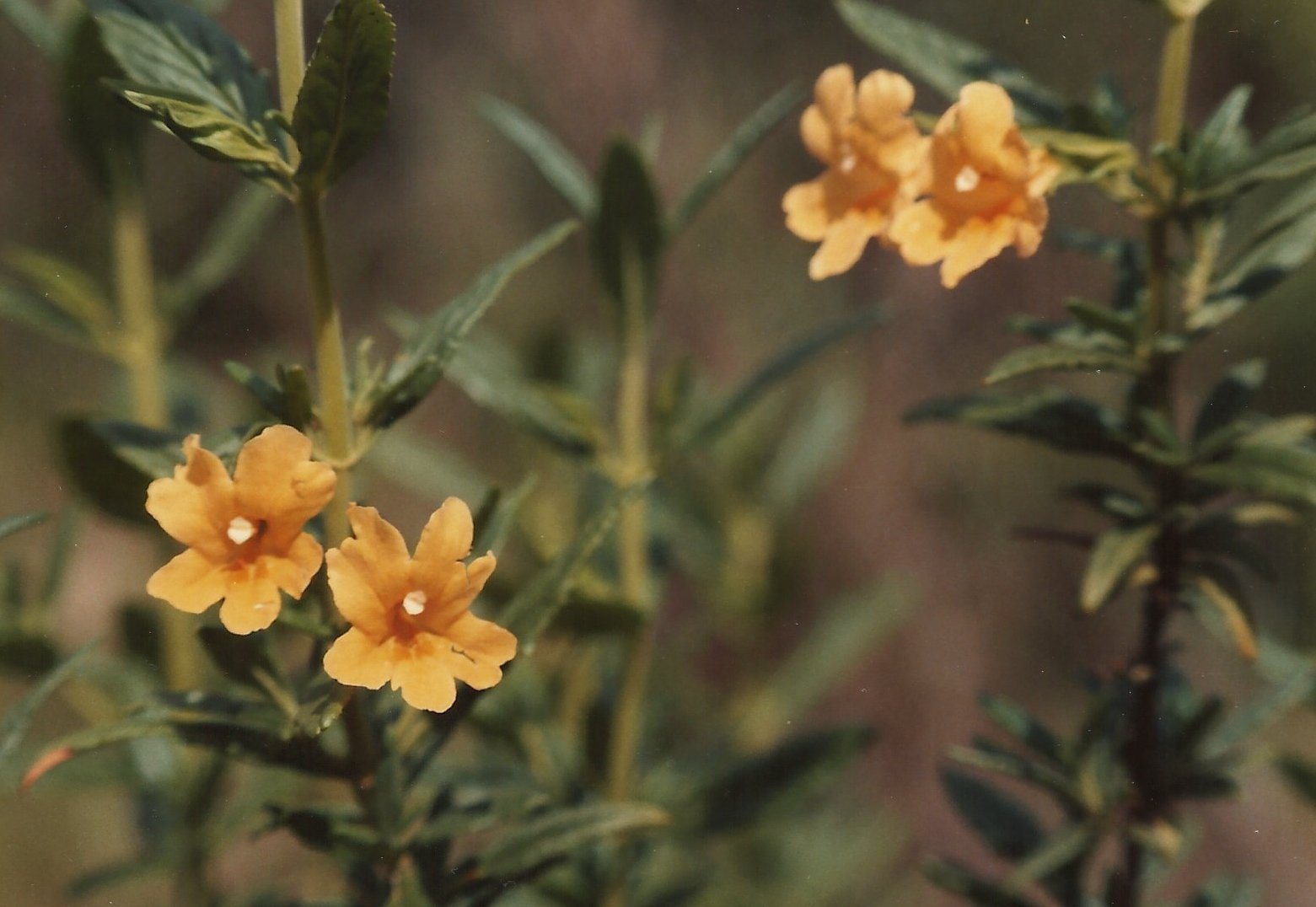
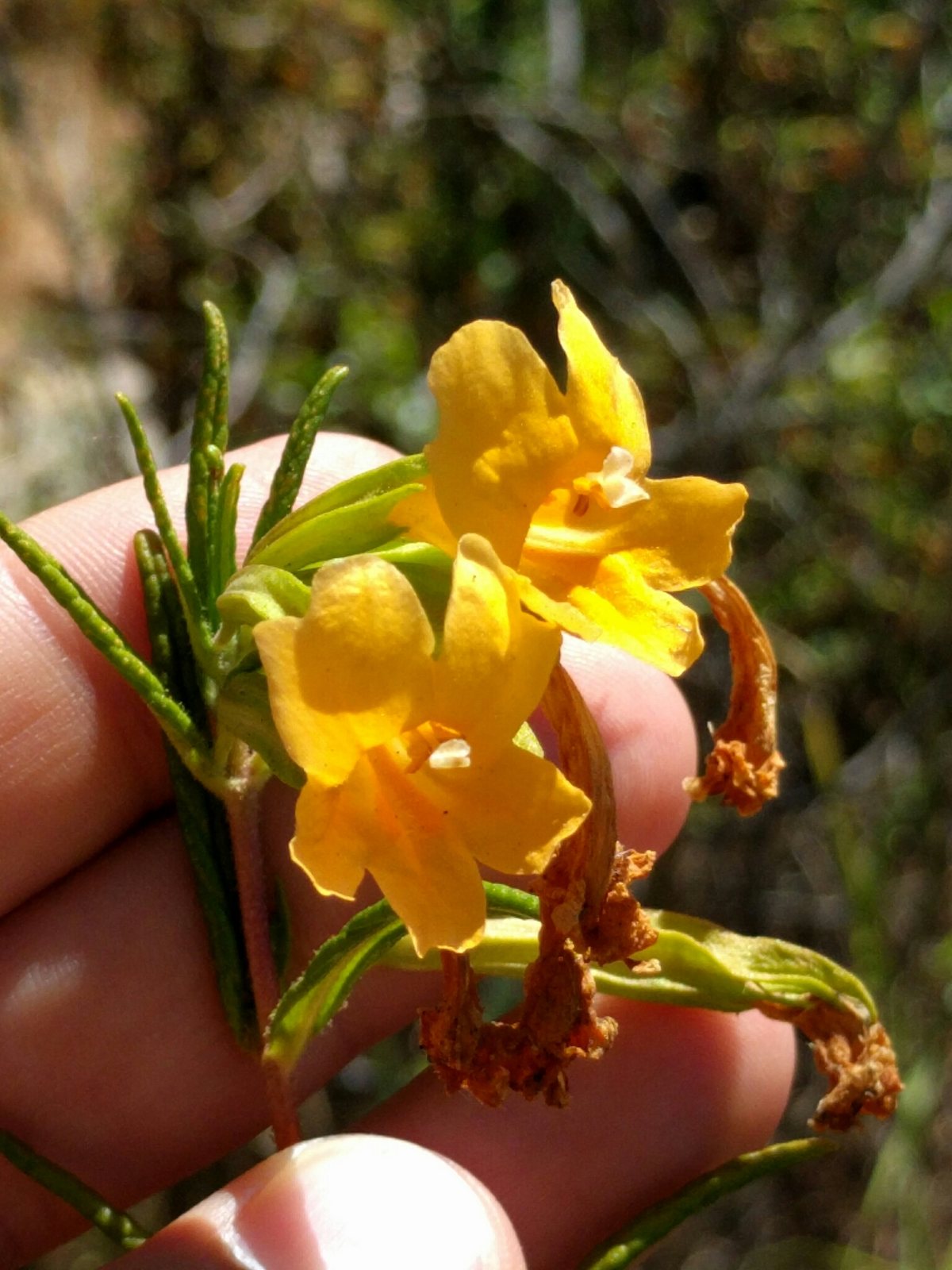
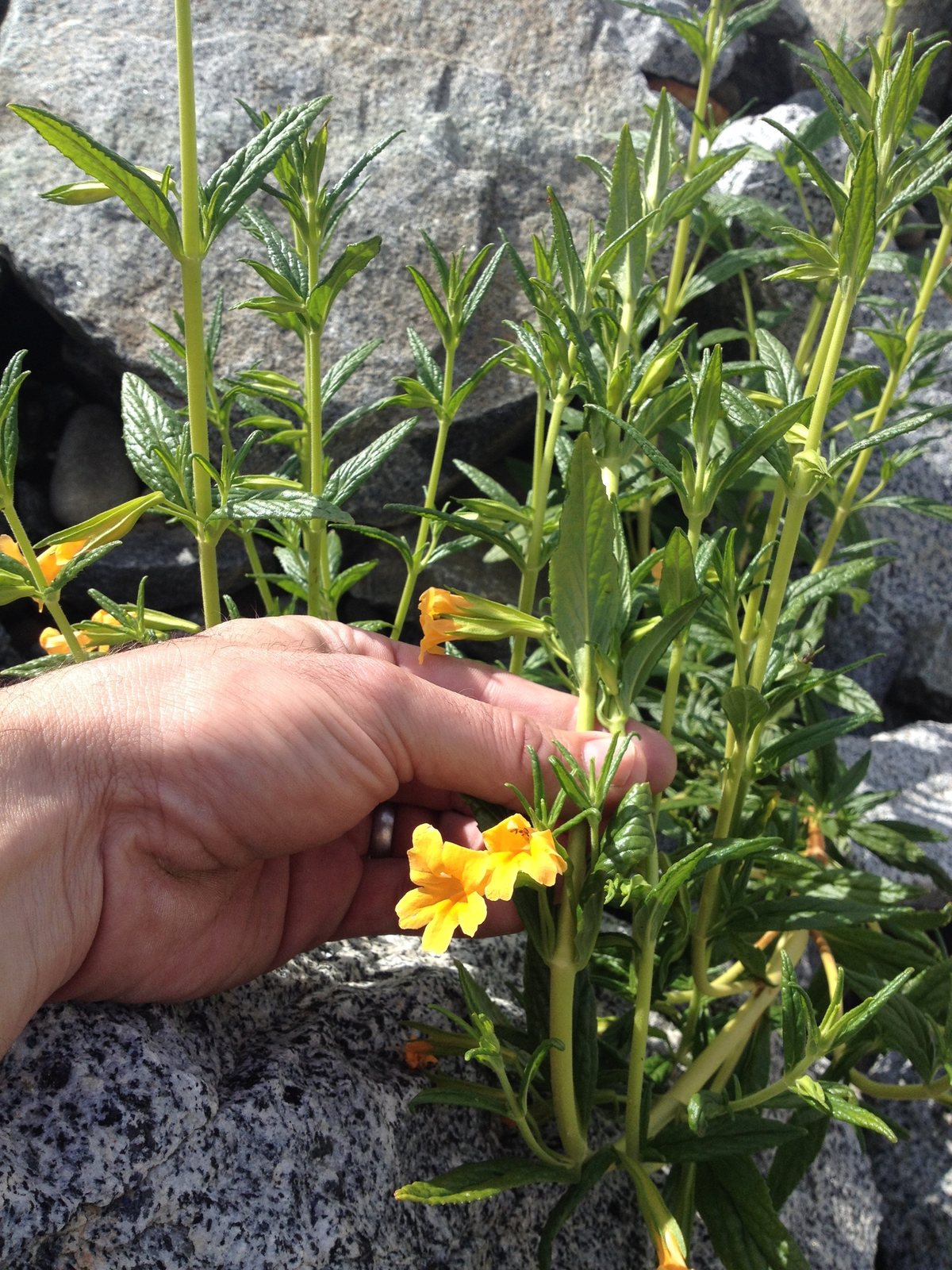
Sticky monkeyflower is a small, woody shrub from western North America, grown for its orange, funnel-shaped flowers and sticky green leaves. It suits sunny, dry gardens with excellent drainage, especially in mild coastal climates. In colder parts of the United States, Canada and the United Kingdom, grow it in a container that can be sheltered from hard frost.
At a glance
- Sun
- Full sun; light afternoon shade is helpful in very hot inland gardens.
- Water
- Low once established. Water young plants regularly while roots develop, then water deeply but infrequently; avoid keeping the soil wet during summer dormancy.
- Soil
- Well-drained sandy, gravelly or rocky soil. Tolerates lean ground but struggles in heavy, persistently wet soil.
- Height
- 2-5 ft (0.6-1.5 m)
- Spread
- 2-4 ft (0.6-1.2 m)
- Flowers
- Mainly spring to early summer, sometimes repeating in autumn after rain; usually apricot-orange to orange, with yellow forms also occurring.
- Foliage
- Evergreen. Narrow, dark green, resinous leaves with a sticky surface and often rolled edges. Leaves may thin or drop during prolonged summer drought or cold weather.
- Growth
- Moderate
- Care needed
- Low
The year at a glance
- Pollinators
- Deer resistant
- Drought tolerant
- Heat tolerant
- Wildlife
- Low allergen
| J | F | M | A | M | J | J | A | S | O | N | D | |
|---|---|---|---|---|---|---|---|---|---|---|---|---|
| Flowers | ||||||||||||
| Plant |
Northern hemisphere months. In Australia, shift them by six.
- Difficulty
- Moderate
- Toughness
- Fairly tough
Will it suit your garden?
Pick your zone, country, light and whether you have pets.
Full sun is 6 or more hours of direct sun a day, part shade 3 to 6 hours, shade under 3.
How it grows
Planting day
1.6 ft (0.5 m)
After 1 year
2 ft (0.61 m)
After 2 years
2.4 ft (0.72 m)
After 3 years
2.7 ft (0.83 m)
After 5 years
3 ft (1.1 m)
full size
About 5 years to full size.
From a typical nursery size, at an average rate for this kind of plant. A rule of thumb, not a forecast.
Good to know
- Cats and dogs
- Safe
- Native to
- the US
- Growth rate
- Moderate
Care
Jobs through the year
- WaterApr–May, Sep–Oct, every 21 days
- Water established plants if dry; water new plants more frequently while roots develop.
- WaterJun–Aug, every 30 days
- Water sparingly only when needed; do not force dormant plants into growth with frequent irrigation.
- MulchMay
- Apply a thin gravel mulch, keeping the woody crown clear.
- PruneApr–May
- Once growth resumes, remove dead stems without cutting into healthy leafless old wood.
- PruneJul–Aug
- After the main flowering flush, lightly shorten flowering shoots to maintain shape.
- ProtectJan–Apr, Oct–Dec
- Not hardy in zones 6–7; overwinter containers in bright, cool, frost-free shelter, keeping compost barely moist.
- Plant in spring after hard frosts, or in autumn where winters are mild and soil drains freely.
- Water during establishment, allowing the upper soil to dry between waterings.
- Reduce watering once established; do not try to reverse summer dormancy with frequent irrigation.
- Usually omit fertiliser; rich feeding encourages soft, sprawling growth.
- Use a thin gravel mulch and keep it clear of the woody crown.
- In cold regions, overwinter container plants in a bright, cool, frost-free place.
Pruning. After the main flowering flush, shorten flowering shoots lightly to keep the shrub compact. Remove dead stems in spring, but avoid cutting hard into old, leafless wood.
Through the year
- Spring
- Check for winter damage and remove dead stems once new growth shows which branches are alive.
- Spring
- Plant after hard frosts and water thoroughly to settle the roots.
- Late spring
- Watch tender shoots for aphids and rinse off small colonies with water.
- After flowering
- Lightly shorten spent flowering shoots to maintain a compact shape.
- Summer
- Allow established plants to rest in hot, dry weather; avoid frequent watering.
- Autumn
- Move container plants under bright, frost-free cover before hard frosts in cold regions.
- Winter
- Keep sheltered pots barely moist and ensure outdoor plants are not sitting in saturated soil.
In the garden
- Plant on sunny banks among rocks, where its loose growth softens edges without needing regular irrigation.
- Combine with California sagebrush, buckwheat and California fuchsia in a dry native planting.
- Use beside paths or patios where the flowers can be viewed closely, allowing room for its spreading branches.
- Grow in a freely draining container on a sunny terrace where winter shelter is available.
Garden styles it suits: California native, Mediterranean, Desert / xeriscape, Dry gravel garden, Wildlife garden and Coastal.
Plant it with: California sagebrush, California buckwheat, California fuchsia, Purple needlegrass, Deer grass and White sage.
Wildlife: Flowers provide nectar for hummingbirds in its native range and are also visited by bees and other insects. It can serve as a larval host for some checkerspot butterflies.
Problems to watch for
- Root or crown rot in wet soil: improve drainage, keep mulch away from the crown and reduce irrigation, especially during summer rest.
- Frost damage: choose a sheltered position and move container plants into frost-free cover before hard freezes.
- Aphids on young shoots: rinse off with water; use insecticidal soap if colonies persist, avoiding open flowers and hot sunshine.
- Sparse summer foliage: this can be a normal drought response rather than disease; check soil moisture before adding water.
Safety
Not known to be toxic to people, cats, dogs or horses. Species-specific safety information is limited, and no particular poisonous part is established; it is an ornamental, not a food plant.
Easily confused with
Red bush monkeyflower (Diplacus puniceus)
Usually has red to scarlet flowers rather than the typical orange flowers of sticky monkeyflower. Garden hybrids blur this distinction, so flower colour alone is not always conclusive.
Seep monkeyflower (Erythranthe guttata)
A soft-stemmed plant of wet ground, with broad leaves and yellow, often spotted flowers; sticky monkeyflower has woody stems and narrow, resinous leaves.
The name
The common name refers to the sticky leaves and fancifully face-like flowers, while aurantiacus means orange-coloured.
Propagation. Take non-flowering softwood or semi-ripe cuttings in spring or early summer and root them in a freely draining medium. Seed can also be surface-sown in spring; seedlings may vary, especially when collected from garden hybrids.
Checked against open data
- Accepted botanical name
- Diplacus aurantiacus
- In the US and Canada
- Native in the lower 48 states.
- Native range
- California and Oregon.
- Measured
- Average height 136 cm.
Sources: GBIF (CC BY 4.0), USDA PLANTS and Trefle (CC BY 4.0). The care and design notes are LandscapeGPT's own.
See it in your own yard.
Upload a photo of your yard and see it redesigned with plants that suit your climate, each checked against your zone.