Jujube
Ziziphus jujuba. Family Rhamnaceae. Tree.
Also called Chinese date, Chinese jujube, Red date.
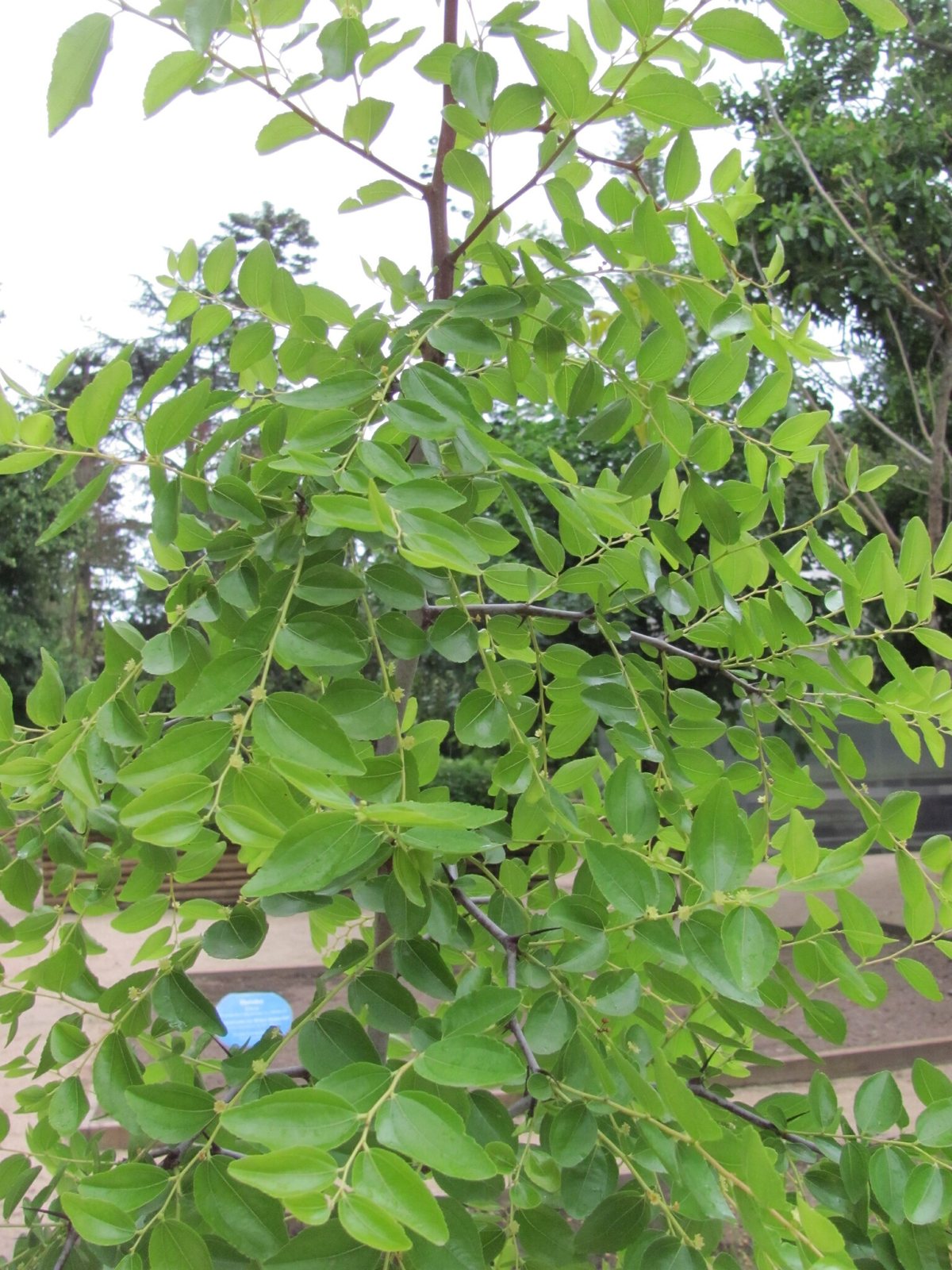
Jujube is a deciduous fruit tree with glossy leaves, often thorny branches and small fruits eaten crisp or dried until chewy. It suits gardens with long, hot summers; winter survival does not guarantee ripe fruit, particularly in the UK and cooler parts of Canada.
At a glance
- Sun
- Full sun; choose a warm, sheltered position for reliable fruit ripening.
- Water
- Water regularly while establishing and during fruit development. Established trees tolerate drought, but prolonged dryness reduces fruit size and yield.
- Soil
- Well-drained soil, including sandy, stony and alkaline soils; avoid waterlogged ground.
- Height
- 15-30 ft (4.6-9.1 m)
- Spread
- 15-25 ft (4.6-7.6 m)
- Flowers
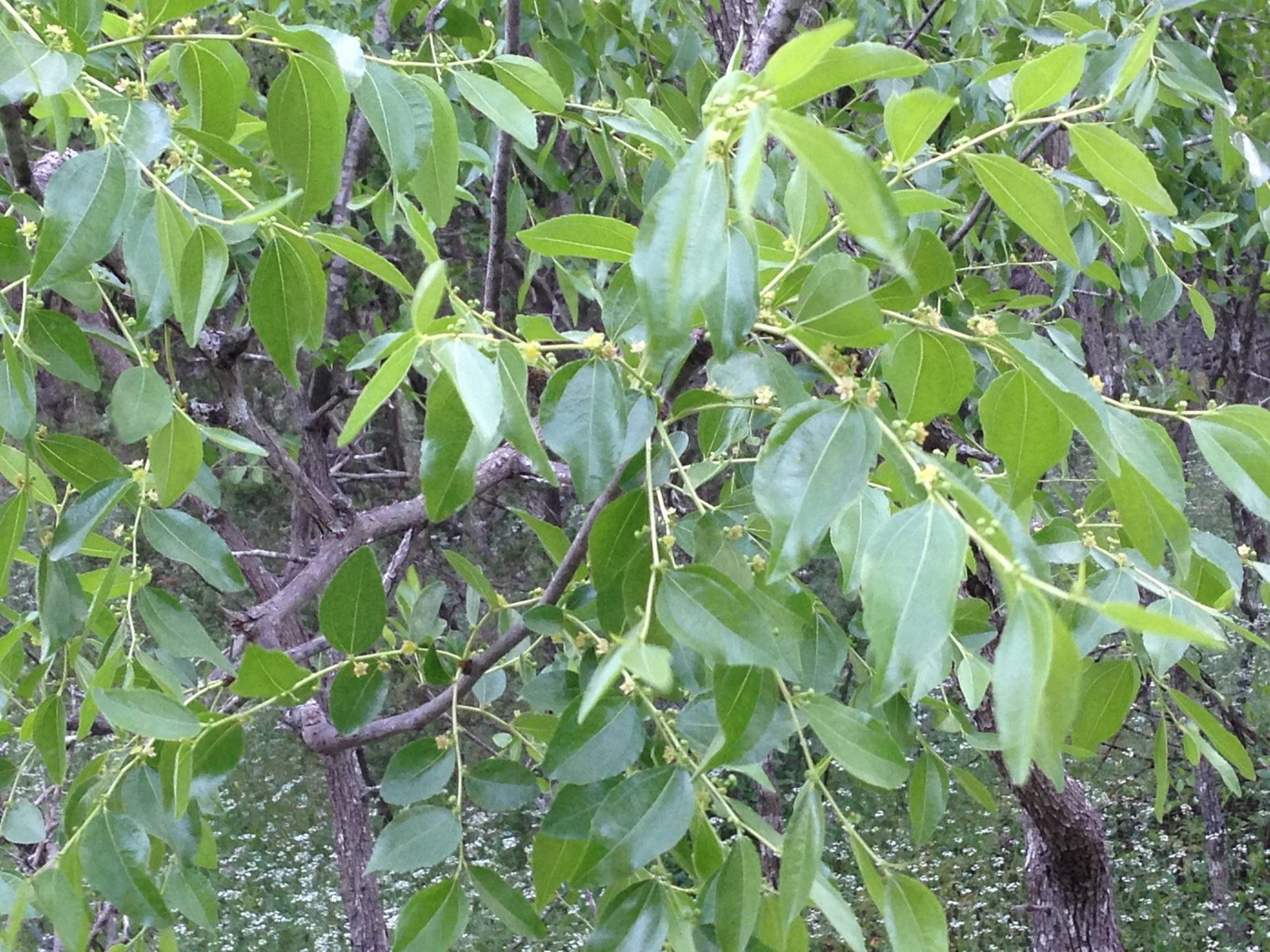
- Small, inconspicuous yellow-green flowers in late spring and summer.
- Foliage
- Small, glossy green leaves with three prominent veins from the base; usually yellow in autumn.
- Growth
- Moderate, sometimes fast in hot summers with adequate water.
- Care needed
- Medium
The year at a glance
- Pollinators
- Drought tolerant
- Heat tolerant
- Disease resistant
- Wildlife
- Low allergen
- Edible
| J | F | M | A | M | J | J | A | S | O | N | D | |
|---|---|---|---|---|---|---|---|---|---|---|---|---|
| Flowers | ||||||||||||
| Fruit | ||||||||||||
| Plant |
Northern hemisphere months. In Australia, shift them by six.
- Difficulty
- Moderate
- Toughness
- Very tough
Will it suit your garden?
Pick your zone, country, light and whether you have pets.
Full sun is 6 or more hours of direct sun a day, part shade 3 to 6 hours, shade under 3.
How it grows
Planting day
7 ft (2 m)
After 1 year
8 ft (2.3 m)
After 2 years
9 ft (2.6 m)
After 3 years
10 ft (2.9 m)
After 5 years
12 ft (3.5 m)
About 16 years to full size.
From a typical nursery size, at an average rate for this kind of plant. A rule of thumb, not a forecast.
Good to know
- Cats and dogs
- Safe
- In the garden
- Spreads vigorously: plan to contain it.
- Growth rate
- Fast
Care
Jobs through the year
- WaterApr–May, Oct, every 21 days
- Water established trees only if soil is dry; young trees need more frequent watering.
- WaterJun–Sep, every 14 days
- Water established trees deeply during dry spells to support fruit size and reduce splitting.
- FeedApr
- Feed lightly only if growth is weak; excess nitrogen reduces fruiting.
- MulchMay
- Refresh organic mulch around the root area, keeping the trunk clear.
- PruneFeb–Mar
- Prune lightly before growth starts to remove damaged and crowded wood; wear gloves for thorns.
- PruneMay–Sep
- Remove root suckers at their origin without unnecessarily disturbing surrounding roots.
- ProtectAug–Oct
- Use wildlife-safe exclusion netting if birds or mammals damage ripening fruit.
- HarvestAug–Oct
- Pick reddish-brown-patched fruit for crisp eating or wrinkling brown fruit for drying, before frost.
- ProtectOct–Nov
- Remove fallen and spoiled fruit to reduce pest carryover.
- Plant where the tree receives all-day sun and plenty of summer heat.
- Water deeply during dry spells for the first two growing seasons, then during prolonged drought and fruit swelling.
- Mulch the root area, keeping mulch clear of the trunk.
- Feed lightly in spring only if growth is weak; excess nitrogen encourages shoots rather than fruit.
- Remove root suckers promptly, especially those arising below a graft.
- For better fruit set, plant two compatible cultivars if space allows; self-fertility varies.
Pruning. Prune in late winter or early spring before growth starts, removing dead, crossing and crowded branches and establishing a clear framework. Keep pruning light once established, and wear gloves when handling thorny shoots.
Harvest
Pick fruit in late summer or autumn when it changes from green to yellow-green with reddish-brown patches; at this stage it is crisp and suitable for fresh eating. For drying, allow it to become fully reddish-brown and begin wrinkling, provided weather remains dry. Grafted trees usually produce their first worthwhile crop about 3-5 years after planting; seedlings take longer and vary in quality.
Through the year
- Late winter
- Prune lightly while dormant, removing damaged wood and crowded branches.
- Spring
- Plant container-grown trees once the soil is workable and severe frost has passed; water thoroughly.
- Late spring
- Renew mulch and check for root suckers; jujube leafs out late, so do not assume a bare tree is dead.
- Summer
- Water during prolonged dry weather, especially while fruit is swelling.
- Late summer
- Check fruit colour and texture, and begin picking fruit for crisp eating.
- Autumn
- Finish harvesting before damaging frost and remove fallen or spoiled fruit.
In the garden
- Use as a small orchard tree in a sunny, heat-retaining part of the garden.
- Train a clear trunk to provide light shade over low, sun-tolerant planting.
- Include in an edible landscape with other drought-tolerant fruit trees.
- Place in a gravel garden with herbs, keeping thorny branches away from paths and seating.
Garden styles it suits: Backyard orchard, Edible landscape, Homestead, Mediterranean, Desert / xeriscape and Chinese scholar garden.
Plant it with: Lavender, Rosemary, Thyme, Sage, Yarrow and Pomegranate.
Wildlife: Flowers attract bees and other small insects. Birds and mammals may eat ripe fruit; use wildlife-safe exclusion netting where necessary.
Problems to watch for
- Poor fruiting or unripe fruit: provide the hottest sunny position available, choose an early-ripening cultivar and consider a second compatible cultivar.
- Persistent root suckers: remove shoots at their point of origin; cutting roots or disturbing the root zone can encourage more suckering.
- Fruit splitting after rain: maintain reasonably even soil moisture and harvest ripe fruit promptly.
- Fruit flies in affected regions, including parts of Australia: use locally approved monitoring, exclusion netting and fallen-fruit sanitation.
Safety
Not known to be toxic to people, cats, dogs or horses. The ripe flesh is edible, but the hard stones can cause choking or digestive obstruction if swallowed; thorns can cause puncture injuries.
Where it spreads. Can spread beyond the planting site through persistent root suckers, including in warm parts of the southern United States and Australia. Avoid planting beside natural vegetation where suckers cannot be controlled. It is a different species from Indian jujube (Ziziphus mauritiana), a serious invasive plant in northern Australia.
Easily confused with
Indian jujube (Ziziphus mauritiana)
Usually evergreen or briefly deciduous in warm climates, with conspicuously pale, felted leaf undersides; Chinese jujube has largely hairless leaves and a pronounced winter dormancy.
Christ's thorn jujube (Ziziphus spina-christi)
A warm-climate, usually evergreen tree with smaller, generally round fruits; Chinese jujube is deciduous and many fruit cultivars have larger, oval fruits.
The name
Jujuba and the common name jujube derive from the Latin name ziziphum for the fruit.
Propagation. Named fruit cultivars are usually grafted or budded onto seedling rootstocks. Seed-grown trees vary in fruit quality and take longer to crop; root suckers from a grafted tree usually belong to the rootstock, not the named cultivar.
Checked against open data
- Accepted botanical name
- Ziziphus jujuba
- In the US and Canada
- Introduced in the lower 48 states.
- Native range
- China North-Central, China Southeast, Inner Mongolia, Korea, Manchuria and Xinjiang.
- Measured
- Soil pH 7 to 7.5. Average height 500 cm.
Sources: GBIF (CC BY 4.0), USDA PLANTS and Trefle (CC BY 4.0). The care and design notes are LandscapeGPT's own.
See it in your own yard.
Upload a photo of your yard and see it redesigned with plants that suit your climate, each checked against your zone.