Kentia palm
Howea forsteriana. Family Arecaceae. Tree.
Also called Thatch palm, Sentry palm.
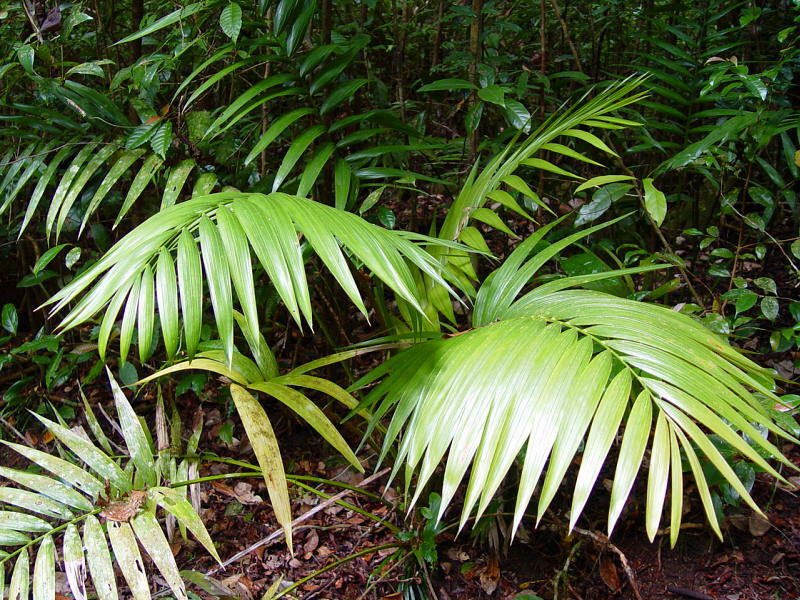
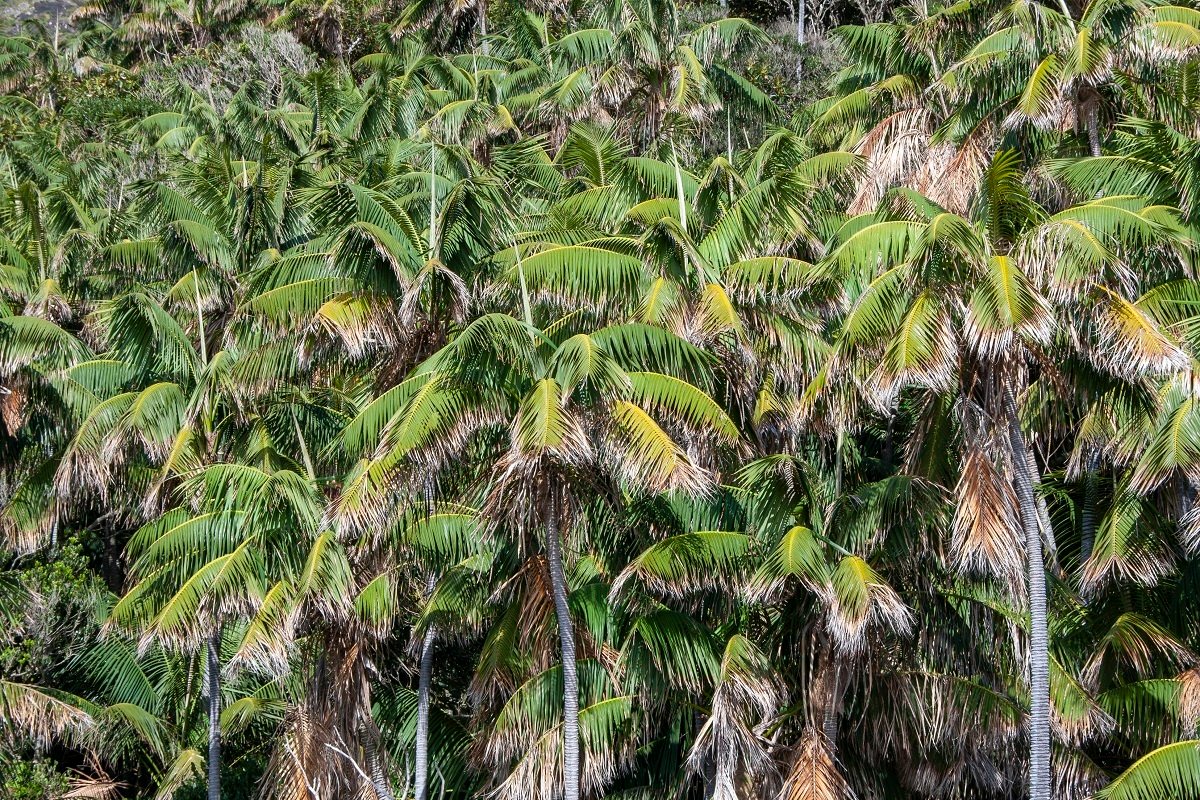
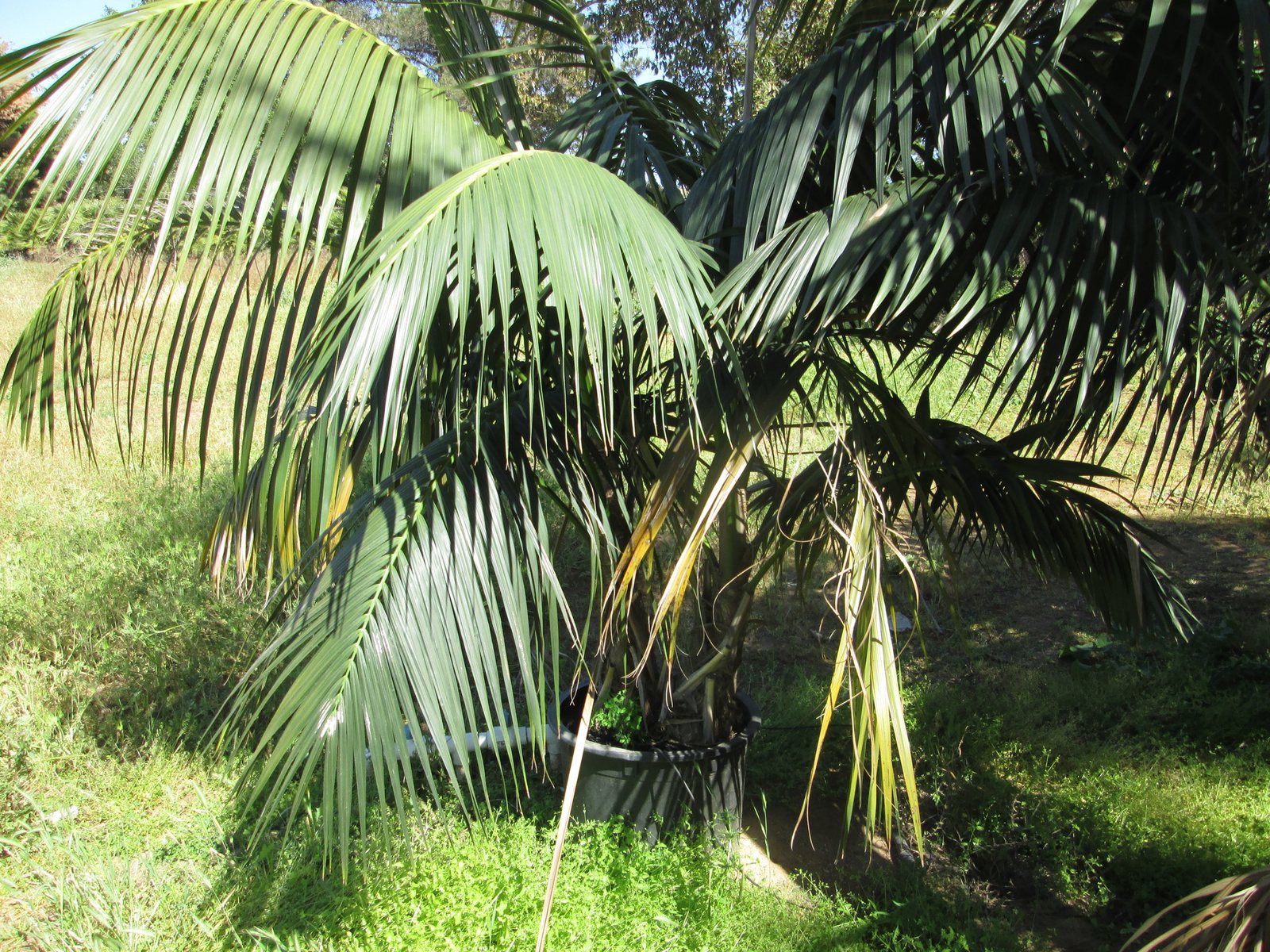
Kentia palm is a slow-growing, evergreen palm from Lord Howe Island, Australia, with a slender trunk and arching, feather-like fronds. Grow it outdoors in mild, largely frost-free gardens, or in a container indoors or under glass in colder regions. It tolerates indoor light levels better than many palms but needs space for its spreading leaves.
At a glance
- Sun
- Partial shade outdoors; established, acclimatised palms tolerate full sun in mild coastal climates. Indoors, provide bright, indirect light.
- Water
- Water thoroughly, then let the surface soil begin to dry before watering again. Keep the root ball lightly moist rather than wet, and reduce watering in winter.
- Soil
- Well-drained soil with organic matter; in containers, use a free-draining potting mix and a pot with drainage holes.
- Height
- 20-40 ft (6-12 m) outdoors, occasionally taller; usually 6-10 ft (1.8-3 m) indoors
- Spread
- 10-15 ft (3-4.6 m) outdoors; usually 4-6 ft (1.2-1.8 m) indoors
- Foliage
- Evergreen. Long, arching, dark green fronds with narrow, drooping leaflets. Each palm has one trunk; pots containing several stems usually hold several separate seedlings.
- Growth
- Slow, especially indoors
- Care needed
- Low
The year at a glance
- Wildlife
| J | F | M | A | M | J | J | A | S | O | N | D | |
|---|---|---|---|---|---|---|---|---|---|---|---|---|
| Plant |
Northern hemisphere months. In Australia, shift them by six.
- Difficulty
- Moderate
- Toughness
- Fairly tough
Will it suit your garden?
Pick your zone, country, light and whether you have pets.
Full sun is 6 or more hours of direct sun a day, part shade 3 to 6 hours, shade under 3.
How it grows
Planting day
7 ft (2 m)
After 1 year
7 ft (2.2 m)
After 2 years
8 ft (2.4 m)
After 3 years
9 ft (2.7 m)
After 5 years
10 ft (3.1 m)
About 32 years to full size.
From a typical nursery size, at an average rate for this kind of plant. A rule of thumb, not a forecast.
Good to know
- Cats and dogs
- Safe
- Growth rate
- Slow
Care
Jobs through the year
- WaterApr–May, Sep–Oct, every 10 days
- Water when the surface begins to dry; these intervals suit sheltered pots in this climate.
- WaterJun–Aug, every 7 days
- Water thoroughly when the surface begins to dry; check outdoor pots more often in heat.
- WaterJan–Mar, Nov–Dec, every 14 days
- Indoors, water only as the surface dries; keep the root ball lightly moist, never wet.
- FeedApr–Aug, every 30 days
- Feed lightly with a suitable palm fertilizer at the label rate while actively growing.
- PruneMay–Aug
- Remove only fully brown fronds; never cut the central growing point.
- ProtectJan–May, Sep–Dec
- Keep indoors in bright indirect light during cold weather; summer outdoors only with reliably warm nights.
- ProtectJun
- Acclimatize gradually to sheltered outdoor shade, avoiding sudden direct sun.
- Check moisture before watering; empty saucers and cachepots after excess water has drained.
- Feed outdoor palms with a slow-release palm fertiliser containing micronutrients during the growing season, following the label.
- Feed indoor plants lightly during spring and summer; do not feed plants that are not actively growing.
- Mulch outdoor soil to conserve moisture, keeping mulch clear of the trunk.
- Repot only when roots fill the container, moving up one pot size and disturbing the roots as little as possible.
- Acclimatise plants gradually to brighter outdoor light and bring container plants under cover before cold nights.
Pruning. Remove fully brown fronds at any time, cutting the leaf stalk close to the trunk without damaging it. Leave green or partly green fronds in place, and never cut the central growing point or shorten the trunk.
Through the year
- Spring
- Check drainage and repot only if the container is crowded with roots.
- Spring
- Begin light feeding as new growth resumes.
- Early summer
- Move indoor plants outside only when nights are reliably warm; start in sheltered shade.
- Summer
- Check soil moisture regularly and inspect leaf undersides for mites and scale.
- Autumn
- Bring container plants into a bright, frost-free position before cold weather.
- Winter
- Water less often, avoid cold draughts and keep foliage away from heaters.
In the garden
- Use as a single specimen in a sheltered courtyard, allowing room for the arching crown.
- Plant a loose group in a frost-free garden above shade-tolerant foliage plants for a layered canopy.
- Place in a large container beside a sheltered entrance or terrace for year-round structure.
- Use indoors in a bright corner with enough clearance to keep the fronds away from walls and walkways.
Garden styles it suits: Modern tropical, Coastal, Modern courtyard, Mid-century modern, Victorian and Architectural minimal.
Plant it with: Cast iron plant, Bird's nest fern, Clivia, Liriope and Bromeliads.
Wildlife: Mature outdoor palms can provide shelter and perching places for birds. Flowering and fruiting are uncommon indoors.
Problems to watch for
- Spider mites cause fine stippling, dull leaves and sometimes webbing: rinse foliage, including leaf undersides, and treat persistent infestations with a labelled insecticidal soap.
- Scale insects and mealybugs leave bumps, cottony deposits or sticky honeydew: isolate container plants, wipe off small infestations and use a labelled treatment if needed.
- Root rot causes yellowing and decline in persistently wet soil: improve drainage, empty standing water and allow the surface to dry slightly between waterings.
- Brown tips or scorched patches can follow drying out, fertiliser salt buildup or sudden strong sun: check moisture, flush freely draining pots occasionally and increase light exposure gradually.
Safety
Not known to be toxic to cats, dogs, horses or people. No part is recognised as poisonous, but the leaves and fruit are not intended as food.
Easily confused with
Belmore sentry palm (Howea belmoreana)
Its fronds are more upright and strongly curved, with leaflets held in a more pronounced V; Kentia palm has a looser, more spreading crown.
Golden cane palm (Dypsis lutescens)
It naturally forms clumps of yellowish canes and has denser, finer foliage; Kentia palm has one trunk per plant.
Majesty palm (Ravenea rivularis)
It has a denser, more upright crown with many closely spaced leaflets; Kentia palm generally has fewer, more widely spaced and drooping leaflets.
The name
The genus name Howea refers to Lord Howe Island, the palm's native home.
Propagation. Grow from fresh seed in a warm, humid propagator with a free-draining medium. Germination is slow and irregular, often taking several months or longer; this single-trunked palm cannot be propagated by cuttings or division.
Checked against open data
- Accepted botanical name
- Howea forsteriana
- Native range
- Norfolk Is..
Sources: GBIF (CC BY 4.0) and Trefle (CC BY 4.0). The care and design notes are LandscapeGPT's own.
See it in your own yard.
Upload a photo of your yard and see it redesigned with plants that suit your climate, each checked against your zone.