Kiwifruit
Actinidia deliciosa. Family Actinidiaceae. Climber.
Also called Fuzzy kiwi, Chinese gooseberry.
Kiwifruit is a vigorous, deciduous woody climber grown for its large leaves and brown, fuzzy-skinned fruit with green flesh. It needs a substantial support, shelter from spring frosts and a long growing season to ripen fruit. Most plants need a separate male pollinator, so plan space for two vines unless choosing a reliably self-fertile cultivar.

At a glance
- Sun
- Full sun in a position sheltered from strong winds; light shade is tolerated but reduces cropping.
- Water
- Keep the root zone evenly moist during growth and fruit development, without waterlogging; water deeply during dry spells.
- Soil
- Deep, fertile, well-drained soil, preferably slightly acidic. Avoid waterlogged ground and strongly alkaline soil.
- Height
- 20-30 ft (6-9 m), potentially more if unrestrained
- Spread
- 15-25 ft (4.5-7.5 m), controlled by training
- Flowers
- Late spring to early summer; fragrant, creamy-white flowers that age to buff-yellow.
- Foliage
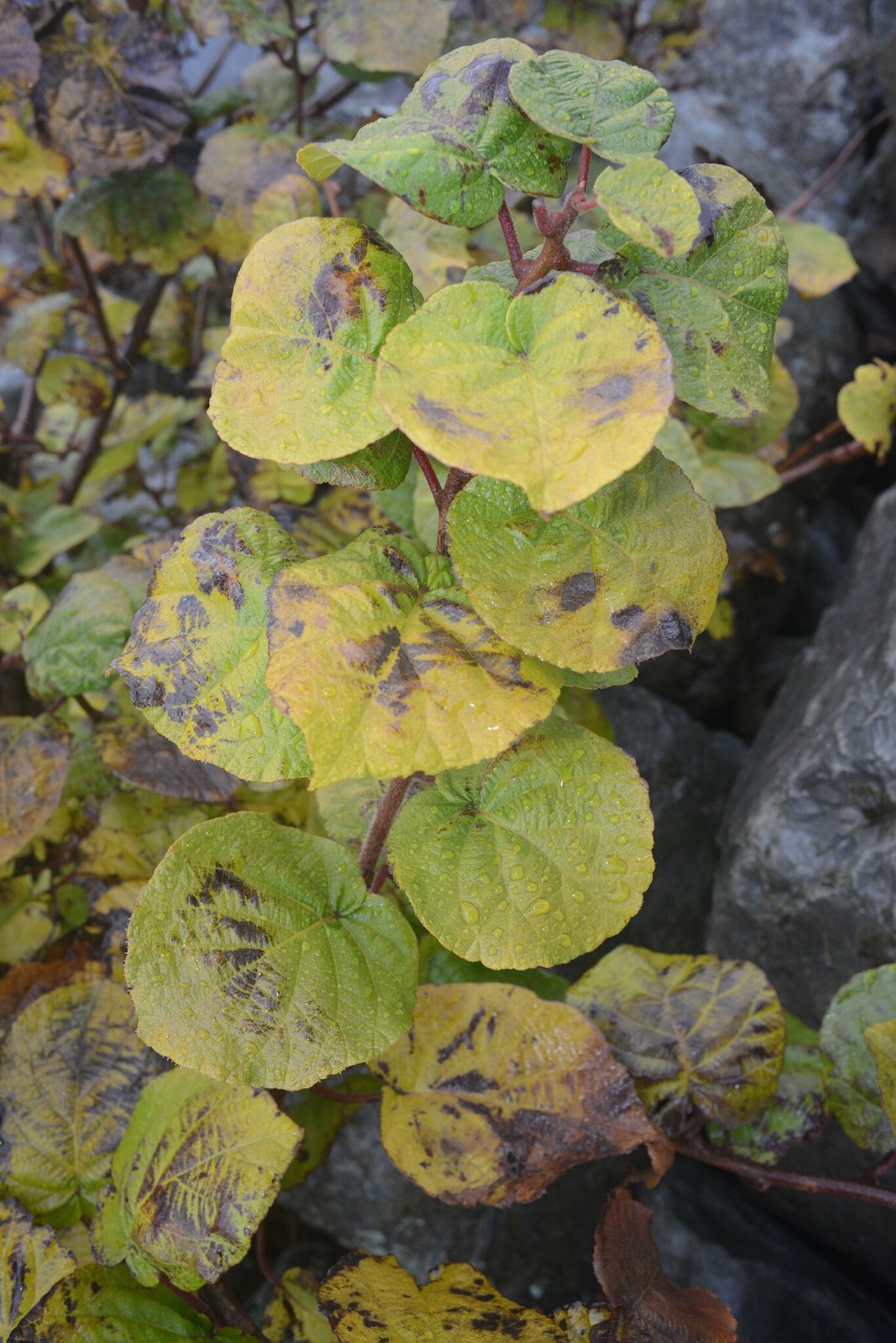
- Large, rounded to heart-shaped green leaves with hairy undersides; young shoots and leaf stalks are often reddish and hairy.
- Growth
- Fast once established
- Care needed
- High
The year at a glance
- Pollinators
- Heat tolerant
- Wildlife
- Low allergen
- Fragrant
- Edible
| J | F | M | A | M | J | J | A | S | O | N | D | |
|---|---|---|---|---|---|---|---|---|---|---|---|---|
| Flowers | ||||||||||||
| Fruit | ||||||||||||
| Plant |
Northern hemisphere months. In Australia, shift them by six.
- Difficulty
- Hard
- Toughness
- Needs looking after
Will it suit your garden?
Pick your zone, country, light and whether you have pets.
Full sun is 6 or more hours of direct sun a day, part shade 3 to 6 hours, shade under 3.
How it grows
Planting day
2 ft (0.6 m)
After 1 year
3 ft (1.1 m)
After 2 years
5 ft (1.5 m)
After 3 years
6 ft (1.8 m)
full size
About 3 years to full size.
From a typical nursery size, at an average rate for this kind of plant. A rule of thumb, not a forecast.
Good to know
- Cats and dogs
- Safe
- Growth rate
- Fast
Care
Jobs through the year
- WaterApr–May, Oct, every 14 days
- Water established vines deeply if rainfall is insufficient; young vines need more frequent watering.
- WaterJun–Sep, every 7 days
- Keep roots evenly moist during fruit development, watering deeply in dry weather.
- FeedMar–Apr
- Apply compost and a balanced fertiliser as growth begins; avoid excess nitrogen.
- MulchMar–Apr
- Mulch the root area annually, keeping material clear of the trunk.
- PruneJan, Dec
- While fully dormant, shorten fruiting laterals and remove crowded or exhausted wood before sap rises.
- PruneJun
- Prune male vines after flowering, preserving the permanent framework.
- PruneJul–Aug
- Shorten fruiting shoots to five leaves beyond the last fruit and remove unwanted vigorous shoots.
- ProtectMar–May
- Cover accessible new shoots with fleece when frost threatens; this species is marginal below zone 7.
- ProtectMay–Aug, every 14 days
- Tie new shoots loosely to a strong support and check ties are not constricting stems.
- HarvestOct–Nov
- Pick full-sized firm fruit before hard frost once seeds are black; ripen indoors.
- Install a heavy-duty pergola or firmly anchored post-and-wire framework before planting; mature vines and fruit are heavy.
- Plant a compatible male with female vines; one male can usually pollinate six to eight females if their flowering times overlap.
- Water deeply during dry weather, particularly while fruit is swelling.
- Apply compost and a balanced fertiliser in spring; avoid excessive nitrogen, which encourages leafy growth.
- Mulch annually, keeping mulch clear of the trunk.
- Protect emerging shoots from late frost and tie new growth loosely to the support.
Pruning. In early to midwinter, while fully dormant and before sap begins rising, maintain a permanent framework and shorten fruiting laterals, removing crowded or exhausted wood. In summer, shorten fruiting shoots to about five leaves beyond the last fruit and remove unwanted vigorous shoots; prune male vines after flowering.
Harvest
Pick full-sized, firm fruit before hard frost, usually in October–November in the US, UK and mild coastal parts of Canada, or April–May in Australia. Cut a sample to check for black seeds, and test that a few picked fruit soften and become sweet indoors; clip the stalks to harvest, then ripen indoors.
Through the year
- Winter
- Prune dormant vines, inspect supports and replace worn ties before growth resumes.
- Early spring
- Plant container-grown vines when soil is workable and not waterlogged; apply fertiliser and mulch established plants.
- Spring
- Protect opening buds and young shoots when frost is forecast.
- Late spring to early summer
- Check that male and female vines flower together; avoid insecticides while bees are visiting.
- Summer
- Water during dry spells, tie in replacement shoots and shorten excess growth.
- Late autumn
- Harvest full-sized, mature fruit before damaging frost; fruit can finish softening indoors.
In the garden
- Train over a substantial pergola to provide summer shade and expose the structure again in winter.
- Grow along sturdy wires beside a sunny, sheltered wall to improve fruit ripening in cooler gardens.
- Use as the productive upper layer of an edible garden, with lower plants kept clear of its trunk.
- Train along a strong boundary framework where its broad leaves can provide seasonal screening.
Garden styles it suits: Edible landscape, Potager (kitchen garden), Backyard orchard, Homestead, Food forest and Modern rustic.
Plant it with: Chives, Calendula, Borage and Strawberries.
Wildlife: Flowers attract bees, which are important pollinators. Birds may eat ripe fruit and disperse its seeds.
Problems to watch for
- Late frost can blacken new shoots and destroy flowers: choose a sheltered site away from frost pockets and cover accessible growth with horticultural fleece when frost threatens.
- Little or no fruit often results from missing or incompatible pollination: check the plant's sex and provide a male that flowers at the same time; young vines may also take several years to crop.
- Phytophthora root and crown rot causes decline in wet soil: improve drainage, keep the crown clear of mulch and avoid standing water.
- Bacterial canker, including Psa, can cause leaf spots, shoot dieback and oozing cankers: buy healthy stock, disinfect pruning tools and seek local plant-health advice if suspected.
Safety
Not known to be toxic to cats, dogs or horses. The fruit is edible for people, but kiwi can cause serious allergic reactions in susceptible individuals; its skin and juice may irritate sensitive skin or mouths. Large amounts of fruit can upset pets' stomachs.
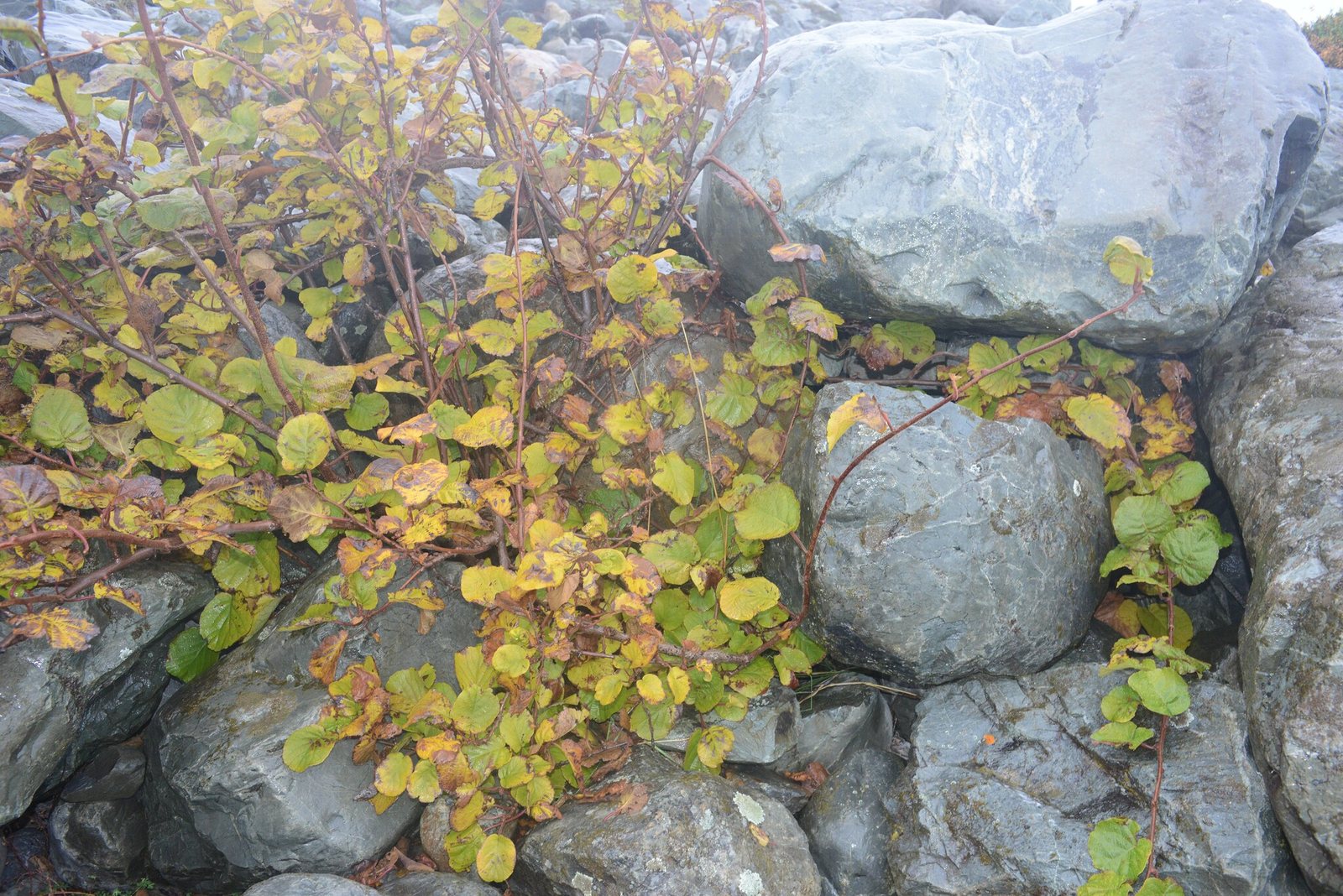
Where it spreads. Escaped kiwifruit vines can smother vegetation in northern New Zealand, notably the Bay of Plenty, where birds spread seed from unharvested fruit. Harvest fruit and remove volunteer seedlings where escape is a concern.
Easily confused with
Hardy kiwi (Actinidia arguta)
Has smaller, smoother leaves and small, smooth-skinned fruit eaten whole; it is much more cold-hardy than fuzzy kiwifruit.
Golden kiwifruit (Actinidia chinensis)
Often has less densely hairy fruit and yellow flesh in cultivated selections, although the species are closely related and appearance overlaps.
Kolomikta vine (Actinidia kolomikta)
Leaves may develop conspicuous white and pink patches, especially on male plants; its fruit is small and smooth-skinned.
The name
The common name kiwifruit was adopted in New Zealand in reference to the brown kiwi bird, while deliciosa means delicious.
Propagation. Root softwood cuttings in early summer or semi-ripe cuttings later in summer, ideally with bottom heat and high humidity; layering is another option. Seedlings vary, take years to flower and cannot be sexed reliably before flowering, so use named, vegetatively propagated plants for predictable crops.
Checked against open data
- Accepted botanical name
- Actinidia chinensis deliciosa Actinidia deliciosa is an older name for Actinidia chinensis deliciosa.
Sources: GBIF (CC BY 4.0). The care and design notes are LandscapeGPT's own.
See it in your own yard.
Upload a photo of your yard and see it redesigned with plants that suit your climate, each checked against your zone.