Lancewood
Pseudopanax crassifolius. Family Araliaceae. Tree.
Also called New Zealand lancewood, Horoeka.
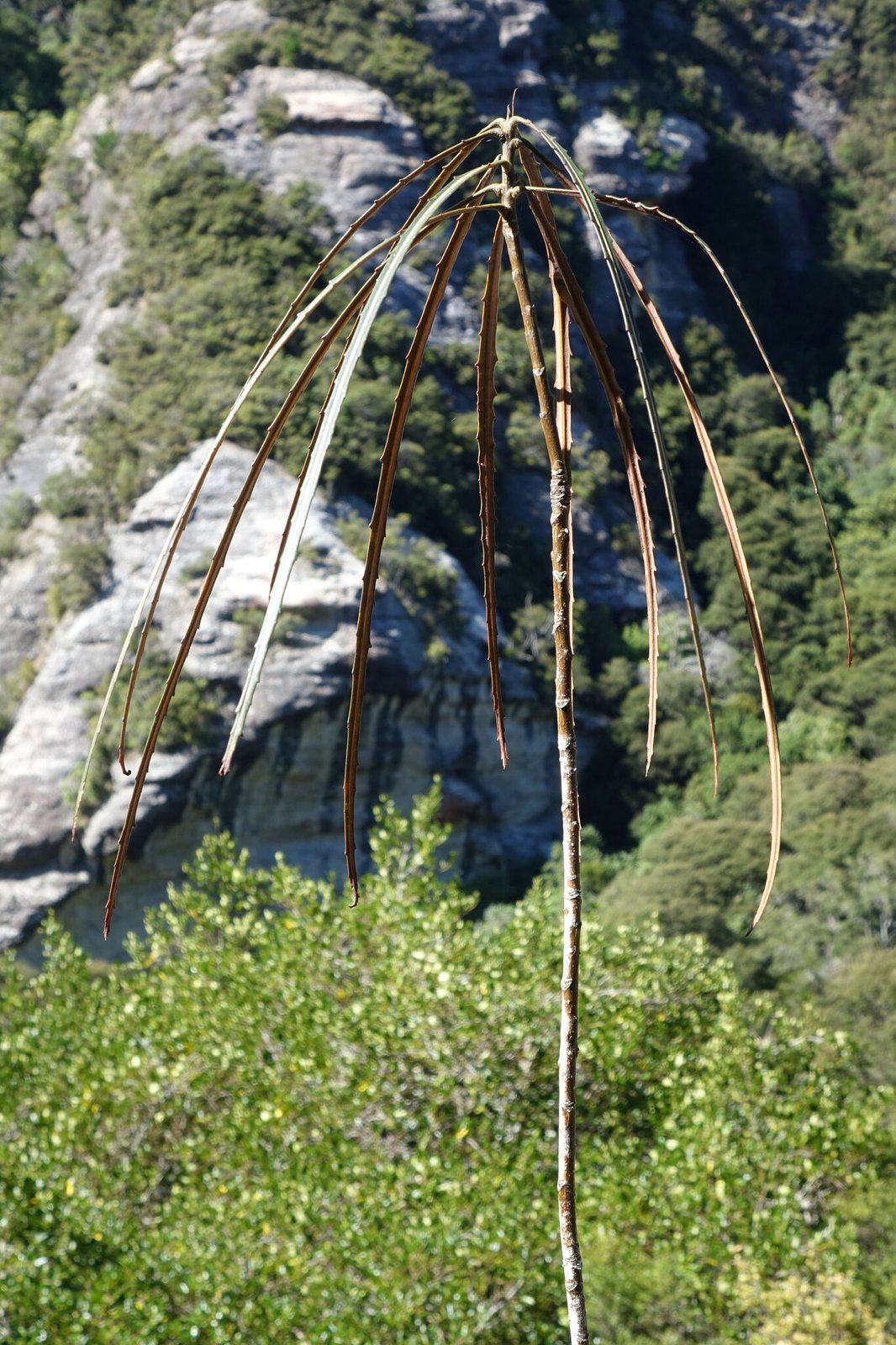
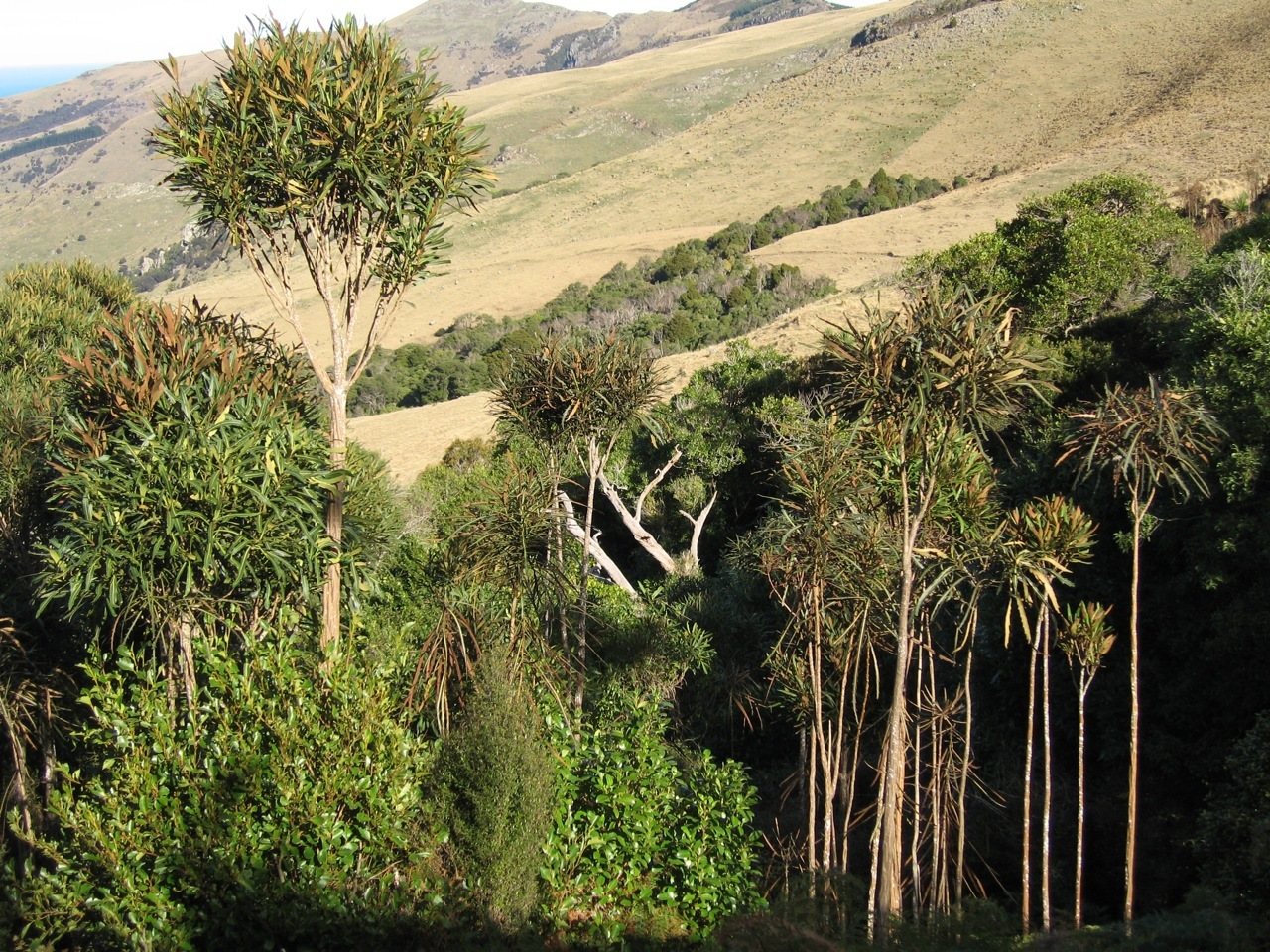
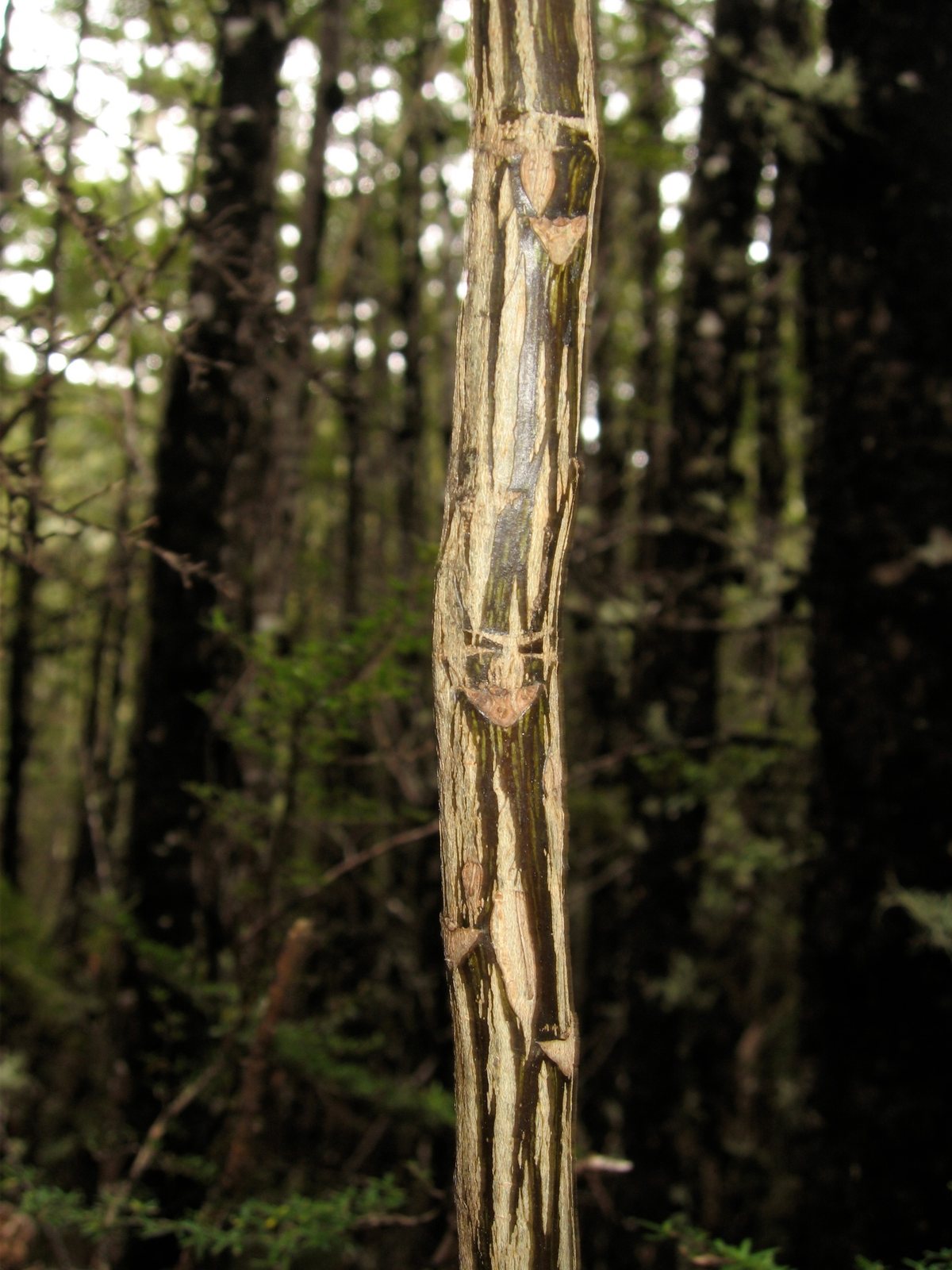
This evergreen New Zealand tree is grown for its striking change in shape: young plants have a slender trunk and long, stiff leaves that point downwards, while mature trees develop a rounded, branching crown. It makes a strong architectural accent in mild-climate gardens; in colder areas, grow it in a container that can be moved into frost-free shelter.
At a glance
- Sun
- Full sun to partial shade; choose a sheltered position away from cold, drying winds.
- Water
- Water regularly while establishing, then during prolonged dry spells. Keep container compost lightly moist rather than saturated.
- Soil
- Well-drained soil with some organic matter; tolerates a range of soil textures and pH levels but dislikes persistent waterlogging.
- Height
- 20-40 ft (6-12 m)
- Spread
- 8-15 ft (2.4-4.5 m), with a much narrower outline while young
- Flowers
- Small greenish flowers in branched clusters in late spring and summer, mainly on mature plants.
- Foliage
- Evergreen. Juvenile leaves are long, narrow, leathery and downward-pointing, often bronze-green with a pale midrib and toothed edges. Adult leaves are shorter, broader and greener, held around a branching crown.
- Growth
- Slow to moderate; the narrow juvenile stage can last many years.
- Care needed
- Low
The year at a glance
- Pollinators
- Wildlife
- Low allergen
| J | F | M | A | M | J | J | A | S | O | N | D | |
|---|---|---|---|---|---|---|---|---|---|---|---|---|
| Flowers | ||||||||||||
| Fruit | ||||||||||||
| Plant |
Northern hemisphere months. In Australia, shift them by six.
- Difficulty
- Moderate
- Toughness
- Fairly tough
Will it suit your garden?
Pick your zone, country, light and whether you have pets.
Full sun is 6 or more hours of direct sun a day, part shade 3 to 6 hours, shade under 3.
How it grows
Planting day
7 ft (2 m)
After 1 year
7 ft (2.3 m)
After 2 years
8 ft (2.5 m)
After 3 years
9 ft (2.8 m)
After 5 years
11 ft (3.3 m)
About 26 years to full size.
From a typical nursery size, at an average rate for this kind of plant. A rule of thumb, not a forecast.
Good to know
- Cats and dogs
- Safe
- Growth rate
- Slow
Care
Jobs through the year
- WaterApr–May, Sep–Oct, every 14 days
- Water established ground plants if the root zone is dry; young plants and pots need more frequent checks.
- WaterJun–Aug, every 7 days
- Water established ground plants deeply during dry weather; keep pots lightly moist, never saturated.
- WaterJan–Mar, Nov–Dec, every 14 days
- Check sheltered pots and water sparingly to keep the root ball lightly moist.
- FeedApr–May
- Give container plants a light controlled-release feed; avoid heavy feeding.
- MulchMay, Oct
- Refresh organic mulch as needed, keeping it clear of the trunk.
- PruneMay–Jun
- Remove only dead, damaged or rubbing growth; preserve the young plant's main leader.
- ProtectJan–Apr, Oct–Dec
- Not reliably hardy in zones 6–7; move pots to bright, cool, frost-free shelter and avoid cold drying winds.
- Plant in spring in cooler districts, giving the roots time to establish before winter.
- Water deeply during dry weather for the first two growing seasons.
- Apply an organic mulch over the root area, keeping it clear of the trunk.
- Give container plants a light application of controlled-release fertiliser in spring; avoid heavy feeding.
- Protect young plants from hard frost and cold winds; move pots under frost-free cover where winters exceed its tolerance.
Pruning. Prune only to remove dead, damaged or rubbing growth in late spring, after severe frost has passed. Avoid cutting back the main leader of a young plant, as this spoils its characteristic upright form.
Through the year
- Spring
- Plant or repot once severe frosts have passed, using freely draining soil or compost.
- Late spring
- Remove frost-damaged or dead growth and check any supporting ties.
- Summer
- Water young trees during dry spells and check pots frequently for drying.
- Autumn
- Refresh mulch without burying the trunk, and prepare winter shelter for container plants.
- Winter
- Protect young plants during sharp freezes and keep sheltered container plants only lightly moist.
In the garden
- Use a young specimen as a narrow vertical accent in a courtyard, allowing room for its eventual crown.
- Set against a plain wall or fence to show the unusual downward-pointing leaves.
- Combine with ferns, sedges and broad-leaved shrubs for contrasting leaf shapes.
- Grow in a large, stable container as an architectural feature where winter shelter is available.
- Use in sheltered coastal gardens beyond the strongest salt-laden winds.
Garden styles it suits: Architectural minimal, Contemporary minimal, Modern courtyard, Woodland, Coastal and Pacific Northwest woodland.
Plant it with: New Zealand flax, New Zealand wind grass, Japanese forest grass, Soft shield fern, Pittosporum and Fatsia.
Wildlife: Flowers attract visiting insects, and ripe dark fruits are eaten by birds. Male and female flowers are usually borne on separate trees, so fruiting generally requires both sexes nearby.
Problems to watch for
- Frost and cold-wind damage can blacken leaves or kill the growing tip; choose a sheltered site, protect young plants and wait until late spring before removing damaged growth.
- Waterlogged soil can cause root decline; improve drainage or plant in a raised position, and never leave pots standing in water.
- Scale insects may settle on stems and leaves, especially under cover; inspect regularly and treat infestations with a suitable horticultural oil according to its label.
- Dry root balls cause leaf browning and shedding, particularly in pots; soak thoroughly, let excess water drain and check moisture below the surface.
Safety
Not known to be toxic to people, cats, dogs or horses, although species-specific poisoning information is limited and no part should be treated as food. The stiff, toothed juvenile leaves can scratch skin or catch at eye level; keep them clear of narrow paths and play areas.
Easily confused with
Fierce lancewood (Pseudopanax ferox)
Its juvenile leaves usually have much larger, irregular, hooked teeth and a more strongly mottled brown or grey-green appearance.
Houpara (Pseudopanax lessonii)
Leaves are usually divided into several broad leaflets rather than forming the long, single, downward-pointing blades of juvenile lancewood.
Cabbage tree (Cordyline australis)
Its strap-shaped leaves grow in dense terminal tufts and lack the toothed edges and distinct midrib of juvenile lancewood.
The name
Pseudopanax means 'false Panax', referring to its resemblance to that related genus, while crassifolius means 'thick-leaved' and lancewood describes the spear-like juvenile leaves.
Propagation. Usually grown from seed collected from ripe fruit. Remove the fleshy coating, sow fresh seed in freely draining seed compost and keep it moist; germination can be slow and uneven.
Checked against open data
- Accepted botanical name
- Pseudopanax crassifolius
- Native range
- New Zealand North and New Zealand South.
- Measured
- Average height 470 cm.
Sources: GBIF (CC BY 4.0) and Trefle (CC BY 4.0). The care and design notes are LandscapeGPT's own.
See it in your own yard.
Upload a photo of your yard and see it redesigned with plants that suit your climate, each checked against your zone.