Leadplant
Amorpha canescens. Family Fabaceae. Shrub.
Also called Lead plant, Prairie shoestring.
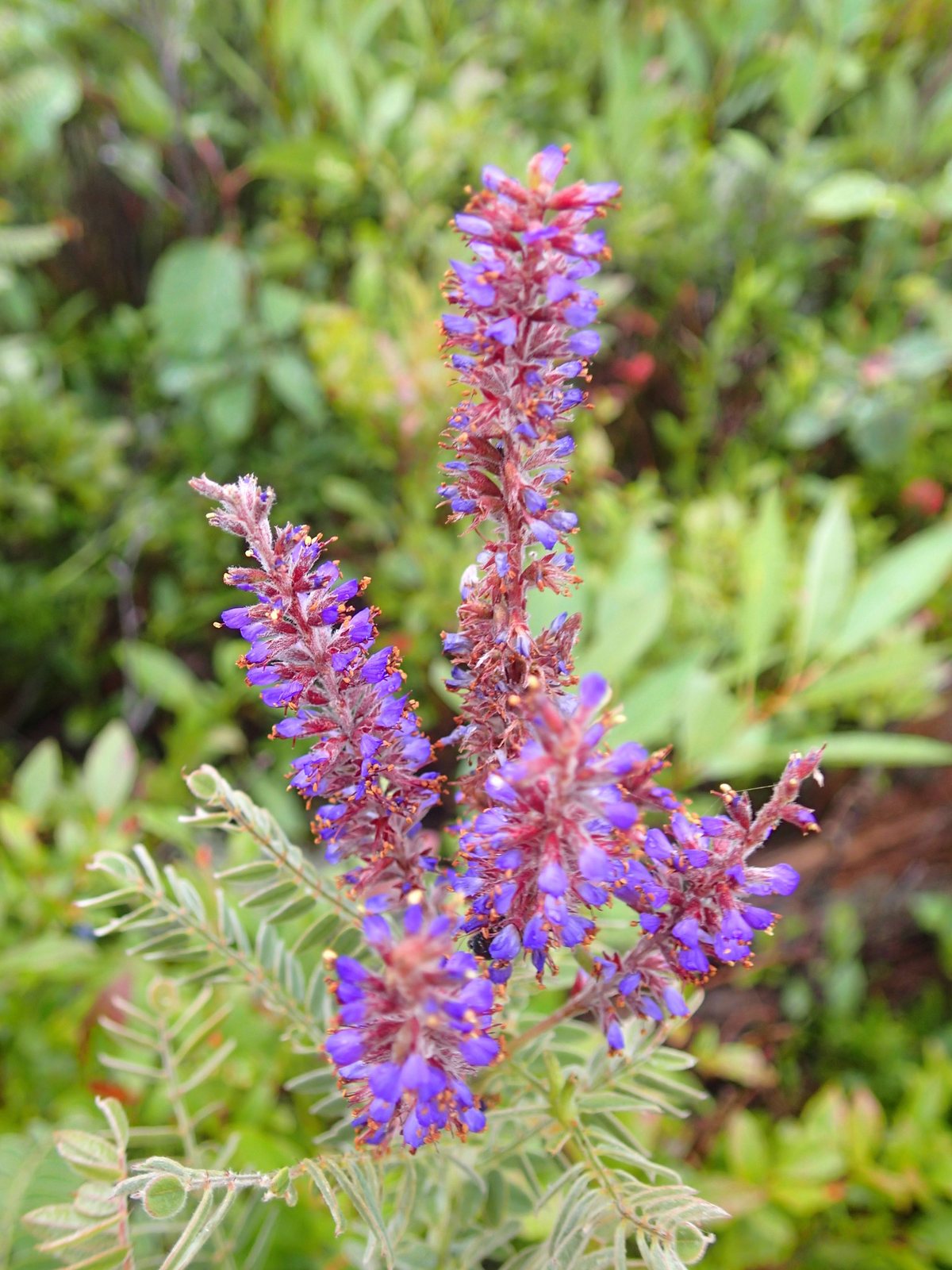
Leadplant is a small, deciduous prairie shrub native to central North America, grown for its finely divided, silvery-grey foliage and spikes of purple flowers with bright orange anthers. It suits sunny, dry gardens and supports native bees, but establishes slowly and needs good drainage.
At a glance
- Sun
- Full sun; tolerates light shade but becomes looser and flowers less.
- Water
- Low once established. Water regularly during the first growing season, allowing the soil to dry somewhat between waterings.
- Soil
- Well-drained sandy, gravelly or loamy soil; tolerates clay if drainage is good. Avoid persistently wet ground, especially in winter.
- Height
- 2-3 ft (0.6-0.9 m)
- Spread
- 2-3 ft (0.6-0.9 m)
- Flowers
- Early to midsummer; slender spikes of small purple flowers with conspicuous orange anthers.
- Foliage
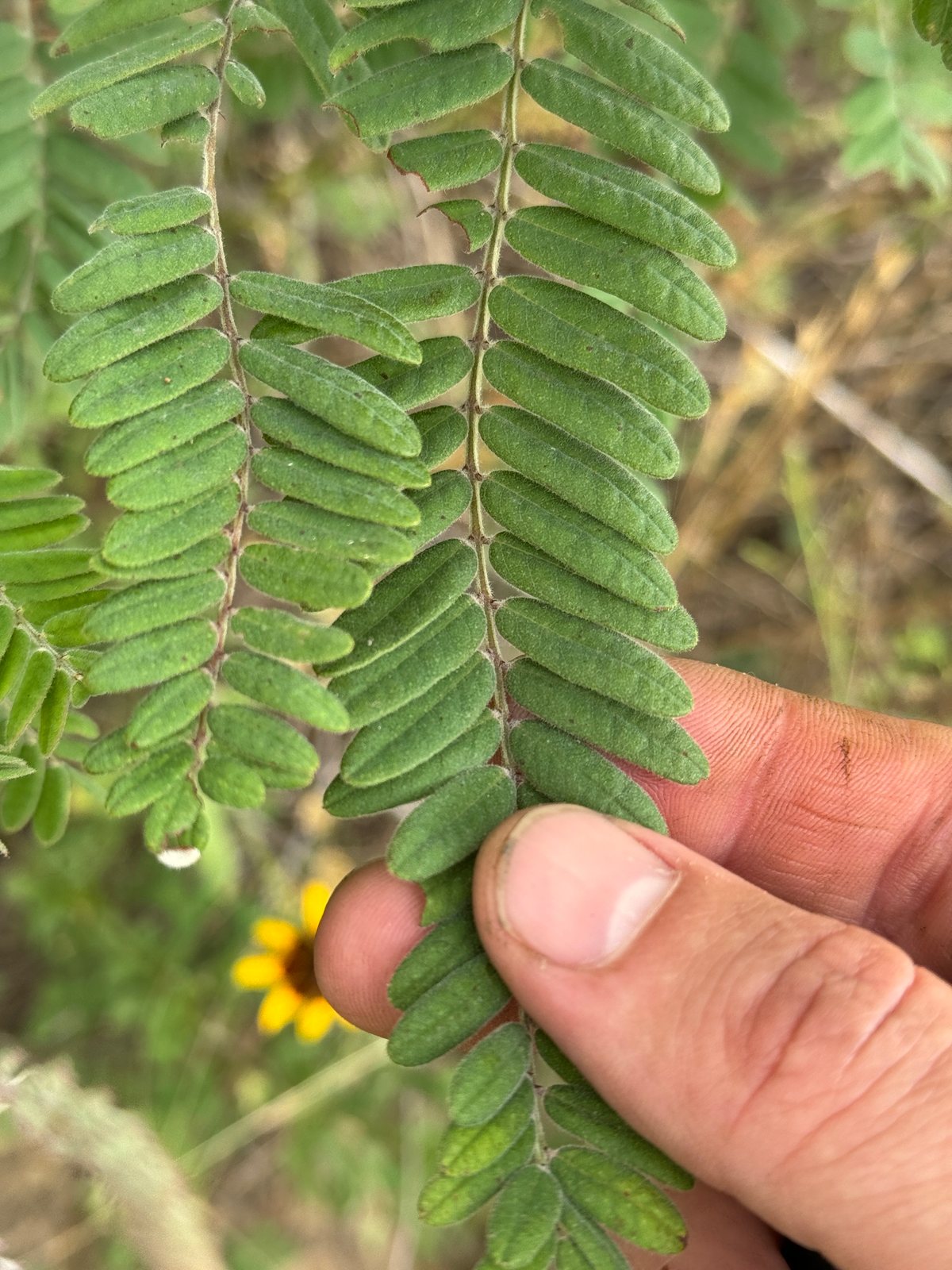
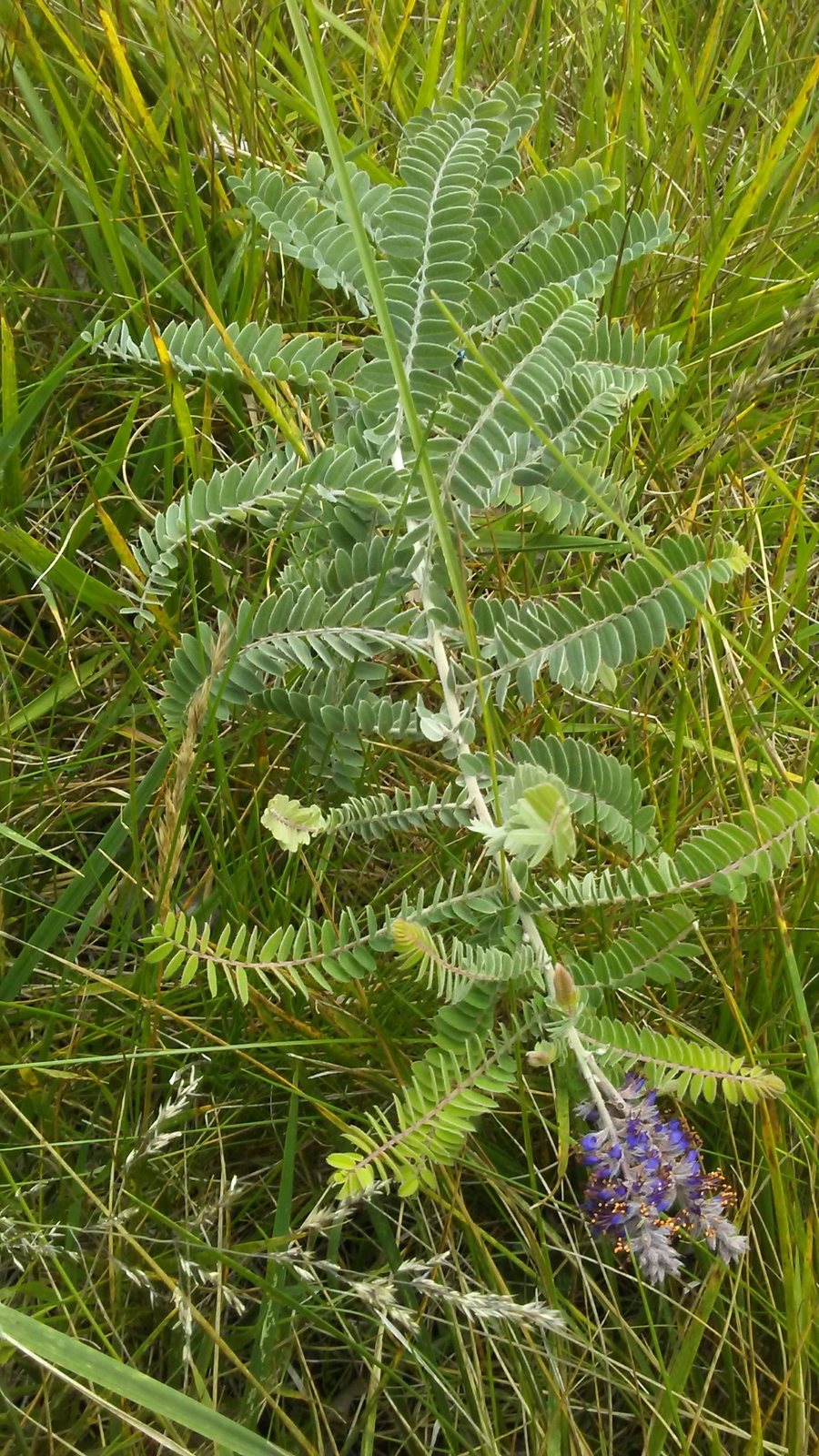
- Small, oval leaflets arranged along divided leaves; fine hairs give the foliage a soft, silvery-grey appearance. Deciduous.
- Growth
- Slow, particularly during the first few years while its deep root system develops.
- Care needed
- Low
The year at a glance
- Pollinators
- Drought tolerant
- Cold hardy
- Heat tolerant
- Wildlife
- Low allergen
| J | F | M | A | M | J | J | A | S | O | N | D | |
|---|---|---|---|---|---|---|---|---|---|---|---|---|
| Flowers | ||||||||||||
| Fruit | ||||||||||||
| Plant |
Northern hemisphere months. In Australia, shift them by six.
- Difficulty
- Easy
- Toughness
- Very tough
Will it suit your garden?
Pick your zone, country, light and whether you have pets.
Full sun is 6 or more hours of direct sun a day, part shade 3 to 6 hours, shade under 3.
How it grows
Planting day
1.6 ft (0.5 m)
After 1 year
1.7 ft (0.53 m)
After 2 years
1.8 ft (0.56 m)
After 3 years
1.9 ft (0.59 m)
After 5 years
2.2 ft (0.66 m)
About 8 years to full size.
From a typical nursery size, at an average rate for this kind of plant. A rule of thumb, not a forecast.
Good to know
- Cats and dogs
- Mildly toxic: may upset a stomach
- Native to
- the US and Canada
- Growth rate
- Slow
Care
Jobs through the year
- WaterApr–May, Sep–Oct, every 21 days
- Water established plants only during prolonged drought; water first-year plants regularly.
- WaterJun–Aug, every 21 days
- Deep-water established plants only in severe drought; young plants need more frequent watering.
- PruneMar–Apr
- When buds swell, remove dead wood and trim damaged tips back to live growth.
- ProtectMar–May
- Guard young plants with wire mesh against rabbits and deer.
- Plant in full sun with good drainage, leaving room for its mature spread.
- Water deeply during dry spells in its first growing season; established plants rarely need supplemental water.
- Do not routinely fertilize; rich soil and heavy feeding encourage floppy growth.
- Keep weeds away while young, and keep mulch clear of the woody crown.
- Choose its position carefully: its deep roots make established plants difficult to move or divide.
Pruning. In early spring, wait until buds begin to swell, then remove dead stems and winter-damaged tips back to living wood. In cold climates, most stems may die back and need cutting close to the ground.
Through the year
- Early spring
- Check for swelling buds and prune out dead or winter-damaged wood.
- Spring
- Plant young plants after the soil is workable; water thoroughly and keep surrounding weeds down.
- Summer
- Water new plants deeply during dry spells, but let established plants grow relatively dry.
- Late summer
- Leave some spent flower spikes to develop seed if you want to collect it.
- Autumn
- Sow prepared seed outdoors for natural winter chilling, and leave standing stems for habitat.
- Winter
- Check that water is not pooling around the crown; improve drainage rather than adding protective mulch over it.
In the garden
- Plant among little bluestem and prairie dropseed for a low prairie planting with contrasting fine textures.
- Use its silvery foliage beside purple coneflowers and black-eyed Susans in a sunny perennial border.
- Place in a gravel garden or dry bank where its deep roots and drought tolerance are useful.
- Group several plants in a pollinator garden, keeping taller neighbours from shading them.
Garden styles it suits: Midwest prairie, Native meadow, New perennial (prairie), Pollinator garden, Dry gravel garden and Desert / xeriscape.
Plant it with: Little bluestem, Prairie dropseed, Purple coneflower, Butterfly weed, Black-eyed Susan and Wild bergamot.
Wildlife: Flowers provide pollen and nectar for native bees and attract other visiting insects. Its foliage supports several prairie insects, and rabbits or deer may browse it.
Problems to watch for
- Root or crown rot in wet soil: improve drainage or move young plants to a drier position; avoid frequent irrigation.
- Sparse flowering and floppy stems in shade: move young plants to full sun and avoid fertilizer.
- Rabbit browsing, especially on young plants: protect with a wire-mesh guard until well established.
- Slow establishment mistaken for failure: keep weeds down and allow several growing seasons for substantial top growth.
Safety
Species-specific toxicity information for people, cats, dogs and horses is limited, so neither poisonousness nor safety is firmly established. Do not treat the leaves, flowers, seeds or roots as food, and prevent pets or livestock from eating substantial amounts.
Easily confused with
False indigo bush (Amorpha fruticosa)
A much taller, broader shrub with greener, less densely hairy foliage; it commonly grows in moist ground rather than dry prairie.
Dwarf false indigo (Amorpha nana)
Usually lower and more compact, with greener, less hairy leaves and shorter flower clusters; leadplant has a distinctly silvery, downy appearance.
The name
Amorpha means 'formless', referring to the flower's single petal rather than a typical pea-flower shape, and canescens means 'becoming grey', referring to its hairy foliage.
Propagation. Grow from seed; lightly scarify the hard seed coat and give moist cold stratification before spring sowing, or sow prepared seed outdoors in autumn. Germination can be uneven and seedlings develop slowly. Softwood cuttings are another option; division is unsuitable because of the deep woody root system.
Checked against open data
- Accepted botanical name
- Amorpha canescens
- In the US and Canada
- Native in Canada and the lower 48 states.
- Native range
- Arizona, Arkansas, Colorado, Illinois, Indiana, Iowa, Kansas, Michigan, Minnesota, Mississippi, Missouri and Montana.
- Measured
- Average height 61 cm.
Sources: GBIF (CC BY 4.0), USDA PLANTS and Trefle (CC BY 4.0). The care and design notes are LandscapeGPT's own.
See it in your own yard.
Upload a photo of your yard and see it redesigned with plants that suit your climate, each checked against your zone.