Leatherleaf fern
Rumohra adiantiformis. Family Dryopteridaceae. Fern.
Also called Leather fern, Florist's fern.
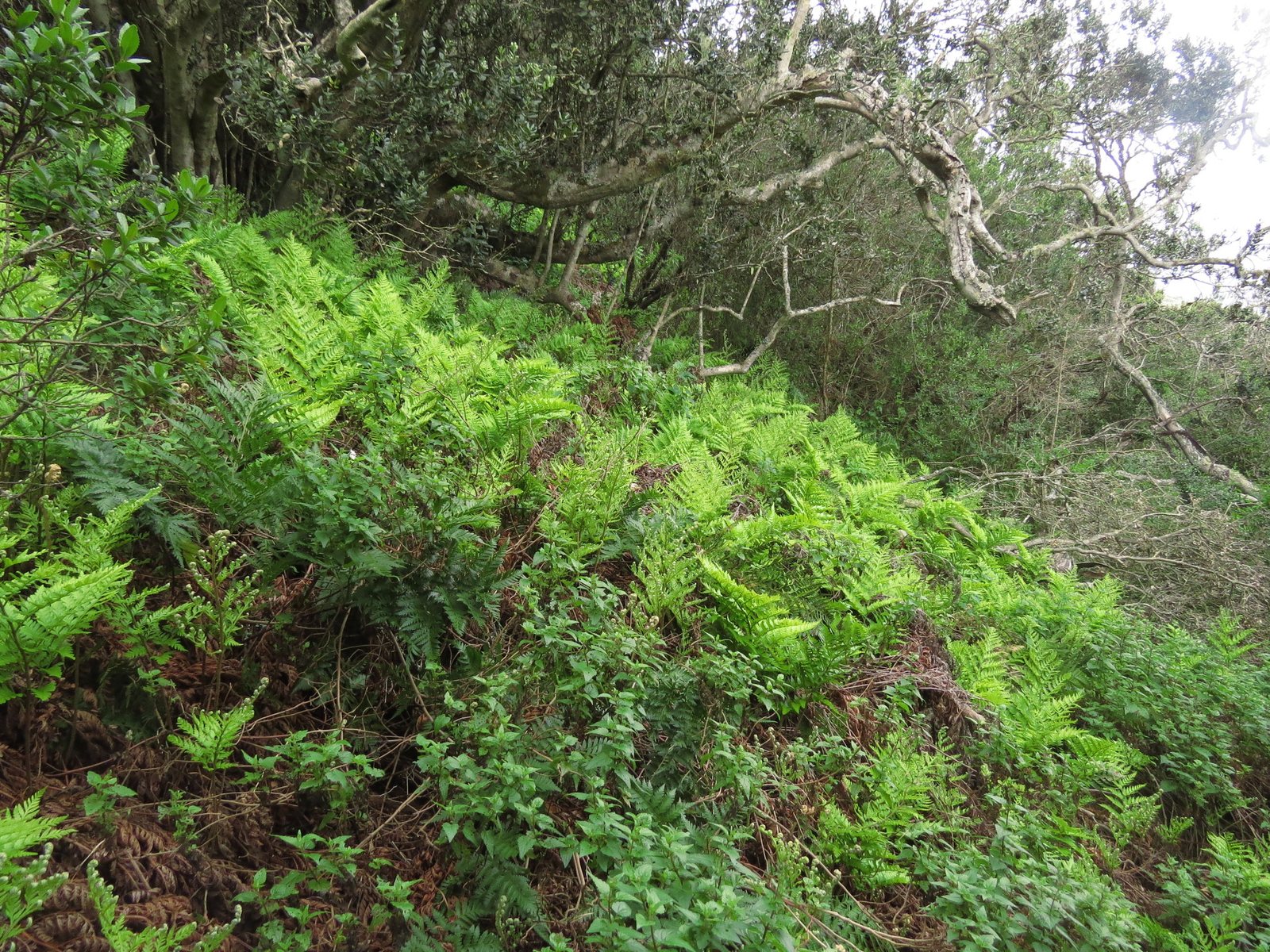
Leatherleaf fern is an evergreen fern with glossy, finely divided fronds that remain firm after cutting, making it useful in both shaded gardens and flower arrangements. It spreads by creeping rhizomes to form a leafy groundcover in mild climates; in colder areas, grow it in a container and overwinter it under cover.
At a glance
- Sun
- Partial to full shade; protect from strong afternoon sun and drying winds.
- Water
- Keep evenly moist but not waterlogged. Water when the soil surface begins to dry; established plants tolerate brief dry spells better than newly planted ones.
- Soil
- Humus-rich, well-drained soil, preferably slightly acidic to neutral. Use a moisture-retentive but freely draining potting mix in containers.
- Height
- 1.5-3 ft (0.45-0.9 m)
- Spread
- 2-3 ft (0.6-0.9 m), eventually wider where rhizomes can spread
- Foliage
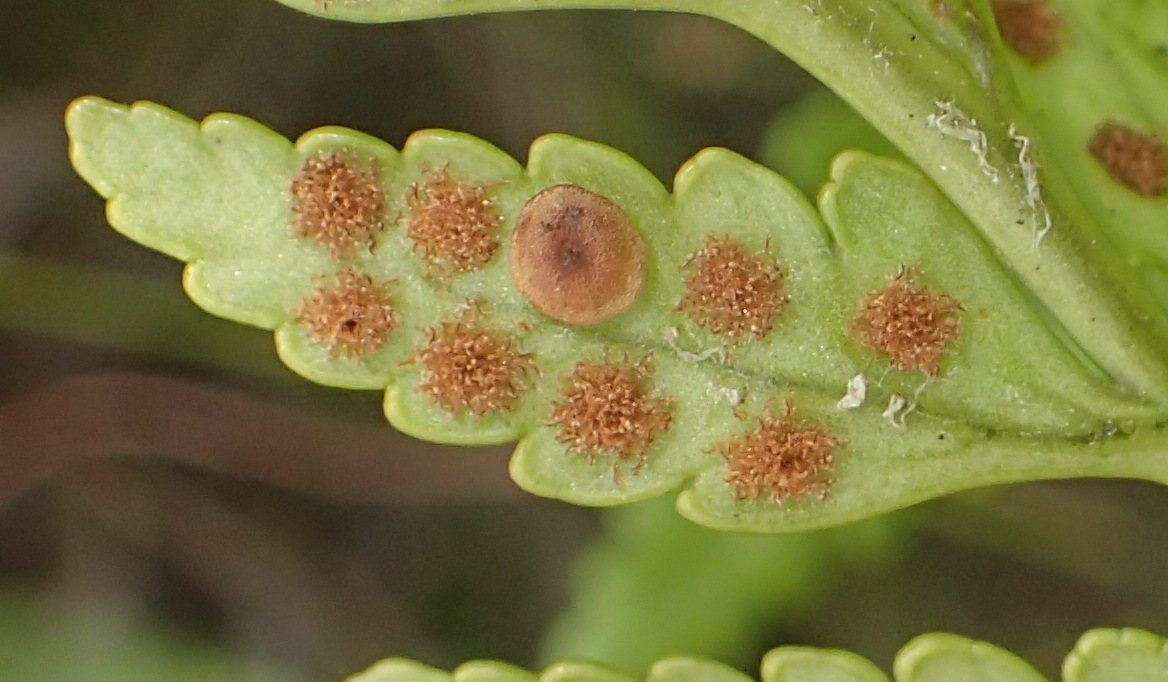
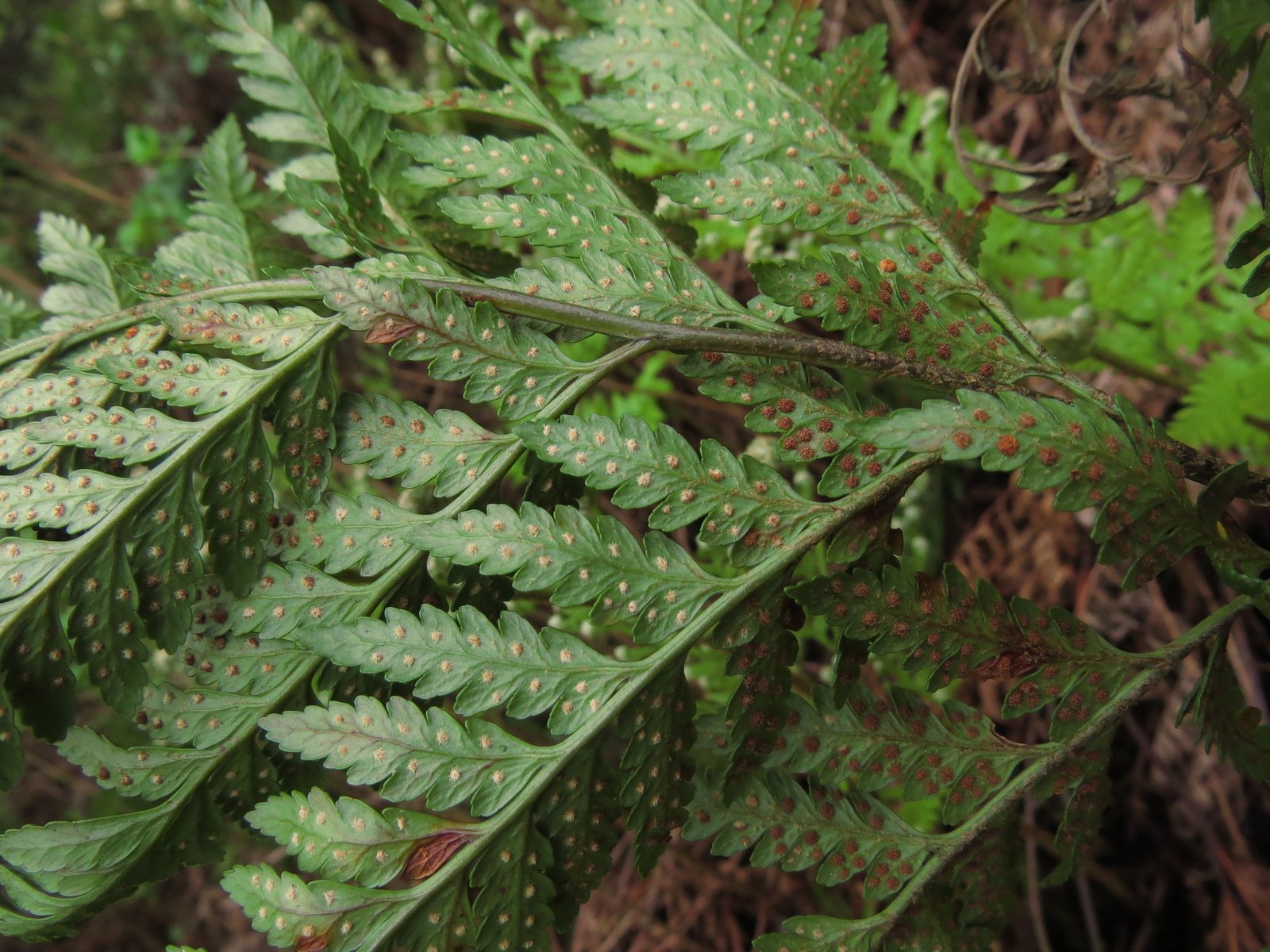
- Evergreen. Dark green, glossy, leathery fronds with a broadly triangular outline and finely divided leaflets; small round spore clusters develop beneath mature fronds.
- Growth
- Moderate in warm, moist conditions; slow in cool weather
- Care needed
- Low
The year at a glance
- Deer resistant
- Heat tolerant
- Wildlife
- Low allergen
| J | F | M | A | M | J | J | A | S | O | N | D | |
|---|---|---|---|---|---|---|---|---|---|---|---|---|
| Plant |
Northern hemisphere months. In Australia, shift them by six.
- Difficulty
- Moderate
- Toughness
- Needs looking after
Will it suit your garden?
Pick your zone, country, light and whether you have pets.
Full sun is 6 or more hours of direct sun a day, part shade 3 to 6 hours, shade under 3.
How it grows
Planting day
1 ft (0.3 m)
After 1 year
1.3 ft (0.4 m)
After 2 years
1.6 ft (0.49 m)
After 3 years
1.9 ft (0.59 m)
After 5 years
2.2 ft (0.68 m)
full size
About 4 years to full size.
From a typical nursery size, at an average rate for this kind of plant. A rule of thumb, not a forecast.
Good to know
- Cats and dogs
- Mildly toxic: may upset a stomach
- Native to
- the US and Australia
- Growth rate
- Slow
Care
Jobs through the year
- WaterApr–May, Sep, every 7 days
- For established summer ground plants, water as the surface dries; check young plants and pots more often.
- WaterJun–Aug, every 4 days
- Keep established summer ground plants lightly moist; pots may need more frequent watering.
- WaterJan–Mar, Oct–Dec, every 14 days
- Under frost-free cover, check pots and water only enough to keep the root ball lightly moist.
- FeedApr–Aug, every 30 days
- Feed container plants lightly with dilute balanced liquid fertiliser during active growth.
- PruneFeb–Mar
- Remove dead or badly worn fronds at the base without cutting healthy or emerging growth.
- MulchApr–May
- Apply a shallow layer of leaf mould or compost, keeping growing crowns uncovered.
- DivideMar–Apr
- Divide crowded clumps under frost-free cover, retaining roots and several growing points.
- ProtectSep–Oct
- Not winter-hardy locally: move pots or lift summer bedding plants into bright frost-free shelter before frost.
- ProtectMay–Jun
- Return plants outdoors only after frost risk passes and acclimatise gradually in shade.
- Water deeply during establishment, then keep the root zone lightly moist without leaving it saturated.
- Apply leaf mould or compost as mulch in spring, keeping it clear of the growing crowns.
- Feed container plants lightly with a balanced liquid fertiliser during active growth; avoid heavy feeding.
- Divide crowded clumps in spring, retaining roots and several healthy growing points on each piece.
- In cold climates, move containers into a bright, frost-free place before frost and reduce winter watering.
Pruning. Remove dead, frost-damaged or badly worn fronds at their base in late winter or early spring, before new growth expands. Leave healthy green fronds in place and avoid cutting emerging shoots.
Through the year
- Spring
- Plant or repot once frost risk has passed, setting the rhizomes close to the soil surface rather than burying them deeply.
- Spring
- Divide crowded clumps and apply a shallow mulch of leaf mould or compost.
- Summer
- Check moisture regularly, especially in pots, and protect fronds from hot afternoon sun.
- Autumn
- Bring containers under frost-free cover where winters are cold; reduce feeding as growth slows.
- Winter
- Keep sheltered plants just moist and check indoor plants for scale insects and spider mites.
- Late winter
- Cut out damaged old fronds before fresh growth starts.
In the garden
- Plant beneath trees and tall shrubs where filtered shade and reasonably moist soil suit its spreading habit.
- Use as an evergreen groundcover beside shaded paths, allowing room for rhizomes to extend.
- Combine with broad-leaved plants such as hostas or cast iron plants for contrasting leaf shapes.
- Grow in shaded courtyard containers, moving the pots under cover for winter in cold regions.
Garden styles it suits: Woodland, Tropical, Modern courtyard, Green on green, Victorian and Low-maintenance.
Plant it with: Cast iron plant, Hosta, Clivia, Camellia, Japanese aralia and Bergenia.
Wildlife: Dense fronds provide shelter for small invertebrates. Like other ferns, it produces neither flowers nor nectar, so it is not a direct food source for pollinating insects.
Problems to watch for
- Brown, crispy fronds usually indicate dry soil, drying wind or excessive sun; water thoroughly and move or shade the plant as needed.
- Yellowing and collapsing growth can result from waterlogged soil and root or rhizome rot; improve drainage and remove rotten tissue.
- Scale insects can settle on fronds and stems; wipe off small infestations and use a labelled horticultural oil if needed.
- Spider mites may cause pale, stippled foliage under warm, dry cover; rinse fronds, prevent drought stress and use an appropriate labelled treatment if infestation persists.
Safety
Not known to be toxic to cats, dogs, horses or people. No part is generally recognised as poisonous, but it is not an edible plant and chewing it may cause mild digestive upset.
Easily confused with
Western sword fern (Polystichum munitum)
Sword fern has long, narrow fronds divided once into distinct, toothed leaflets; leatherleaf fern has broader, triangular fronds divided into much finer segments.
Japanese holly fern (Cyrtomium falcatum)
Holly fern has large, glossy, sickle-shaped leaflets with little further division, unlike leatherleaf fern's finely divided foliage.
The name
The common name refers to the firm, leathery texture of its mature fronds.
Propagation. Divide creeping rhizomes in spring, keeping roots and at least one healthy growing point on each section. Propagation from spores is possible but slow and requires consistently humid, clean conditions.
Checked against open data
- Accepted botanical name
- Rumohra adiantiformis
- In the US and Canada
- Native in the lower 48 states and Puerto Rico.
- Native range
- Argentina Northeast, Argentina South, Bermuda, Bolivia, Brazil Northeast, Brazil South, Brazil Southeast, Brazil West-Central, Cape Provinces, Central American Pac, Chatham Is. and Chile Central.
- Measured
- Average height 145 cm.
Sources: GBIF (CC BY 4.0), USDA PLANTS and Trefle (CC BY 4.0). The care and design notes are LandscapeGPT's own.
See it in your own yard.
Upload a photo of your yard and see it redesigned with plants that suit your climate, each checked against your zone.