Lemon thyme
Thymus × citriodorus. Family Lamiaceae. Perennial.
Also called Citrus thyme.
Lemon thyme is a low, woody-based culinary herb with small, lemon-scented leaves and summer flowers that attract bees. Grow it beside paths, in herb beds or in containers where it gets plenty of sun and excellent drainage; winter wet is often more damaging than cold.
At a glance
- Sun
- Full sun; tolerates light afternoon shade in very hot climates, but grows less densely in shade.
- Water
- Water regularly while establishing, letting the soil surface dry between waterings. Established plants tolerate drought; water containers when the upper soil feels dry.
- Soil
- Well-drained, sandy, gritty or stony soil, preferably neutral to alkaline. Avoid waterlogged ground and rich, heavily fertilised soil.
- Height
- 0.5-1 ft (0.15-0.3 m)
- Spread
- 1-1.5 ft (0.3-0.45 m)
- Flowers
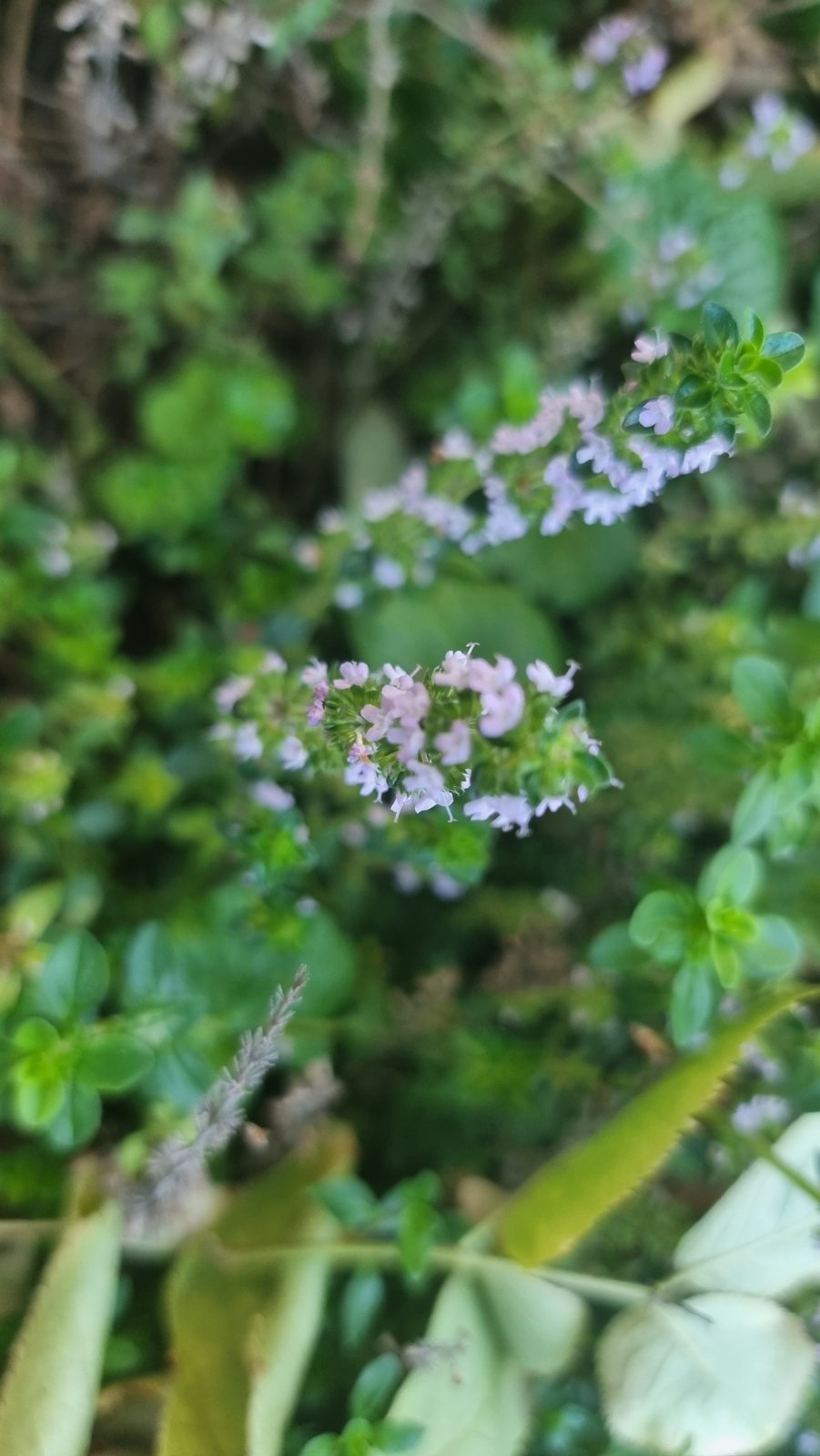
- Small pale pink to lilac flowers in early to midsummer.
- Foliage
- Evergreen. Small, rounded to oval, aromatic leaves on wiry stems. Leaves are green, with yellow or cream variegation in some cultivars; their lemon scent is strongest when rubbed.
- Growth
- Moderate
- Care needed
- Low
The year at a glance
- Pollinators
- Deer resistant
- Drought tolerant
- Heat tolerant
- Low allergen
- Fragrant
- Edible
| J | F | M | A | M | J | J | A | S | O | N | D | |
|---|---|---|---|---|---|---|---|---|---|---|---|---|
| Flowers | ||||||||||||
| Fruit | ||||||||||||
| Plant |
Northern hemisphere months. In Australia, shift them by six.
- Difficulty
- Easy
- Toughness
- Very tough
Will it suit your garden?
Pick your zone, country, light and whether you have pets.
Full sun is 6 or more hours of direct sun a day, part shade 3 to 6 hours, shade under 3.
How it grows
Planting day
0.7 ft (0.22 m)
full size
About 3 years to full size.
From a typical nursery size, at an average rate for this kind of plant. A rule of thumb, not a forecast.
Good to know
- Cats and dogs
- Safe
- Growth rate
- Moderate
Care
Jobs through the year
- WaterApr–May, Sep–Oct, every 21 days
- Water established plants only in prolonged dry weather; water new plants more often while rooting.
- WaterJun–Aug, every 14 days
- Water only if soil is dry beneath the surface; avoid keeping the crown wet.
- MulchApr
- Apply a thin gravel mulch to separate foliage and stems from damp soil.
- PruneApr
- After severe frost risk passes, remove dead shoots and lightly shorten straggly growth.
- PruneJul–Aug
- Trim lightly after flowering without cutting into bare old wood.
- HarvestApr–Oct, every 14 days
- Pick small amounts of leafy tips from established plants, leaving ample foliage for recovery.
- ProtectOct–Nov
- Clear leaves from the crown and ensure free drainage to prevent winter rot.
- Plant with the crown at soil level in a sunny, freely draining position.
- Let the surface soil dry between waterings; never leave pots standing in water.
- Feed sparingly; container plants may need a light spring feed, but plants in the ground usually need none.
- Use a thin gravel mulch to keep damp soil away from the crown rather than piling organic mulch against the stems.
- In cold, wet climates, shelter pots from persistent winter rain while keeping them outdoors in good light.
Pruning. In spring, after the risk of severe frost has passed, remove dead shoots and lightly shorten straggly growth. Trim again after flowering to keep a compact mound, but do not cut deeply into bare old wood.
Harvest
Pick leafy shoot tips once the plant is established and producing fresh growth, taking small amounts rather than stripping whole stems. Leaves are usable throughout the growing season, with tender growth just before flowering especially useful for drying; leave enough foliage for the plant to recover.
Through the year
- Spring
- Remove dead growth and lightly trim stems once severe frosts have passed.
- Spring
- Plant into warming, well-drained soil, or pot into a container with drainage holes and a gritty growing mix.
- Late spring
- Begin harvesting fresh shoot tips once new plants are growing strongly.
- Summer
- Check containers regularly and water when the upper growing mix feels dry; leave some flowers for bees.
- After flowering
- Lightly shear the leafy growth to maintain a dense mound, and take non-flowering cuttings.
- Autumn
- Clear fallen leaves from the crown and check that rainwater drains freely; avoid hard pruning.
- Winter
- Keep watering minimal and move pots away from persistent rain or standing water.
In the garden
- Edge a sunny herb or vegetable bed with low, aromatic mounds within easy reach for picking.
- Plant beside paving or steps where brushing the leaves releases their scent, but avoid regular foot traffic.
- Combine with lavender, sage and rosemary in a gravel garden with matching drainage needs.
- Use in shallow, well-drained containers near an outdoor dining area.
- Place along the front of a sunny border to soften edges and provide summer flowers for bees.
Garden styles it suits: Mediterranean, Cottage garden, Potager (kitchen garden), Herb parterre, Dry gravel garden and Sensory garden.
Plant it with: Lavender, Common sage, Rosemary, Winter savory, Oregano and Santolina.
Wildlife: Flowers provide nectar and pollen for bees and other visiting insects. Leaving part of the plant untrimmed during flowering preserves this food source.
Problems to watch for
- Root and crown rot in wet soil: improve drainage, keep mulch away from the crown and replace badly affected plants in a drier position.
- Woody, bare-centred growth: trim lightly each year without cutting into leafless wood; replace old plants with rooted cuttings when they no longer make useful new growth.
- Spider mites in hot, dry, sheltered conditions: check for fine webbing and stippled leaves, rinse leaf undersides and avoid letting container plants become severely drought-stressed.
- Winter dieback: remove dead shoots in spring and protect plants from waterlogged soil and prolonged winter wet.
Safety
Lemon thyme foliage is edible and is not known to be toxic to people, cats, dogs or horses in ordinary garden exposure. Eating large amounts may cause digestive upset. Concentrated thyme essential oil is not equivalent to the culinary herb and should not be given to pets.
Easily confused with
Common thyme (Thymus vulgaris)
Usually has narrower, greyer leaves with rolled edges and a savoury thyme scent rather than a clear lemon scent.
Broad-leaved thyme (Thymus pulegioides)
Can have similarly broad leaves, but usually lacks the distinct lemon scent; its flowering stems are characteristically hairy mainly along their angles. Scent alone is not a reliable botanical identification.
Creeping thyme (Thymus serpyllum)
Usually forms a flatter, spreading mat with stems rooting along the ground, rather than the small bushy mound typical of lemon thyme, and generally lacks a strong lemon scent.
The name
The common name and the botanical epithet citriodorus refer to the lemon-like scent released by the leaves.
Propagation. Take non-flowering softwood or semi-ripe cuttings in late spring or summer, or separate shoots that have rooted where they touch the soil. Cuttings preserve a cultivar's leaf colour and scent; seedlings may vary.
Checked against open data
- Accepted botanical name
- Thymus citriodorus
Sources: GBIF (CC BY 4.0). The care and design notes are LandscapeGPT's own.
See it in your own yard.
Upload a photo of your yard and see it redesigned with plants that suit your climate, each checked against your zone.