Winter savory
Satureja montana. Family Lamiaceae. Shrub.
Also called Mountain savory.
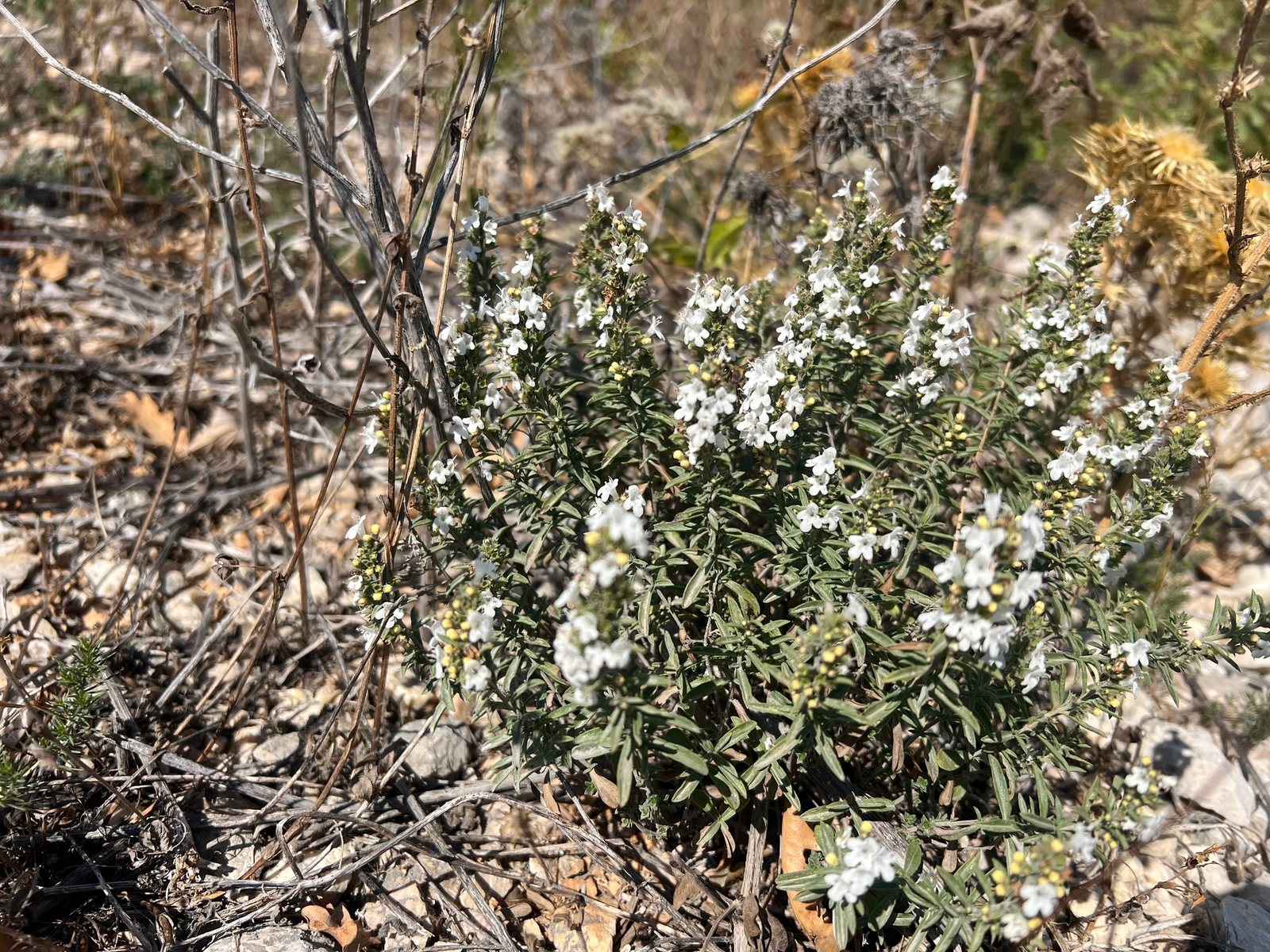
Winter savory is a small, woody perennial herb grown for its peppery leaves and clusters of tiny summer flowers. It suits sunny herb beds, gravel gardens and containers, where sharp drainage helps it survive winter. Its leaves have a stronger flavour than summer savory and are commonly used with beans, meat and stews.
At a glance
- Sun
- Full sun; tolerates light shade but becomes less compact.
- Water
- Low once established; water young plants regularly, then let the soil dry between waterings.
- Soil
- Well-drained, lean to moderately fertile soil, including sandy, stony and chalky soils. Avoid heavy soil that stays wet in winter.
- Height
- 1-1.5 ft (0.3-0.45 m)
- Spread
- 1-2 ft (0.3-0.6 m)
- Flowers
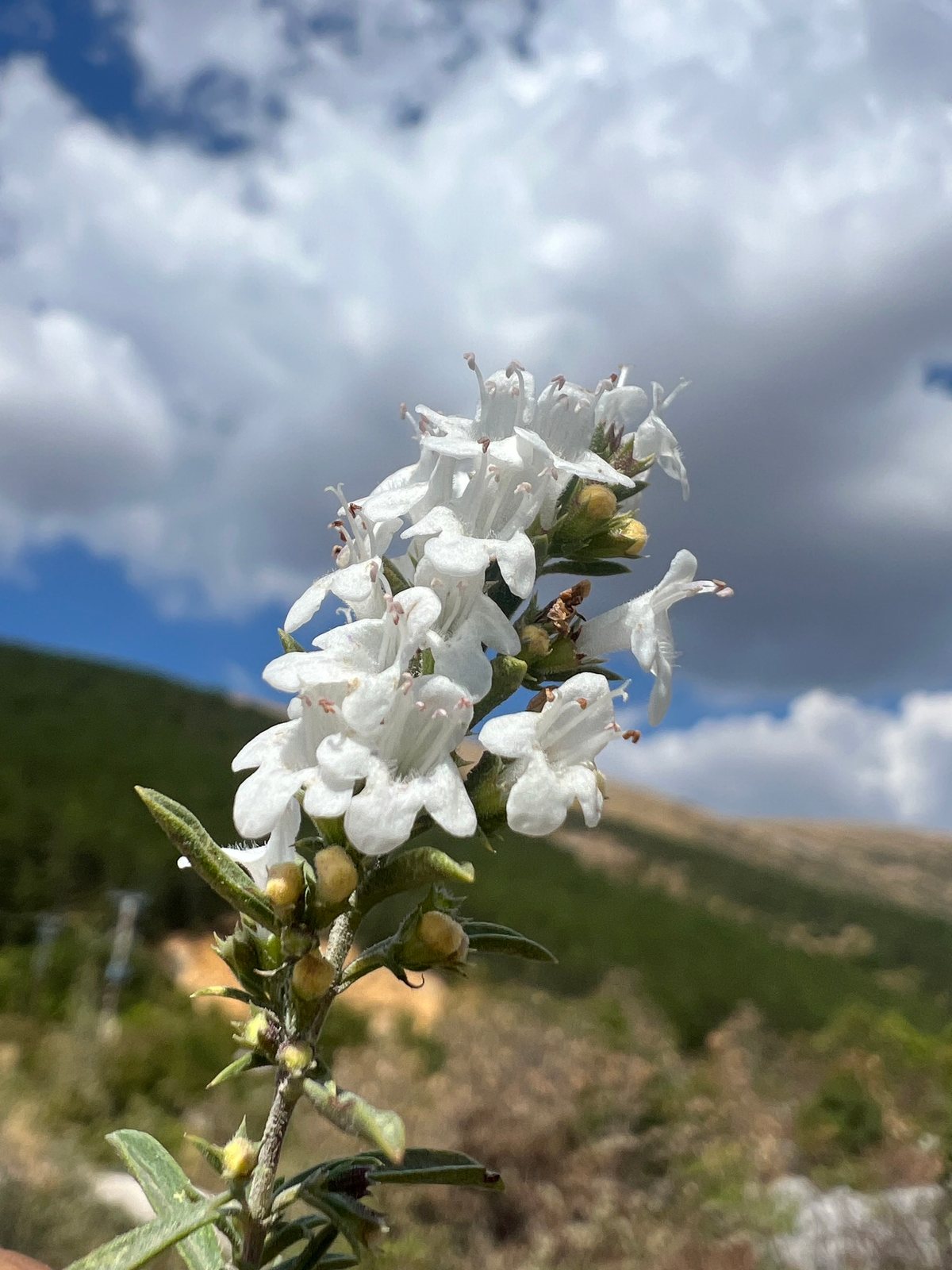
- Summer into early autumn; small white to pale pink or lilac flowers.
- Foliage
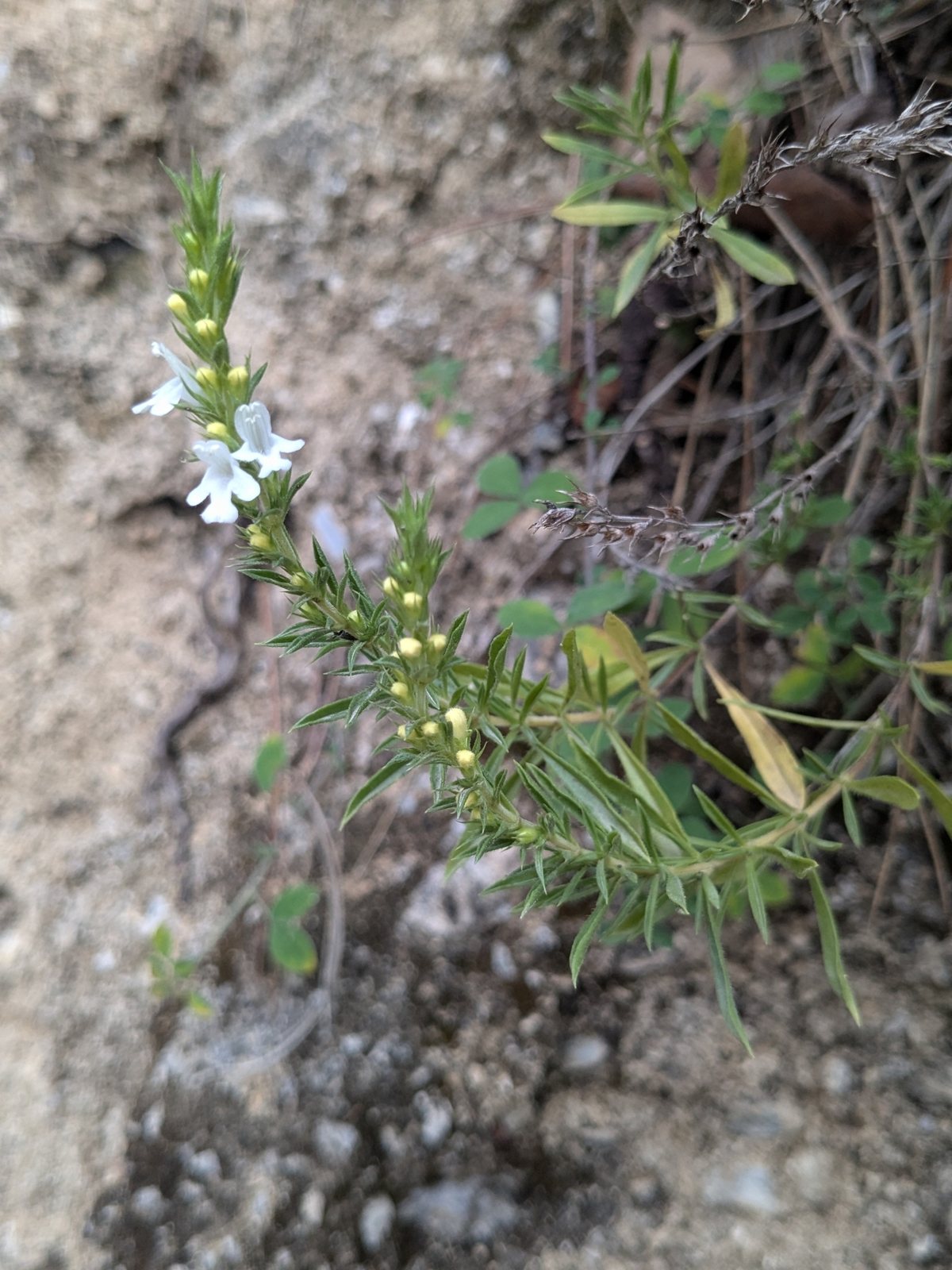
- Small, narrow, pointed, dark green leaves with a strong, peppery scent. Evergreen in mild climates, but may lose leaves in cold winters.
- Growth
- Moderate
- Care needed
- Low
The year at a glance
- Pollinators
- Deer resistant
- Drought tolerant
- Low allergen
- Fragrant
- Edible
| J | F | M | A | M | J | J | A | S | O | N | D | |
|---|---|---|---|---|---|---|---|---|---|---|---|---|
| Flowers | ||||||||||||
| Fruit | ||||||||||||
| Plant |
Northern hemisphere months. In Australia, shift them by six.
- Difficulty
- Easy
- Toughness
- Very tough
Will it suit your garden?
Pick your zone, country, light and whether you have pets.
Full sun is 6 or more hours of direct sun a day, part shade 3 to 6 hours, shade under 3.
How it grows
Planting day
1.2 ft (0.38 m)
full size
About 5 years to full size.
From a typical nursery size, at an average rate for this kind of plant. A rule of thumb, not a forecast.
Good to know
- Cats and dogs
- Safe
- Growth rate
- Moderate
Care
Jobs through the year
- WaterApr–May, Sep–Oct, every 21 days
- For established ground plants, water only during prolonged dry spells; young plants need more.
- WaterJun–Aug, every 14 days
- Water established plants only if soil is dry; allow drying between soakings.
- MulchApr
- Use a thin gravel mulch if needed, keeping the woody crown clear.
- PruneApr–May
- Once new growth appears, remove dead stems and shorten leafy shoots by about one-third.
- PruneAug–Sep
- Clip lightly after flowering without cutting into bare old wood.
- ProtectJan–Feb, Nov–Dec
- Keep drainage clear; shelter containers from persistent rain and severe freezing.
- HarvestApr–Oct
- Pick leafy tips lightly; cut stems for drying just before flowering and avoid heavy autumn harvests.
- Water during establishment, then only during prolonged dry spells; check containers more often.
- Use a container with drainage holes and a gritty potting mix.
- Avoid rich manure and heavy feeding; plants in ordinary garden soil usually need no fertiliser.
- Keep damp mulch away from the woody crown; a thin gravel mulch is suitable.
- In cold regions, choose a sheltered position with excellent winter drainage.
Pruning. In spring, once new growth appears, shorten leafy shoots by about one-third and remove dead stems. Clip lightly after flowering, but avoid cutting into bare old wood, which may not regrow.
Harvest
Pick leafy shoot tips once the plant is established, taking small amounts throughout the growing season when leaves are available. For drying, cut leafy stems just before flowering, when their flavour is strongest, and hang them in a dry, airy place out of direct sunlight. Leave plenty of foliage and avoid heavy harvesting before winter.
Through the year
- Spring
- Plant in a sunny, freely draining position after the soil becomes workable and severe frosts have passed.
- Mid spring
- Check for new growth, remove winter damage and lightly shorten leafy stems.
- Late spring
- Begin light harvesting from established plants; take softwood cuttings for replacements.
- Summer
- Harvest stems for drying just before flowering, leaving some flowers for pollinators.
- Late summer
- Trim lightly after flowering to maintain a compact shape.
- Autumn
- Stop heavy harvesting and check that pots and planting sites drain freely.
- Winter
- Avoid watering wet soil and protect containers from persistent rain and severe freezing.
In the garden
- Edge herb beds or vegetable plots with compact, aromatic plants that can be clipped lightly.
- Combine with thyme, sage and lavender in a sunny gravel garden.
- Grow beside a path or seating area where brushing the leaves releases their scent.
- Use in small containers near the kitchen for convenient harvesting.
- Plant along the front of a dry, sunny border to provide low foliage and summer flowers.
Garden styles it suits: Herb parterre, Potager (kitchen garden), Mediterranean, Dry gravel garden, Cottage garden and Edible landscape.
Plant it with: Common thyme, Common sage, English lavender, Oregano, Hyssop and Chives.
Wildlife: Flowers attract bees and other small pollinating insects. Leave some stems unharvested so the plant can flower.
Problems to watch for
- Root and crown rot in wet soil: improve drainage, keep the crown clear of wet mulch and replace badly affected plants.
- Winter dieback: use a sheltered, well-drained site and wait for spring growth before removing damaged stems.
- Leggy growth and bare centres: provide full sun, avoid excess fertiliser and trim leafy shoots regularly; replace plants that no longer respond.
- Aphids on soft shoots: rinse off with water or pinch out heavily infested tips.
Safety
Not known to be toxic to people, cats, dogs or horses. The leaves and tender shoots are used as a culinary herb; animal-specific safety information is limited. Concentrated essential oil is not equivalent to the fresh herb and should not be given to pets.
Easily confused with
Summer savory (Satureja hortensis)
Summer savory is an annual with softer, more slender stems and generally longer, softer leaves; winter savory develops a persistent woody base and firmer foliage.
Common thyme (Thymus vulgaris)
Thyme usually has smaller, more rounded, often grey-green leaves with rolled edges; winter savory has longer, pointed leaves and a sharper, peppery scent.
The name
The species name montana means 'of the mountains', referring to its mountainous native habitats in southern Europe and the Mediterranean region.
Propagation. Sow seed shallowly in spring, keeping it lightly moist until germination. Take softwood cuttings in late spring or semi-ripe cuttings in summer; cuttings are useful for replacing old, woody plants.
Checked against open data
- Accepted botanical name
- Satureja montana
- In the US and Canada
- Introduced in the lower 48 states.
- Native range
- Albania, Austria, France, Greece, Italy, Lebanon-Syria, Spain, Turkey and Yugoslavia.
- Measured
- Average height 16 cm.
Sources: GBIF (CC BY 4.0), USDA PLANTS and Trefle (CC BY 4.0). The care and design notes are LandscapeGPT's own.
See it in your own yard.
Upload a photo of your yard and see it redesigned with plants that suit your climate, each checked against your zone.