Lemonwood
Pittosporum eugenioides. Family Pittosporaceae. Tree.
Also called Tarata, Lemon-scented pittosporum.
Lemonwood is a fast-growing evergreen tree from New Zealand, grown for its fresh green, lemon-scented foliage and fragrant spring flowers. It makes a tall screen or small garden tree in mild climates, but needs shelter from cold, drying winds and is unsuitable for permanent outdoor planting across most of Canada.
At a glance
- Sun
- Full sun or partial shade; shelter from cold winds.
- Water
- Water regularly while establishing; once rooted, water during prolonged dry spells. Avoid persistently wet soil.
- Soil
- Fertile, well-drained soil; tolerates clay, loam or sand if drainage is good.
- Height
- 20-40 ft (6-12 m)
- Spread
- 13-26 ft (4-8 m)
- Flowers
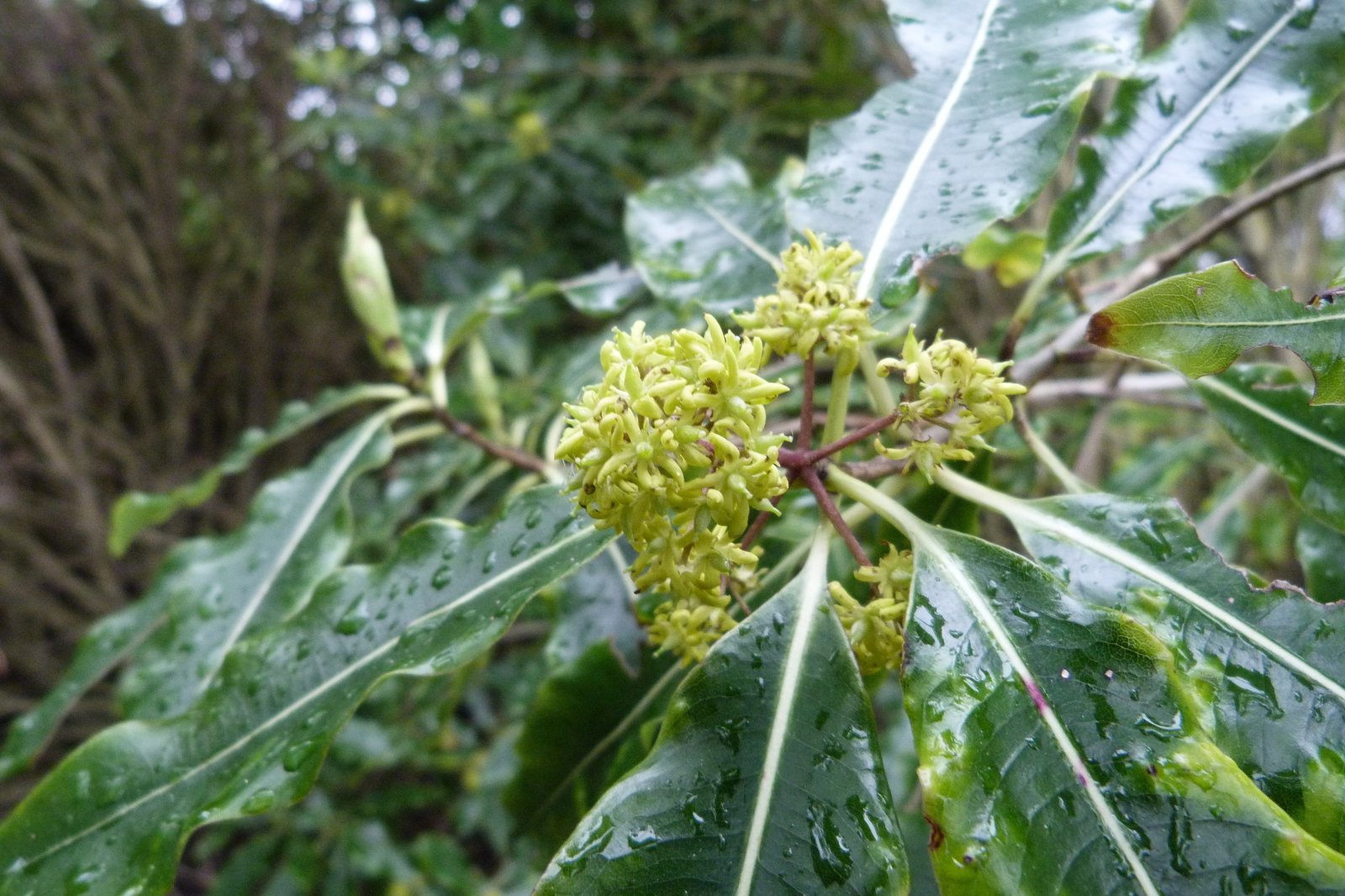
- Spring; small, fragrant yellow to cream flowers in clusters.
- Foliage
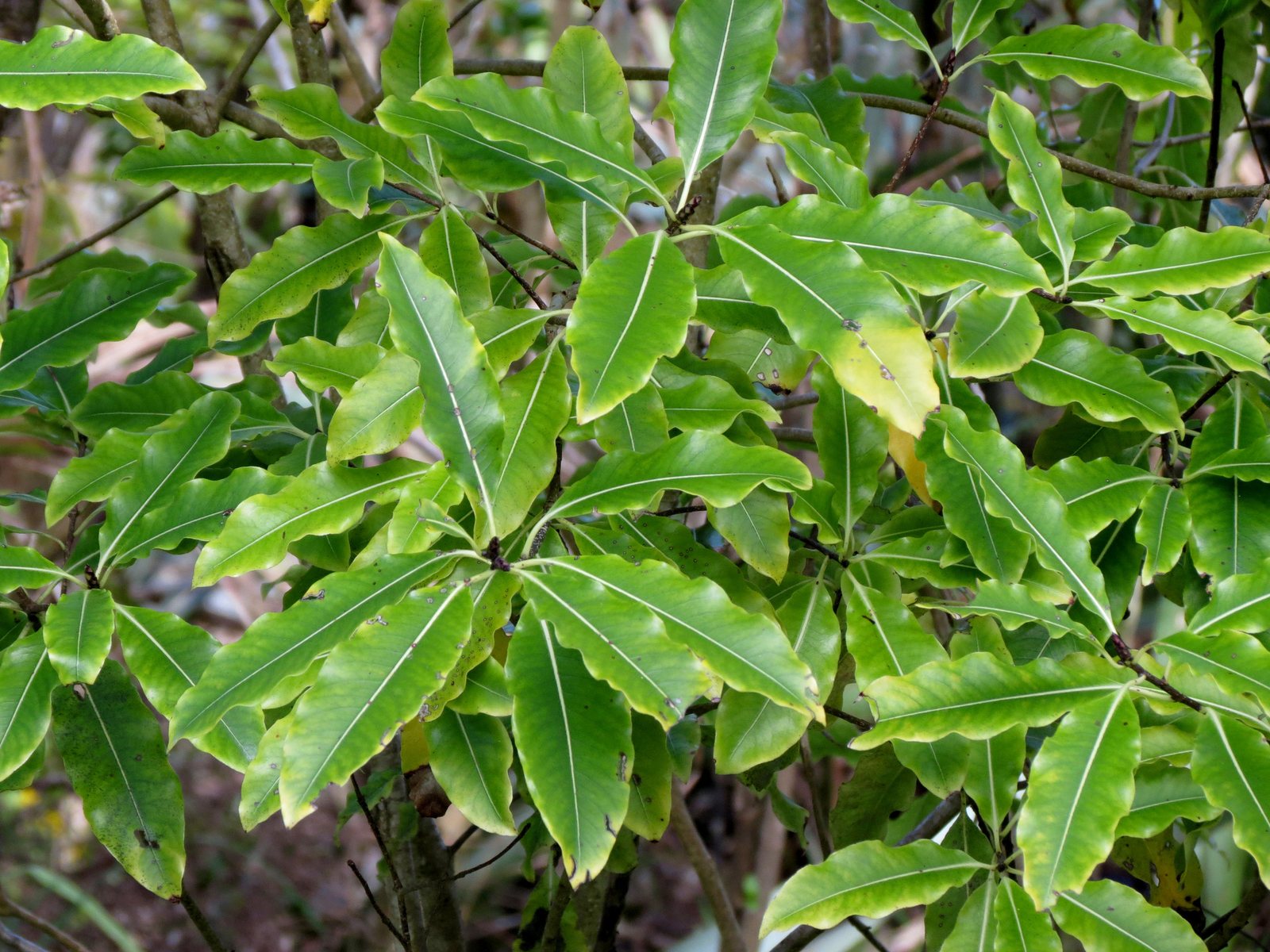
- Evergreen. Glossy, light green leaves with wavy edges and a conspicuous pale midrib; crushed leaves smell of lemon.
- Growth
- Fast in mild conditions with adequate moisture.
- Care needed
- Low
The year at a glance
- Pollinators
- Heat tolerant
- Wildlife
- Low allergen
- Fragrant
| J | F | M | A | M | J | J | A | S | O | N | D | |
|---|---|---|---|---|---|---|---|---|---|---|---|---|
| Flowers | ||||||||||||
| Fruit | ||||||||||||
| Plant |
Northern hemisphere months. In Australia, shift them by six.
- Difficulty
- Hard
- Toughness
- Fairly tough
Will it suit your garden?
Pick your zone, country, light and whether you have pets.
Full sun is 6 or more hours of direct sun a day, part shade 3 to 6 hours, shade under 3.
How it grows
Planting day
7 ft (2 m)
After 1 year
8 ft (2.5 m)
After 2 years
10 ft (3.1 m)
After 3 years
12 ft (3.6 m)
After 5 years
15 ft (4.7 m)
About 13 years to full size.
From a typical nursery size, at an average rate for this kind of plant. A rule of thumb, not a forecast.
Good to know
- Cats and dogs
- Safe
- Native to
- Australia
- Growth rate
- Fast
Care
Jobs through the year
- WaterApr–May, Sep–Oct, every 21 days
- Water established ground plants only during dry spells; young trees and pots need more frequent attention.
- WaterJun–Aug, every 14 days
- Deep-water established ground plants when the root zone dries; water regularly for the first two growing seasons.
- WaterJan–Mar, Nov–Dec, every 21 days
- Check overwintering pots and water sparingly when the surface dries; never leave them standing in water.
- FeedApr–May
- Apply a light balanced slow-release feed only on poor soil or where growth is weak.
- MulchMay
- Apply 5–8 cm of organic mulch, keeping the trunk clear.
- PruneMay–Jun
- Remove dead or crossing branches after frost risk passes; trim screens lightly after flowering.
- ProtectJan–Apr, Oct–Dec
- Not hardy outdoors in zones 6–7; use a container and bright, frost-free winter shelter, not fleece alone.
- Plant in spring in cooler districts so roots establish before winter.
- Water deeply through the first two growing seasons, allowing the soil surface to dry slightly between waterings.
- Spread 2-3 in (5-8 cm) of organic mulch over the root area, keeping it clear of the trunk.
- Apply a balanced, slow-release fertiliser in spring only if growth is weak or the soil is poor.
- Stake young trees only where needed, using a flexible tie, and remove support once the roots hold firmly.
Pruning. Remove dead, damaged or crossing branches in late spring, once frost risk has passed. Trim screens lightly after flowering; regular light trimming gives a better result than allowing them to become overgrown.
Through the year
- Spring
- Plant young trees after severe frost risk has passed and water them in thoroughly.
- Spring
- Refresh mulch and feed lightly if growth is weak.
- Late spring
- Remove frost-damaged growth once healthy new shoots show which branches are alive.
- Early summer
- Trim hedges and screens after flowering.
- Summer
- Water young plants deeply during dry weather and check leaves for scale insects.
- Autumn
- Check tree ties and drainage; avoid heavy feeding that encourages soft winter growth.
- Winter
- Protect young plants with horticultural fleece during unusually hard frosts.
In the garden
- Use as a tall evergreen boundary screen where there is room for its eventual width.
- Train as a single-stemmed tree above shade-tolerant shrubs and ferns.
- Pair with New Zealand flax and hebes for contrasting leaf shapes.
- Place near a path where its spring fragrance can be enjoyed, leaving enough space to avoid repeated hard pruning.
Garden styles it suits: Coastal, Woodland, Green on green, Sensory garden, Low-maintenance and Pacific Northwest woodland.
Plant it with: New Zealand flax, Hebe, Camellia, Hydrangea, Sweet box and Soft shield fern.
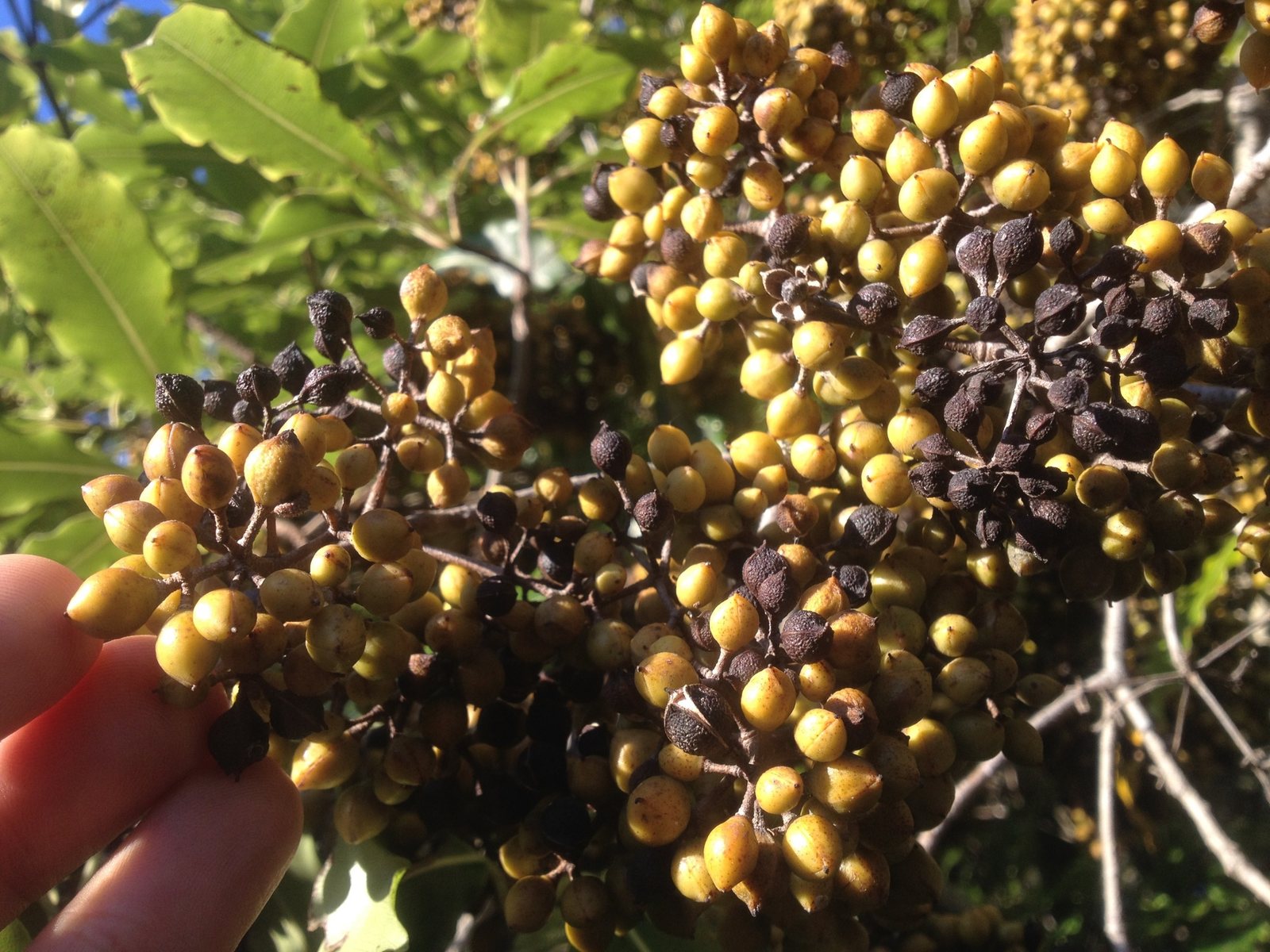
Wildlife: The fragrant flowers attract visiting insects, including bees. Birds may eat the seeds and use the dense evergreen canopy for shelter.
Problems to watch for
- Root rot in waterlogged soil: improve drainage before planting and avoid frequent watering of already wet ground.
- Frost scorch and windburn: choose a sheltered site, protect young plants during cold snaps and wait until late spring before removing damaged growth.
- Scale insects and associated sooty mould: inspect stems and leaf undersides; treat affected areas with a horticultural oil labelled for the plant and pest.
- Sparse lower growth in crowded or shaded screens: give plants adequate light and space, and trim lightly from a young age.
Safety
Lemonwood is not generally known to be toxic to people, cats, dogs or horses, although species-specific information is limited. Its leaves, capsules and sticky seeds are not food; discourage chewing or eating them, as ingestion may cause stomach upset.
Easily confused with
Kohuhu (Pittosporum tenuifolium)
Usually has smaller leaves, dark slender stems and small dark purple flowers; lemonwood has larger, lemon-scented leaves with a prominent pale midrib and yellowish flowers.
Sweet pittosporum (Pittosporum undulatum)
Has darker leaves, conspicuously wavy margins, white flowers and orange capsules; lemonwood has lighter foliage with a distinct lemon scent when crushed.
Japanese pittosporum (Pittosporum tobira)
Has thick, leathery, round-ended leaves clustered at shoot tips and larger white flowers that age yellow; lemonwood has thinner, pointed, wavy-edged leaves.
The name
Lemonwood refers to the lemon scent of its crushed leaves, while eugenioides means resembling Eugenia, a reference to its foliage.
Propagation. Sow cleaned, fresh seed in a sheltered cold frame; germination can be slow and uneven. Take semi-ripe cuttings in summer to reproduce a particular plant.
Checked against open data
- Accepted botanical name
- Pittosporum eugenioides
- Native range
- New Zealand North, New Zealand South and Tasmania.
- Measured
- Average height 840 cm.
Sources: GBIF (CC BY 4.0) and Trefle (CC BY 4.0). The care and design notes are LandscapeGPT's own.
See it in your own yard.
Upload a photo of your yard and see it redesigned with plants that suit your climate, each checked against your zone.