Lily of the valley
Convallaria majalis. Family Asparagaceae. Perennial.
Also called May bells, Our Lady's tears.
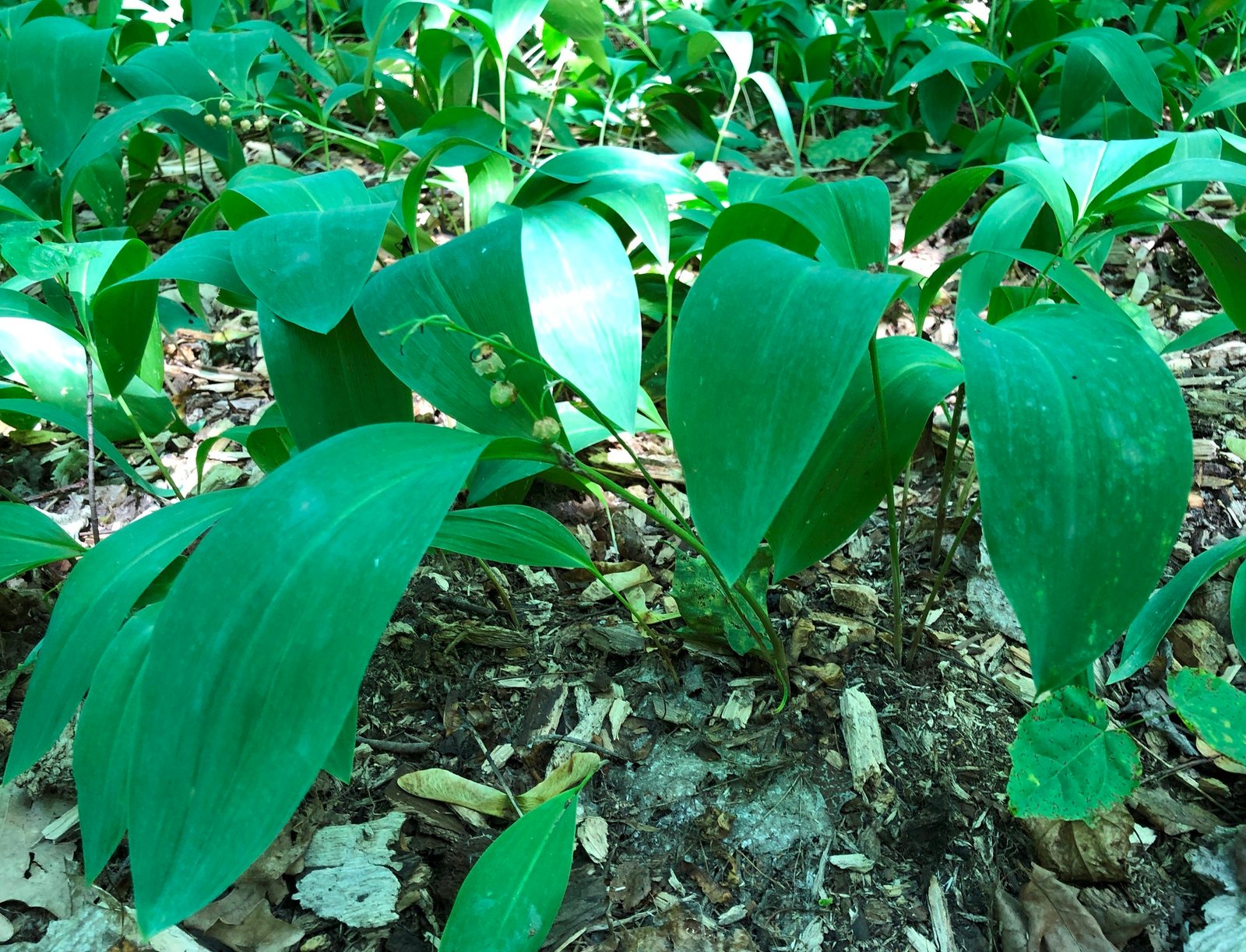
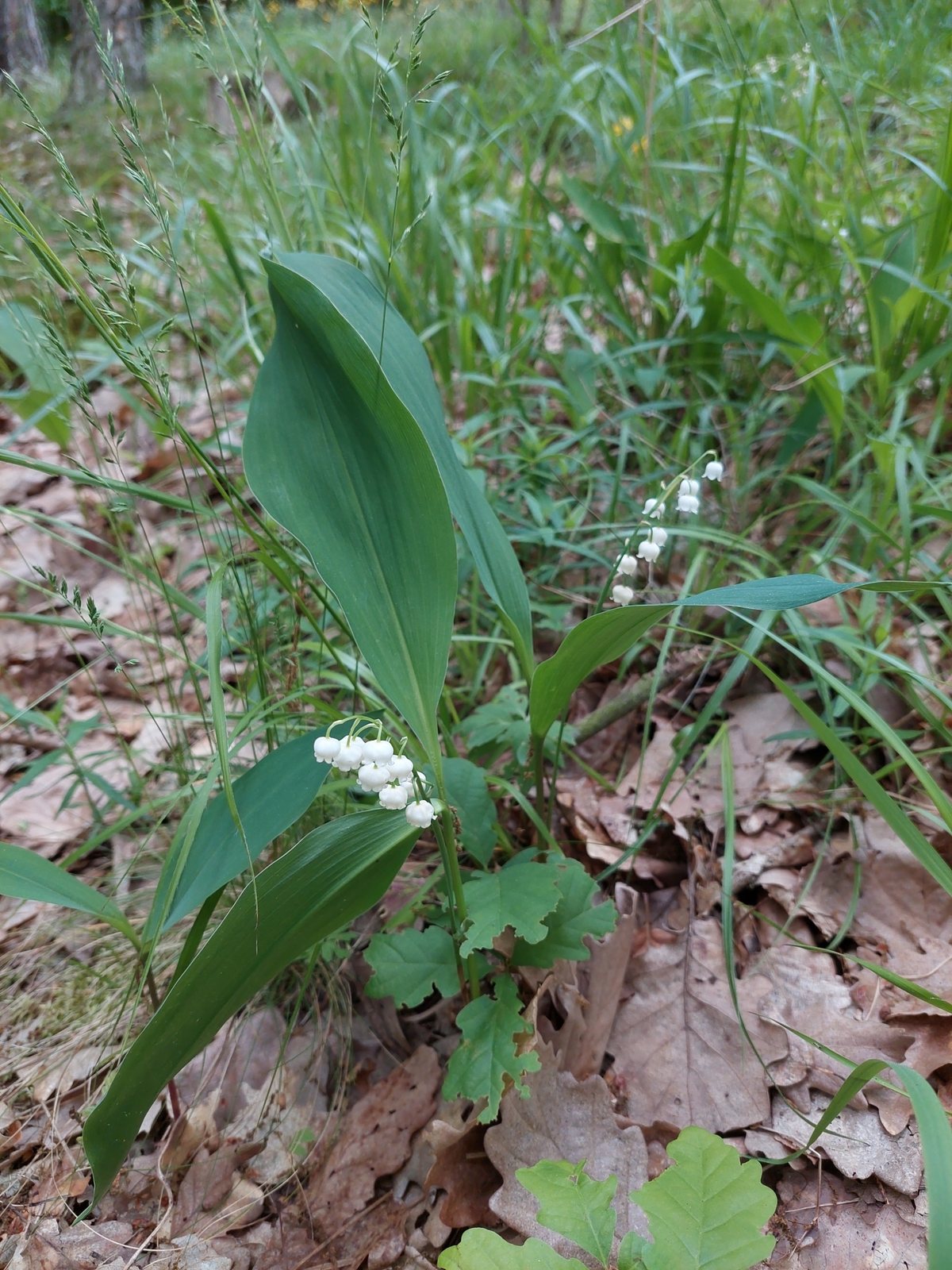
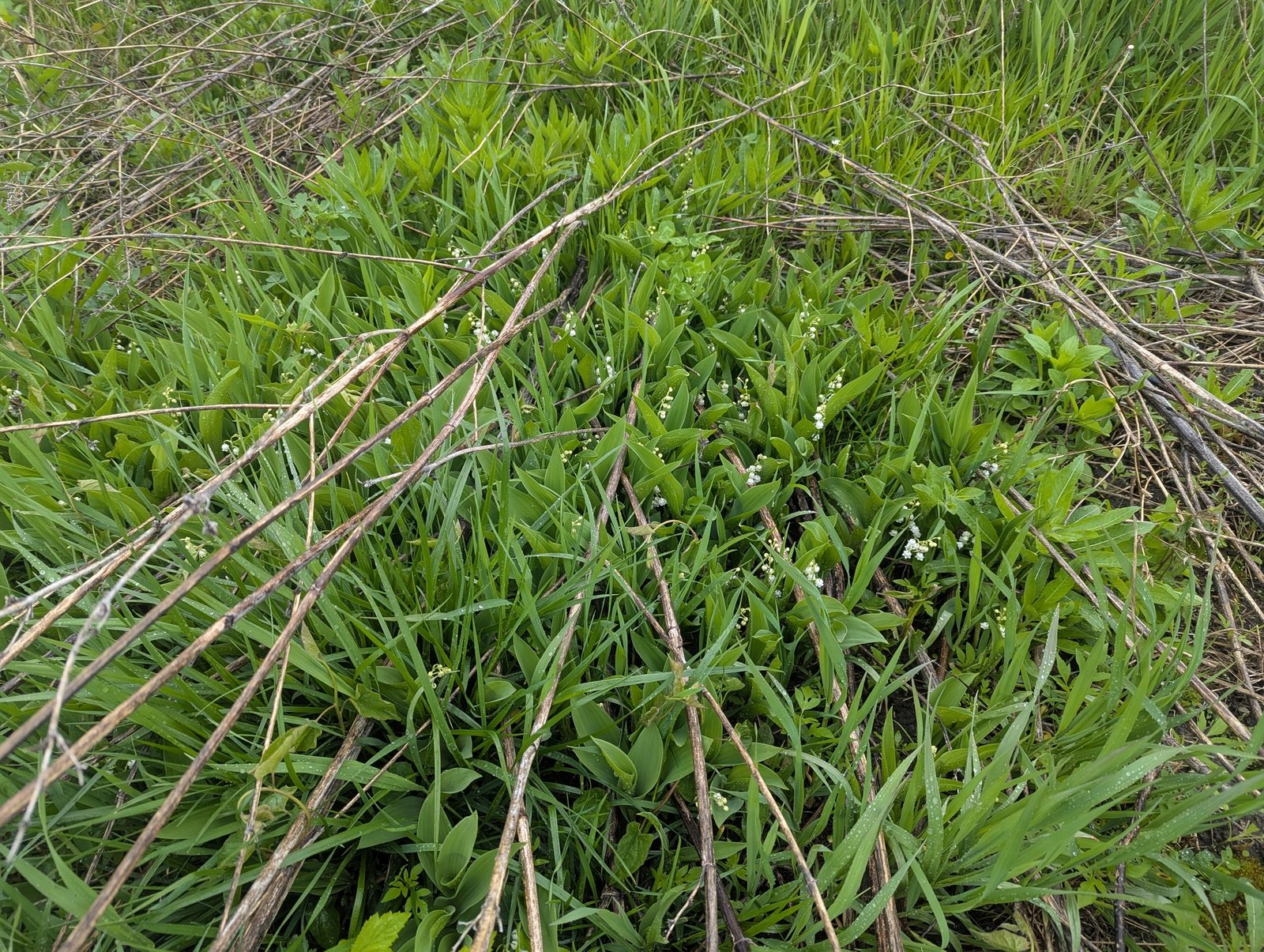
Lily of the valley is a spreading woodland perennial grown for its fragrant, white spring bells and broad green leaves. It makes dense groundcover in cool, shaded gardens, but its underground runners can overtake smaller plants. All parts are highly poisonous if eaten.
At a glance
- Sun
- Partial shade to full shade; tolerates some morning sun where summers are cool and the soil stays moist.
- Water
- Keep soil moderately moist, especially during establishment and spring growth. Established colonies tolerate short dry spells, but prolonged drought scorches foliage.
- Soil
- Humus-rich, well-drained soil that retains moisture; tolerates clay if it is not waterlogged. Adaptable to acidic, neutral or mildly alkaline soil.
- Height
- 0.5-1 ft (0.15-0.3 m)
- Spread
- 1-2 ft (0.3-0.6 m) initially; colonies spread indefinitely where conditions suit.
- Flowers
- Mid- to late spring; small, fragrant white bells hang along one side of arching stems.
- Foliage
- Broad, pointed green leaves emerge in spring, usually in pairs from each shoot, then yellow and die back in autumn; drought may cause earlier dormancy.
- Growth
- Moderate to fast once established, spreading by underground rhizomes.
- Care needed
- Medium
The year at a glance
- Deer resistant
- Cold hardy
- Low allergen
- Fragrant
| J | F | M | A | M | J | J | A | S | O | N | D | |
|---|---|---|---|---|---|---|---|---|---|---|---|---|
| Flowers | ||||||||||||
| Fruit | ||||||||||||
| Plant |
Northern hemisphere months. In Australia, shift them by six.
- Difficulty
- Easy
- Toughness
- Very tough
Will it suit your garden?
Pick your zone, country, light and whether you have pets.
Full sun is 6 or more hours of direct sun a day, part shade 3 to 6 hours, shade under 3.
How it grows
Planting day
0.7 ft (0.22 m)
full size
About 2 years to full size.
From a typical nursery size, at an average rate for this kind of plant. A rule of thumb, not a forecast.
Good to know
- Cats and dogs
- Toxic
- Native to
- the UK
- Invasive in
- the US and Canada
- In the garden
- Spreads vigorously: plan to contain it.
- Growth rate
- Fast
Care
Jobs through the year
- WaterApr–May, every 7 days
- Water established patches during dry spring weather; water new plants more consistently.
- WaterJun–Sep, every 14 days
- Deep-water established patches during prolonged drought while foliage remains green.
- MulchMar
- Spread a thin layer of leaf mould or compost without burying emerging shoots.
- DeadheadMay–Jun
- Remove spent flower stems if unwanted poisonous berries or seedlings are a concern.
- PruneJun–Aug
- Dig out encroaching rhizomes and remove fragments; never dump them in woodland.
- PruneOct–Nov
- Remove foliage only once it has fully yellowed or collapsed.
- DivideSep–Oct
- Divide crowded or poorly flowering patches and replant shoots just below the surface.
- Water new plants through their first growing season; water established patches during prolonged dry weather.
- Apply a thin layer of leaf mould or compost in spring, keeping emerging shoots uncovered.
- Avoid heavy feeding; reasonably fertile garden soil usually needs no additional fertiliser.
- Lift unwanted runners each year before they enter neighbouring planting.
- Divide crowded or poorly flowering patches in autumn, replanting shoots just below the soil surface.
Pruning. Remove spent flower stems before berries develop if you want to limit seed production or reduce access to the berries. Leave green leaves intact, then remove them once fully yellow or brown.
Through the year
- Early spring
- Top-dress with leaf mould or compost as shoots begin to emerge.
- Mid-spring
- Water during dry spells while leaves and flower stems are developing.
- Late spring
- Remove faded flower stems if berries are not wanted.
- Summer
- Check the patch edges and dig out runners encroaching on other plants.
- Autumn
- Divide established patches or plant dormant rhizomes in moist, prepared soil.
- Late autumn
- Remove collapsed foliage and check that winter rain drains freely.
In the garden
- Use as a contained groundcover beneath deciduous shrubs, where it receives spring light and summer shade.
- Plant in a bed enclosed by paving to enjoy the scent while making its spread easier to manage.
- Combine with robust ferns and hostas for contrasting leaf shapes in a shaded border.
- Use in a white-flowered woodland scheme with snowdrops and white hellebores, keeping space around less vigorous plants.
Garden styles it suits: Woodland, Cottage garden, Traditional, Romantic rose garden, Sensory garden and White garden.
Plant it with: Hostas, Male fern, Hellebores, Solomon's seal and Snowdrops.
Wildlife: Flowers may be visited by bees collecting pollen, but this is not a major nectar plant. Dense colonies can displace a more varied woodland ground layer.
Problems to watch for
- Aggressive spreading: dig out rhizomes beyond the intended patch, removing fragments and checking for regrowth; do not dump garden waste in woodland.
- Brown leaf edges or early dieback: improve moisture retention with leaf mould and water during drought; protect from hot afternoon sun.
- Few flowers: avoid nitrogen-rich fertilisers, divide congested patches and move plants from very deep shade into brighter, filtered light.
- Leaf spot or grey mould: remove affected and dead foliage, thin congested growth and water at soil level rather than over the leaves.
Safety
Highly toxic to people, cats, dogs and horses. All parts, including flowers, leaves, rhizomes and berries, contain cardiac glycosides; vase water may also be hazardous. Eating it can cause vomiting, dangerous heart-rhythm disturbances and potentially death. Seek urgent medical or veterinary advice after suspected ingestion.
Where it spreads. Spreads aggressively in suitable garden conditions. Introduced populations are invasive in parts of the northeastern and midwestern United States and southern Canada, including Ontario and Quebec. In the UK, where it is native in some areas, it can still overrun garden beds. Keep it away from natural woodland and check local guidance before planting.
Easily confused with
Wild garlic (Allium ursinum)
Wild garlic has white, star-shaped flowers in rounded clusters and leaves that smell strongly of garlic when crushed. Lily of the valley has hanging bells along an arching stem.
Solomon's seal (Polygonatum multiflorum)
Solomon's seal carries many leaves alternately along taller, arching stems, with tubular flowers hanging beneath them. Lily of the valley has leaves arising near ground level and a separate, short flower stalk.
The name
Convallaria comes from the Latin for valley, while majalis means 'of May', referring to its usual flowering season in much of Europe.
Propagation. Divide rhizomes in autumn or early spring, keeping roots attached to each pointed growing bud, often called a pip. Replant just below the surface and water well. Seed is slow and unreliable compared with division.
Checked against open data
- Accepted botanical name
- Convallaria majalis
- In the US and Canada
- Introduced in Canada and the lower 48 states.
- Native range
- Albania, Austria, Baltic States, Belarus, Belgium, Bulgaria, Central European Rus, Czechoslovakia, Denmark, East European Russia, Finland and France.
- Measured
- Soil pH 5.5 to 7.5. Average height 23 cm.
Sources: GBIF (CC BY 4.0), USDA PLANTS and Trefle (CC BY 4.0). The care and design notes are LandscapeGPT's own.
See it in your own yard.
Upload a photo of your yard and see it redesigned with plants that suit your climate, each checked against your zone.