Lindheimer's muhly
Muhlenbergia lindheimeri. Family Poaceae. Ornamental grass.
Also called Lindheimer muhly, Big muhly.
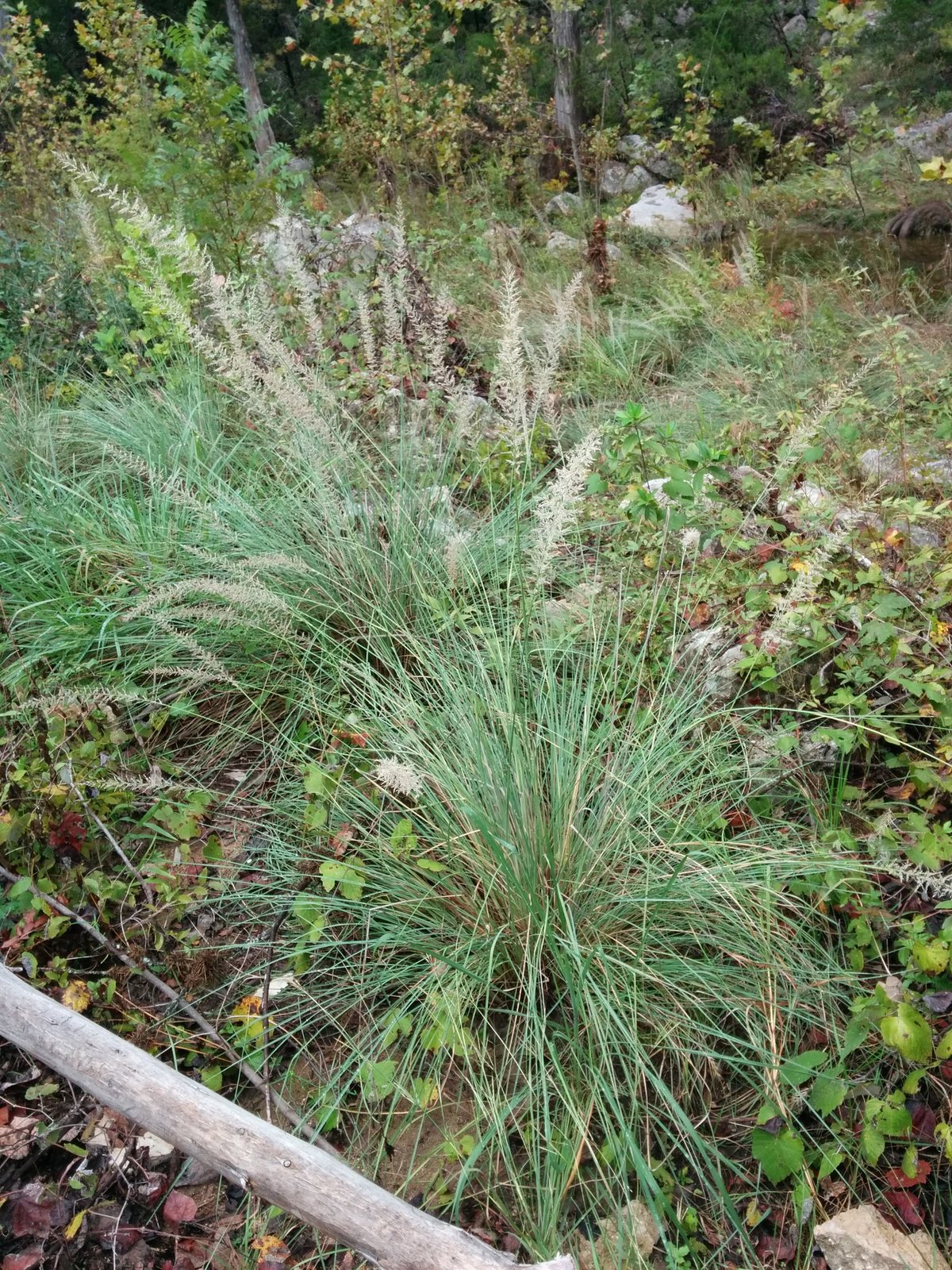
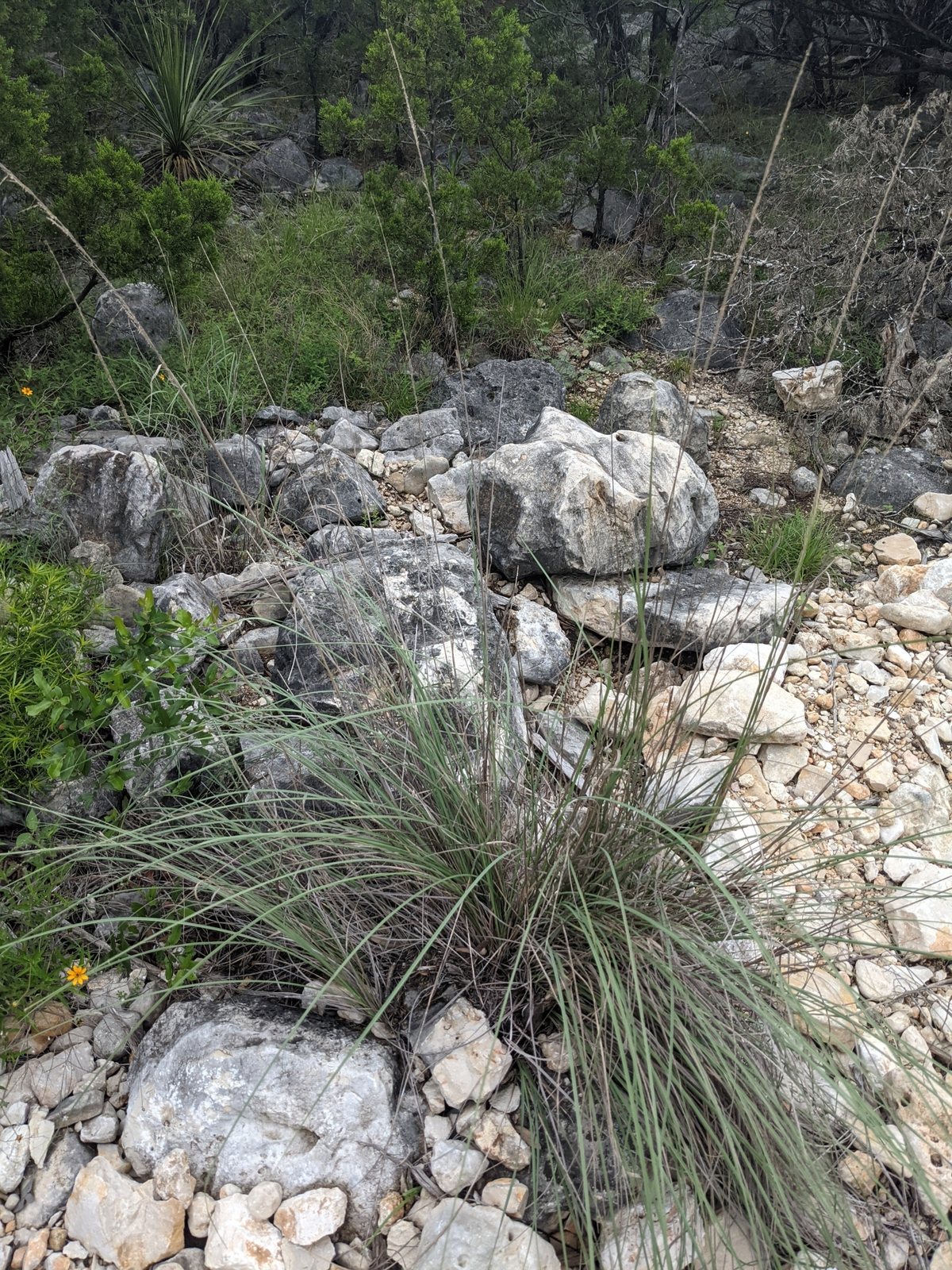
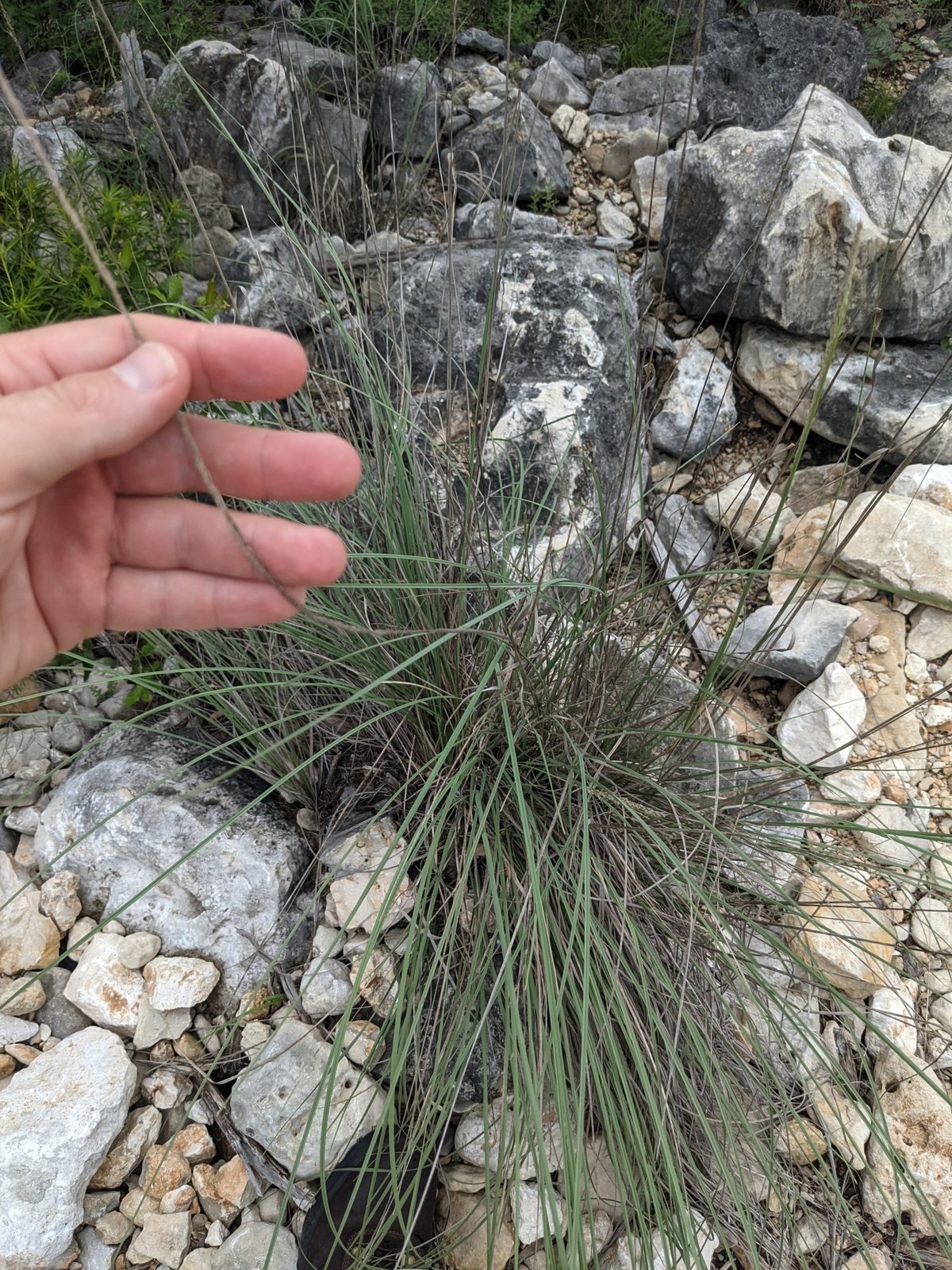
Lindheimer's muhly is a large, clump-forming grass native to Texas and northern Mexico, grown for its upright blue-green leaves and airy autumn flower spikes. It gives sunny borders structure and movement without spreading by running roots, and tolerates drought once established.
At a glance
- Sun
- Full sun; tolerates light shade but grows less upright and flowers less freely.
- Water
- Water regularly during the first growing season. Once established, water deeply during prolonged drought; avoid persistently wet soil.
- Soil
- Well-drained sandy, gravelly or loamy soil; tolerates limestone and alkaline conditions. Heavy clay is suitable only where drainage is good.
- Height
- 3-5 ft (0.9-1.5 m), including flower stems
- Spread
- 2-4 ft (0.6-1.2 m)
- Flowers
- Late summer to autumn; narrow, airy flower spikes open grey-purple and mature to silvery tan.
- Foliage
- Fine, arching to upright blue-green leaves form a dense fountain-shaped clump. Evergreen in mild climates, partly or fully dormant after hard frost.
- Growth
- Moderate; a warm-season grass that starts active growth relatively late in spring.
- Care needed
- Low
The year at a glance
- Deer resistant
- Drought tolerant
- Heat tolerant
- Wildlife
| J | F | M | A | M | J | J | A | S | O | N | D | |
|---|---|---|---|---|---|---|---|---|---|---|---|---|
| Flowers | ||||||||||||
| Fruit | ||||||||||||
| Plant |
Northern hemisphere months. In Australia, shift them by six.
- Difficulty
- Moderate
- Toughness
- Fairly tough
Will it suit your garden?
Pick your zone, country, light and whether you have pets.
Full sun is 6 or more hours of direct sun a day, part shade 3 to 6 hours, shade under 3.
How it grows
Planting day
1.1 ft (0.35 m)
After 1 year
2.3 ft (0.69 m)
After 2 years
3 ft (1 m)
After 3 years
4 ft (1.2 m)
full size
About 3 years to full size.
From a typical nursery size, at an average rate for this kind of plant. A rule of thumb, not a forecast.
Good to know
- Cats and dogs
- Safe
- Native to
- the US
- Growth rate
- Moderate
Care
Jobs through the year
- WaterApr–May, Sep, every 21 days
- Water established clumps only during prolonged drought; water first-year plants more often.
- WaterJun–Aug, every 14 days
- Soak established clumps deeply only during prolonged drought, then let soil dry.
- PruneFeb–Mar
- Remove old flower stems and dead leaves; cut fully browned clumps to 15–20 cm.
- DivideApr–May
- Divide only crowded clumps or those with dead centres as the soil warms.
- ProtectJan–Mar, Nov–Dec
- Keep crowns dry and sheltered; in zone 6, overwinter a container plant under cover.
- Plant in spring after severe frost has passed, especially near the colder end of its range.
- Water deeply through the first growing season, allowing the surface soil to dry between waterings.
- Avoid routine feeding; rich soil and excess nitrogen can produce floppy growth.
- Keep mulch clear of the crown, particularly where winters are wet.
- Divide in spring only when the clump becomes crowded or develops a dead centre.
Pruning. In late winter or early spring, before new growth begins, remove dead flower stems and comb out loose, dead leaves. If frost has browned the whole clump, cut it back to 6-8 in (15-20 cm), taking care not to cut emerging shoots.
Through the year
- Late winter
- Leave standing stems for winter structure, then remove them before fresh growth starts.
- Spring
- Plant or divide once the soil begins to warm; allow space for the mature clump.
- Late spring
- Check for new basal growth before deciding that a slow-starting clump has died.
- Summer
- Water new plants deeply during dry spells; established clumps usually need little supplemental water.
- Autumn
- Leave the silvery flower heads standing for their colour and movement.
- Winter
- Check that water drains away from the crown and remove any wet mulch piled against it.
In the garden
- Repeat clumps through a sunny border with salvias and coneflowers for an upright framework.
- Use as a specimen in gravel planting, where its blue-green leaves contrast with stone.
- Plant in loose groups beside paths or patios, leaving room for the arching leaves.
- Combine with yuccas and other drought-tolerant plants for contrasting fine and bold foliage.
Garden styles it suits: Architectural minimal, New perennial (prairie), Dry gravel garden, Desert / xeriscape, Texas Hill Country and Winter interest.
Plant it with: Autumn sage, Purple coneflower, Butterfly weed, Red yucca, Little bluestem and Lanceleaf coreopsis.
Wildlife: Dense clumps provide shelter for insects and small animals, and seed heads may feed small birds. The flowers are wind-pollinated rather than a nectar source for bees and butterflies.
Problems to watch for
- Crown or root rot in waterlogged soil: improve drainage or move the plant to a raised, freely draining position.
- Floppy growth in shade or overly rich soil: move to full sun and stop nitrogen feeding.
- Winter damage in cold, wet sites: choose a sheltered, well-drained position and wait for warm weather before removing apparently dead plants.
- Dead centre in an old clump: lift and divide in spring, retaining healthy outer sections.
Safety
Not known to be toxic to cats, dogs, horses or people. No poisonous parts are recognised, though coarse leaves can cause minor scratches and the plant is not intended as food.
Easily confused with
Pink muhly grass (Muhlenbergia capillaris)
Usually smaller, with a broad cloud of pink flowers rather than Lindheimer's muhly's taller, narrower grey-purple to silvery flower spikes.
Deer grass (Muhlenbergia rigens)
Has predominantly green foliage and long, slender tan flower spikes; Lindheimer's muhly usually has more distinctly blue-green leaves and airier flower heads.
Big bluestem (Andropogon gerardii)
Produces distinctive finger-like seed-head branches resembling a bird's foot, rather than the fine, narrow flower plumes of Lindheimer's muhly.
The name
Muhlenbergia honours the botanist Gotthilf Heinrich Ernst Muhlenberg, while lindheimeri honours Ferdinand Lindheimer, a botanist closely associated with the flora of Texas.
Propagation. Divide established clumps in spring as growth begins, replanting healthy sections promptly. Sow seed in spring in a warm, bright position, covering it only lightly and keeping it moist until germination.
Checked against open data
- Accepted botanical name
- Muhlenbergia lindheimeri
- In the US and Canada
- Native in the lower 48 states.
- Native range
- Mexico Northeast and Texas.
Sources: GBIF (CC BY 4.0), USDA PLANTS and Trefle (CC BY 4.0). The care and design notes are LandscapeGPT's own.
See it in your own yard.
Upload a photo of your yard and see it redesigned with plants that suit your climate, each checked against your zone.