Lithodora
Glandora diffusa. Family Boraginaceae. Groundcover.
Also called Purple gromwell, Lithodora diffusa.
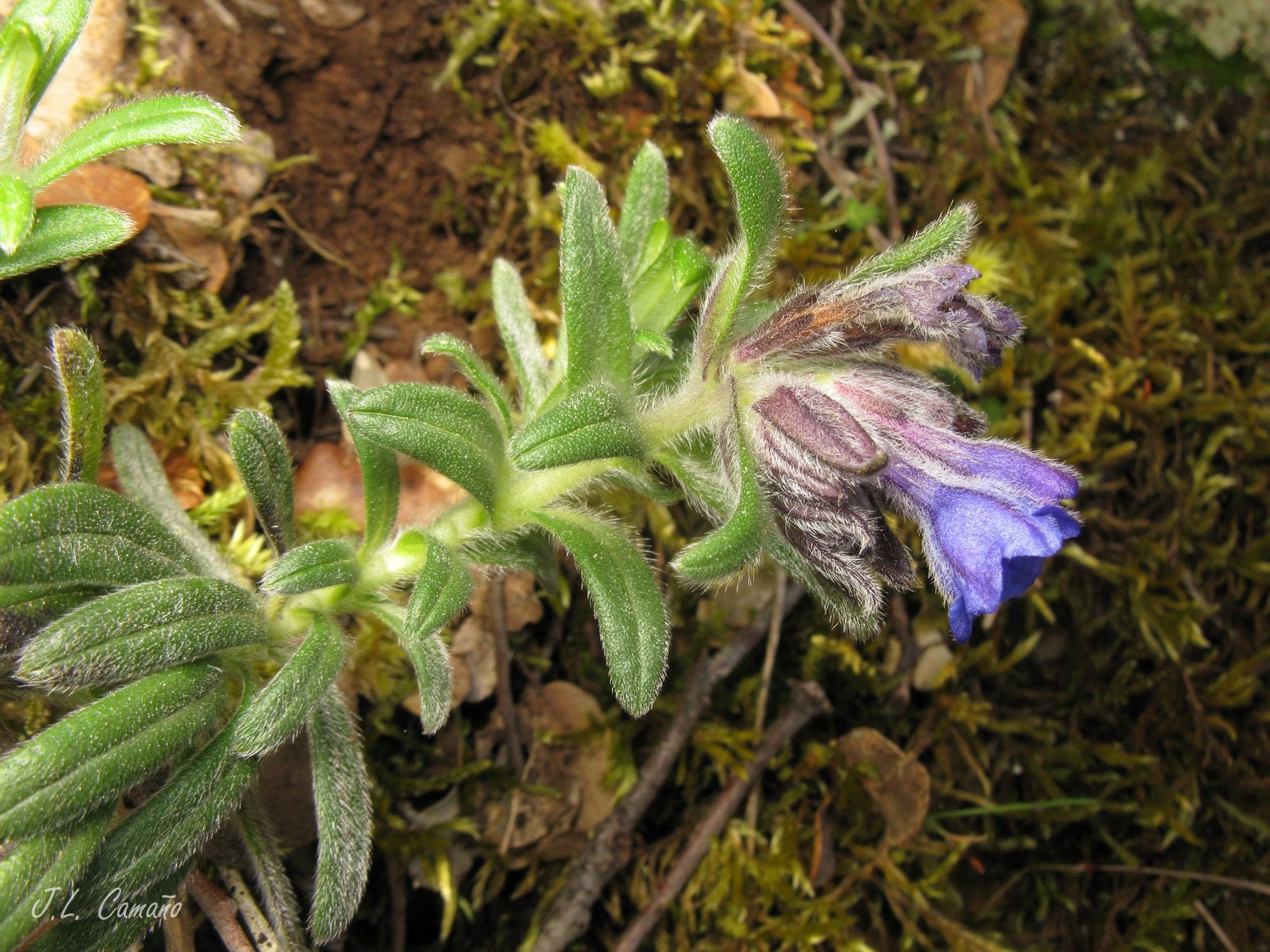
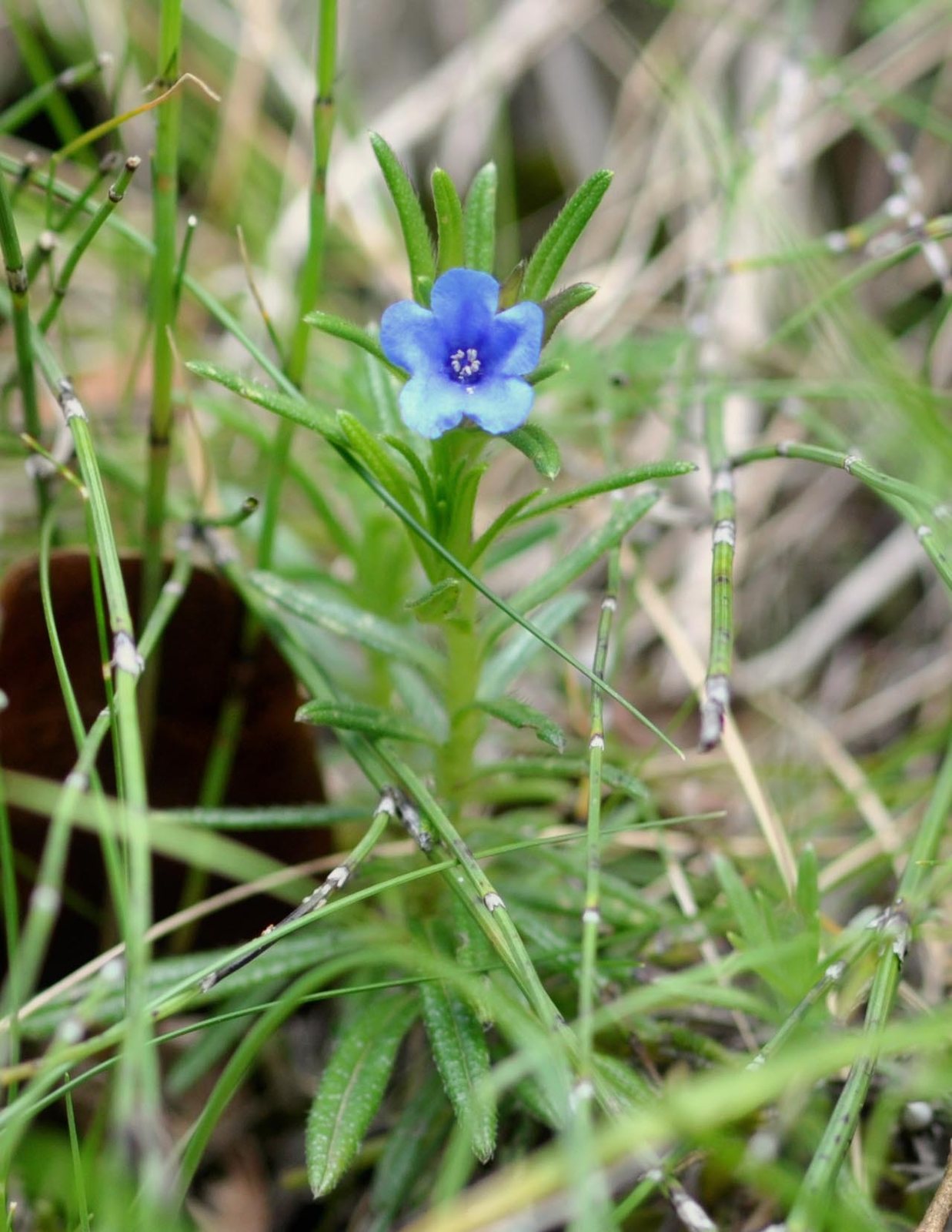
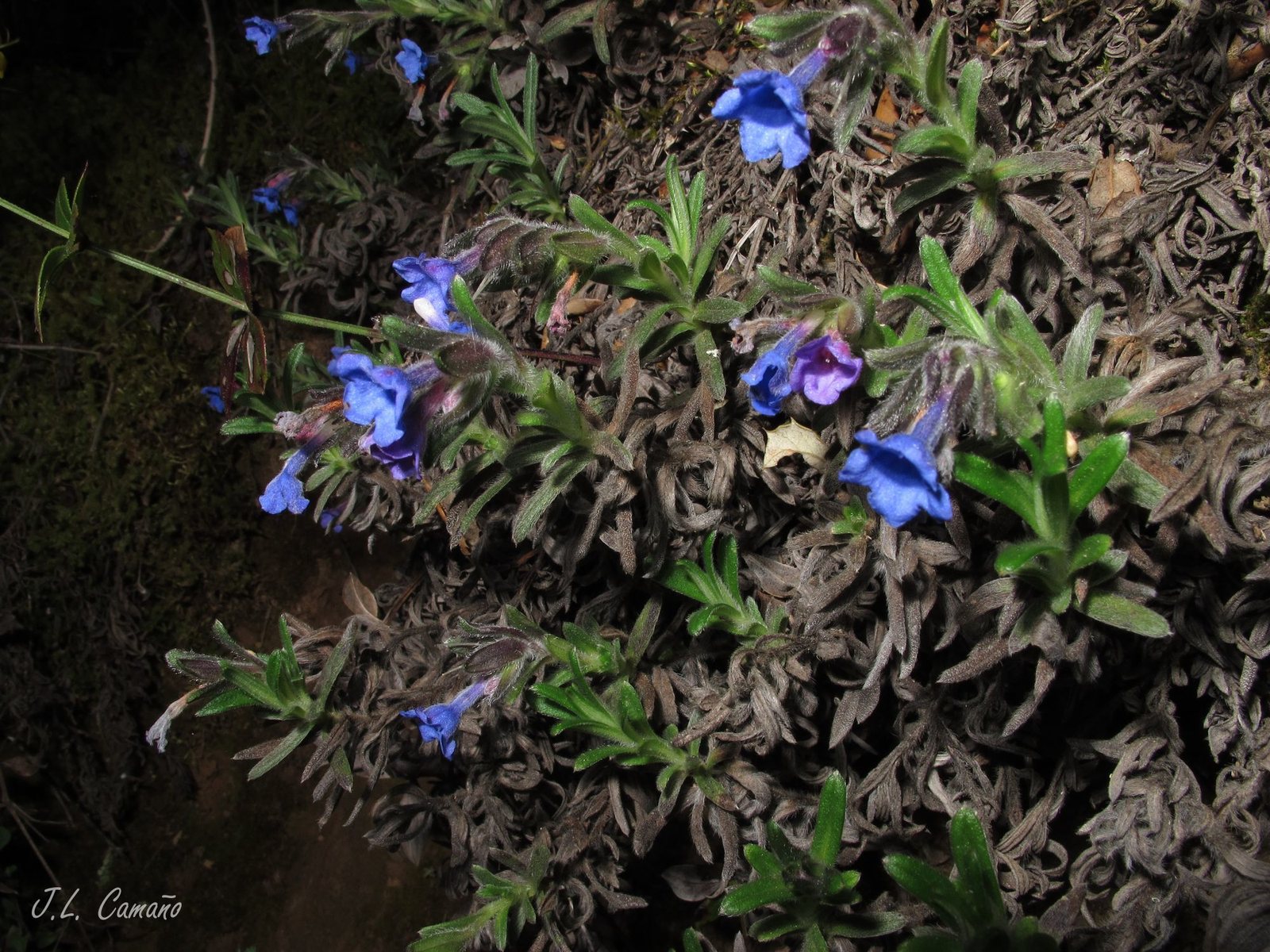
Lithodora is a low, spreading evergreen subshrub grown for its vivid blue, star-shaped flowers and small, hairy leaves. It makes a useful groundcover for sunny rock gardens and wall edges, provided the soil is acidic and drains freely. It struggles in lime-rich soil, waterlogged ground and prolonged humid heat.
At a glance
- Sun
- Full sun; light afternoon shade is helpful in hot climates.
- Water
- Water regularly while establishing, then during extended dry spells. Keep the root zone lightly moist rather than wet; established plants tolerate some drought.
- Soil
- Acidic to neutral, humus-enriched, sharply drained soil; acidic soil gives the most reliable results. Avoid chalk, heavy wet clay and sites that stay wet in winter.
- Height
- 0.5-1 ft (0.15-0.3 m)
- Spread
- 2-3 ft (0.6-0.9 m)
- Flowers
- Bright blue flowers from mid-spring into early summer, sometimes followed by scattered flowers later. Some cultivars have white markings.
- Foliage
- Evergreen. Small, narrow, dark green leaves with a rough, hairy surface, carried on low woody stems.
- Growth
- Moderate
- Care needed
- Medium
The year at a glance
- Pollinators
- Deer resistant
- Drought tolerant
- Heat tolerant
- Low allergen
| J | F | M | A | M | J | J | A | S | O | N | D | |
|---|---|---|---|---|---|---|---|---|---|---|---|---|
| Flowers | ||||||||||||
| Plant |
Northern hemisphere months. In Australia, shift them by six.
- Difficulty
- Moderate
- Toughness
- Fairly tough
Will it suit your garden?
Pick your zone, country, light and whether you have pets.
Full sun is 6 or more hours of direct sun a day, part shade 3 to 6 hours, shade under 3.
How it grows
Planting day
0.2 ft (0.06 m)
After 1 year
0.4 ft (0.12 m)
After 2 years
0.6 ft (0.19 m)
After 3 years
0.7 ft (0.22 m)
full size
About 3 years to full size.
From a typical nursery size, at an average rate for this kind of plant. A rule of thumb, not a forecast.
Good to know
- Cats and dogs
- Safe
- Growth rate
- Moderate
Care
Jobs through the year
- WaterApr–May, Sep–Oct, every 14 days
- Water established plants only when soil is drying; water new plants more often without keeping roots wet.
- WaterJun–Aug, every 7 days
- During extended dry spells, water established plants at the base and let the surface dry slightly between soakings.
- FeedApr
- Apply a light acid-loving plant feed only if growth is weak; avoid heavy feeding.
- MulchApr
- Apply a thin gravel mulch beneath trailing stems, leaving the crown clear.
- PruneMar
- Remove winter-damaged shoots back to healthy leafy growth.
- PruneJun
- Lightly trim after the main flowering flush without cutting into bare old wood.
- ProtectJan–Feb, Nov–Dec
- Keep the crown free of fallen leaves and standing water; shelter from severe frost and drying winds.
- Plant with the crown at soil level in a freely drained position; use a raised bed if drainage is poor.
- Water at the base during the first growing season, allowing the surface to dry slightly between waterings.
- Apply a light feed for acid-loving plants in spring if growth is weak; avoid heavy feeding.
- Use a thin gravel mulch to keep trailing stems off damp soil, keeping it clear of the crown.
- In cold regions, shelter plants from drying winds and prevent winter waterlogging.
Pruning. Lightly trim the leafy shoots after the main flowering flush to keep the plant compact. Do not cut hard into bare old wood, which may not regrow.
Through the year
- Early spring
- Remove dead or winter-damaged shoots, cutting back to healthy leafy growth.
- Spring
- Plant once the soil is workable and no longer waterlogged; water thoroughly after planting.
- Spring
- Check for yellowing leaves and apply a light acid-loving plant feed if needed.
- Early summer
- Lightly trim after the main flowering flush to encourage dense growth.
- Summer
- Water during prolonged drought and take semi-ripe cuttings from healthy nonflowering shoots.
- Autumn
- Clear fallen leaves from the mat and check that water drains away from the crown.
- Winter
- Keep container plants out of standing water and shelter them from severe frost and drying winds.
In the garden
- Trail it over a low retaining wall where the blue flowers can be seen at eye level.
- Plant between rocks in an acidic rock garden, allowing room for its spreading stems.
- Edge a sunny path with low blue-flowering mats beside dwarf conifers or heathers.
- Grow in a wide container with acidic, free-draining potting mix where garden soil is chalky.
Garden styles it suits: Cottage garden, Alpine rock garden, Dry gravel garden, Coastal, Blues and silvers and Small-space.
Plant it with: Heather, Dwarf pines, Creeping phlox and Blue fescue.
Wildlife: The flowers provide nectar for bees and other visiting insects. It is not a native groundcover in the United States, Canada, the United Kingdom or Australia.
Problems to watch for
- Root or crown rot in wet soil: improve drainage or replant in a raised bed; discard badly rotted plants.
- Yellow leaves with greener veins in alkaline soil: grow in acidic soil or an ericaceous container mix; chelated iron may offer temporary relief.
- Sparse, woody growth: trim lightly after flowering and replace declining plants with rooted cuttings rather than pruning hard.
- Winter browning or dieback: provide shelter from cold winds, keep winter drainage sharp and remove dead shoots in spring.
Safety
Not known to be toxic to people, cats, dogs or horses. Species-specific poisoning information is limited, so do not treat any part as edible; the rough, hairy foliage may irritate sensitive skin.
Easily confused with
Creeping phlox (Phlox subulata)
Forms similar flowering mats, but has needle-like leaves and flatter flowers with visibly notched petal tips; flowers may be pink, purple, white or bluish.
Hardy plumbago (Ceratostigma plumbaginoides)
Has broader leaves, flowers mainly in late summer and autumn, and loses its foliage in winter, often after turning red.
Purple gromwell (Buglossoides purpurocaerulea)
Produces more upright leafy shoots, has flowers that change from purple to blue, and spreads by rooting runners; it usually grows in partial shade rather than an open rock garden.
The name
The species name diffusa means spreading, referring to the plant's low, outward-growing habit.
Propagation. Take semi-ripe cuttings from nonflowering shoots in summer and root them in a gritty propagation mix. Layering low stems is another option; seed-grown plants may not match named cultivars.
Checked against open data
- Accepted botanical name
- Glandora diffusa
- Native range
- Spain.
Sources: GBIF (CC BY 4.0) and Trefle (CC BY 4.0). The care and design notes are LandscapeGPT's own.
See it in your own yard.
Upload a photo of your yard and see it redesigned with plants that suit your climate, each checked against your zone.