Heather
Calluna vulgaris. Family Ericaceae. Shrub.
Also called Scotch heather, Ling, Common heather.
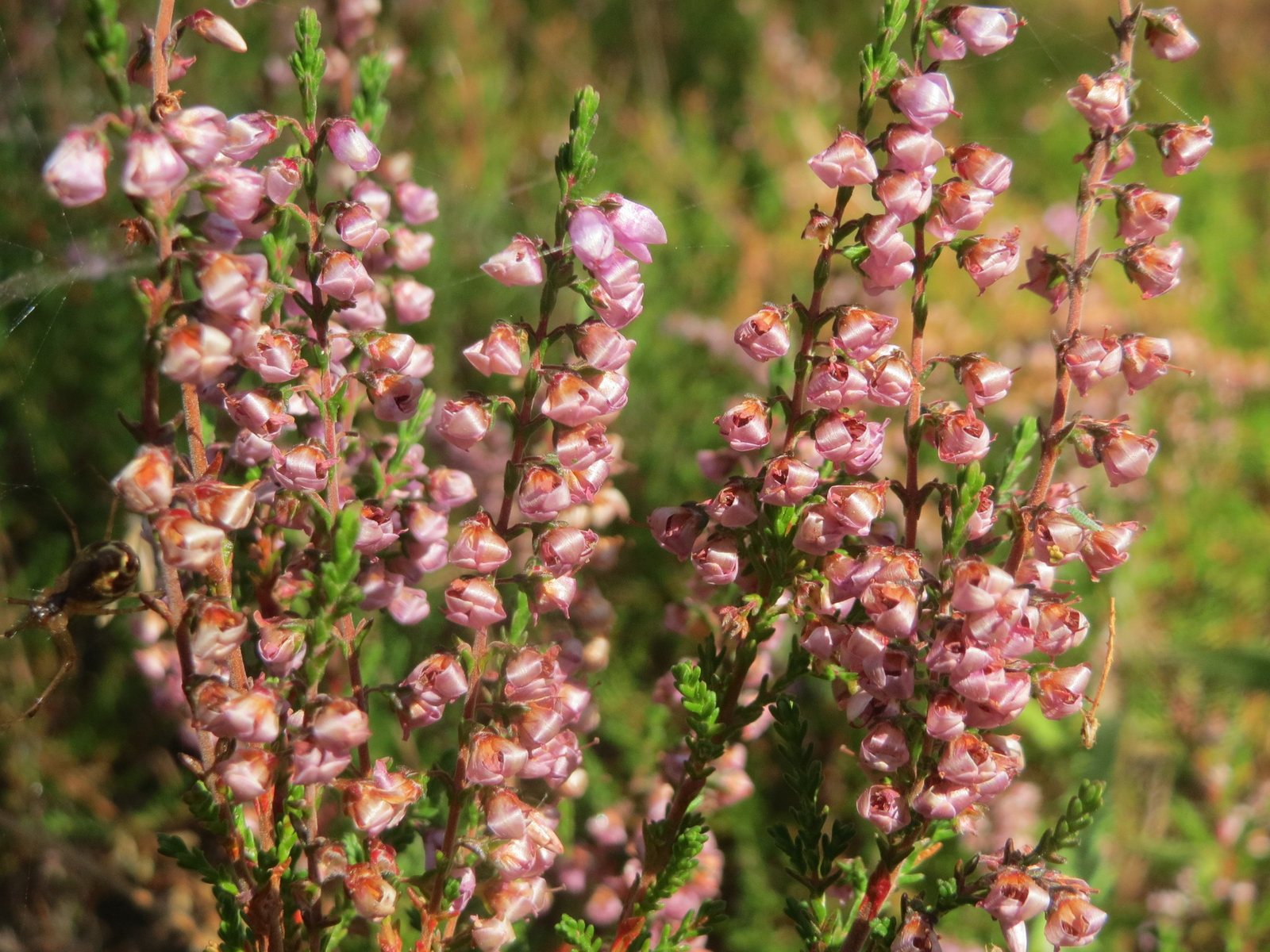
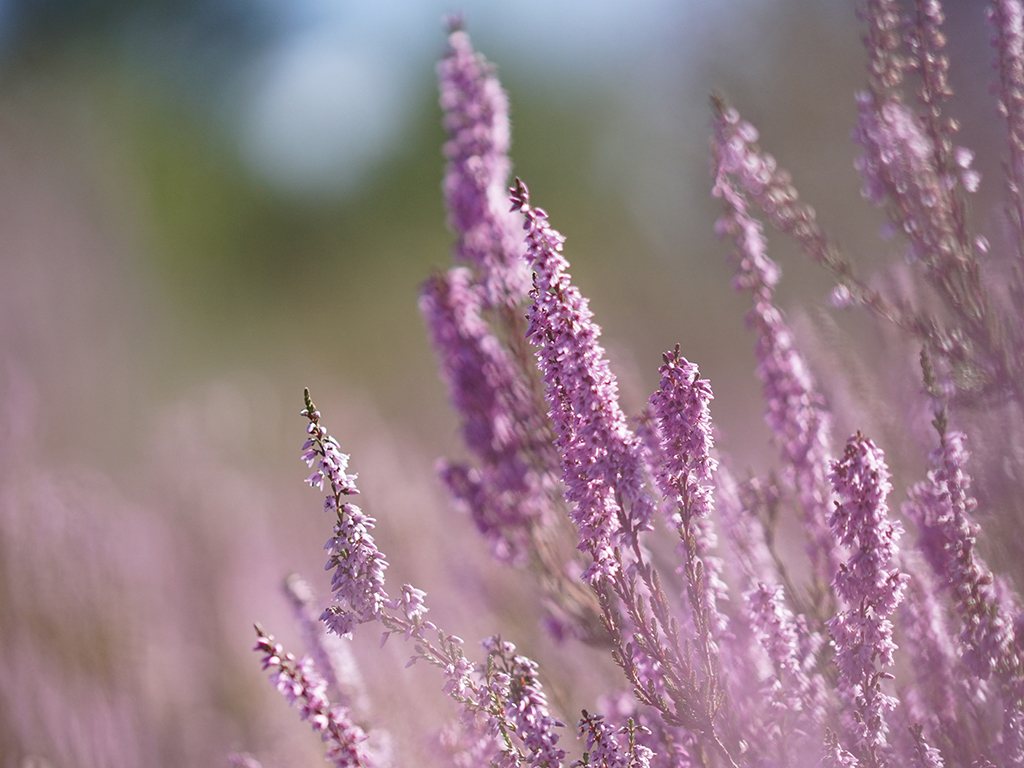
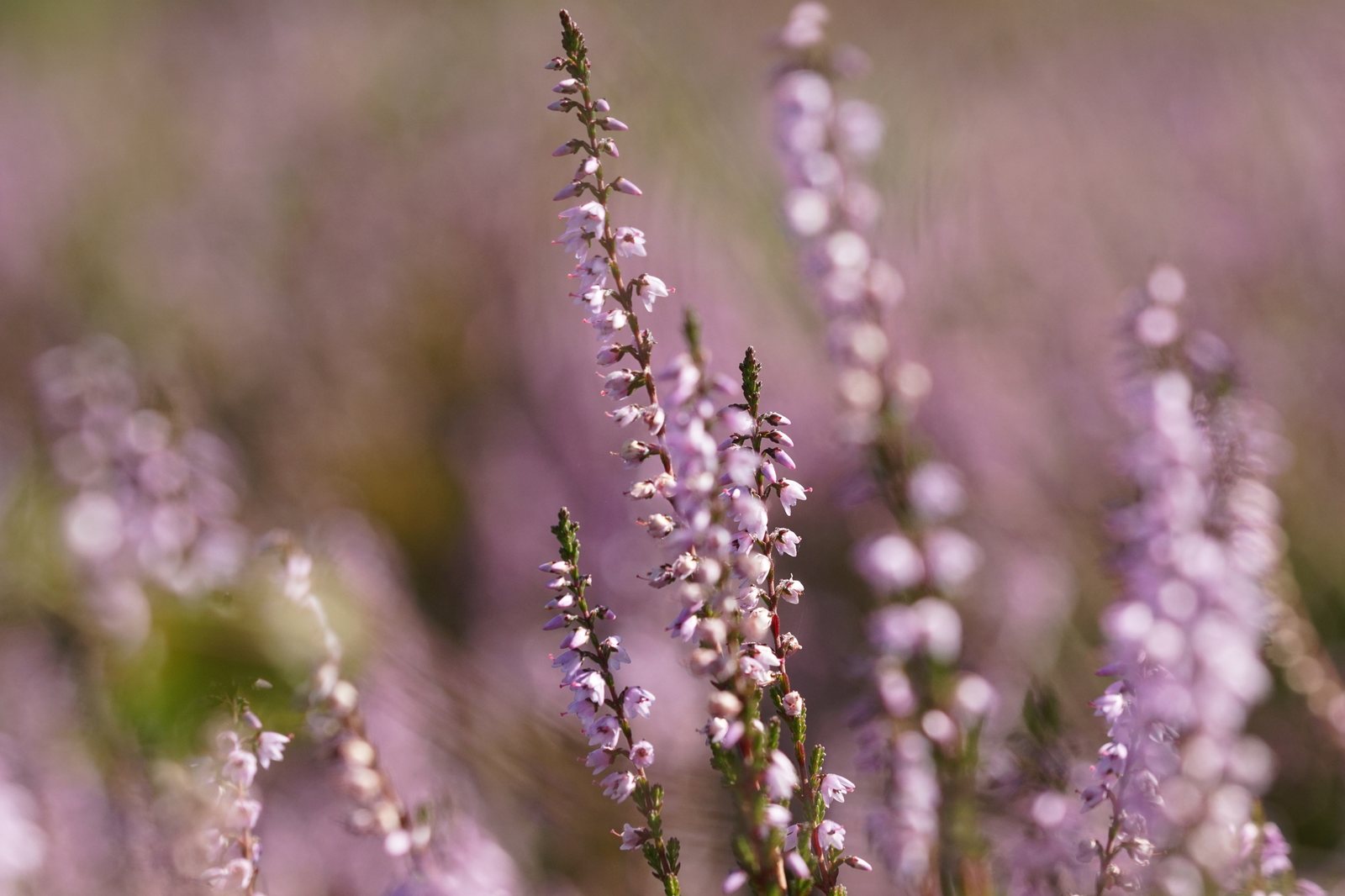
Heather is a small evergreen shrub grown for its late-summer flowers and fine-textured foliage, which may turn bronze or red in winter. It suits sunny gardens with acidic soil and cool summers; it struggles in alkaline ground, waterlogged soil and prolonged hot, humid weather.
At a glance
- Sun
- Full sun is best; tolerates light shade, but flowers less freely.
- Water
- Keep evenly moist while establishing. Established plants tolerate short dry spells in cool climates, but need watering during prolonged drought; never leave roots waterlogged.
- Soil
- Acidic soil, ideally pH 4.5-5.5, with good drainage and some organic matter. Avoid chalk, lime and heavy, wet clay.
- Height
- 1-2 ft (0.3-0.6 m)
- Spread
- 1-2.5 ft (0.3-0.75 m)
- Flowers
- Summer to autumn, usually late summer; small pink to purple flowers, with white and deeper pink cultivars available.
- Foliage
- Evergreen. Tiny, overlapping, scale-like leaves on densely branched stems. Usually green, with gold, silver-grey and winter-bronzing cultivars available.
- Growth
- Slow to moderate; compact cultivars may grow considerably more slowly.
- Care needed
- Low
The year at a glance
- Pollinators
- Cold hardy
- Low allergen
| J | F | M | A | M | J | J | A | S | O | N | D | |
|---|---|---|---|---|---|---|---|---|---|---|---|---|
| Flowers | ||||||||||||
| Plant |
Northern hemisphere months. In Australia, shift them by six.
- Difficulty
- Moderate
- Toughness
- Fairly tough
Will it suit your garden?
Pick your zone, country, light and whether you have pets.
Full sun is 6 or more hours of direct sun a day, part shade 3 to 6 hours, shade under 3.
How it grows
Planting day
1.5 ft (0.45 m)
full size
About 7 years to full size.
From a typical nursery size, at an average rate for this kind of plant. A rule of thumb, not a forecast.
Good to know
- Cats and dogs
- Safe
- Native to
- the UK
- Invasive in
- the US and Australia
- Growth rate
- Slow
Care
Jobs through the year
- WaterApr–May, Sep–Oct, every 14 days
- Water established plants only if soil is drying; keep new plants evenly moist and use rainwater where tap water is alkaline.
- WaterJun–Aug, every 7 days
- During prolonged dry weather, soak established roots without waterlogging; new plants need closer moisture checks.
- PruneMar
- Trim spent flower spikes and leafy tips before new growth; never cut into bare old wood.
- MulchApr–May
- Refresh a thin layer of composted pine bark, keeping stems clear.
- FeedApr
- Only if growth is weak in suitable acidic soil, apply a light acid-loving plant feed; never lime.
- ProtectOct–Nov
- Clear smothering fallen leaves and ensure winter rain drains freely.
- Soak the root ball before planting and keep its surface level with the surrounding soil.
- Water regularly through the first growing season, allowing excess water to drain away.
- Mulch lightly with composted pine bark, keeping mulch away from the stems.
- Do not lime the soil; use rainwater where tap water is strongly alkaline.
- Feed only if growth is weak, using a light application of fertiliser for acid-loving plants in spring.
- In containers, use free-draining ericaceous potting mix and check moisture frequently.
Pruning. In early spring, trim off the previous year's flower spikes and lightly shape the leafy shoots before new growth gets underway. Do not cut into bare, old wood, which often fails to regrow.
Through the year
- Early spring
- Trim spent flower spikes without cutting below the leafy growth.
- Spring
- Plant in acidic, well-drained soil and water thoroughly.
- Late spring
- Refresh the light bark mulch and check new plants for drying roots.
- Summer
- Water during prolonged dry spells, especially plants in containers.
- Late summer
- Take semi-ripe cuttings from healthy, non-flowering shoots.
- Autumn
- Check drainage before winter and remove fallen leaves that smother the plants.
In the garden
- Plant in broad groups on sunny, acidic banks for a low carpet of late-season colour.
- Edge paths with compact cultivars, leaving room for their mature spread.
- Combine with dwarf conifers and small ornamental grasses for contrasting texture and winter structure.
- Mix with winter-flowering heaths that tolerate acidic soil to extend the flowering season.
- Grow in containers of ericaceous potting mix where garden soil is alkaline.
Garden styles it suits: Cottage garden, Woodland, Pollinator garden, Winter interest, Mountain lodge and Low-maintenance.
Plant it with: Dwarf rhododendrons, Japanese pieris, Dwarf pines, Common juniper, Sheep's fescue and Winter heath.
Wildlife: Open flowers provide late-season nectar and pollen for bees and other insects. Bud-flowering cultivars, whose flowers remain closed, offer little accessible nectar or pollen.
Problems to watch for
- Yellow leaves and weak growth in alkaline soil: check soil pH; move to suitable acidic ground or a container of ericaceous potting mix rather than repeatedly adding fertiliser.
- Root rot, including Phytophthora, in wet soil: remove badly affected plants, improve drainage and avoid replanting into persistently saturated ground.
- Browning or dieback during drought: check moisture within the root ball, water deeply and maintain a light mulch.
- Leggy plants with bare centres: trim lightly every spring; replace old plants rather than cutting hard into leafless wood.
Safety
Not known to be toxic to cats, dogs, horses or people. No part is generally recognised as poisonous, though eating garden plants may still cause digestive upset.
Where it spreads. Invasive in New Zealand, especially the central North Island. It is a declared weed in Tasmania and is prohibited in Massachusetts, United States. Check local restrictions before planting near heathland or other natural areas.
Easily confused with
Winter heath (Erica carnea)
Has needle-like leaves in whorls and usually flowers from winter into spring; heather has tiny, overlapping scale-like leaves and usually flowers in summer and autumn.
Bell heather (Erica cinerea)
Has narrow leaves in whorls of three and conspicuous rounded, bell-shaped flowers; heather has scale-like leaves and smaller flowers with prominent petal-like sepals.
Mexican heather (Cuphea hyssopifolia)
Has broader, flat, opposite leaves and small, open flowers. It is a frost-tender shrub, unlike cold-hardy true heather.
The name
Calluna comes from the Greek word meaning 'to sweep', referring to the use of its branches for brooms, while vulgaris means 'common'.
Propagation. Take semi-ripe cuttings in late summer, or layer low stems into acidic, gritty soil and separate them after rooting. Seed-grown plants vary; use cuttings or layering to preserve a named cultivar.
Checked against open data
- Accepted botanical name
- Calluna vulgaris
- In the US and Canada
- Introduced in Canada, the lower 48 states and St. Pierre and Miquelon.
- Native range
- Austria, Azores, Baltic States, Belarus, Belgium, Bulgaria, Central European Rus, Corse, Czechoslovakia, Denmark, East European Russia and Finland.
- Measured
- Average height 21 cm.
Sources: GBIF (CC BY 4.0), USDA PLANTS and Trefle (CC BY 4.0). The care and design notes are LandscapeGPT's own.
See it in your own yard.
Upload a photo of your yard and see it redesigned with plants that suit your climate, each checked against your zone.