Little Henry sweetspire
Itea virginica 'Sprich'. Family Iteaceae. Shrub.
Also called Little Henry Virginia sweetspire, Itea virginica 'Sprich'.
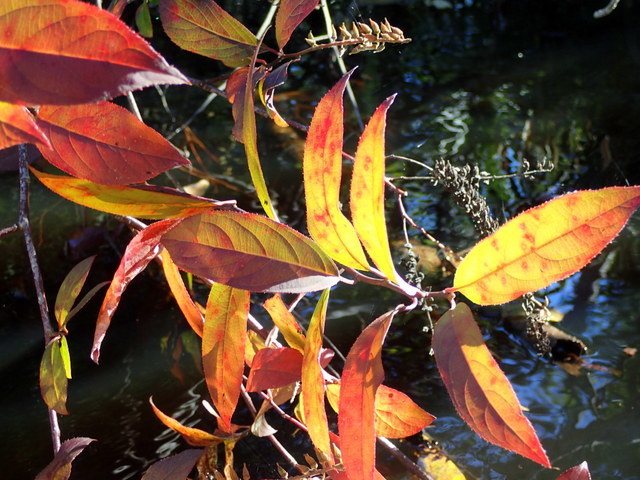
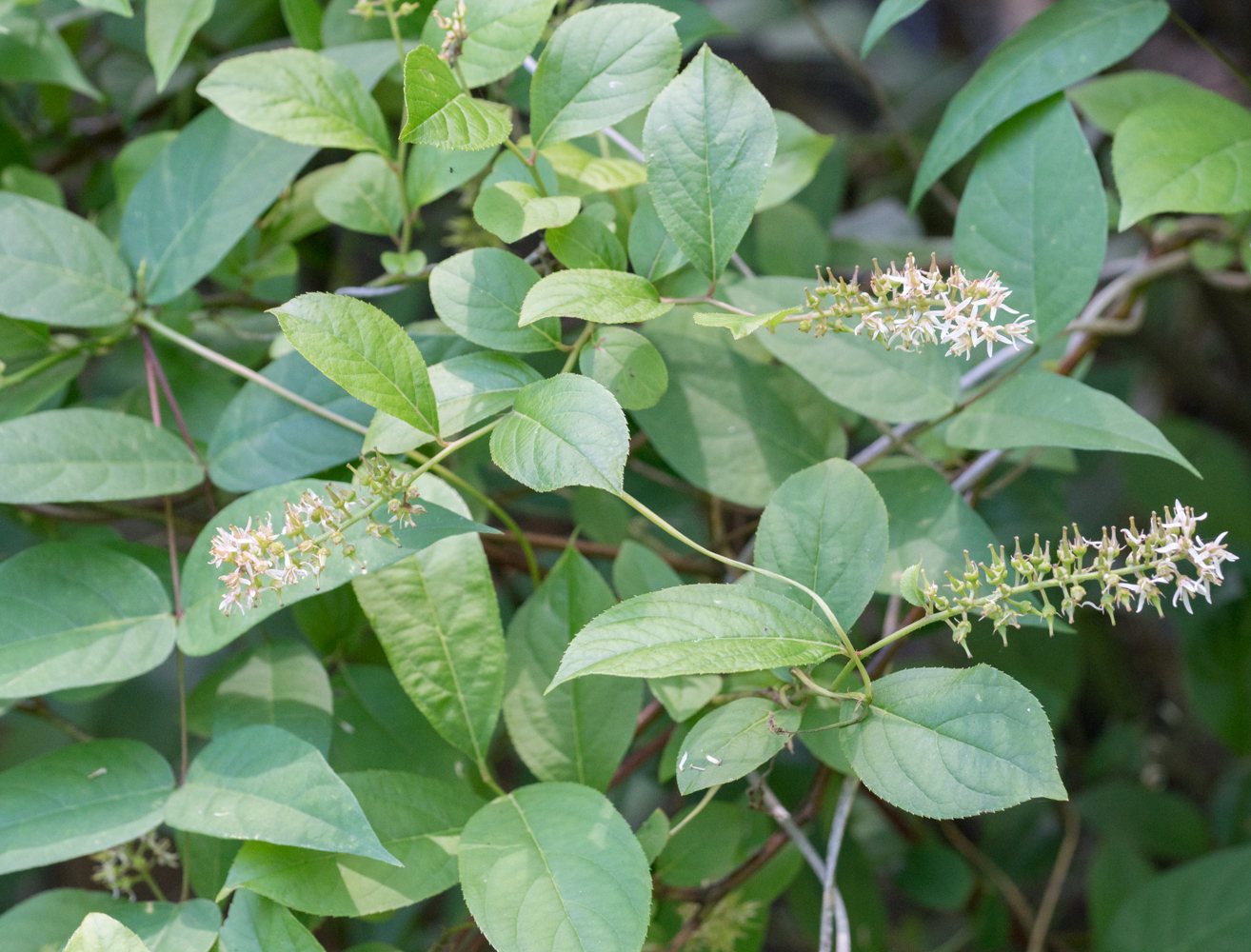
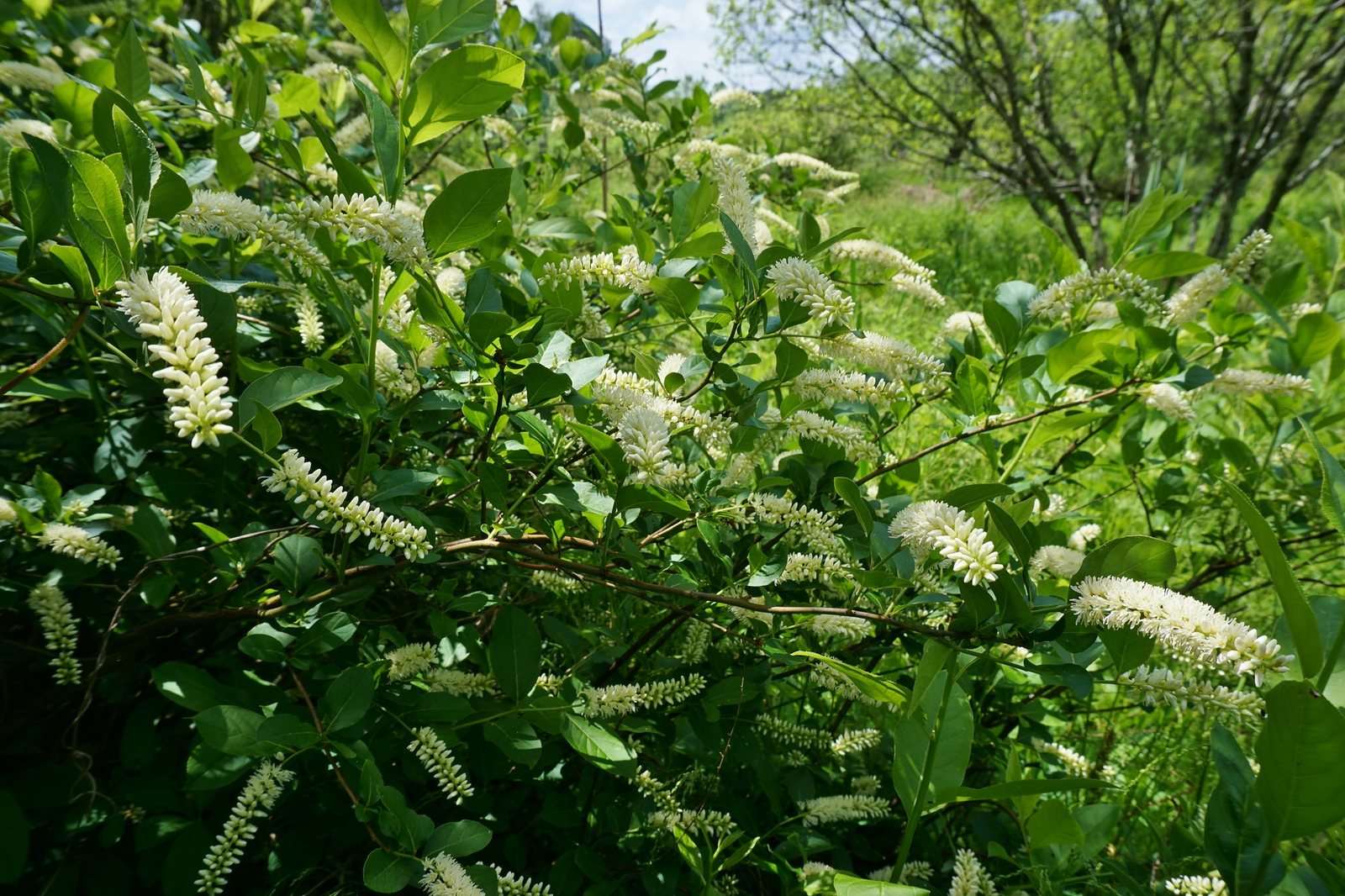
Little Henry is a compact, deciduous form of Virginia sweetspire, a shrub native to the eastern United States. Gardeners grow it for its fragrant, drooping white flower spikes and red to burgundy autumn foliage, especially in moist borders and small gardens.
At a glance
- Sun
- Full sun to partial shade; tolerates deeper shade but flowers less and may develop weaker autumn colour.
- Water
- Keep the soil consistently moist while establishing. Established plants tolerate brief dry spells, but grow best with reliable moisture and can handle periodically wet soil.
- Soil
- Moist, humus-rich soil, preferably acidic to neutral; tolerates clay and periodically waterlogged ground.
- Height
- 2-3 ft (0.6-0.9 m)
- Spread
- 2-3 ft (0.6-0.9 m), eventually wider if suckers are allowed to spread
- Flowers
- Late spring to early summer; fragrant white flowers in slender, drooping spikes.
- Foliage
- Oval, finely toothed green leaves turn orange, red and burgundy in autumn, often remaining on the stems late into the season.
- Growth
- Moderate
- Care needed
- Low
The year at a glance
- Pollinators
- Heat tolerant
- Disease resistant
- Wildlife
- Low allergen
- Fragrant
| J | F | M | A | M | J | J | A | S | O | N | D | |
|---|---|---|---|---|---|---|---|---|---|---|---|---|
| Flowers | ||||||||||||
| Plant |
Northern hemisphere months. In Australia, shift them by six.
- Difficulty
- Easy
- Toughness
- Very tough
Will it suit your garden?
Pick your zone, country, light and whether you have pets.
Full sun is 6 or more hours of direct sun a day, part shade 3 to 6 hours, shade under 3.
How it grows
Planting day
1.6 ft (0.5 m)
After 1 year
1.8 ft (0.55 m)
After 2 years
2 ft (0.6 m)
After 3 years
2.1 ft (0.65 m)
After 5 years
2.5 ft (0.75 m)
full size
About 5 years to full size.
From a typical nursery size, at an average rate for this kind of plant. A rule of thumb, not a forecast.
Good to know
- Cats and dogs
- Safe
- Native to
- the US
- In the garden
- Spreads vigorously: plan to contain it.
- Growth rate
- Moderate
Care
Jobs through the year
- WaterApr–May, Sep–Oct, every 14 days
- Check established plants and water deeply if soil is drying; keep new root balls consistently moist.
- WaterJun–Aug, every 7 days
- Water established shrubs deeply during dry weather; skip when soil remains moist.
- FeedMar–Apr
- Top-dress with compost; use fertilizer only for a confirmed deficiency or weak growth.
- MulchApr, Oct
- Maintain 5–8 cm of organic mulch, keeping it clear of stem bases.
- PruneMar
- Remove clearly dead or damaged stems without shearing healthy wood.
- PruneJun–Jul
- Immediately after flowering, shape lightly and remove a few old stems or unwanted rooted suckers.
- Water deeply during dry weather in the first growing season; do not let the root ball dry out.
- Maintain a 2-3 in (5-8 cm) layer of organic mulch, keeping it clear of the stems.
- Top-dress with compost in spring; use fertiliser only if growth is weak or a soil test identifies a deficiency.
- Remove rooted suckers at the edge of the clump if you want to limit its spread.
- During prolonged drought, water established plants rather than allowing repeated wilting.
Pruning. Prune just after flowering, since the next crop of flowers develops on older wood. Remove dead or damaged stems and, if needed, cut a few of the oldest stems to ground level; avoid routine winter shearing.
Through the year
- Spring
- Plant when the ground is workable, water thoroughly and mulch.
- Early spring
- Top-dress established plants with compost and remove clearly dead or damaged wood.
- Late spring
- Check soil moisture as flower spikes develop, especially on recently planted shrubs.
- After flowering
- Do any shaping or selective thinning before new flower buds develop.
- Summer
- Water during prolonged dry spells and remove unwanted suckers.
- Autumn
- Plant in mild regions while the soil is moist; renew mulch without burying the stem bases.
In the garden
- Mass along a rain-garden margin where the soil becomes wet after rain but is not permanently submerged.
- Use as a low, informal edging beside a path, allowing space for arching flower spikes.
- Plant at a woodland edge with ferns and sedges for contrasting foliage.
- Group in a small mixed border for early-summer flowers and strong autumn colour.
Garden styles it suits: Woodland, Wildlife garden, Pollinator garden, Low-maintenance, Autumn colour and Small-space.
Plant it with: Summersweet, Oakleaf hydrangea, Cinnamon fern, Royal fern, Turtlehead and Foamflower.
Wildlife: Flowers attract bees and other pollinating insects. Dense, suckering growth provides low cover for small wildlife; deer may browse it despite its reputation for some resistance.
Problems to watch for
- Few flowers: deep shade or pruning in winter can reduce bloom; provide more light and prune only after flowering.
- Wilting or scorched leaf edges: check for dry soil and water deeply; mulch to reduce moisture loss.
- Yellow leaves with green veins: alkaline soil can restrict iron uptake; test the soil and address pH rather than repeatedly adding general fertiliser.
- Spreading beyond its allotted space: sever and lift rooted suckers, or give the shrub room to form a wider colony.
Safety
Not known to be toxic to people, cats, dogs or horses. No part is recognised as seriously poisonous, but it is not a food plant and should not be deliberately eaten.
Easily confused with
Summersweet (Clethra alnifolia)
Summersweet usually flowers later, with upright rather than drooping flower spikes, and typically develops yellow rather than burgundy autumn foliage.
Henry's Garnet sweetspire (Itea virginica 'Henry's Garnet')
It has similar flowers and autumn colour but generally grows much taller, around 3-5 ft (0.9-1.5 m); young plants can be difficult to distinguish without a reliable label.
The name
Itea comes from the Greek word for willow, referring to the willow-like leaves, while virginica means 'of Virginia'.
Propagation. Root softwood cuttings in late spring or early summer, or lift rooted suckers while dormant. Vegetative propagation preserves the cultivar; seedlings will not reliably retain its compact habit.
Checked against open data
- Accepted botanical name
- Itea virginica
- In the US and Canada
- Native in the lower 48 states.
- Native range
- Alabama, Arkansas, Delaware, District of Columbia, Florida, Georgia, Illinois, Indiana, Kentucky, Louisiana, Maryland and Mississippi.
- Measured
- Soil pH 4 to 7.5. Average height 300 cm.
Sources: GBIF (CC BY 4.0), USDA PLANTS and Trefle (CC BY 4.0). The care and design notes are LandscapeGPT's own.
See it in your own yard.
Upload a photo of your yard and see it redesigned with plants that suit your climate, each checked against your zone.