Loganberry
Rubus × loganobaccus. Family Rosaceae. Shrub.
Also called Logan berry.
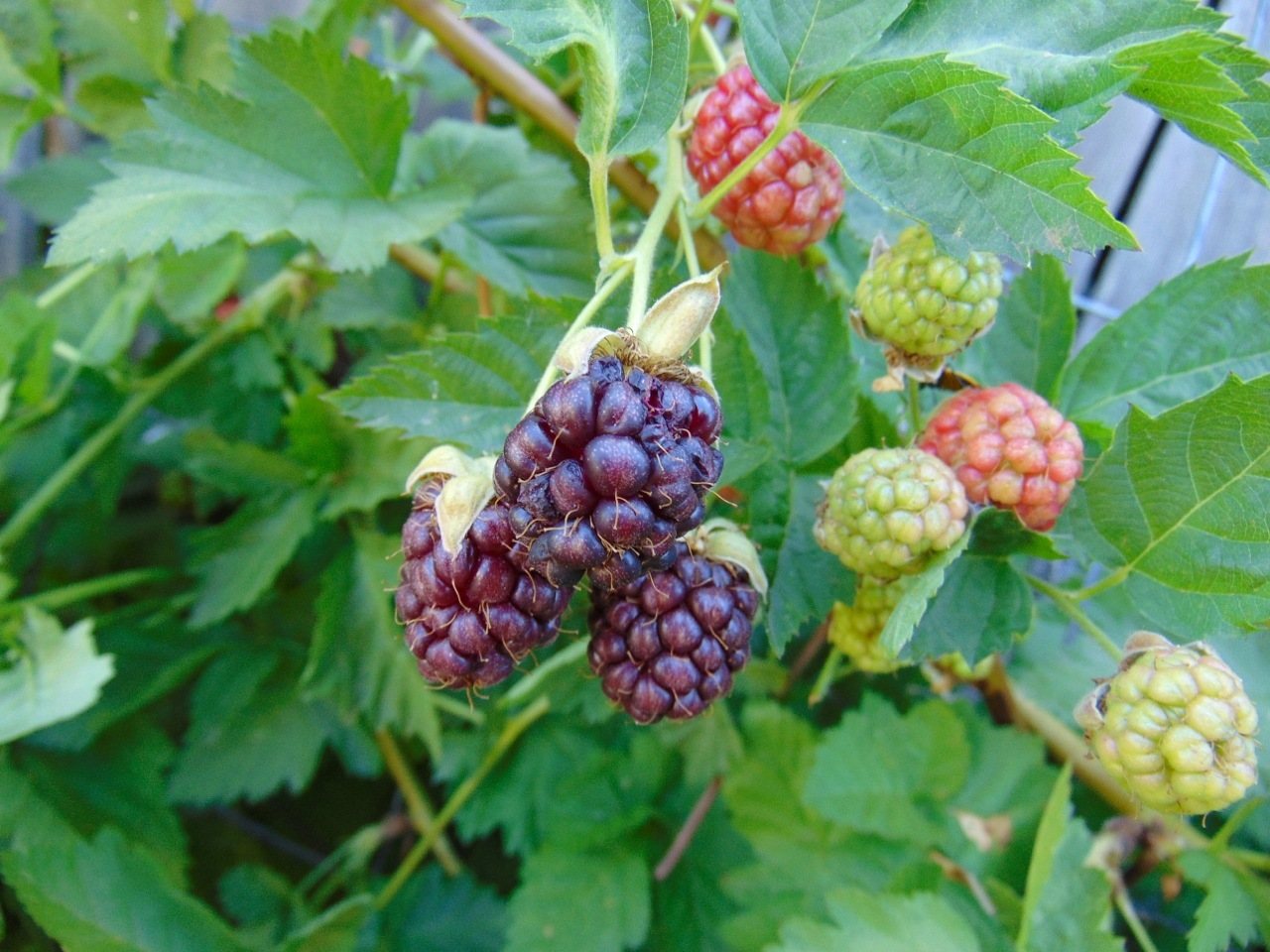
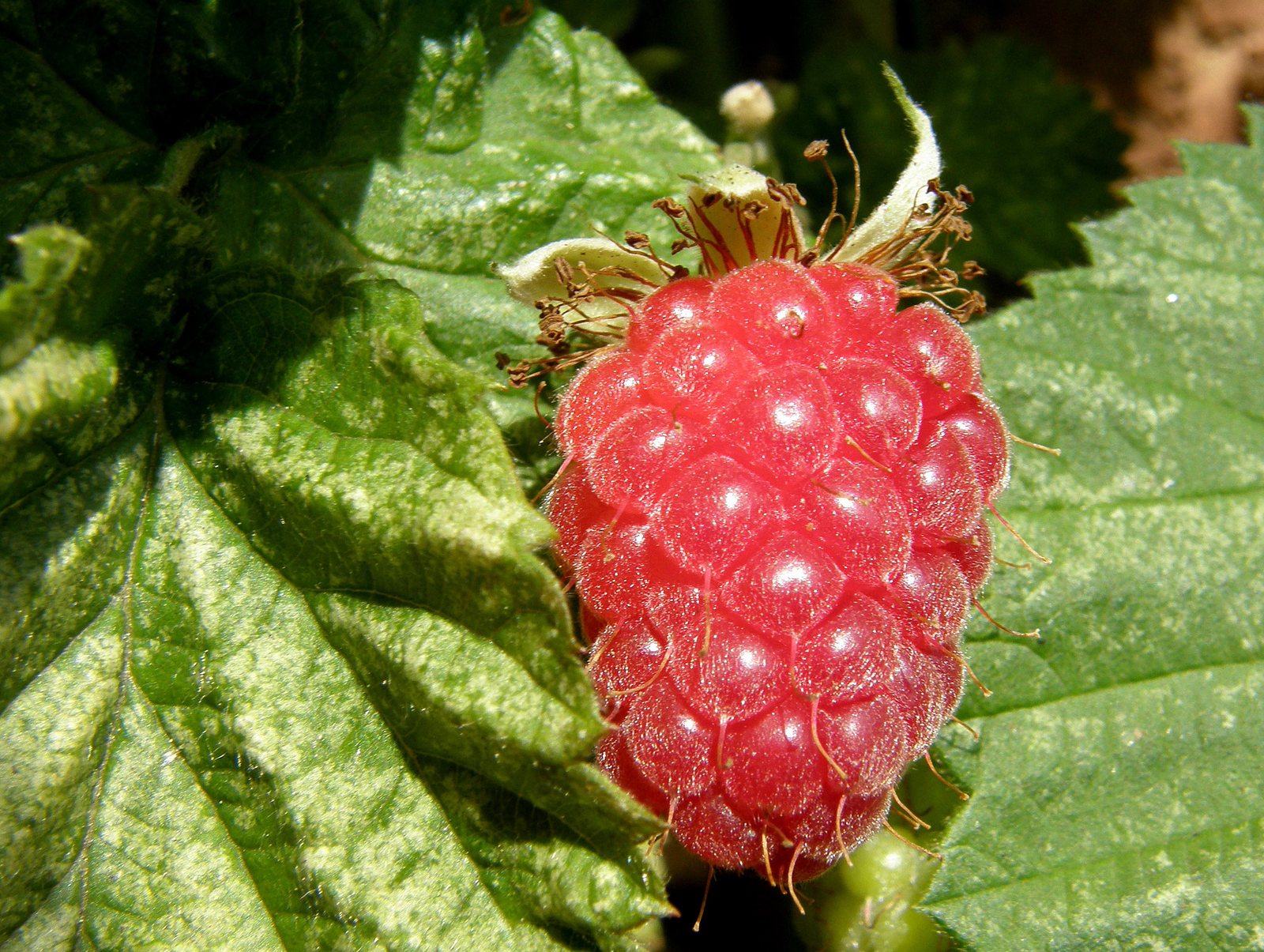
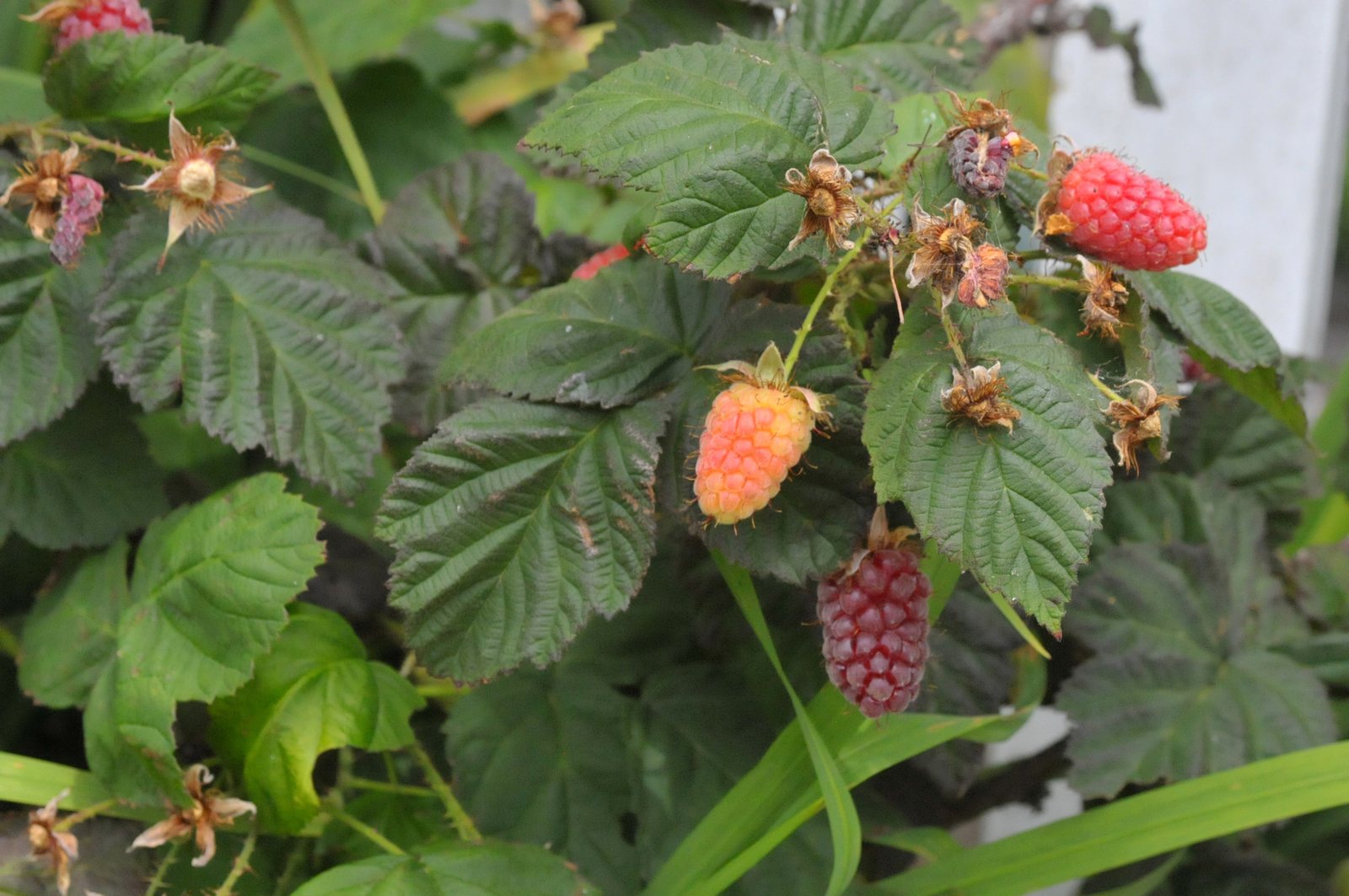
Loganberry is a trailing blackberry–raspberry hybrid grown for its large, elongated, dark red berries. The fruit is tangy and particularly useful for jam, pies and freezing; its long canes need a sturdy wire support and annual pruning.
At a glance
- Sun
- Full sun gives the best crops; light partial shade is tolerated.
- Water
- Keep soil evenly moist, especially during flowering and fruit development, but never waterlogged.
- Soil
- Fertile, well-drained soil enriched with compost; slightly acidic soil is ideal. Avoid poorly drained ground and very chalky soil.
- Height
- 5-6 ft (1.5-1.8 m) on supports
- Spread
- 8-12 ft (2.4-3.7 m) when trained along wires
- Flowers
- White to pale pink flowers in late spring to early summer.
- Foliage
- Green, toothed leaves divided into leaflets on long, arching canes; usually deciduous, sometimes retaining leaves in mild winters.
- Growth
- Fast; new canes can grow several metres in a season.
- Care needed
- Medium
The year at a glance
- Pollinators
- Heat tolerant
- Wildlife
- Low allergen
- Edible
| J | F | M | A | M | J | J | A | S | O | N | D | |
|---|---|---|---|---|---|---|---|---|---|---|---|---|
| Flowers | ||||||||||||
| Fruit | ||||||||||||
| Plant |
Northern hemisphere months. In Australia, shift them by six.
- Difficulty
- Moderate
- Toughness
- Fairly tough
Will it suit your garden?
Pick your zone, country, light and whether you have pets.
Full sun is 6 or more hours of direct sun a day, part shade 3 to 6 hours, shade under 3.
How it grows
Planting day
1.6 ft (0.5 m)
After 1 year
2.8 ft (0.85 m)
After 2 years
4 ft (1.2 m)
After 3 years
5 ft (1.6 m)
After 5 years
5 ft (1.7 m)
full size
About 3 years to full size.
From a typical nursery size, at an average rate for this kind of plant. A rule of thumb, not a forecast.
Good to know
- Cats and dogs
- Safe
- In the garden
- Spreads vigorously: plan to contain it.
- Growth rate
- Fast
Care
Jobs through the year
- WaterApr, Sep–Oct, every 14 days
- Water established plants deeply if soil is drying; newly planted canes need closer moisture checks.
- WaterMay–Aug, every 7 days
- Keep established roots evenly moist during flowering and fruiting, adjusting for rainfall and heat.
- FeedMar
- Apply compost and a balanced fruit fertilizer at the labelled rate.
- MulchMar–Apr
- Renew organic mulch, keeping the crown uncovered.
- ProtectMay–Jul, every 14 days
- Tie new canes separately from fruiting canes and keep their tips off the soil.
- ProtectJun–Aug
- Protect ripening berries with taut wildlife-safe netting; keep flowers accessible to pollinators.
- HarvestJun–Aug
- Pick soft, deep wine-red berries that release easily; refrigerate promptly.
- PruneAug–Sep
- After harvest, cut fruited canes to ground level and tie in strong new canes for next year.
- PruneOct
- Remove unwanted rooted tips and diseased or weak canes.
- Install strong posts and horizontal wires before planting, and tie canes in loosely as they grow.
- Water deeply during dry spells, particularly while berries are swelling.
- Apply compost and a balanced fruit fertiliser in early spring, following the product's rate.
- Mulch annually with organic matter, keeping it clear of the crown.
- Keep new canes separate from fruiting canes, and lift their tips off the soil to prevent rooting.
- Net ripening fruit against birds using taut, wildlife-safe mesh secured clear of the berries.
Pruning. After harvest, cut every cane that has fruited down to ground level. Retain and tie in the strongest new canes for next year's crop, removing weak or crowded growth.
Harvest
Pick berries in early to midsummer, depending on climate, when they are deep wine-red, slightly soft and detach easily with a gentle pull; the core stays inside the fruit. Harvest frequently because ripe berries are delicate and do not keep long. Expect the first worthwhile crop about two years after planting.
Through the year
- Winter
- Plant dormant stock when soil is workable and not waterlogged; install supports.
- Early spring
- Feed, apply fresh mulch and check cane ties.
- Late spring
- Guide new canes separately from flowering canes and water during dry weather.
- Summer
- Protect ripening berries from birds and pick fully coloured fruit regularly.
- Late summer
- Once harvesting finishes, remove spent canes at ground level and tie in their replacements.
- Autumn
- Remove unwanted rooted cane tips and clear diseased leaves and shrivelled berries.
In the garden
- Train along a sunny boundary fence to produce fruit without occupying the centre of the garden.
- Use a freestanding wire framework as a productive divider between vegetable beds and other garden areas.
- Grow against a sunny wall in cooler districts to help fruit ripen, allowing space behind the canes for airflow.
- Place in a dedicated berry row with a low edging of thyme or chives, leaving clear access for picking and pruning.
Garden styles it suits: Cottage garden, Potager (kitchen garden), Homestead, Edible landscape, Food forest and Traditional.
Plant it with: Chives, Thyme, Calendula and Borage.
Wildlife: Flowers provide nectar and pollen for bees and other insects. Birds eat the berries, and dense canes can offer shelter.
Problems to watch for
- Grey mould on berries: improve airflow, avoid wetting flowers and fruit, and remove mouldy berries promptly.
- Cane blight or dieback: cut affected canes back to healthy tissue or ground level, remove the debris and avoid damaging young canes.
- Spotted wing drosophila, where present: pick frequently, remove overripe fruit and use fine insect mesh before berries begin colouring.
- Poor crops from incorrect pruning: retain this year's healthy new canes, which carry next year's fruit, and remove only spent, weak or diseased canes.
Safety
Not known to be toxic to people, cats, dogs or horses. The ripe berries are edible; prickly forms can cause scratches or eye injuries, which are physical hazards rather than poisoning.
Easily confused with
Raspberry (Rubus idaeus)
A ripe raspberry pulls away leaving its central core on the plant, so the picked fruit is hollow. Loganberries retain their core and are usually longer and darker red.
Blackberry (Rubus fruticosus aggregate)
Most blackberries ripen glossy black, whereas loganberries ripen deep wine-red and usually have a more elongated shape. Both retain the core when picked.
The name
Loganberry and the botanical epithet loganobaccus honour James Harvey Logan, who raised the original hybrid in Santa Cruz, California, in the early 1880s.
Propagation. Root the tip of a healthy new cane in a pot or patch of soil in late summer, then detach it from the parent once well rooted. Use disease-free stock; seedlings do not reliably reproduce the parent plant.
Checked against open data
- Accepted botanical name
- Rubus loganobaccus
Sources: GBIF (CC BY 4.0) and Trefle (CC BY 4.0). The care and design notes are LandscapeGPT's own.
See it in your own yard.
Upload a photo of your yard and see it redesigned with plants that suit your climate, each checked against your zone.