Long-leaf wax flower
Philotheca myoporoides. Family Rutaceae. Shrub.
Also called Long-leaved wax flower, Long-leaf waxflower, Eriostemon myoporoides.
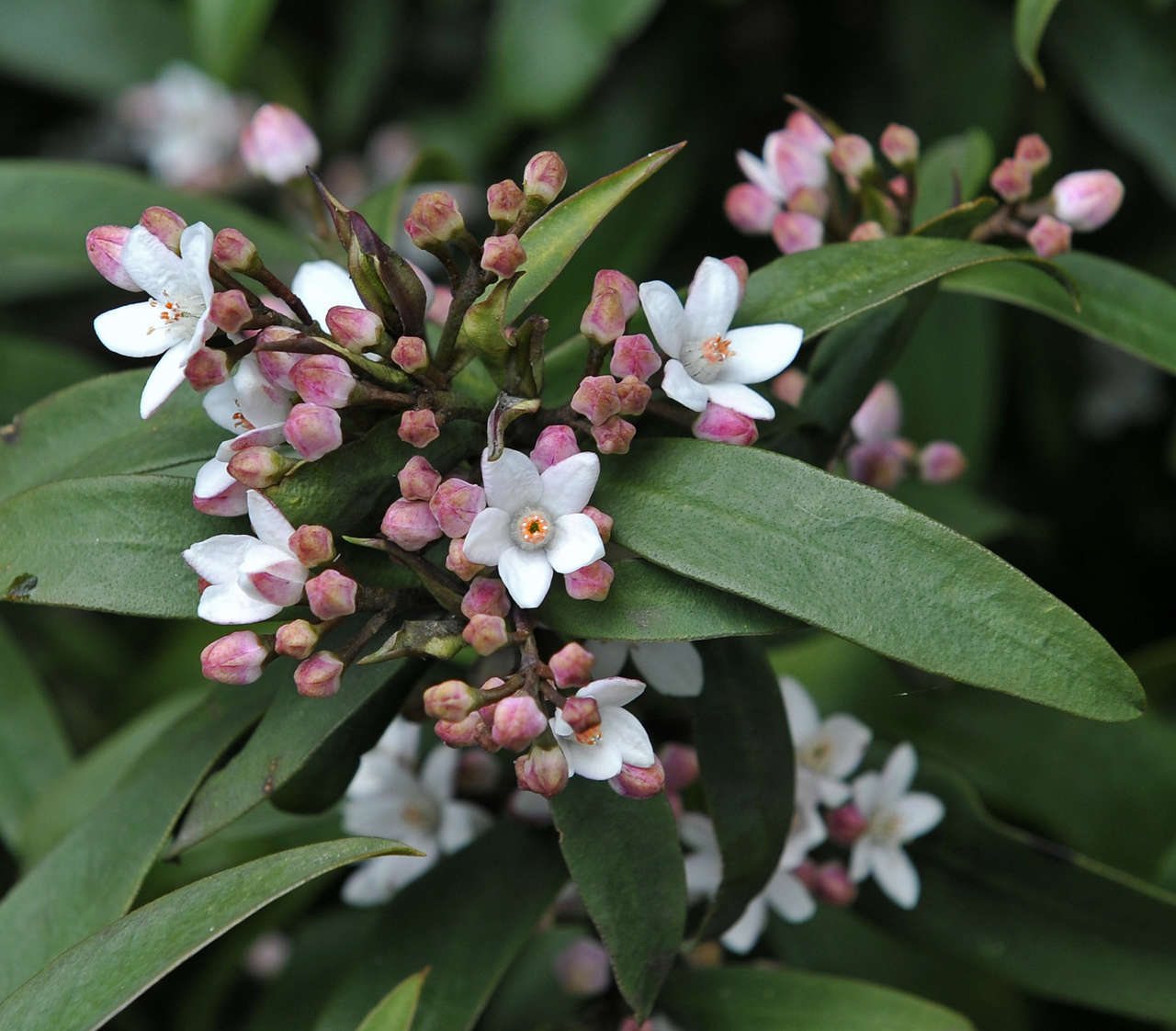
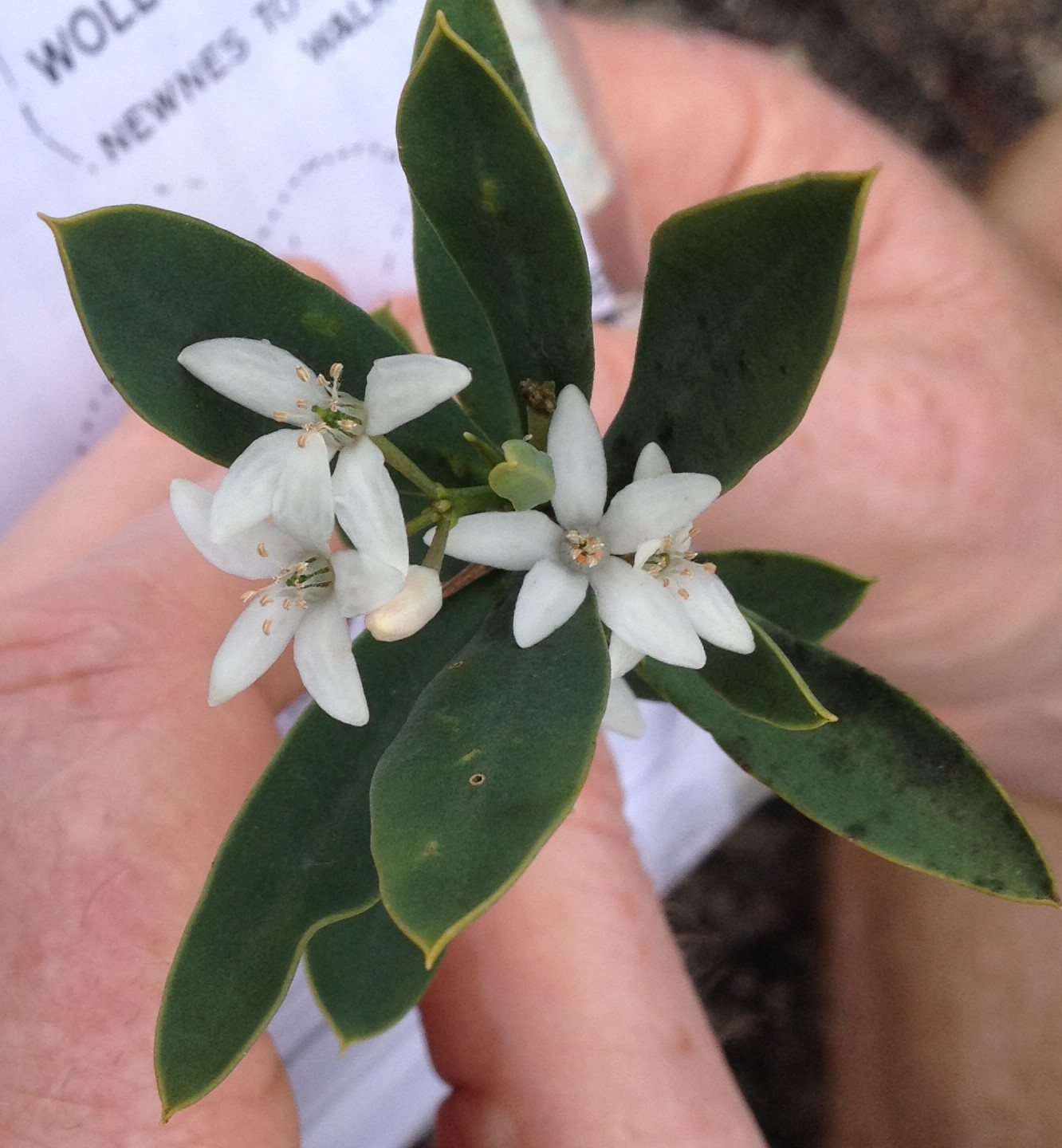
This evergreen shrub from eastern Australia has aromatic leaves and clusters of white, star-shaped flowers opening from pink buds. Gardeners grow it for its long flowering season, tidy branching and useful evergreen structure in sheltered borders or containers.
At a glance
- Sun
- Full sun to partial shade; light afternoon shade is helpful in hot inland gardens.
- Water
- Water regularly while establishing, then deeply during prolonged dry spells. Established plants tolerate some drought but flower and grow better with occasional summer watering.
- Soil
- Well-drained, mildly acidic to neutral soil with some organic matter. Avoid waterlogged ground and strongly alkaline soil.
- Height
- 3-7 ft (0.9-2.1 m)
- Spread
- 3-7 ft (0.9-2.1 m)
- Flowers
- Mainly late winter through spring, with scattered flowers at other times in mild climates; pink buds open to white, five-petalled flowers.
- Foliage
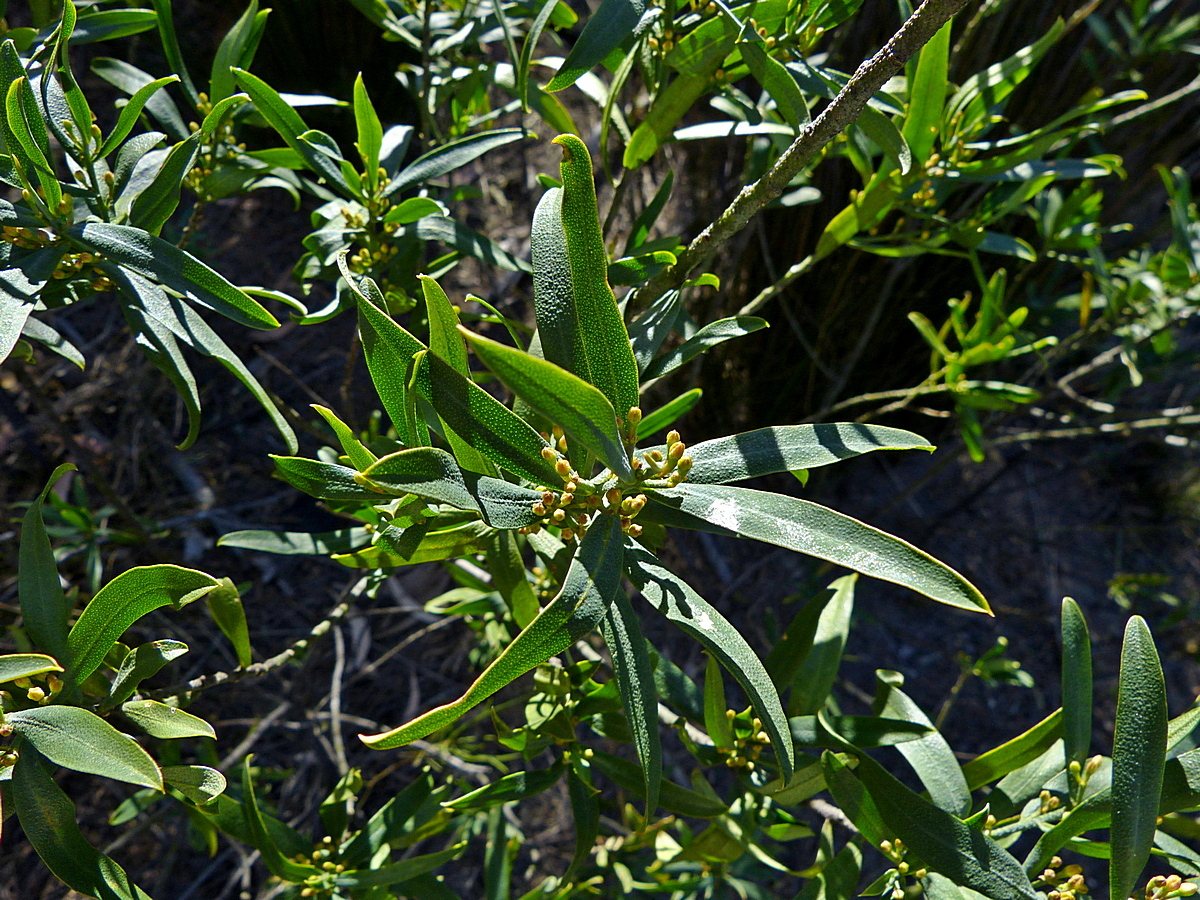
- Evergreen, leathery, narrow-elliptic green leaves with an aromatic scent when crushed.
- Growth
- Moderate
- Care needed
- Low
The year at a glance
- Pollinators
- Drought tolerant
- Heat tolerant
- Wildlife
- Low allergen
- Fragrant
| J | F | M | A | M | J | J | A | S | O | N | D | |
|---|---|---|---|---|---|---|---|---|---|---|---|---|
| Flowers | ||||||||||||
| Plant |
Northern hemisphere months. In Australia, shift them by six.
- Difficulty
- Moderate
- Toughness
- Needs looking after
Will it suit your garden?
Pick your zone, country, light and whether you have pets.
Full sun is 6 or more hours of direct sun a day, part shade 3 to 6 hours, shade under 3.
How it grows
Planting day
1.6 ft (0.5 m)
After 1 year
2.3 ft (0.7 m)
After 2 years
3 ft (0.9 m)
After 3 years
4 ft (1.1 m)
After 5 years
5 ft (1.5 m)
full size
About 5 years to full size.
From a typical nursery size, at an average rate for this kind of plant. A rule of thumb, not a forecast.
Good to know
- Cats and dogs
- Safe
- Growth rate
- Moderate
Care
Jobs through the year
- WaterApr–May, Sep–Oct, every 14 days
- Water established plants if the root zone is drying; young plants and pots need more frequent checks.
- WaterJun–Aug, every 14 days
- Water established ground plants deeply during prolonged dry spells; check pots much more often.
- WaterJan–Mar, Nov–Dec, every 14 days
- Check sheltered pots and water sparingly when partly dry; never leave them standing in water.
- FeedApr
- Apply a light low-phosphorus feed only if growth is weak.
- MulchMay
- Add a thin layer of leaf mould or fine bark, keeping the stem bases clear.
- PruneMay–Jun
- Lightly shorten flowered shoots after the main display; do not cut into leafless old wood.
- ProtectJan–Apr, Oct–Dec
- In zone 6–7, keep in a bright, frost-free winter position with good airflow and drainage.
- Water through the first growing season whenever the root zone begins to dry; avoid keeping it constantly wet.
- Mulch with leaf mould or fine bark, leaving a clear gap around the stems.
- Apply a light dose of low-phosphorus fertiliser in spring if growth is weak; avoid heavy feeding.
- Grow in a pot with drainage holes and a free-draining mix where winter protection is needed.
- Shelter from cold, drying winds and protect container plants from prolonged frost.
Pruning. After the main spring flowering, lightly shorten flowered shoots to keep the shrub bushy. Avoid cutting hard into old, leafless wood; remove dead or damaged branches as needed.
Through the year
- Spring
- Plant after severe frosts have passed in cooler districts, and water thoroughly.
- Spring
- Check growth and apply a light low-phosphorus feed only if needed.
- Late spring
- Lightly trim after the main flower display, adjusting timing to local flowering.
- Summer
- Check soil moisture during dry weather, especially in pots and beneath overhanging trees.
- Late summer
- Take semi-ripe cuttings from healthy, non-flowering shoots.
- Autumn
- Plant in mild-winter districts while the soil is warm, and refresh mulch without burying the stems.
- Winter
- Keep drainage clear and move pots into a bright, frost-protected position where winters are too cold.
In the garden
- Plant near a path or entrance where the pink buds, white flowers and aromatic foliage can be appreciated.
- Use in a mixed Australian-native border with correas and small grevilleas for overlapping flowering seasons.
- Group as a loose, low screen in a sheltered courtyard, allowing room for its natural rounded shape.
- Grow in a large container on a sunny terrace where winter shelter is available.
Garden styles it suits: Australian native, Modern courtyard, Woodland, White garden, Sensory garden and Pollinator garden.
Plant it with: Native fuchsia, Westringia, Kangaroo paw, Spiny-headed mat-rush, Flax lily and Small-flowered grevilleas.
Wildlife: Flowers provide pollen and nectar for bees and other visiting insects; the branching foliage offers shelter for small garden wildlife.
Problems to watch for
- Root rot in wet soil: improve drainage before planting, keep mulch away from the crown and avoid frequent watering of already-moist ground.
- Yellow leaves on alkaline soil: check soil pH and drainage; use a suitable chelated iron treatment if iron deficiency is confirmed, or grow in a container with mildly acidic compost.
- Scale insects and associated sooty mould: inspect stems and leaf undersides, remove small infestations by hand and use a labelled horticultural oil if necessary.
- Frost and cold-wind damage: choose a sheltered site, cover young plants during brief frosts and overwinter pots under protection in colder regions.
Safety
Not known to be toxic to people, cats, dogs or horses, but reliable species-specific safety information is limited. No particular poisonous part is established; do not treat the leaves, flowers or other parts as edible.
Easily confused with
Pink wax flower (Eriostemon australasius)
Usually has larger pink flowers borne singly in the leaf axils, rather than the small clusters of predominantly white flowers typical of long-leaf wax flower.
Bendigo waxflower (Philotheca verrucosa)
Has much smaller, rounded leaves and conspicuously warty stems, rather than long, narrow-elliptic leaves.
Geraldton wax (Chamelaucium uncinatum)
Has fine, needle-like leaves with hooked tips and more open sprays of waxy flowers; long-leaf wax flower has broader, flat leaves.
The name
The epithet myoporoides means resembling Myoporum, referring to the foliage, while the common name describes the relatively long leaves and waxy-looking flowers.
Propagation. Take semi-ripe cuttings in late summer and root in a free-draining propagation mix with gentle warmth and humidity. Rooting can be slow and uneven; seed germination is less predictable.
Checked against open data
- Accepted botanical name
- Philotheca myoporoides
Sources: GBIF (CC BY 4.0). The care and design notes are LandscapeGPT's own.
See it in your own yard.
Upload a photo of your yard and see it redesigned with plants that suit your climate, each checked against your zone.