Lucifer crocosmia
Crocosmia 'Lucifer'. Family Iridaceae. Bulb.
Also called Crocosmia 'Lucifer', Lucifer montbretia.
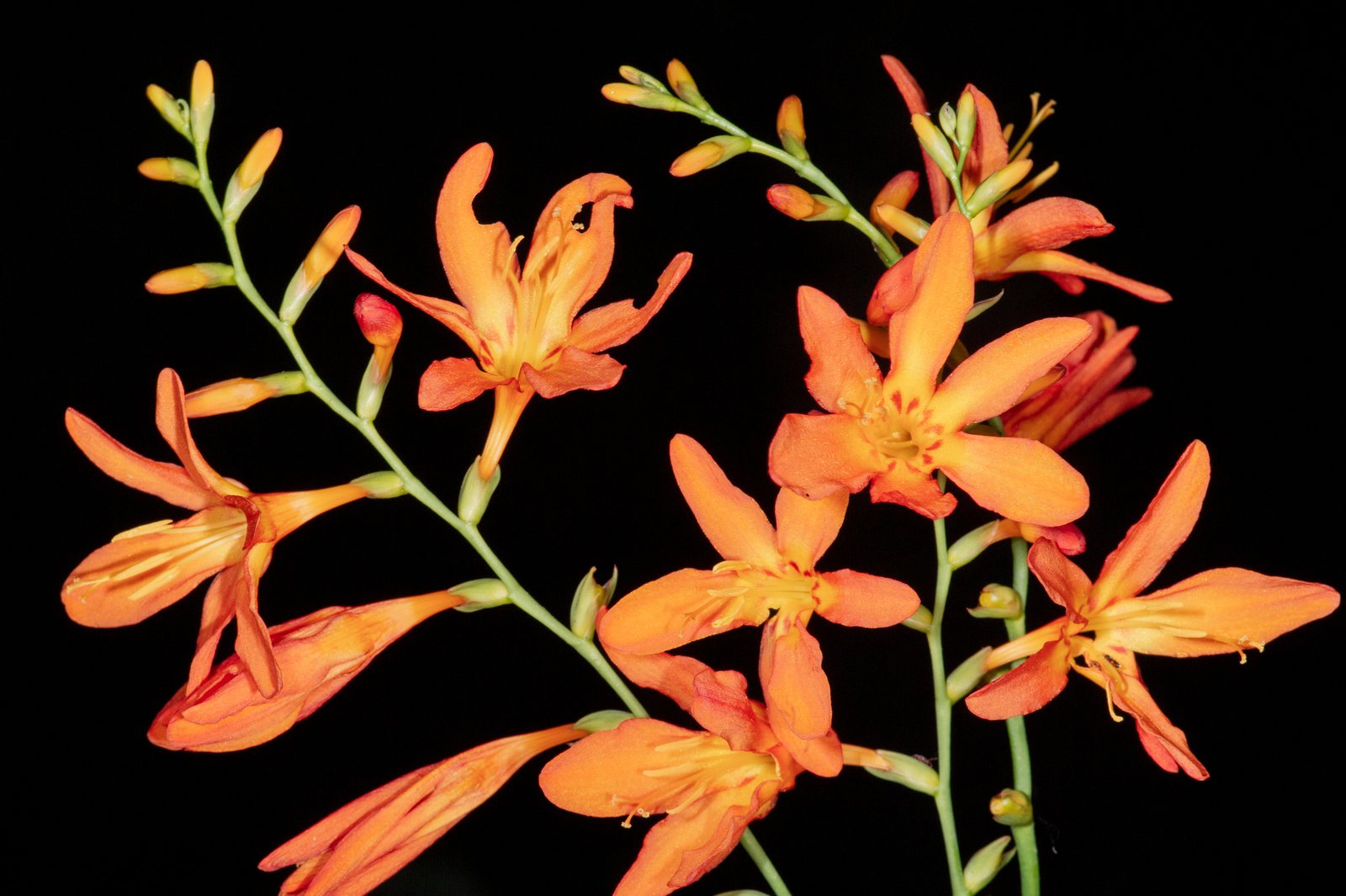
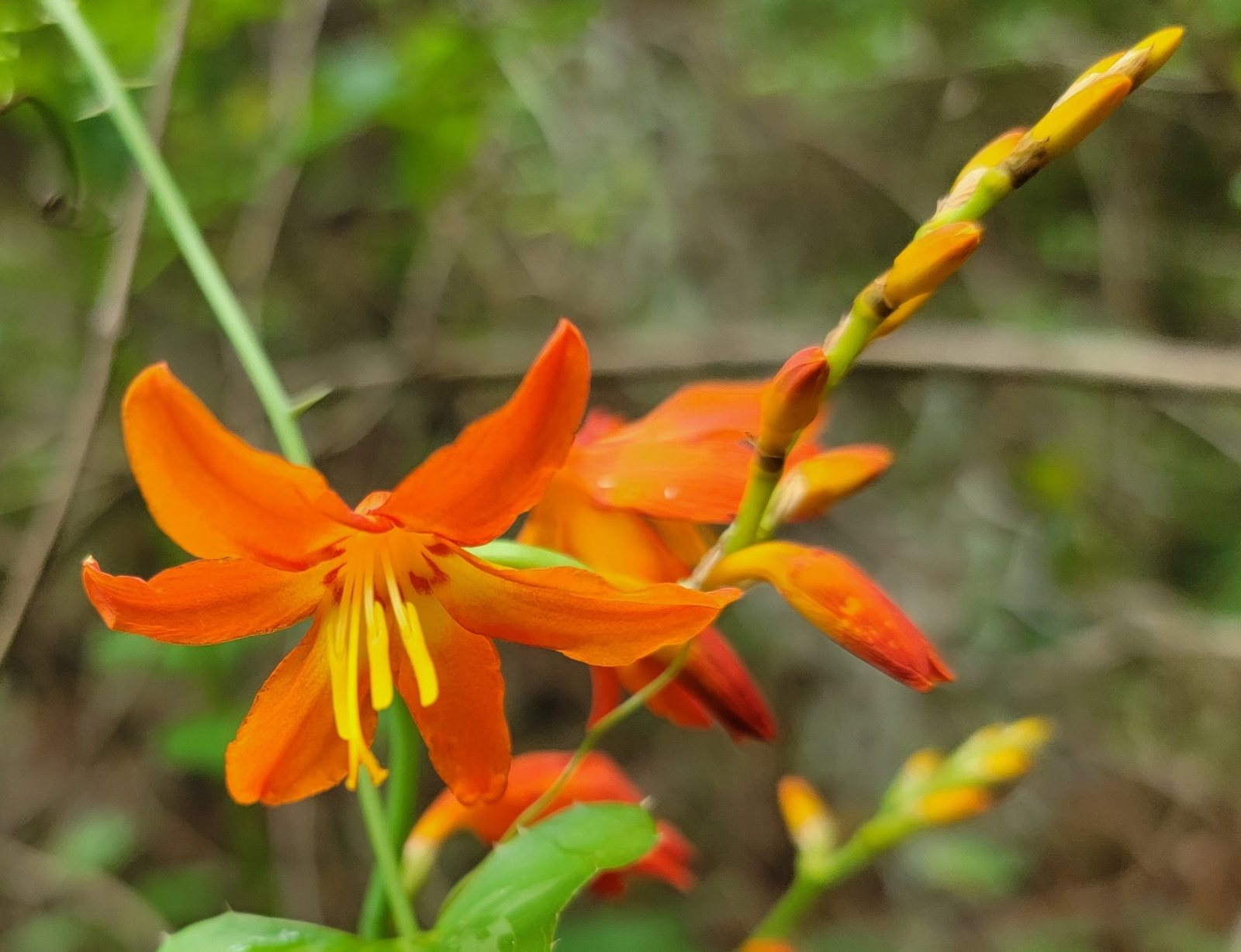
Lucifer crocosmia is a deciduous, corm-forming perennial with upright, sword-shaped leaves and arching stems of brilliant red flowers. It brings height and strong colour to summer borders, especially when planted in groups among grasses and other perennials.
At a glance
- Sun
- Full sun for the strongest stems and best flowering; tolerates light partial shade.
- Water
- Keep the soil evenly moist during active growth, watering deeply during dry spells. Avoid waterlogged soil, particularly in winter.
- Soil
- Moderately fertile, humus-rich soil with good drainage; tolerates clay if it does not remain saturated.
- Height
- 3-4 ft (0.9-1.2 m)
- Spread
- 1-2 ft (0.3-0.6 m), widening over time through corm offsets
- Flowers
- Scarlet-red flowers in mid- to late summer, carried along arching, branched stems.
- Foliage
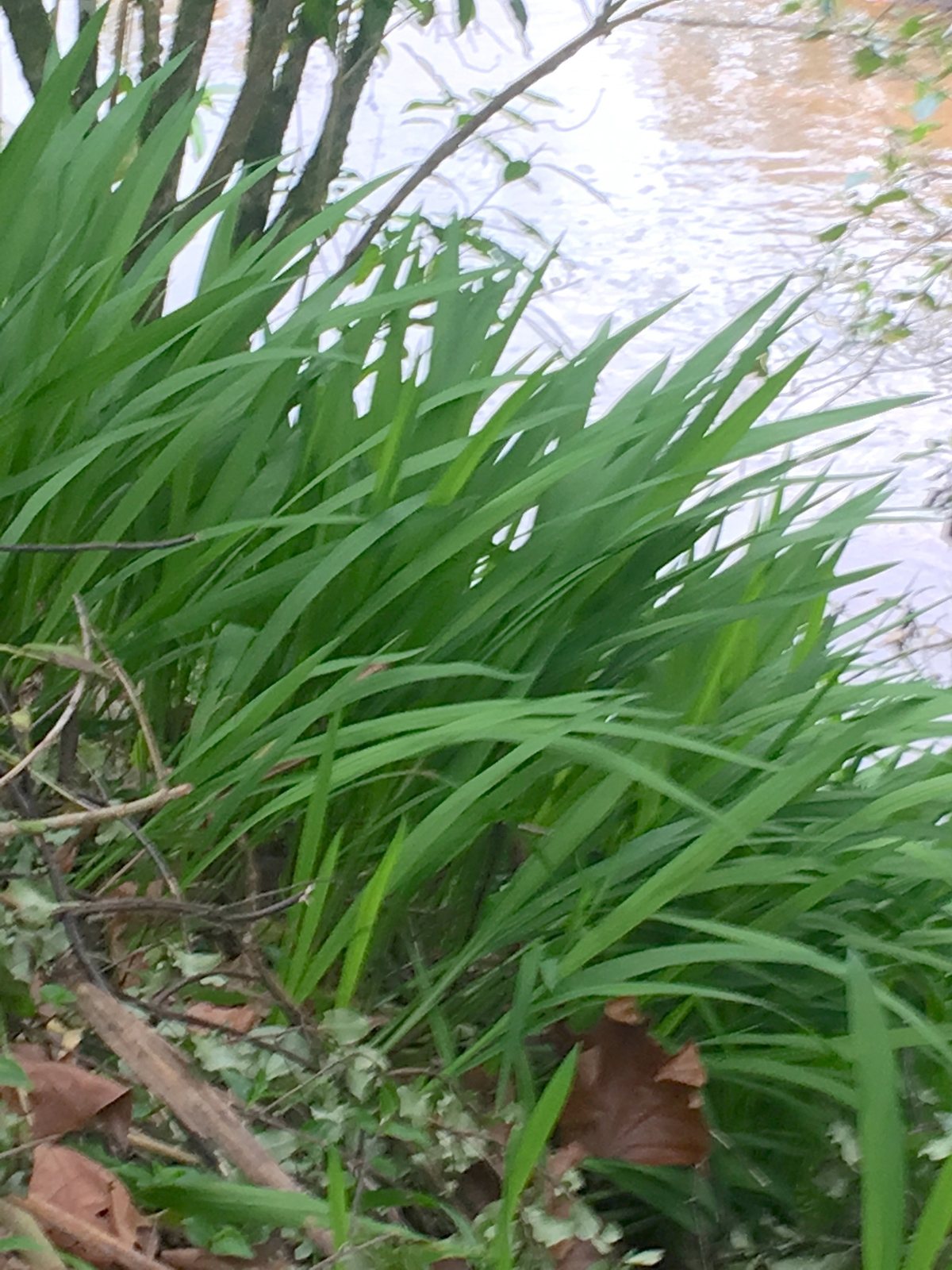
- Upright, pleated, sword-shaped green leaves forming a dense clump; dies back in autumn.
- Growth
- Fast during the growing season; forms expanding clumps.
- Care needed
- Medium
The year at a glance
- Pollinators
- Deer resistant
- Heat tolerant
- Low allergen
| J | F | M | A | M | J | J | A | S | O | N | D | |
|---|---|---|---|---|---|---|---|---|---|---|---|---|
| Flowers | ||||||||||||
| Fruit | ||||||||||||
| Plant |
Northern hemisphere months. In Australia, shift them by six.
- Difficulty
- Moderate
- Toughness
- Fairly tough
Will it suit your garden?
Pick your zone, country, light and whether you have pets.
Full sun is 6 or more hours of direct sun a day, part shade 3 to 6 hours, shade under 3.
How it grows
Planting day
0.5 ft (0.15 m)
After 1 year
3 ft (1.1 m)
full size
Full size in one season.
From a typical nursery size, at an average rate for this kind of plant. A rule of thumb, not a forecast.
Good to know
- Cats and dogs
- Safe
- In the garden
- Spreads vigorously: plan to contain it.
- Growth rate
- Fast
Care
Jobs through the year
- WaterApr–May, Sep, every 14 days
- Water established clumps if rain is insufficient while leaves remain green; new plantings need closer checks.
- WaterJun–Aug, every 7 days
- Water established clumps deeply during dry weather to keep soil evenly moist, not waterlogged.
- FeedApr–May
- Apply compost around clumps; avoid heavy nitrogen feeding.
- PruneFeb–Mar
- Remove dead foliage before new shoots emerge; leave any green leaves intact.
- DivideMar–Apr
- Divide crowded clumps every three to five years, retaining healthy corms and removing excess offsets.
- ProtectMay–Jun
- Install discreet supports before flower stems lean in exposed positions.
- DeadheadAug–Sep
- Cut finished flower stems to the base unless ornamental seed heads are wanted.
- MulchNov
- Mulch dormant clumps after the ground cools, maintaining good winter drainage.
- Plant corms in spring about 3-4 in (8-10 cm) deep and 6-8 in (15-20 cm) apart.
- Water during prolonged dry weather while leaves and flower stems are growing.
- Apply compost in spring; avoid heavy nitrogen feeding, which encourages leaves rather than flowers.
- In colder gardens, mulch over dormant clumps after the ground cools; keep winter drainage good.
- Support exposed clumps with discreet stakes before flower stems lean or fall.
- Divide crowded clumps every three to five years in spring, keeping healthy corms and removing excess offsets.
Pruning. Cut spent flower stems back to the base after flowering unless you want the seedheads. Leave green leaves intact, then remove dead foliage in late winter or early spring before new shoots appear.
Through the year
- Early spring
- Remove dead foliage and check that winter mulch is not smothering emerging shoots.
- Spring
- Plant corms or divide congested clumps once the soil is workable and no longer waterlogged.
- Late spring
- Apply compost and put supports around clumps in windy positions.
- Summer
- Water deeply during dry spells and check foliage for spider mites.
- Late summer
- Remove finished flower stems and mark any clumps that need dividing.
- Late autumn
- Mulch dormant clumps in cold gardens; where winters are too cold, lift corms and store frost-free.
In the garden
- Plant in repeated groups through a hot-coloured border with orange, yellow and deep-purple flowers.
- Place behind shorter perennials so its arching flower stems rise above them.
- Combine with ornamental grasses for contrasting leaf shapes and movement.
- Use beside a sunny path or seating area where the flowers can be seen closely without the foliage obstructing access.
Garden styles it suits: Hot border, Cottage garden, New perennial (prairie), Tropical, Wildlife garden and English country.
Plant it with: Switchgrass, Purple coneflower, Black-eyed Susan, Catmint, Salvia and Sneezeweed.
Wildlife: The tubular flowers attract hummingbirds where they occur, especially in North America. Bees also visit the flowers.
Problems to watch for
- Few flowers: move into stronger sun, avoid excessive nitrogen and divide overcrowded clumps in spring.
- Spider mites in hot, dry weather: look for stippled leaves and fine webbing; water adequately and rinse leaf undersides regularly.
- Corm rot in wet winter soil: improve drainage or move the clump to a raised bed; discard soft, rotten corms.
- Leaning flower stems: provide early support and avoid overly rich soil or deep shade.
Safety
Not known to be toxic to cats, dogs or horses, and no serious toxicity to people is generally reported. Corms, leaves and flowers are not food; eating plant material may cause stomach upset.
Where it spreads. Spreads by corm offsets and can outgrow its space in mild, moist gardens. The invasive montbretia listed in the UK and problematic in New Zealand and parts of southeastern Australia is mainly Crocosmia × crocosmiiflora, not specifically 'Lucifer'. Check local guidance and never dump unwanted corms in natural areas.
Easily confused with
Common montbretia (Crocosmia × crocosmiiflora)
Usually shorter, with smaller orange or orange-red flowers and often more aggressively spreading colonies; 'Lucifer' has tall stems and conspicuous scarlet flowers.
Mason's crocosmia (Crocosmia masoniorum)
Typically has orange flowers in dense, relatively level ranks along arching stems; 'Lucifer' has scarlet flowers on taller, more openly branched stems.
Gladiolus (Gladiolus hybrids)
Has larger flowers arranged on a mostly upright, unbranched spike rather than crocosmia's smaller flowers on arching, branched stems.
The name
Crocosmia comes from Greek words meaning saffron and smell, referring to the saffron-like scent released when dried flowers are moistened.
Propagation. Divide established clumps in spring and replant healthy corms with their offsets. Seed-grown plants will not reliably retain the characteristics of 'Lucifer'.
Checked against open data
- Accepted botanical name
- Crocosmia
Sources: GBIF (CC BY 4.0). The care and design notes are LandscapeGPT's own.
See it in your own yard.
Upload a photo of your yard and see it redesigned with plants that suit your climate, each checked against your zone.