Sneezeweed
Helenium autumnale. Family Asteraceae. Perennial.
Also called Common sneezeweed, Autumn sneezeweed, Helen's flower.
Sneezeweed is a tall, clump-forming perennial native to North America, grown for its yellow daisy-like flowers in late summer and autumn. It brings late colour and food for pollinators to sunny borders and damp meadow plantings, but needs consistently moist soil.
At a glance
- Sun
- Full sun; tolerates light shade but may flower less and lean.
- Water
- Keep the root zone consistently moist. Water deeply during dry spells; this is not a drought-tolerant plant.
- Soil
- Fertile, moisture-retentive soil, including clay, provided it does not dry out. Tolerates occasional flooding but is not an aquatic plant.
- Height
- 3-5 ft (0.9-1.5 m)
- Spread
- 2-3 ft (0.6-0.9 m)
- Flowers
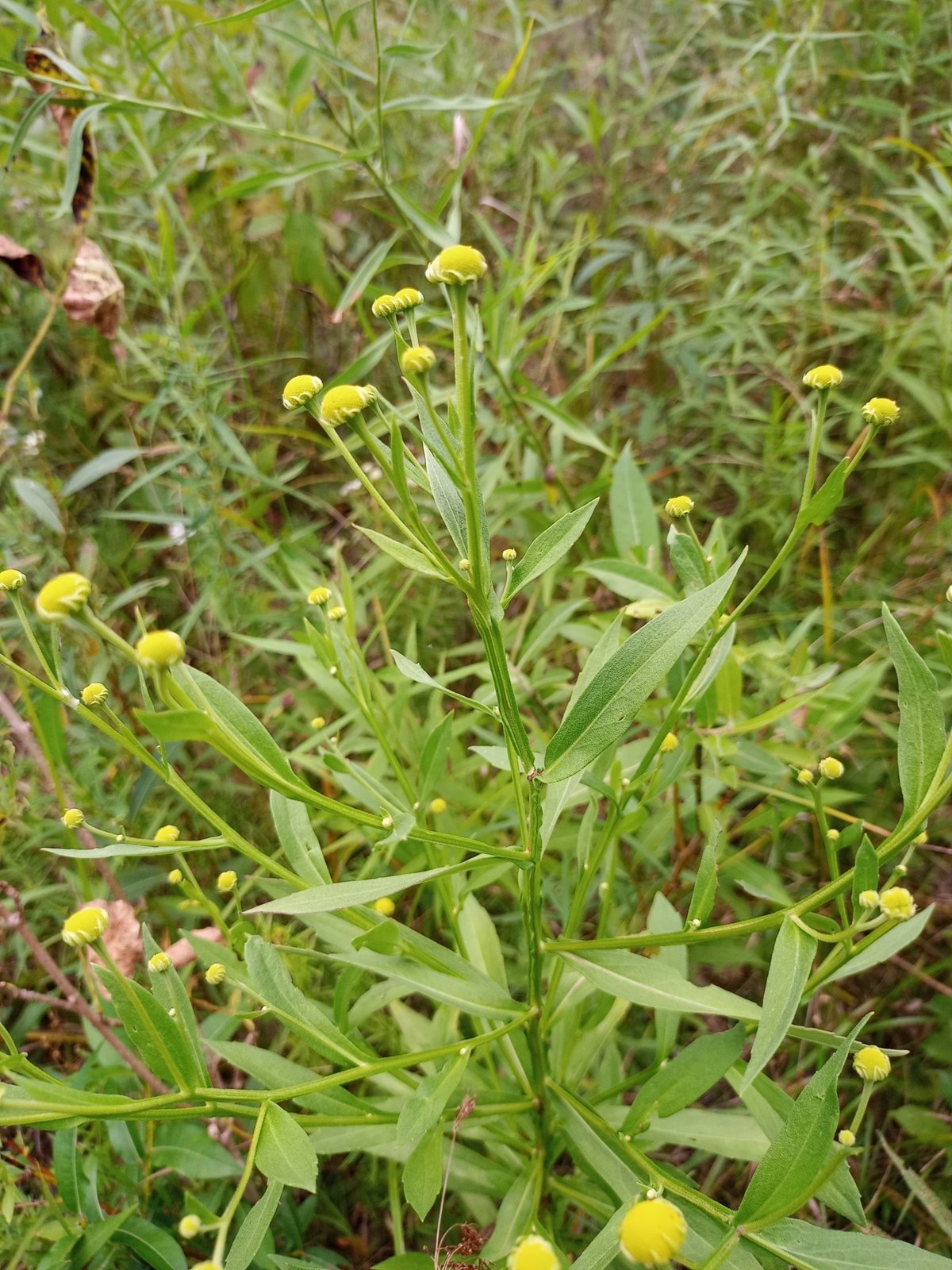
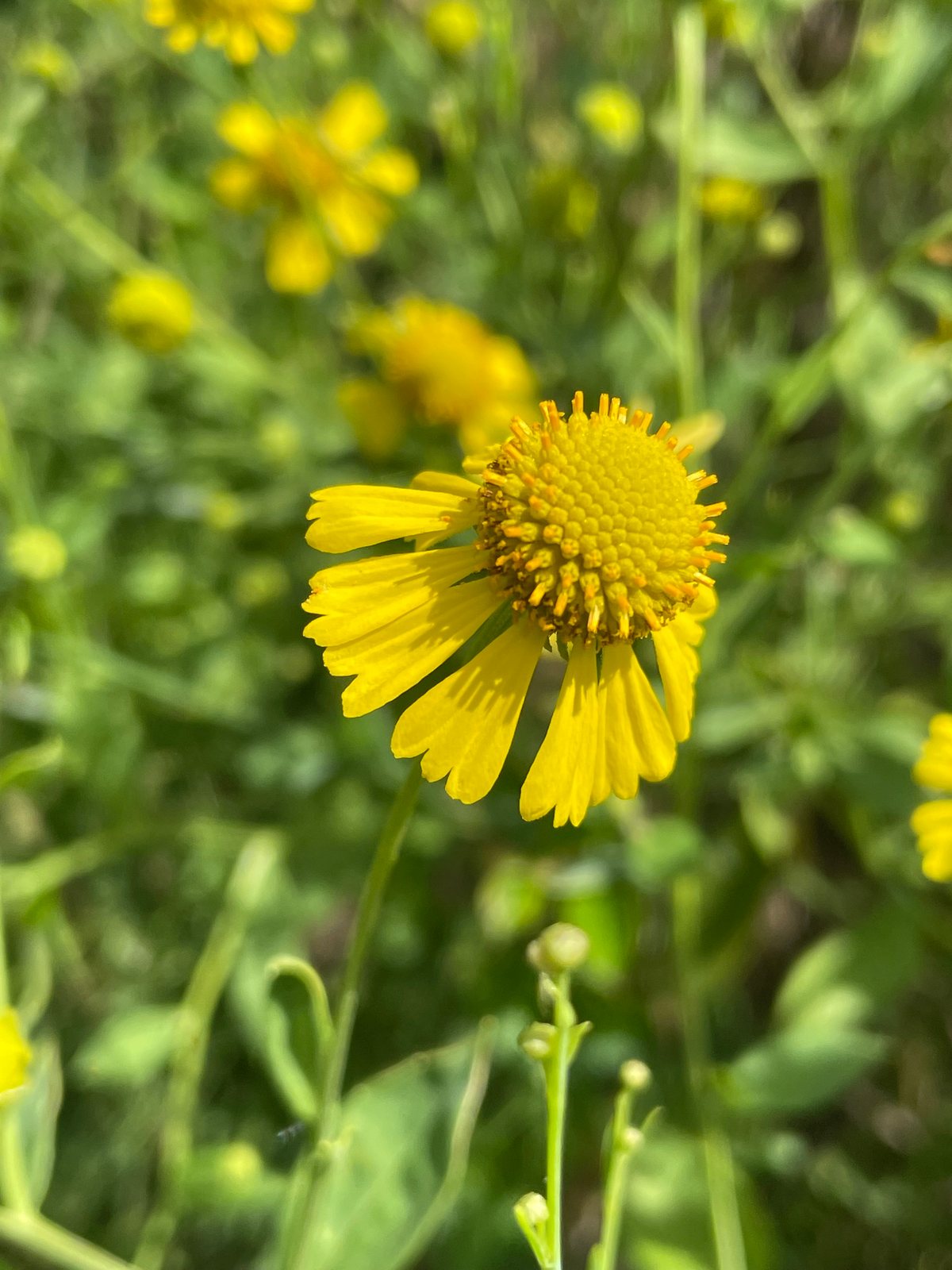
- Late summer to autumn; yellow rays with notched tips surround raised yellow to yellow-brown centres.
- Foliage
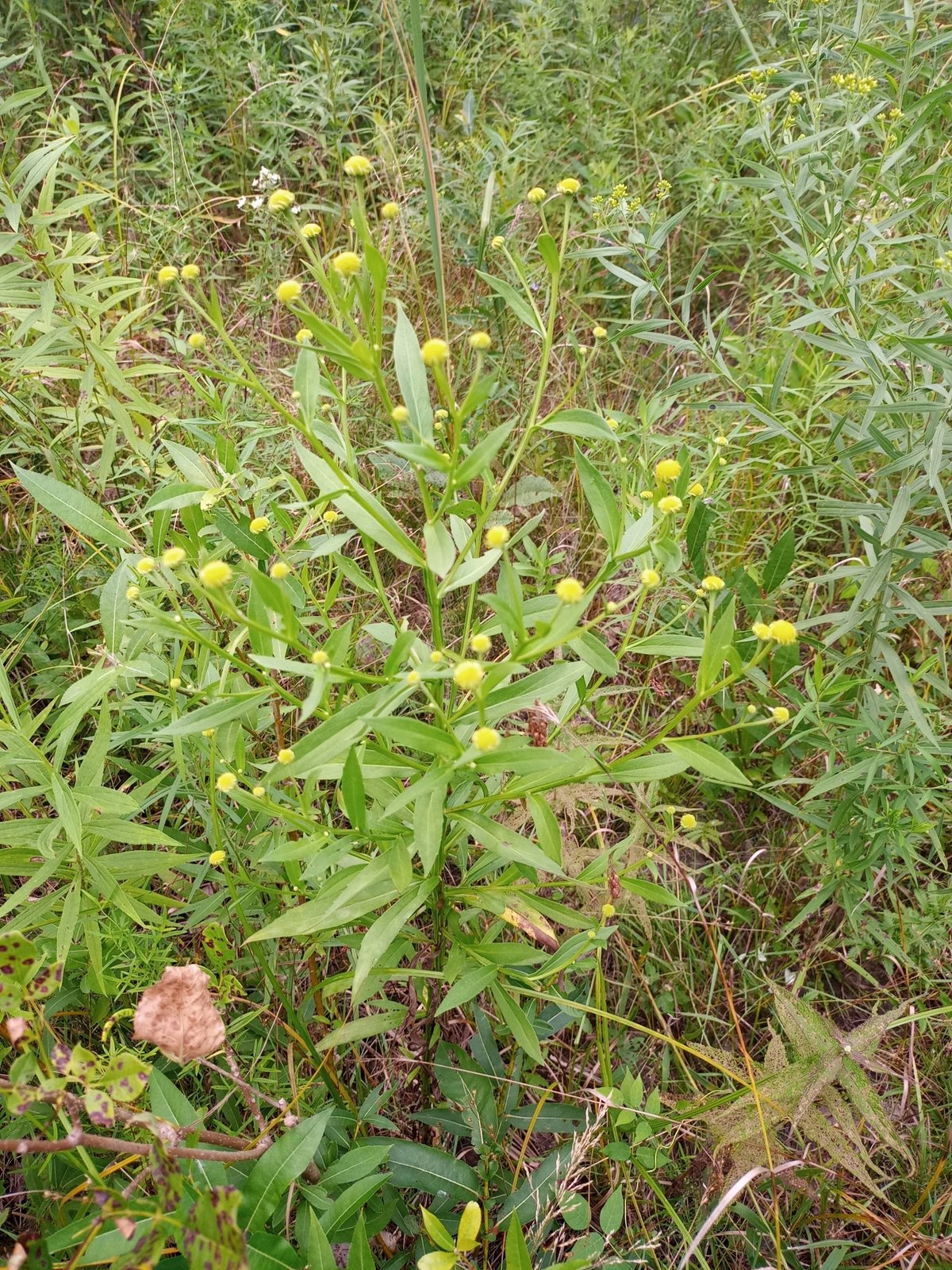
- Green, lance-shaped, toothed leaves run down the stems to form narrow wings. Stems and leaves die back for winter.
- Growth
- Moderate to fast
- Care needed
- Medium
The year at a glance
- Pollinators
- Deer resistant
- Cold hardy
- Low allergen
| J | F | M | A | M | J | J | A | S | O | N | D | |
|---|---|---|---|---|---|---|---|---|---|---|---|---|
| Flowers | ||||||||||||
| Fruit | ||||||||||||
| Plant |
Northern hemisphere months. In Australia, shift them by six.
- Difficulty
- Moderate
- Toughness
- Fairly tough
Will it suit your garden?
Pick your zone, country, light and whether you have pets.
Full sun is 6 or more hours of direct sun a day, part shade 3 to 6 hours, shade under 3.
How it grows
Planting day
1 ft (0.3 m)
After 1 year
2.2 ft (0.68 m)
After 2 years
3 ft (1.1 m)
After 3 years
4 ft (1.2 m)
full size
About 2 years to full size.
From a typical nursery size, at an average rate for this kind of plant. A rule of thumb, not a forecast.
Good to know
- Cats and dogs
- Toxic
- Native to
- the US and Canada
- Growth rate
- Fast
Care
Jobs through the year
- WaterApr–May, Oct, every 7 days
- Water established clumps if rainfall is insufficient to keep roots moist; newly planted clumps need closer checks.
- WaterJun–Sep, every 3 days
- Water deeply when soil starts drying, especially during budding and flowering; skip when soil remains moist.
- MulchMar–Apr
- Apply compost and 5–8 cm of organic mulch, keeping the crown uncovered.
- DivideMar–Apr
- Divide crowded clumps every three to four years and replant promptly.
- ProtectApr–May
- Install supports before tall stems develop, especially in exposed sites.
- PruneMay
- Optionally shorten stems by one-third for bushier growth and slightly later flowering.
- DeadheadAug–Oct, every 7 days
- Remove faded heads to limit seedlings, or leave some for winter structure.
- PruneFeb–Mar
- Cut remaining dead stems close to ground level before new growth becomes tall.
- Water deeply whenever the soil begins to dry, especially during bud formation and flowering.
- Apply a thin layer of compost in spring; avoid heavy nitrogen feeding, which encourages floppy growth.
- Mulch with 2-3 in (5-8 cm) of organic matter, keeping it away from the crown.
- Install supports in spring if the site is exposed or the plants tend to flop.
- Divide crowded clumps every three to four years in spring to maintain vigour.
Pruning. For shorter, more branched plants, cut stems back by about one-third in late spring; flowering may be delayed. Remove spent flower heads to limit seedlings, then cut dead stems to near ground level in late winter or early spring.
Through the year
- Early spring
- Cut down remaining dead stems before new growth becomes tall.
- Spring
- Plant or divide clumps, water thoroughly and apply compost and mulch.
- Late spring
- Install supports and optionally shorten stems by one-third for a more compact plant.
- Summer
- Check soil moisture frequently and water deeply during dry weather.
- Late summer
- Remove faded flower heads if you want to reduce self-seeding.
- Autumn
- Leave healthy stems standing for winter structure, or remove them if diseased.
In the garden
- Plant in groups towards the back of a sunny border for a broad band of late-season yellow.
- Combine with asters and upright grasses in naturalistic perennial planting.
- Use in a rain garden or damp meadow above areas of permanent standing water.
- Pair with blue or purple flowers for a strong late-summer colour contrast.
Garden styles it suits: Cottage garden, Native meadow, New perennial (prairie), Pollinator garden, Hot border and Autumn colour.
Plant it with: New England aster, Joe-Pye weed, Switchgrass, Bee balm, Great blue lobelia and Turtlehead.
Wildlife: Flowers provide pollen and nectar for bees, butterflies and other insects late in the season. The plant is generally unpalatable to browsing animals, but it is not safe forage.
Problems to watch for
- Wilting and scorched lower leaves in dry soil: water deeply and mulch; move plants if the site regularly dries out.
- Flopping stems: provide full sun, avoid excess fertiliser and install supports before flowering.
- Powdery mildew: improve spacing and airflow, keep roots watered and remove badly affected foliage.
- Leaf spots: avoid overhead watering where practical and clear affected fallen leaves.
Safety
Treat all parts as toxic to people, cats, dogs and horses if eaten. Ingestion can cause digestive upset, and substantial consumption can cause serious poisoning, particularly in grazing animals; species-specific information for cats and dogs is limited. Sap may irritate sensitive skin. Keep it out of grazing areas and seek medical or veterinary advice after ingestion.
Easily confused with
Purple-headed sneezeweed (Helenium flexuosum)
Usually shorter, with a conspicuously dark purple-brown central cone rather than the yellow to yellow-brown centre of common sneezeweed.
Cutleaf coneflower (Rudbeckia laciniata)
Has deeply divided lower leaves and a greenish central cone; common sneezeweed has undivided leaves and distinctly notched ray tips.
The name
Helenium refers to Helen of Troy, autumnale means autumn-flowering, and sneezeweed recalls the historical use of dried plant material as a sneezing powder.
Propagation. Divide established clumps in spring. Sow seed in autumn outdoors, or give stored seed a period of cold, moist stratification before spring sowing; press onto the surface because light helps germination. Named selections may not come true from seed.
Checked against open data
- Accepted botanical name
- Helenium autumnale
- In the US and Canada
- Native in Canada and the lower 48 states.
- Native range
- Alabama, Alberta, Arizona, Arkansas, British Columbia, California, Colorado, Delaware, District of Columbia, Florida, Georgia and Idaho.
- Measured
- Soil pH 4 to 7.5. Average height 78 cm.
Sources: GBIF (CC BY 4.0), USDA PLANTS and Trefle (CC BY 4.0). The care and design notes are LandscapeGPT's own.
See it in your own yard.
Upload a photo of your yard and see it redesigned with plants that suit your climate, each checked against your zone.