Great blue lobelia
Lobelia siphilitica. Family Campanulaceae. Perennial.
Also called Blue cardinal flower, Great lobelia.
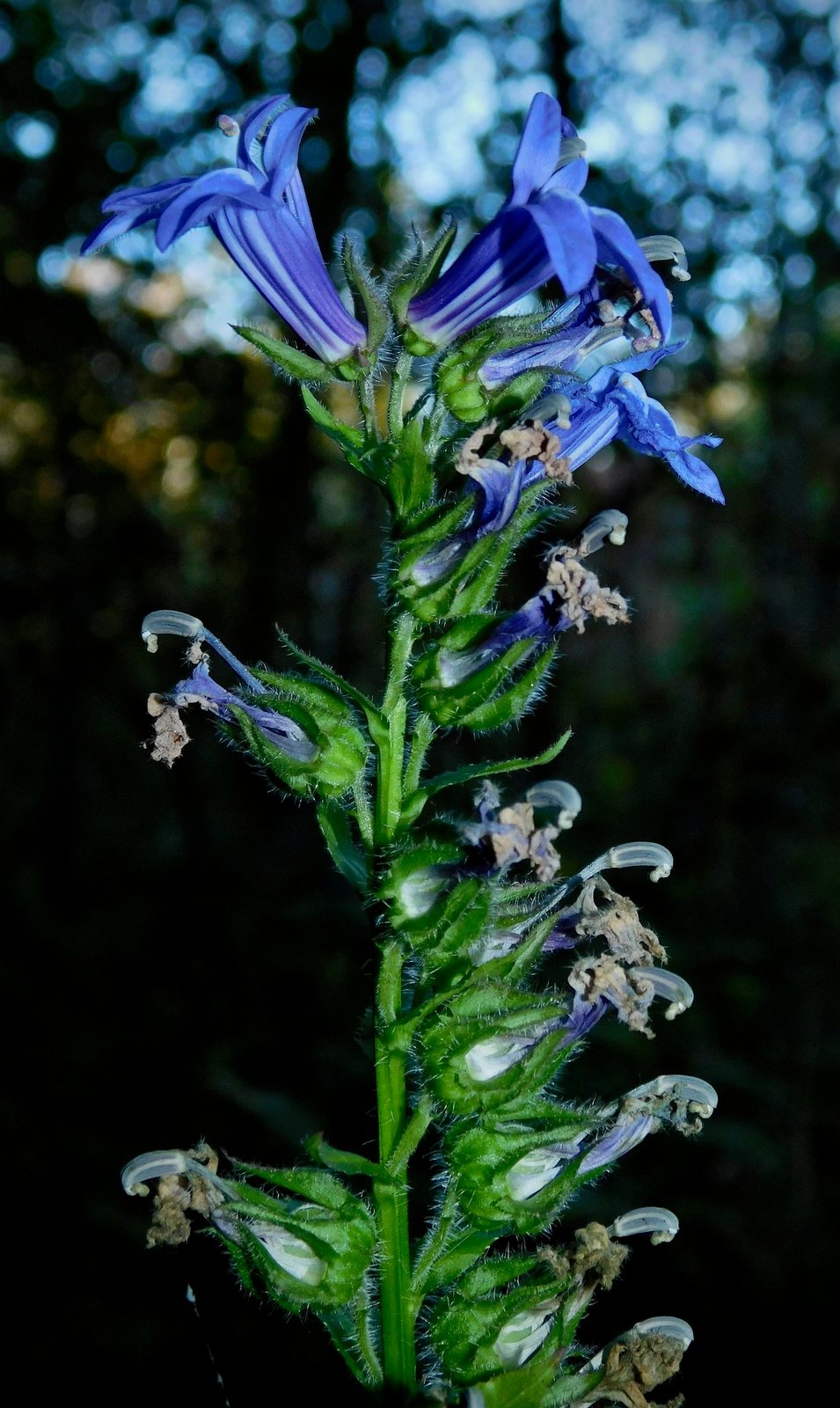
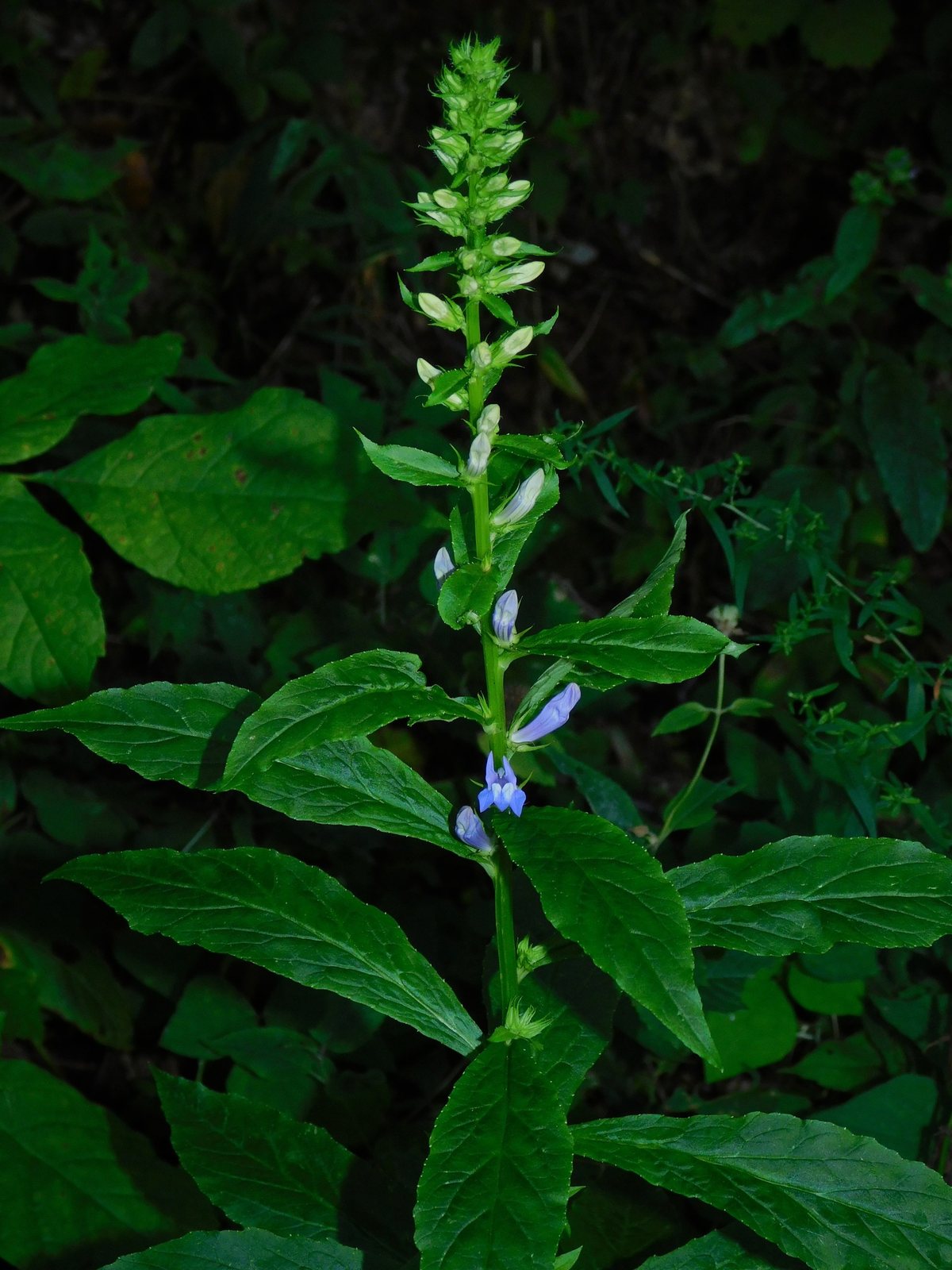
Great blue lobelia is a clump-forming perennial native to central and eastern North America, grown for upright spikes of blue flowers in late summer and early autumn. It brings colour and bumblebee activity to damp borders, rain gardens and pond margins, but struggles in dry soil.
At a glance
- Sun
- Full sun to partial shade; afternoon shade is helpful in hot climates. Full sun suits consistently wet ground.
- Water
- Keep the soil consistently moist to wet. Water deeply during dry spells; do not let the root zone dry out.
- Soil
- Humus-rich, moisture-retentive soil, including clay, provided it stays moist. Tolerates periodically saturated ground and a range of soil pH.
- Height
- 2-3 ft (0.6-0.9 m)
- Spread
- 1-1.5 ft (0.3-0.45 m)
- Flowers
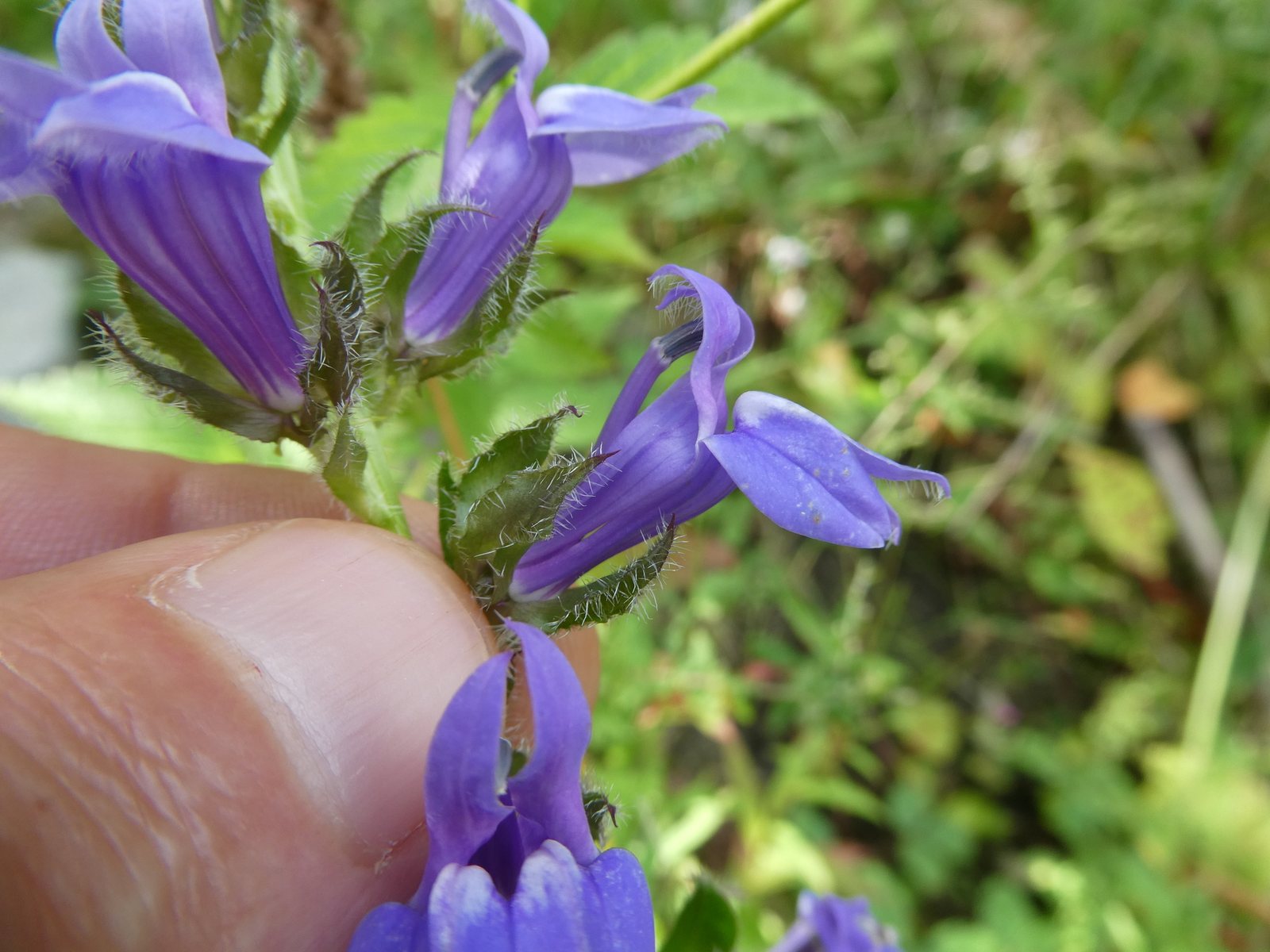
- Late summer to early autumn; blue to violet-blue, two-lipped flowers with pale throats.
- Foliage
- Green, lance-shaped leaves with toothed edges, arranged along upright stems; dies back for winter.
- Growth
- Moderate
- Care needed
- Medium
The year at a glance
- Pollinators
- Deer resistant
- Cold hardy
- Heat tolerant
- Low allergen
| J | F | M | A | M | J | J | A | S | O | N | D | |
|---|---|---|---|---|---|---|---|---|---|---|---|---|
| Flowers | ||||||||||||
| Fruit | ||||||||||||
| Plant |
Northern hemisphere months. In Australia, shift them by six.
- Difficulty
- Moderate
- Toughness
- Fairly tough
Will it suit your garden?
Pick your zone, country, light and whether you have pets.
Full sun is 6 or more hours of direct sun a day, part shade 3 to 6 hours, shade under 3.
How it grows
Planting day
1 ft (0.3 m)
After 1 year
1.5 ft (0.45 m)
After 2 years
2 ft (0.6 m)
After 3 years
2.5 ft (0.75 m)
full size
About 3 years to full size.
From a typical nursery size, at an average rate for this kind of plant. A rule of thumb, not a forecast.
Good to know
- Cats and dogs
- Toxic
- Native to
- the US and Canada
- Growth rate
- Moderate
Care
Jobs through the year
- WaterApr–May, Sep–Oct, every 7 days
- Keep established plants consistently moist; skip watering if soil remains wet and check new plants more often.
- WaterJun–Aug, every 3 days
- Water established plants as needed to prevent drying; check new plants and hot sites daily.
- FeedMar–Apr
- Apply a thin compost dressing; omit additional feed in rich soil.
- MulchApr–May
- Mulch to conserve moisture, keeping crowns uncovered.
- PruneFeb–Mar
- Cut dead stems just above the crown without damaging basal growth.
- DivideMar–Apr
- Divide crowded clumps every few years and replant promptly in moist soil.
- DeadheadAug–Oct
- Remove faded spikes to limit self-seeding, or leave some capsules to ripen.
- ProtectMar–May
- Inspect young shoots for slugs and snails and hand-pick pests.
- Plant in spring or early autumn where the soil will remain moist through summer.
- Water during dry spells, especially while plants are establishing.
- Apply a thin layer of compost in spring; rich soil rarely needs additional fertiliser.
- Mulch around the plants to conserve moisture, keeping mulch off the crowns.
- Divide crowded clumps in spring every few years, and remove unwanted seedlings while small.
Pruning. Remove spent flower spikes if you want to limit self-seeding, or leave some to ripen for seed. Cut dead stems to just above the crown in late winter or early spring before new growth lengthens.
Through the year
- Late winter
- Cut back remaining dead stems without damaging new basal growth.
- Spring
- Plant or divide clumps, water thoroughly, and add compost and mulch.
- Early summer
- Check soil moisture regularly and water before the root zone dries.
- Late summer
- Enjoy the flowers and remove faded spikes if seedlings are not wanted.
- Autumn
- Collect ripe seed from dry capsules, or leave some stems to self-seed.
In the garden
- Plant in groups beside a pond, above the permanently submerged zone, for upright blue flower spikes.
- Use in the moist part of a rain garden with cardinal flower and swamp milkweed.
- Combine with ferns and astilbes in a damp, partly shaded border for contrasting foliage and late colour.
- Weave through a moist native planting with turtlehead and Joe-Pye weed to extend flowering into early autumn.
Garden styles it suits: Cottage garden, Woodland, Wildlife garden, Pollinator garden, Bog garden and New perennial (prairie).
Plant it with: Cardinal flower, White turtlehead, Joe-Pye weed, Royal fern, Swamp milkweed and Astilbe.
Wildlife: The flowers are particularly valuable to bumblebees and also attract other bees. In its native range, it supports wet-ground pollinator plantings late in the growing season.
Problems to watch for
- Wilting and scorched leaves in dry soil: water deeply, mulch, and move plants to a damper position if drying is recurrent.
- Slugs and snails eating young shoots: inspect new growth, remove pests, and use wildlife-conscious slug controls if needed.
- Rust or leaf spots: remove badly affected foliage, improve spacing, and water the soil rather than the leaves.
- Unwanted seedlings in moist bare soil: remove spent flower spikes before seed ripens and pull seedlings while small.
Safety
All parts contain toxic alkaloids and should not be eaten by people, cats, dogs or horses. Ingestion can cause vomiting, diarrhoea, weakness and, in serious cases, breathing or heart problems. Seek medical or veterinary advice promptly after suspected ingestion.
Easily confused with
Cardinal flower (Lobelia cardinalis)
The usual species has bright red rather than blue flowers, with narrower, more prominently projecting flower parts; both grow upright in damp ground.
Edging lobelia (Lobelia erinus)
This familiar bedding plant forms low mounds or trailing stems covered in small flowers, rather than tall, leafy stems bearing upright flower spikes.
The name
Lobelia honours the Flemish botanist Matthias de l’Obel, while siphilitica refers to the plant’s historical use as a supposed treatment for syphilis, not an effective or safe remedy.
Propagation. Divide clumps in spring. Sow the fine seed on the surface of moist seed compost without burying it; light aids germination. A period of cold, moist conditions can improve germination, so outdoor autumn sowing is useful where winters are cold. Plants may also self-seed in suitable damp ground.
Checked against open data
- Accepted botanical name
- Lobelia siphilitica
- In the US and Canada
- Native in Canada and the lower 48 states.
- Native range
- Alabama, Arkansas, Colorado, Connecticut, Delaware, Georgia, Illinois, Indiana, Iowa, Kansas, Kentucky and Louisiana.
- Measured
- Average height 80 cm.
Sources: GBIF (CC BY 4.0), USDA PLANTS and Trefle (CC BY 4.0). The care and design notes are LandscapeGPT's own.
See it in your own yard.
Upload a photo of your yard and see it redesigned with plants that suit your climate, each checked against your zone.