Lyreleaf sage
Salvia lyrata. Family Lamiaceae. Perennial.
Also called Lyre-leaved sage, Cancerweed.
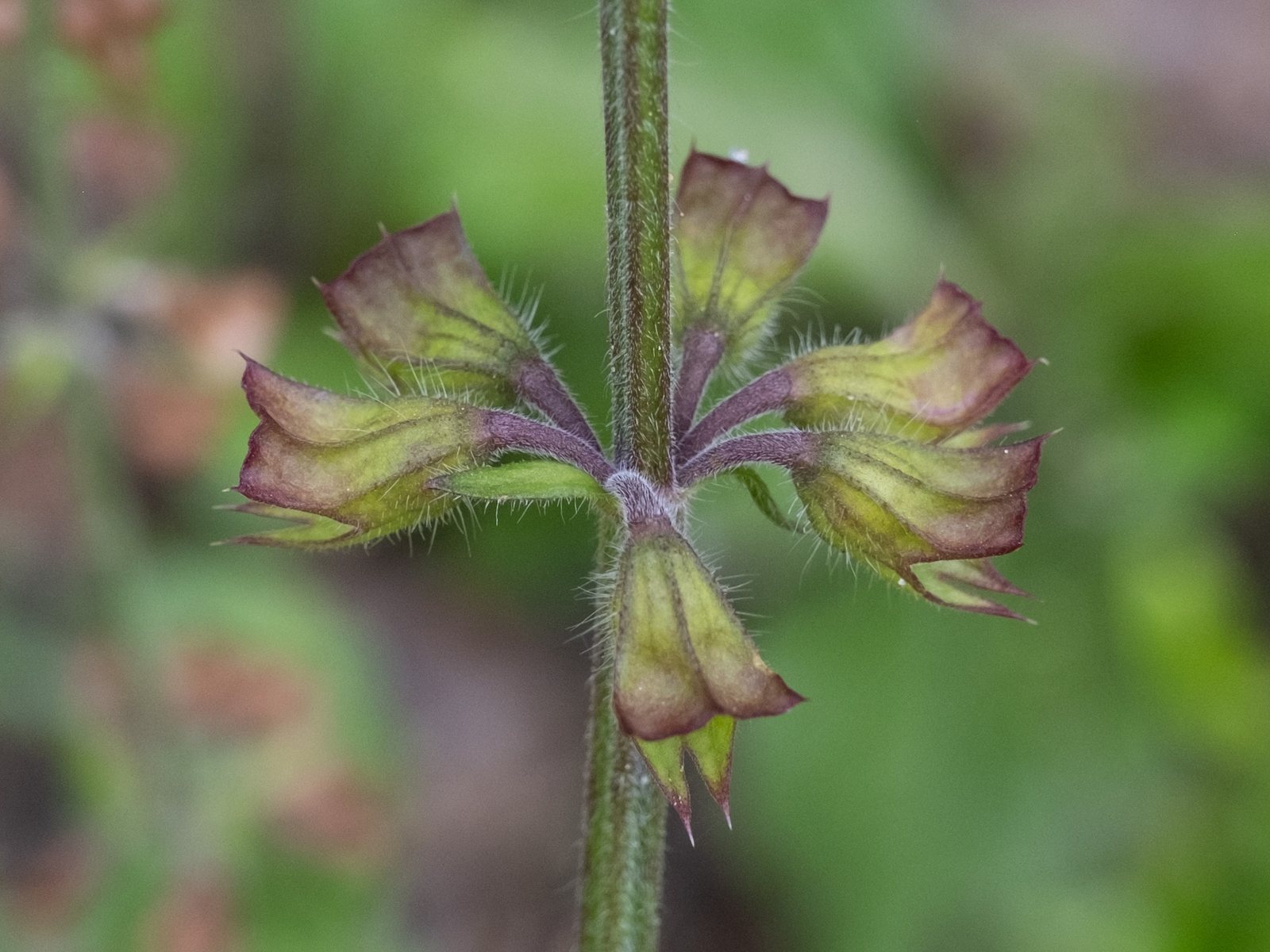
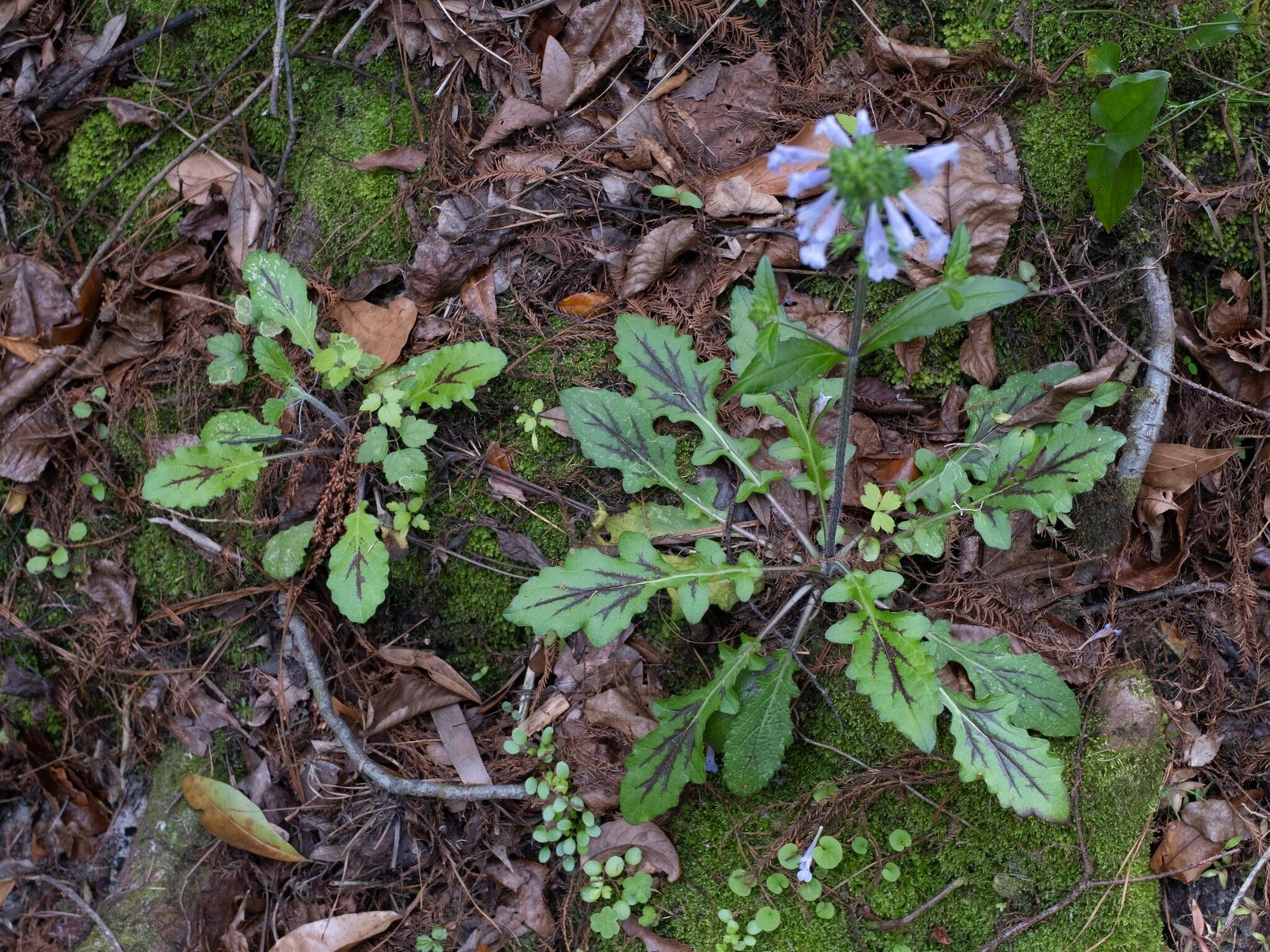
Lyreleaf sage is a small perennial native to the eastern and central United States, grown for its low rosettes of often purple-marked leaves and upright spikes of pale blue flowers. It suits informal borders, meadow edges and wildlife gardens, but can seed freely into nearby beds and lawns.
At a glance
- Sun
- Full sun to partial shade; flowering is usually best with at least several hours of direct sun.
- Water
- Moderate water while establishing; tolerates occasional drought once rooted, but grows best with some moisture.
- Soil
- Adaptable to sandy, loamy or clay soils, provided water drains away; tolerates acidic to neutral conditions and relatively poor soil.
- Height
- 1-2 ft (0.3-0.6 m) in flower
- Spread
- 0.5-1 ft (0.15-0.3 m) per rosette
- Flowers
- Spring to early summer; pale blue to violet-blue tubular flowers, occasionally white.
- Foliage
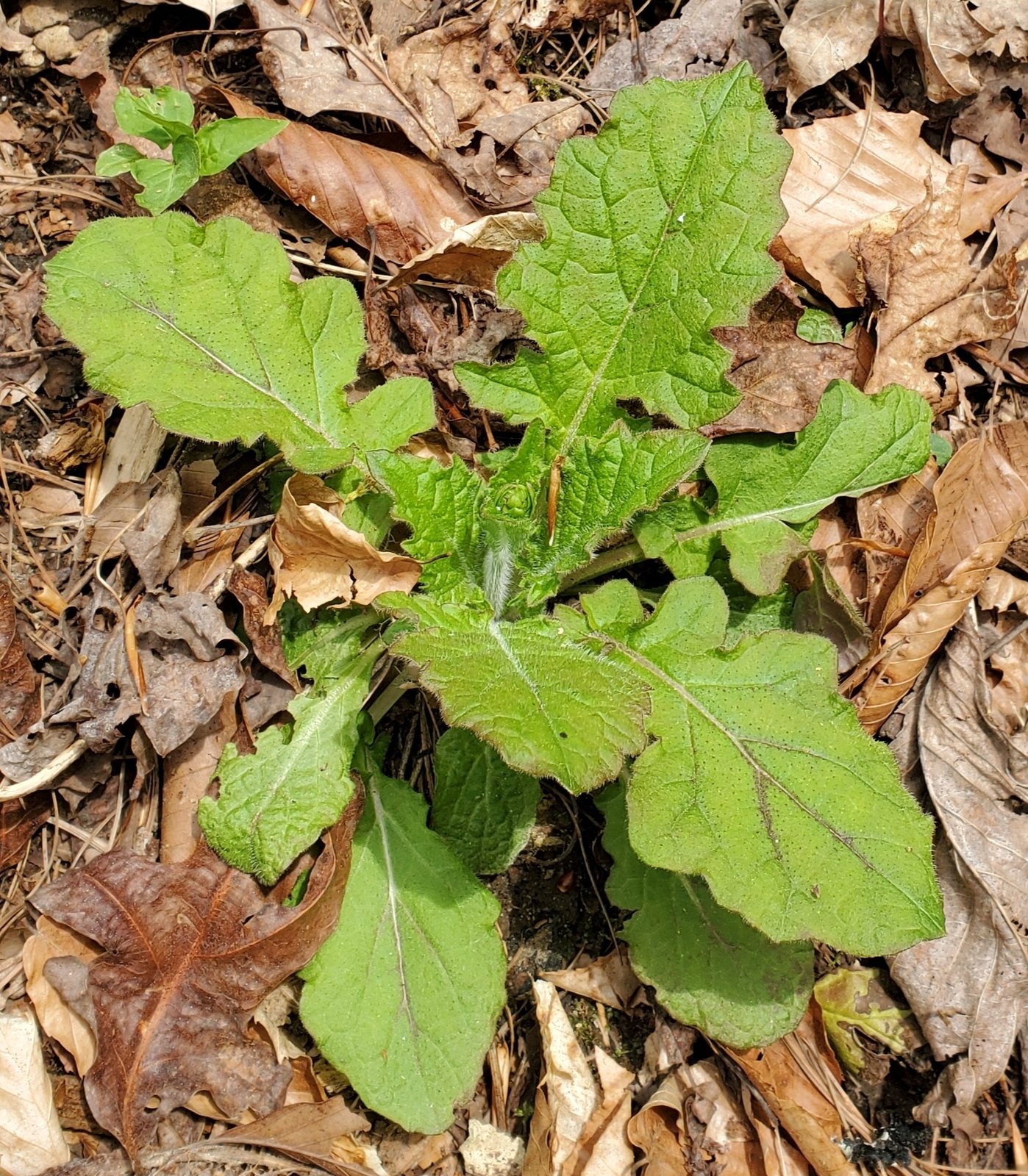
- Low rosettes of lobed, lyre-shaped leaves, often marked or flushed with purple. Foliage may persist through mild winters but dies back or becomes weather-worn in colder climates.
- Growth
- Moderate; seedlings can quickly expand a planting.
- Care needed
- Low
The year at a glance
- Pollinators
- Deer resistant
- Drought tolerant
- Heat tolerant
- Low allergen
| J | F | M | A | M | J | J | A | S | O | N | D | |
|---|---|---|---|---|---|---|---|---|---|---|---|---|
| Flowers | ||||||||||||
| Fruit | ||||||||||||
| Plant |
Northern hemisphere months. In Australia, shift them by six.
- Difficulty
- Easy
- Toughness
- Very tough
Will it suit your garden?
Pick your zone, country, light and whether you have pets.
Full sun is 6 or more hours of direct sun a day, part shade 3 to 6 hours, shade under 3.
How it grows
Planting day
1 ft (0.3 m)
After 1 year
1.1 ft (0.35 m)
After 2 years
1.3 ft (0.4 m)
After 3 years
1.5 ft (0.45 m)
full size
About 3 years to full size.
From a typical nursery size, at an average rate for this kind of plant. A rule of thumb, not a forecast.
Good to know
- Cats and dogs
- Safe
- Native to
- the US
- In the garden
- Spreads vigorously: plan to contain it.
- Growth rate
- Moderate
Care
Jobs through the year
- WaterApr–May, Sep–Oct, every 14 days
- Water established plants only when soil is drying; keep new plantings more evenly moist.
- WaterJun–Aug, every 10 days
- Water deeply during prolonged dry spells, allowing the surface soil to dry between waterings.
- PruneFeb–Mar
- Remove dead or damaged leaves without cutting into the central crown.
- DeadheadMay–Jun, every 14 days
- Cut spent flower stems to basal leaves before seeds ripen if spread is unwanted.
- MulchApr
- Use only a thin mulch layer and leave the central rosette uncovered.
- ProtectJan–Feb, Nov–Dec
- Clear heavy fallen leaves from rosettes and keep drainage open to prevent crown rot.
- Water regularly during the first growing season, allowing the surface soil to dry slightly between waterings.
- Water established plants during prolonged drought rather than keeping the soil constantly wet.
- Skip routine feeding; rich soil and heavy fertilising are unnecessary.
- Keep mulch thin and clear of the central rosette to reduce crown rot.
- Remove unwanted seedlings while small, especially along lawn edges and paths.
Pruning. Cut spent flower stems back to the basal leaves after flowering, before seeds ripen if you want to limit spreading. Remove dead or damaged leaves in late winter or early spring without cutting into the crown.
Through the year
- Early spring
- Remove winter-damaged foliage and pull unwanted seedlings.
- Spring
- Plant nursery-grown plants after the soil is workable; water them in thoroughly.
- Late spring
- Cut fading flower stems before seed ripens if you do not want more plants.
- Summer
- Water new plantings during dry spells; established plants usually need less attention.
- Autumn
- Sow ripe seed outdoors where you want new plants, or transplant young rosettes.
- Winter
- Keep fallen leaves and heavy mulch from smothering the rosettes.
In the garden
- Plant in small groups at the front of an informal border for spring flowers above low foliage.
- Mix with little bluestem and other eastern North American meadow plants where self-seeding is welcome.
- Use along sunny woodland edges with golden ragwort for contrasting blue and yellow spring flowers.
- Grow between widely spaced stepping stones or beside paths, away from regular foot traffic.
Garden styles it suits: Native meadow, Wildflower, Wildlife garden, Pollinator garden, Cottage garden and Low-maintenance.
Plant it with: Little bluestem, Golden ragwort, Butterfly weed, Lanceleaf coreopsis, Purple coneflower and Wild columbine.
Wildlife: Flowers provide nectar and pollen for bees and attract butterflies; hummingbirds may also visit within their range. Letting some stems set seed supports natural regeneration.
Problems to watch for
- Excessive self-seeding: remove flower stems before seed ripens and pull young seedlings promptly.
- Crown or root rot in persistently wet soil: improve drainage, move plants out of waterlogged spots and keep mulch off the crown.
- Slugs and snails damaging young leaves: remove hiding places and use traps or a labelled iron-phosphate bait where needed.
- Sparse flowering in deep shade: move plants to a brighter position with more direct sunlight.
Safety
Not known to be toxic to people, cats, dogs or horses, although species-specific safety information is limited. It is not a standard culinary sage; do not treat its leaves or other parts as a substitute for culinary sage.
Where it spreads. Can spread aggressively by seed in garden beds and lawns, particularly in the southeastern United States, where it is native. This garden behaviour does not mean it is an introduced invasive species there; remove seed heads to control spread.
Easily confused with
Bugle (Ajuga reptans)
Bugle forms spreading mats through obvious creeping runners and has mostly unlobed leaves. Lyreleaf sage forms distinct rosettes with deeply lobed basal leaves and taller, more open flower spikes.
Selfheal (Prunella vulgaris)
Selfheal has mostly unlobed, oval leaves and short, dense flower heads. Lyreleaf sage has lobed basal leaves and flowers spaced in whorls along a longer upright stem.
The name
The name lyrata means lyre-shaped, referring to the outline of the lobed basal leaves.
Propagation. Grow from seed sown outdoors in autumn, allowing natural winter chilling, or transplant self-sown rosettes in spring or autumn. Divide established clumps in spring where they have formed several crowns.
Checked against open data
- Accepted botanical name
- Salvia lyrata
- In the US and Canada
- Native in the lower 48 states.
- Native range
- Alabama, Connecticut, Florida, Illinois, Kansas, Kentucky, Maryland, Missouri, New Jersey, New York, South Carolina and Tennessee.
- Measured
- Average height 8 cm.
Sources: GBIF (CC BY 4.0), USDA PLANTS and Trefle (CC BY 4.0). The care and design notes are LandscapeGPT's own.
See it in your own yard.
Upload a photo of your yard and see it redesigned with plants that suit your climate, each checked against your zone.