Maiden grass 'Gracillimus'
Miscanthus sinensis 'Gracillimus'. Family Poaceae. Ornamental grass.
Also called Chinese silver grass 'Gracillimus', Eulalia 'Gracillimus'.
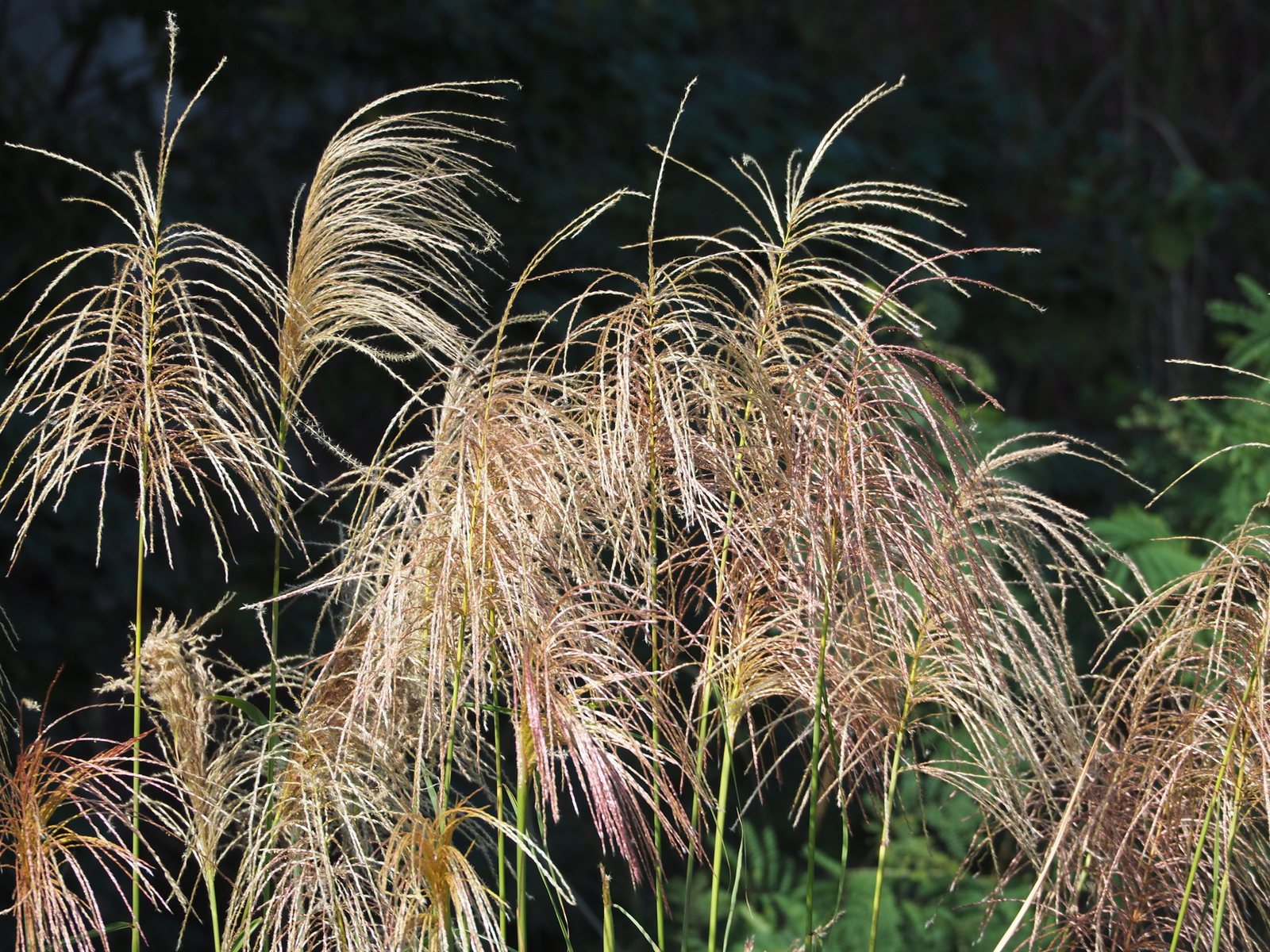
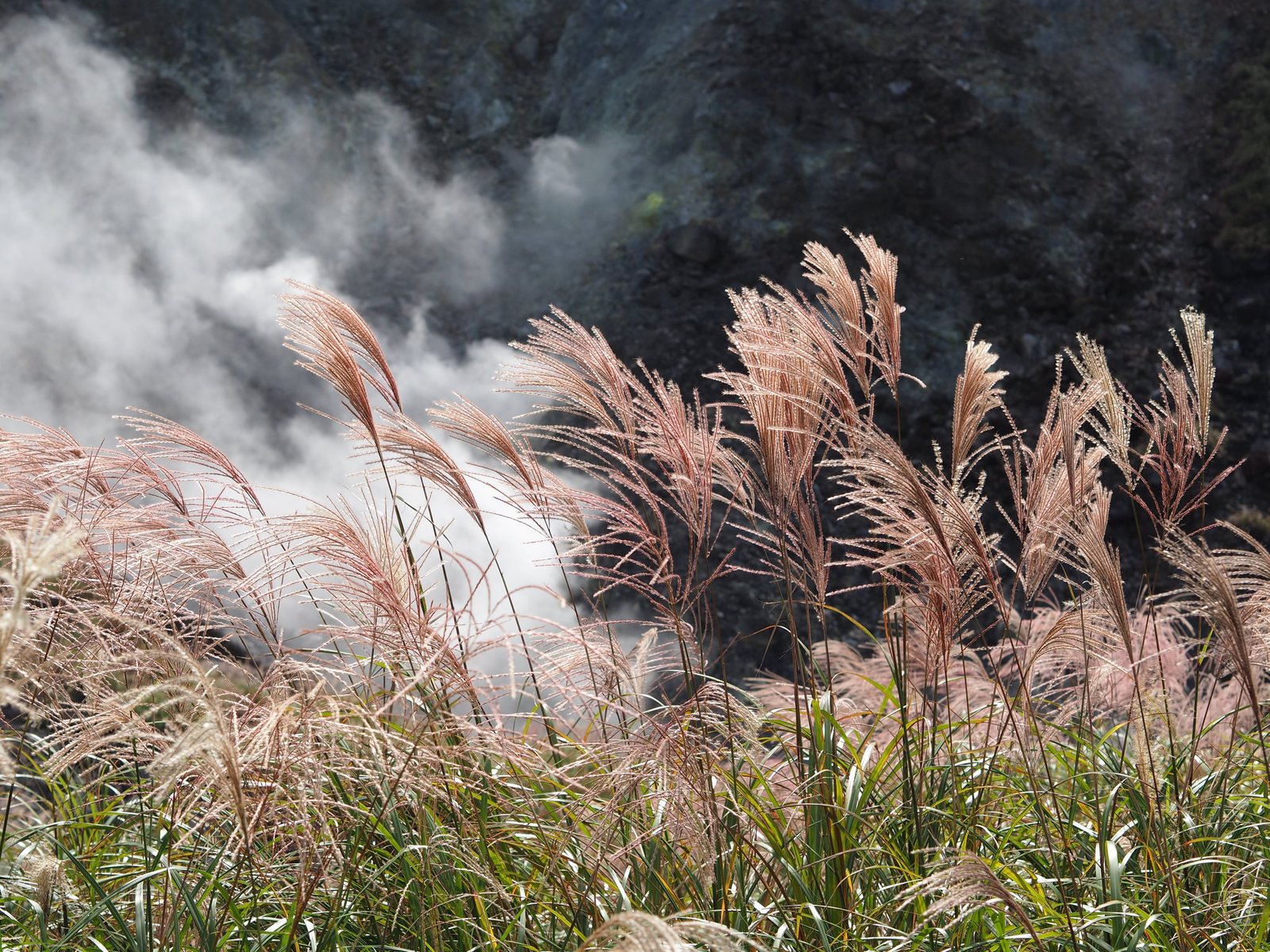
'Gracillimus' is a tall, deciduous ornamental grass with a rounded clump of narrow, arching leaves. Gardeners grow it for its fine texture, screening effect and straw-coloured winter stems; coppery flower plumes appear late in warm seasons but may not develop in cool climates.
At a glance
- Sun
- Full sun is best; light shade reduces flowering and can make stems flop.
- Water
- Water regularly during the first growing season. Once established, water during prolonged dry spells; avoid persistently wet soil.
- Soil
- Average, well-drained soil, including clay that drains adequately. Tolerates a range of soil pH; avoid waterlogged sites and excessive fertility.
- Height
- 5-7 ft (1.5-2.1 m), including flower stems
- Spread
- 3-5 ft (0.9-1.5 m)
- Flowers
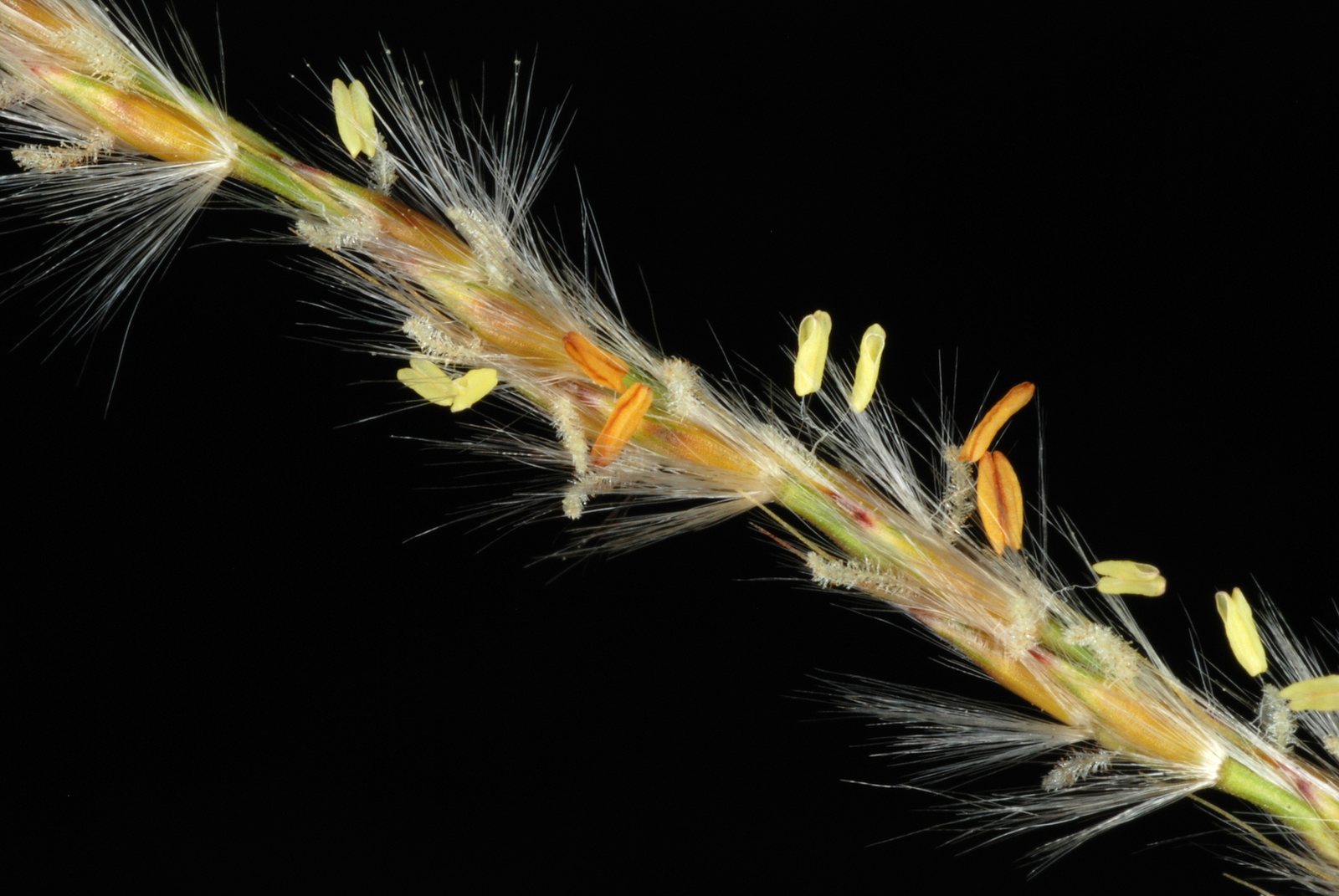
- Late summer to autumn, often very late: copper-red plumes fade to silvery cream. Flowering can be sparse or absent in cool, short summers.
- Foliage
- Very narrow green blades with a fine white midrib, arching from an upright base; turns yellowish tan in autumn and straw-coloured in winter.
- Growth
- Moderate to fast once established; slow to start growing in spring.
- Care needed
- Medium
The year at a glance
- Deer resistant
- Drought tolerant
- Heat tolerant
- Wildlife
| J | F | M | A | M | J | J | A | S | O | N | D | |
|---|---|---|---|---|---|---|---|---|---|---|---|---|
| Flowers | ||||||||||||
| Fruit | ||||||||||||
| Plant |
Northern hemisphere months. In Australia, shift them by six.
- Difficulty
- Moderate
- Toughness
- Very tough
Will it suit your garden?
Pick your zone, country, light and whether you have pets.
Full sun is 6 or more hours of direct sun a day, part shade 3 to 6 hours, shade under 3.
How it grows
Planting day
1.1 ft (0.35 m)
After 1 year
3 ft (0.93 m)
After 2 years
5 ft (1.5 m)
After 3 years
6 ft (1.8 m)
full size
About 3 years to full size.
From a typical nursery size, at an average rate for this kind of plant. A rule of thumb, not a forecast.
Good to know
- Cats and dogs
- Safe
- Invasive in
- the US and Australia
- Growth rate
- Moderate
Care
Jobs through the year
- WaterApr–May, Sep–Oct, every 21 days
- Water established ground-grown clumps only during prolonged drought; water new plants more often.
- WaterJun–Aug, every 14 days
- Water deeply during prolonged dry spells only; keep new plants regularly watered.
- PruneFeb–Mar
- Cut old stems to 10–15 cm before new growth; wear gloves and long sleeves.
- MulchApr–May
- Apply a thin organic mulch, using compost on poor soil and keeping the crown clear.
- DivideApr–May
- Divide only crowded clumps or those with dead centres, retaining healthy outer sections.
- DeadheadSep–Oct
- Where seed escape is a concern, remove plumes before seeds mature; flowering may be absent in cool summers.
- Plant in spring in cold regions, allowing room for the mature clump.
- Water deeply during the first growing season and during extended drought thereafter.
- Apply a thin layer of compost in spring if soil is poor; avoid high-nitrogen fertiliser.
- Mulch around the clump to conserve moisture, keeping mulch away from the crown.
- Divide in spring when the centre becomes bare or the clump outgrows its space.
- Where seed escape is a concern, remove plumes before seeds mature; do not plant where locally restricted.
Pruning. In late winter or early spring, before new shoots emerge, cut old stems to 4-6 in (10-15 cm) above the ground. Wear gloves and long sleeves because the leaf edges can cut skin.
Through the year
- Late winter
- Cut down old stems before fresh growth starts, unless they are still providing useful winter structure.
- Spring
- Plant or divide as the soil warms and new shoots begin to appear.
- Late spring
- Weed around emerging shoots, refresh mulch and water new plants deeply.
- Summer
- Water during prolonged drought and check that neighbouring plants are not crowding the clump.
- Autumn
- Remove flower heads before seed dispersal where escape is a risk.
- Winter
- Leave sound stems standing for structure, but remove any that collapse across paths.
In the garden
- Plant at the back of a sunny border for height and fine texture behind coneflowers and stonecrops.
- Repeat clumps through a large perennial planting to create rhythm and movement.
- Use as a seasonal screen beside a terrace, allowing for its bare period after spring cutting.
- Place where low autumn light catches the arching leaves and any flower plumes.
Garden styles it suits: New perennial (prairie), Modern, Japanese, Architectural minimal, Autumn colour and Winter interest.
Plant it with: Purple coneflower, Black-eyed Susan, Tall stonecrop, Russian sage, Michaelmas daisy and Blazing star.
Wildlife: Dense clumps and standing stems provide shelter for small animals and overwintering insects. The wind-pollinated flowers are not a significant nectar source, and this non-native grass is not a substitute for locally native habitat plants.
Problems to watch for
- Flopping stems: move to full sun, stop high-nitrogen feeding and divide an overcrowded clump in spring.
- Bare or dead centre: lift and divide in spring, replanting vigorous outer sections and discarding the old centre.
- Crown rot in wet soil: improve drainage or move to a better-drained site; discard badly rotted crowns.
- Miscanthus mealybug: white, waxy insects hide beneath leaf sheaths and can cause weak growth. Remove badly infested stems, avoid sharing divisions and seek local advice if the infestation persists.
Safety
Not known to be toxic to people, cats, dogs or horses. The main hazard is physical: sharp leaf edges can cut skin, and coarse leaves may irritate the mouth if chewed.
Where it spreads. Miscanthus sinensis is invasive in parts of the eastern and midwestern United States, including the Mid-Atlantic and Southeast, and is an environmental weed in parts of New South Wales, Australia. 'Gracillimus' is not reliably sterile and can produce viable seed, especially where other cultivars grow nearby. Check local guidance before planting;
Easily confused with
Maiden grass 'Morning Light' (Miscanthus sinensis 'Morning Light')
Its narrow leaves have pale margins that give the whole plant a silvery appearance; 'Gracillimus' has green leaf margins and a white midrib.
Zebra grass (Miscanthus sinensis 'Zebrinus')
Its broader leaves carry conspicuous yellow bands across the blades; 'Gracillimus' has narrow leaves without cross-banding.
Pampas grass (Cortaderia selloana)
Forms a heavier mound of tougher, sharply edged leaves and bears much larger, dense white or pinkish plumes rather than the finer, branching plumes of miscanthus.
The name
'Sinensis' means 'from China', while 'Gracillimus' is Latin for 'very slender', referring to the cultivar's fine leaves.
Propagation. Divide established clumps in spring as new growth begins, using a sharp spade or saw and retaining healthy roots and shoots on each section. Seedlings do not reliably retain the characteristics of 'Gracillimus'.
Checked against open data
- Accepted botanical name
- Miscanthus sinensis
- In the US and Canada
- Introduced in Canada and the lower 48 states.
- Native range
- Borneo, China North-Central, China South-Central, China Southeast, Hainan, Japan, Jawa, Kazan-retto, Khabarovsk, Korea, Kuril Is. and Laos.
- Measured
- Soil pH 5 to 7.2. Average height 186 cm.
Sources: GBIF (CC BY 4.0), USDA PLANTS and Trefle (CC BY 4.0). The care and design notes are LandscapeGPT's own.
See it in your own yard.
Upload a photo of your yard and see it redesigned with plants that suit your climate, each checked against your zone.