Maiden pink
Dianthus deltoides. Family Caryophyllaceae. Perennial.
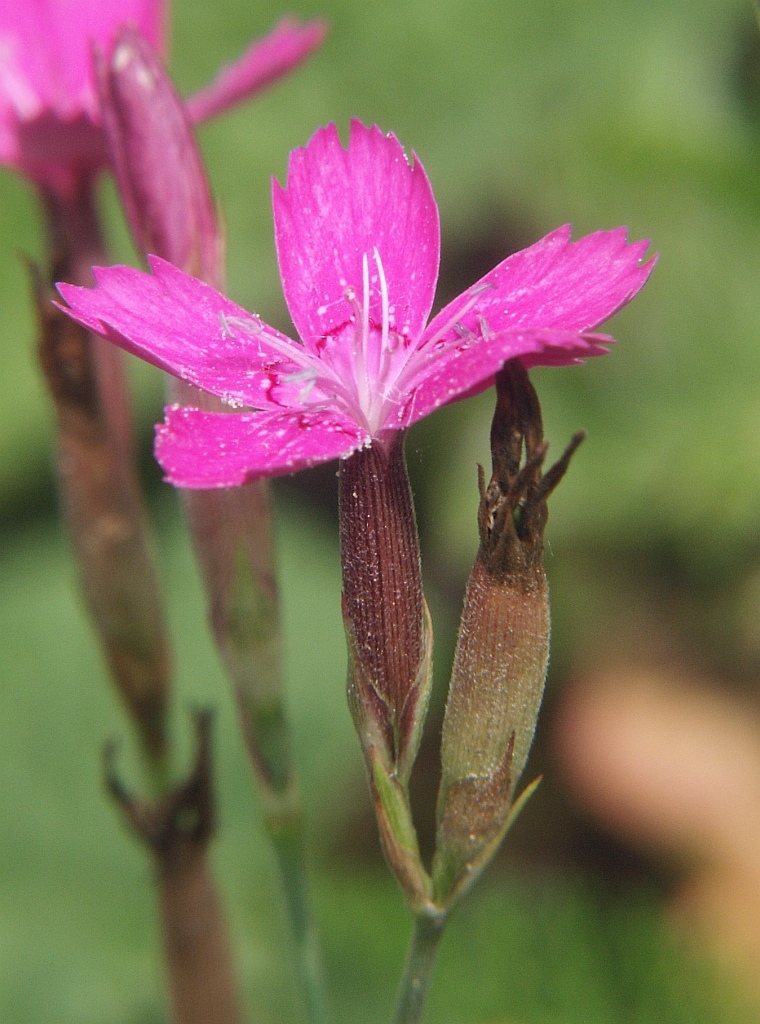
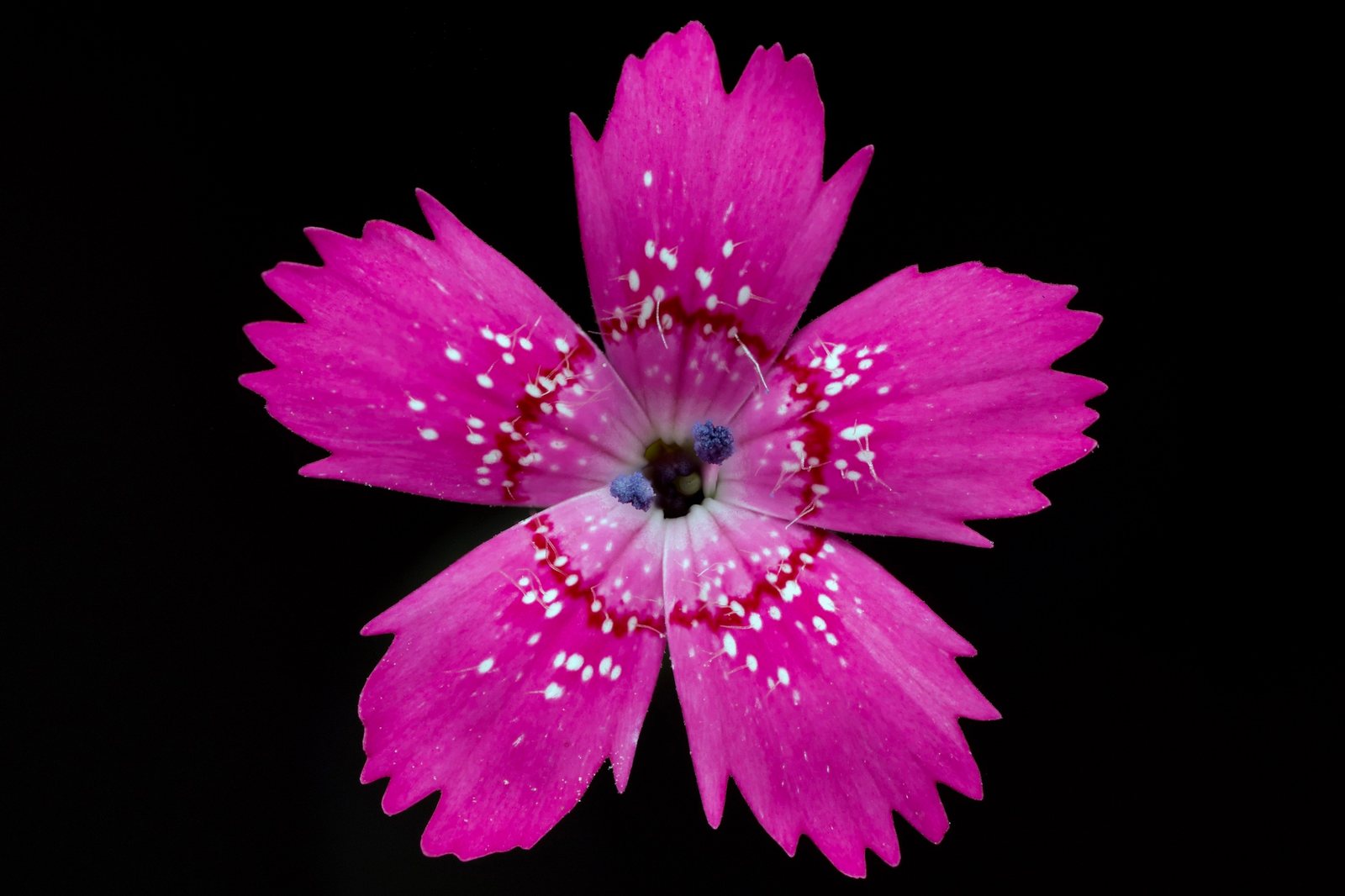
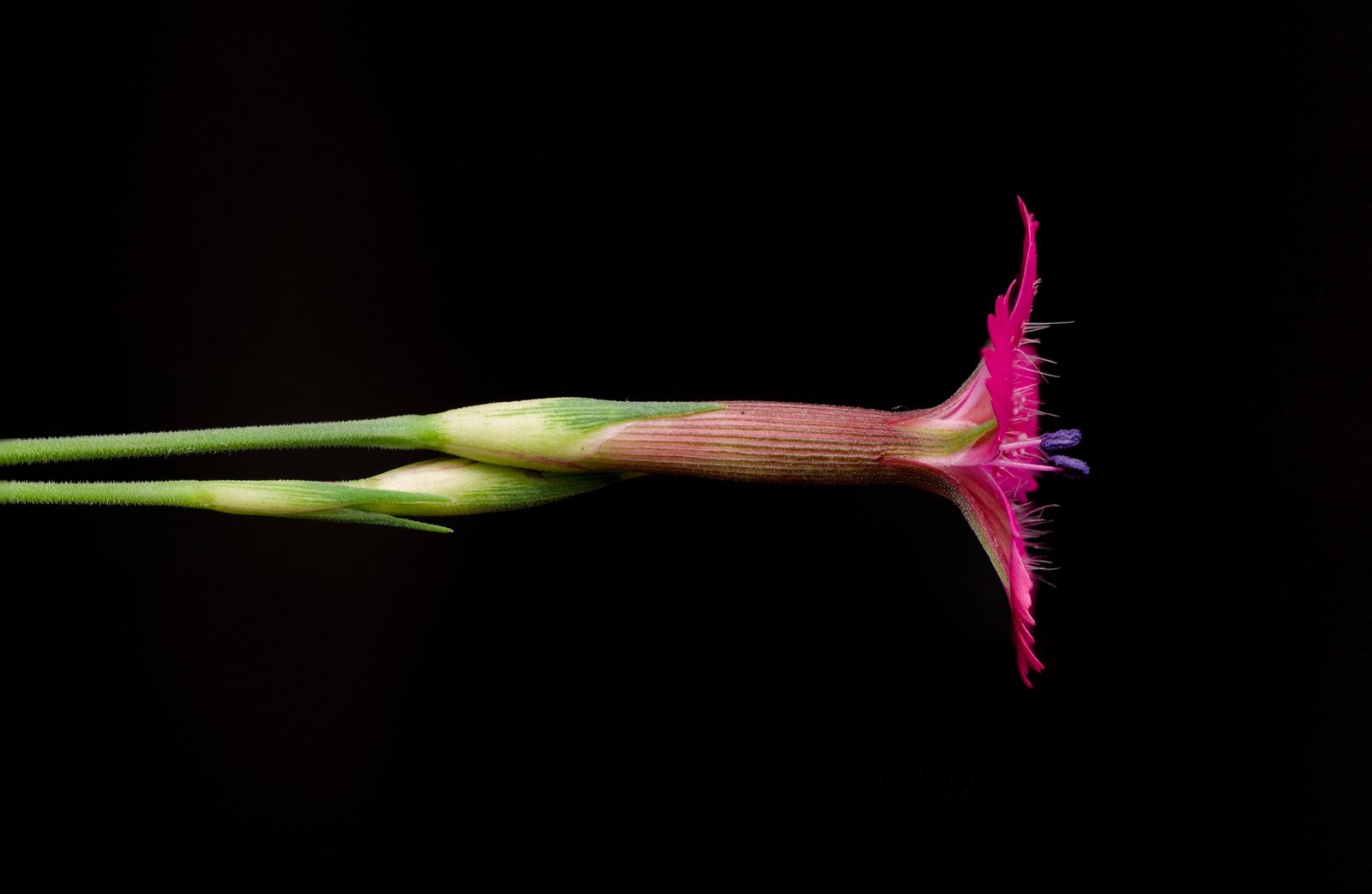
Maiden pink (Dianthus deltoides) is a low, mat-forming perennial with narrow leaves and small, fringed flowers held above the foliage. Grow it along sunny borders, in rock gardens or between widely spaced paving stones where the soil drains freely.
At a glance
- Sun
- Full sun; tolerates light afternoon shade in hotter climates, but flowers less in shade.
- Water
- Water regularly while establishing, then during prolonged dry spells. Established plants tolerate some drought but dislike persistently wet soil.
- Soil
- Well-drained sandy, gritty or gravelly soil, preferably neutral to slightly alkaline. Avoid heavy, waterlogged soil and very rich planting mixes.
- Height
- 0.5-1 ft (0.15-0.3 m), including flower stems
- Spread
- 1-2 ft (0.3-0.6 m)
- Flowers
- Late spring to midsummer, sometimes with scattered later flowers; usually deep pink, with white, pale pink and red forms available.
- Foliage
- Small, narrow, green to dark green leaves form a low mat. Usually evergreen in mild climates, but foliage may thin or die back in severe winters.
- Growth
- Moderate; forms spreading mats and may self-seed.
- Care needed
- Low
The year at a glance
- Pollinators
- Deer resistant
- Drought tolerant
- Cold hardy
- Low allergen
| J | F | M | A | M | J | J | A | S | O | N | D | |
|---|---|---|---|---|---|---|---|---|---|---|---|---|
| Flowers | ||||||||||||
| Plant |
Northern hemisphere months. In Australia, shift them by six.
- Difficulty
- Easy
- Toughness
- Very tough
Will it suit your garden?
Pick your zone, country, light and whether you have pets.
Full sun is 6 or more hours of direct sun a day, part shade 3 to 6 hours, shade under 3.
How it grows
Planting day
0.7 ft (0.22 m)
full size
About 3 years to full size.
From a typical nursery size, at an average rate for this kind of plant. A rule of thumb, not a forecast.
Good to know
- Cats and dogs
- Mildly toxic: may upset a stomach
- Native to
- the UK
- In the garden
- Spreads vigorously: plan to contain it.
- Growth rate
- Moderate
Care
Jobs through the year
- WaterApr–May, Sep–Oct, every 14 days
- Water established plants only during dry spells; new plants need more frequent watering.
- WaterJun–Aug, every 14 days
- Soak established mats during prolonged drought, allowing the surface to dry afterward.
- FeedMar–Apr
- Give a light feed only if growth is weak on very poor soil.
- MulchMar–Apr
- Use a thin gravel mulch rather than organic mulch against crowns.
- PruneMar
- Remove dead foliage and inspect crowns for winter rot.
- PruneJul–Aug
- Lightly shear after the main flowering flush, retaining leafy growth.
- DeadheadMay–Aug, every 14 days
- Remove spent flowers before seeds ripen if self-seeding is unwanted.
- DivideMar–Apr
- Divide only thinning or bare-centred mats, replanting healthy rooted edges.
- ProtectJan–Feb, Nov–Dec
- Clear fallen leaves and wet mulch from the mats.
- Plant with the crown level with the soil surface, leaving room for the mat to spread.
- Water at soil level while establishing; allow the surface to dry between waterings.
- Avoid routine heavy feeding; use a light spring feed only if growth is weak on very poor soil.
- Use a thin gravel mulch rather than piling compost or bark against the crown.
- Divide thinning or bare-centred clumps in spring, keeping healthy rooted outer sections.
Pruning. After the main flowering flush, lightly shear off spent stems without cutting into bare, leafless growth. Remove dead foliage in early spring and deadhead before seed ripens if you want to limit seedlings.
Through the year
- Early spring
- Remove dead foliage and check that winter moisture has not left the crown soft or rotten.
- Spring
- Plant or divide clumps once the soil is workable, choosing a sunny, freely drained position.
- Late spring
- Watch new growth for aphids and water newly planted clumps during dry weather.
- Summer
- Lightly shear after the main flowering flush and remove unwanted seedlings.
- Early autumn
- Plant in mild climates while the soil is still warm; avoid planting into wet ground.
- Winter
- Keep fallen leaves and wet organic mulch off the mat to reduce crown rot.
In the garden
- Edge sunny paths and borders with a low ribbon of flowers and fine-textured foliage.
- Tuck into rock gardens or gravel beds with creeping thyme and low sedums.
- Plant between widely spaced paving stones where it will receive little foot traffic.
- Group at the front of cottage borders beneath taller, open-growing perennials.
Garden styles it suits: Cottage garden, Dry gravel garden, Alpine rock garden, Pollinator garden, Low-maintenance and Small-space.
Plant it with: Creeping thyme, Moss phlox, Rock rose, Low-growing stonecrop, Candytuft and Dwarf lavender.
Wildlife: Flowers provide nectar and pollen for small bees and butterflies. Its low mats offer some shelter for small invertebrates.
Problems to watch for
- Crown or root rot in wet soil: improve drainage, keep mulch away from crowns and replace badly affected plants.
- Aphids on soft shoots: dislodge with a firm spray of water; use insecticidal soap if persistent, following the label.
- Slugs and snails damaging young growth: remove hiding places, hand-pick or use an approved iron-phosphate bait.
- Thin, floppy growth or few flowers: move to more sun, reduce feeding and divide ageing mats.
Safety
Dianthus plants are considered mildly toxic to cats and dogs; chewing leaves, stems or flowers may cause vomiting, diarrhoea or skin irritation. People may develop skin irritation, and this ornamental should not be eaten. Maiden pink is not known to be toxic to horses, though species-specific information is limited.
Where it spreads. Naturalized in parts of North America, including the northeastern United States and southern Canada. It can self-seed beyond gardens into open grassland and disturbed ground; remove spent flowers near natural areas and check local invasive-plant guidance before planting.
Easily confused with
Cheddar pink (Dianthus gratianopolitanus)
Usually has conspicuously blue-grey foliage, denser cushions and larger, often strongly fragrant flowers; maiden pink generally has greener foliage and smaller flowers.
Deptford pink (Dianthus armeria)
Has taller, upright, hairy stems and small flowers grouped in tight clusters, rather than a spreading leafy mat with more loosely arranged flowers.
Sweet William (Dianthus barbatus)
Has broader leaves and dense, flat-topped flower clusters on stout upright stems; maiden pink is lower and finer-leaved.
The name
Dianthus comes from Greek words meaning 'flower of Zeus', while deltoides means 'triangular' or 'delta-shaped'.
Propagation. Divide rooted mats in spring or take non-flowering shoot cuttings in late spring or summer. Sow seed in spring, barely covering it; named cultivars may not come true from seed.
Checked against open data
- Accepted botanical name
- Dianthus deltoides
- In the US and Canada
- Introduced in Canada and the lower 48 states.
- Native range
- Albania, Altay, Austria, Baltic States, Belarus, Belgium, Bulgaria, Buryatiya, Central European Rus, Czechoslovakia, Denmark and East European Russia.
- Measured
- Average height 20 cm.
Sources: GBIF (CC BY 4.0), USDA PLANTS and Trefle (CC BY 4.0). The care and design notes are LandscapeGPT's own.
See it in your own yard.
Upload a photo of your yard and see it redesigned with plants that suit your climate, each checked against your zone.