Malabar spinach
Basella alba. Family Basellaceae. Climber.
Also called Ceylon spinach, Indian spinach, Vine spinach.
Malabar spinach is a tropical, twining perennial grown as an annual in gardens with frost. Its fleshy leaves and tender shoots provide cooking greens during hot weather, when true spinach often bolts. It needs sustained warmth, so outdoor crops can be disappointing in cool summers; a greenhouse gives more reliable results in much of the UK.
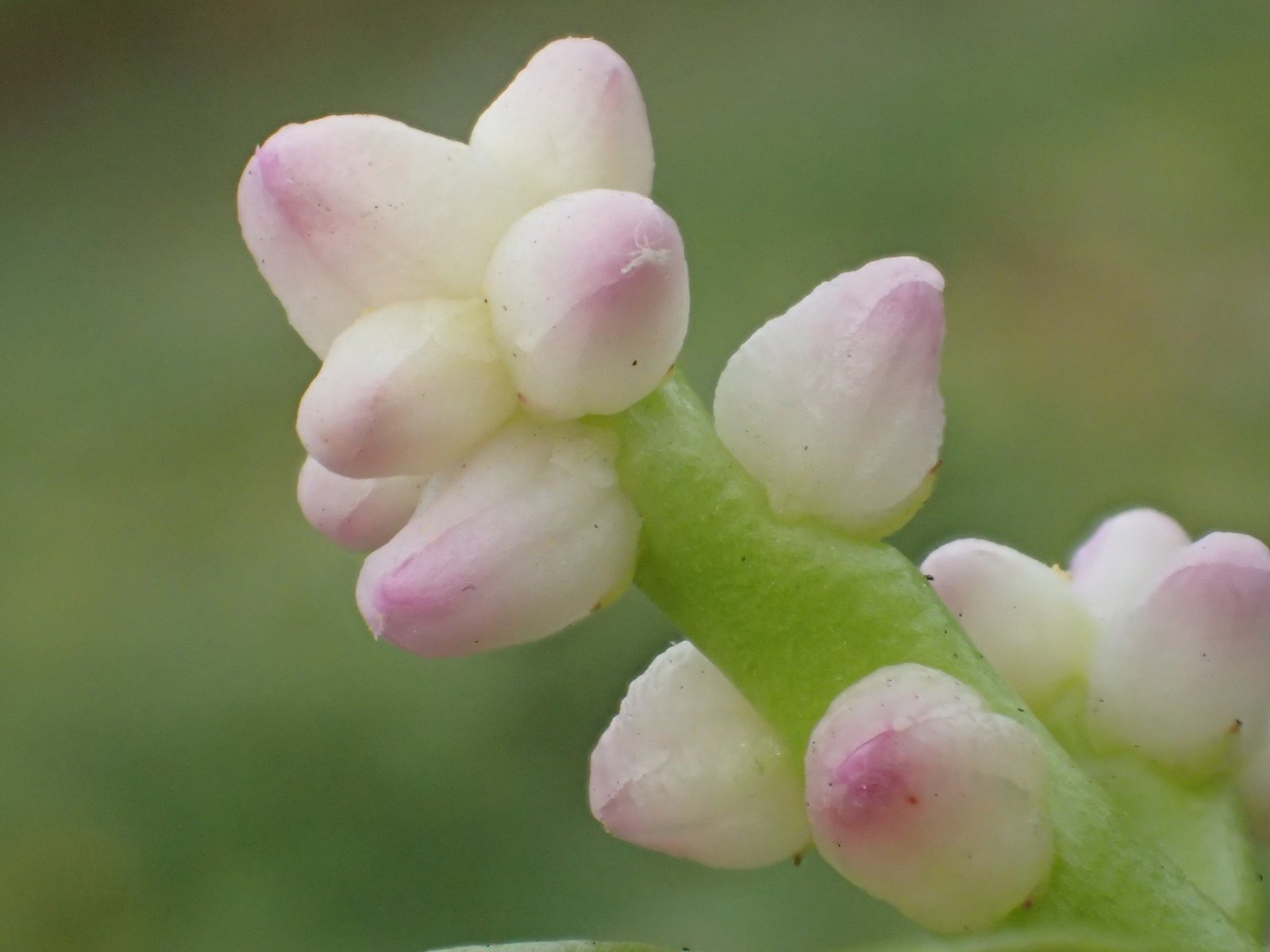
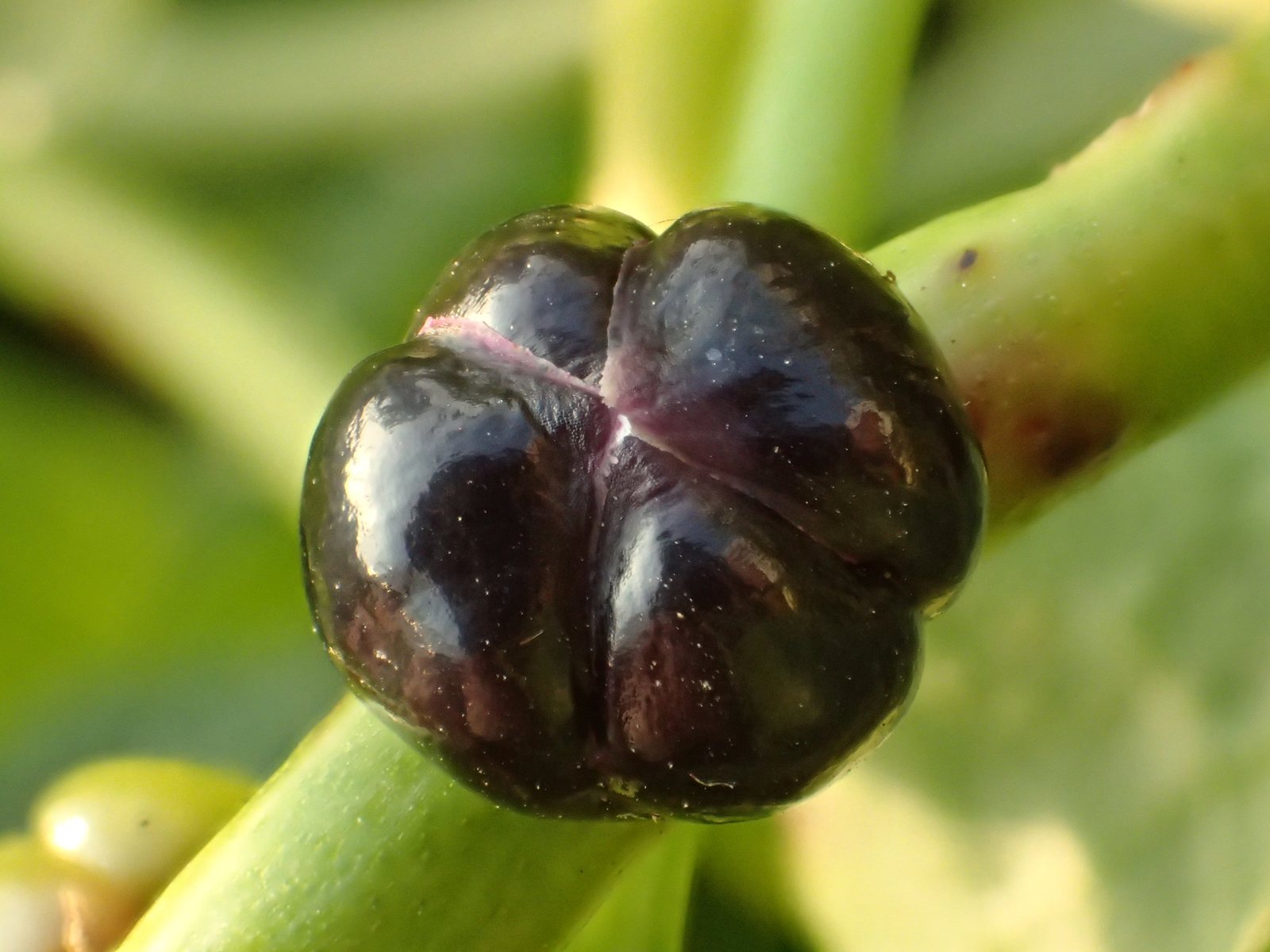
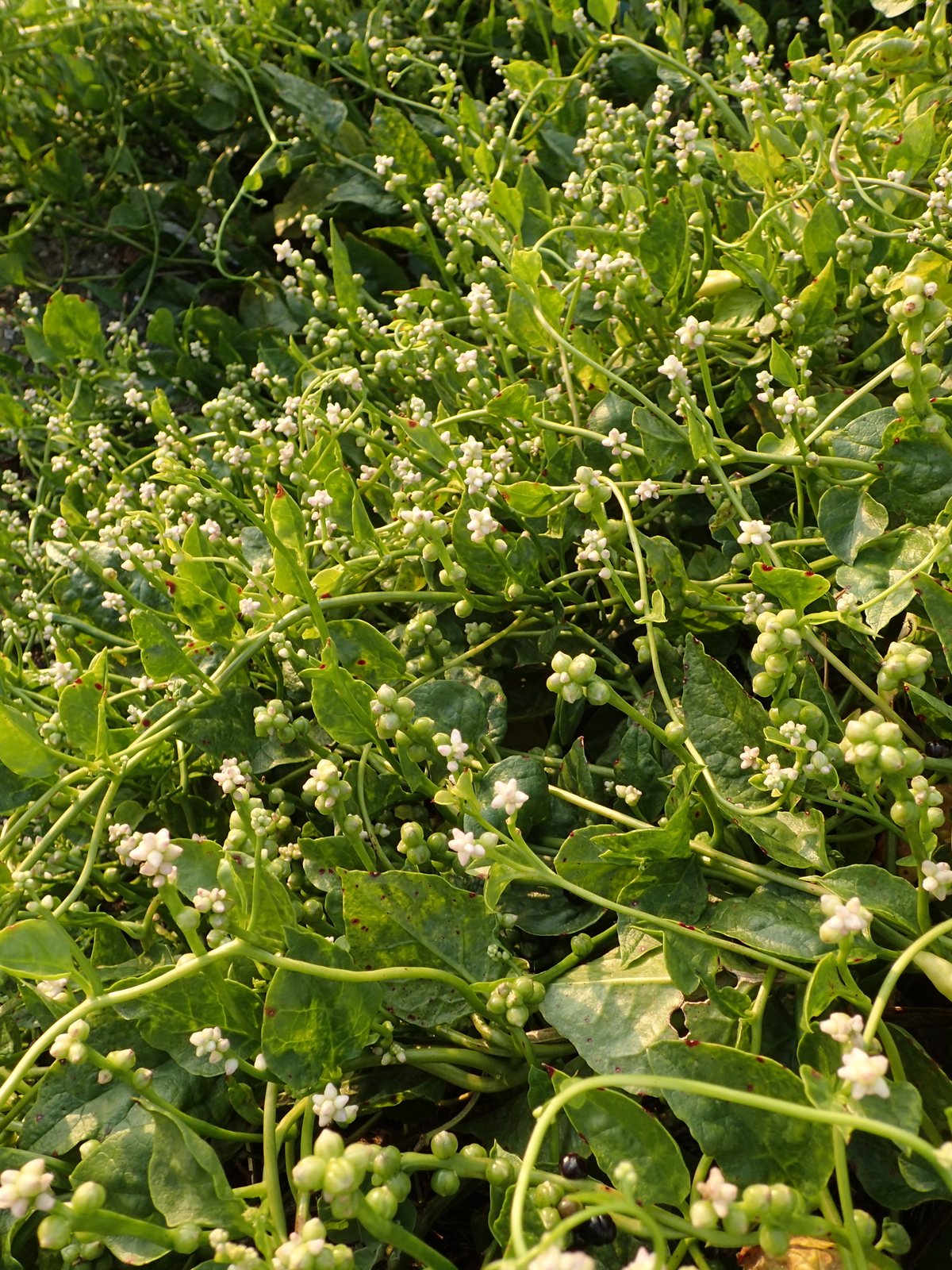
At a glance
- Sun
- Full sun in cooler climates; light afternoon shade is useful in very hot gardens.
- Water
- Keep the root zone evenly moist but not waterlogged; drought makes leaves tougher and slows growth.
- Soil
- Fertile, moisture-retentive, well-drained soil enriched with compost.
- Height
- 6-10 ft (1.8-3 m) on supports in a warm growing season; potentially longer in frost-free climates.
- Spread
- 2-3 ft (0.6-0.9 m) when trained vertically.
- Foliage
- Evergreen. Glossy, fleshy, broadly heart-shaped green leaves on twining stems. Red-stemmed forms have reddish-purple stems and leaf stalks.
- Growth
- Fast in hot weather; slow in cool conditions.
- Care needed
- Medium
The year at a glance
- Heat tolerant
- Low allergen
- Edible
| J | F | M | A | M | J | J | A | S | O | N | D | |
|---|---|---|---|---|---|---|---|---|---|---|---|---|
| Fruit | ||||||||||||
| Plant |
Northern hemisphere months. In Australia, shift them by six.
- Difficulty
- Moderate
- Toughness
- Needs looking after
Will it suit your garden?
Pick your zone, country, light and whether you have pets.
Full sun is 6 or more hours of direct sun a day, part shade 3 to 6 hours, shade under 3.
How it grows
Planting day
2 ft (0.6 m)
After 1 year
3 ft (0.9 m)
After 2 years
4 ft (1.2 m)
After 3 years
5 ft (1.5 m)
After 5 years
6 ft (1.8 m)
full size
About 4 years to full size.
From a typical nursery size, at an average rate for this kind of plant. A rule of thumb, not a forecast.
Good to know
- Cats and dogs
- Safe
- In the garden
- Spreads vigorously: plan to contain it.
- Growth rate
- Moderate
Care
Jobs through the year
- WaterJun, Sep, every 7 days
- For rooted plants in the ground, water if the surface dries; new transplants need closer attention.
- WaterJul–Aug, every 3 days
- Keep established plants evenly moist, adjusting for rain and avoiding saturated soil.
- MulchJun
- Apply compost mulch once the soil is warm, keeping it away from stems.
- PruneJun–Jul
- Pinch established growing tips to encourage branching and guide stems onto supports.
- DeadheadJul–Sep, every 14 days
- Remove flower spikes to favour leaves and prevent unwanted berries.
- HarvestJul–Oct, every 7 days
- Pick young leaves and tender tips, leaving ample foliage; take the final harvest before frost.
- ProtectJun, Sep–Oct
- Use fleece during unexpected chilly nights; this crop needs warmth and cannot survive frost.
- Plant outside only after frost danger has passed and nights are consistently warm, preferably above 59°F (15°C).
- Provide a trellis, netting or upright poles at planting, and guide young stems onto the support.
- Water deeply whenever the soil surface begins to dry; check containers frequently in hot weather.
- Mix compost into the bed before planting; feed container plants with a balanced liquid fertilizer according to its label.
- Mulch once the soil is warm to conserve moisture and suppress weeds.
Pruning. Pinch out growing tips once plants are established to encourage branching, then shorten long vines through regular harvesting. Remove flower spikes if leaf production is the priority, and remove berries before they ripen where unwanted seedlings are a concern.
Harvest
Begin picking when vines are established and carrying several healthy leaves, often about 6-8 weeks after planting out in warm conditions. Pick young, fully expanded leaves and tender shoot tips, leaving enough foliage for continued growth. Use fresh in small amounts or cook like spinach; the leaves become slippery when cooked and can thicken soups.
Through the year
- Early spring
- In frost-prone climates, soak seeds overnight and sow indoors in warmth about 6-8 weeks before the expected planting-out date.
- Late spring
- Harden off plants gradually, then plant into warm soil after frost danger has passed; install supports.
- Early summer
- Guide stems onto the trellis, pinch tips to encourage branching, and mulch after the soil has warmed.
- Summer
- Harvest little and often, maintain steady moisture, and feed container plants as needed.
- Early autumn
- Remove unwanted flowers and berries, or allow a few berries to ripen for seed saving.
- Late autumn
- Harvest usable leaves before frost and clear killed vines; in frost-free gardens, trim congested growth instead.
In the garden
- Train up a narrow trellis in a vegetable bed to produce leafy greens without taking much ground space.
- Grow red-stemmed forms on an obelisk among basil and peppers for contrasting stems and glossy foliage.
- Use a large container with a sturdy support on a warm patio, keeping the crop within easy picking reach.
- Cover a sunny fence in an edible garden for a temporary summer screen.
Garden styles it suits: Potager (kitchen garden), Edible landscape, Tropical, Modern tropical, Small-space and Homestead.
Plant it with: Basil, Okra, Sweet peppers, Aubergines and French marigolds.
Wildlife: Small flowers attract visiting insects, and birds may eat the dark berries and disperse seed. It is not a major nectar plant.
Problems to watch for
- Poor growth in cool weather: delay outdoor planting until nights are warm, or grow under cover.
- Root rot in saturated soil: improve drainage and avoid leaving pots standing in water.
- Leaf spots in humid conditions: remove badly affected leaves, improve airflow and water the soil rather than the foliage.
- Slugs and snails on young plants: inspect after dark, remove hiding places and use a locally approved bait if necessary.
Safety
Not known to be toxic to people, cats, dogs or horses, although specific pet and livestock safety information is limited. Leaves and tender shoots are edible; they contain oxalates, so people advised to restrict dietary oxalate should limit consumption. The dark berries stain strongly and are not the usual harvested food.
Where it spreads. Naturalized in Hawaii and parts of tropical Australia. It can spread by bird-dispersed seed and self-seed freely in frost-free gardens; remove ripe berries and unwanted seedlings, particularly near natural vegetation.
Easily confused with
True spinach (Spinacia oleracea)
True spinach forms a low rosette rather than a twining vine, has thinner leaves and grows best in cool weather.
Madeira vine (Anredera cordifolia)
This invasive climber also has fleshy, heart-shaped leaves, but develops knobbly aerial bulbils and long, trailing sprays of tiny white flowers.
The name
The common name refers to India's Malabar Coast and the leaves' use as a spinach substitute, although the plant is not closely related to true spinach.
Propagation. Grow from seed or stem cuttings. Soak the hard seeds overnight before sowing in a warm propagator; germination can be slow and uneven. Root tender stem cuttings in moist potting mix in warm conditions.
Checked against open data
- Accepted botanical name
- Basella alba
- In the US and Canada
- Introduced in Hawaii, Pacific Basin and Puerto Rico.
- Native range
- Bangladesh, Borneo, Cambodia, India, Jawa, Laos, Lesser Sunda Is., Malaya, Maluku, Myanmar, New Guinea and Philippines.
Sources: GBIF (CC BY 4.0), USDA PLANTS and Trefle (CC BY 4.0). The care and design notes are LandscapeGPT's own.
See it in your own yard.
Upload a photo of your yard and see it redesigned with plants that suit your climate, each checked against your zone.