Marginal wood fern
Dryopteris marginalis. Family Dryopteridaceae. Fern.
Also called Marginal shield fern, Leatherwood fern, Evergreen wood fern.
Marginal wood fern is an evergreen, clump-forming fern native to eastern North America, with leathery blue-green fronds. Grow it for year-round structure in shady borders, woodland gardens and rocky slopes; established plants tolerate somewhat dry shade but not prolonged drought.
At a glance
- Sun
- Partial to full shade; protect from hot afternoon sun.
- Water
- Keep evenly moist while establishing. Once established, water during prolonged dry spells; avoid waterlogged ground.
- Soil
- Humus-rich, well-drained soil, preferably acidic to neutral. Tolerates rocky soil and shallow pockets of soil among stones.
- Height
- 1.5-2.5 ft (0.45-0.75 m)
- Spread
- 1.5-2.5 ft (0.45-0.75 m)
- Foliage
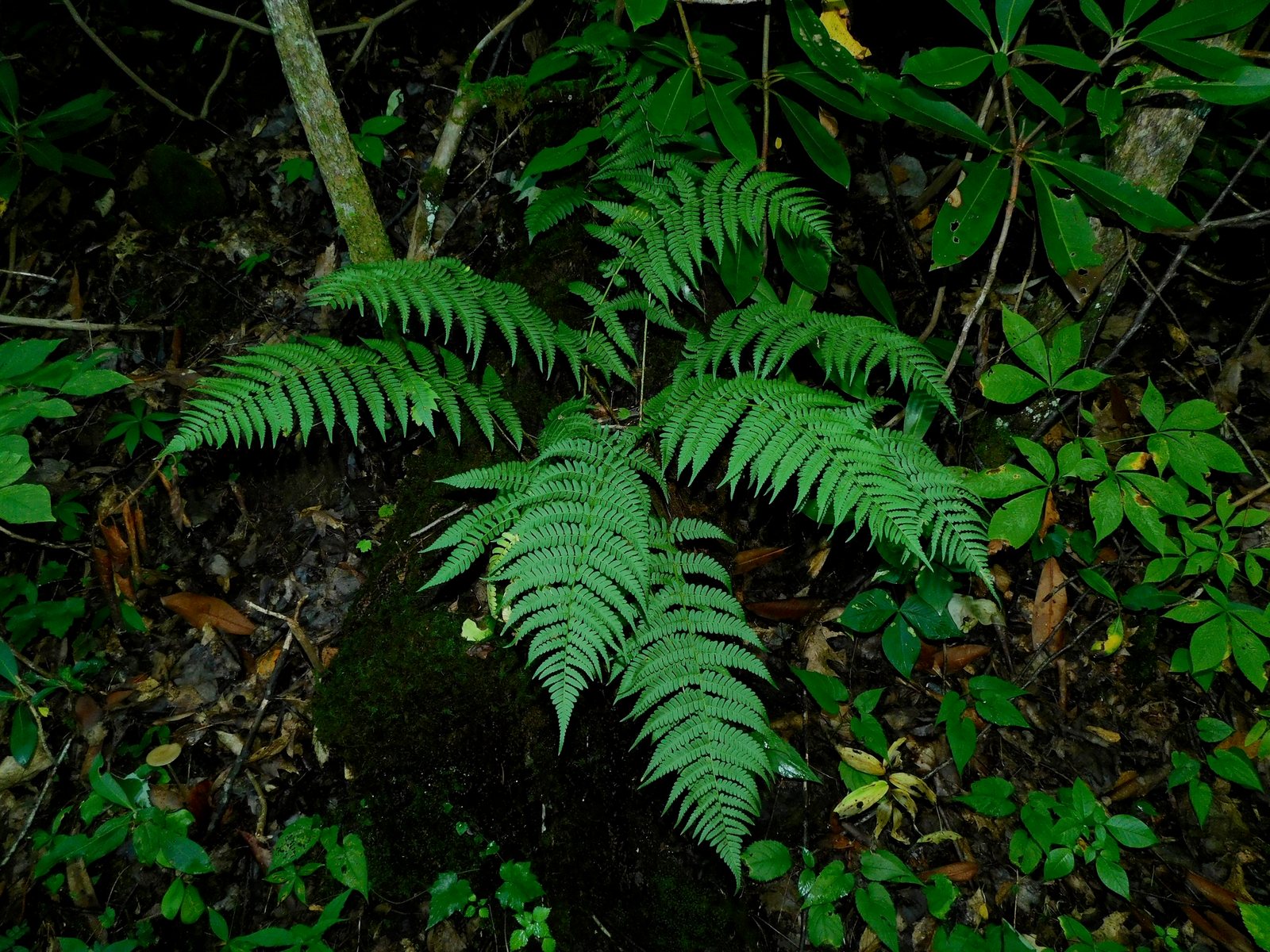
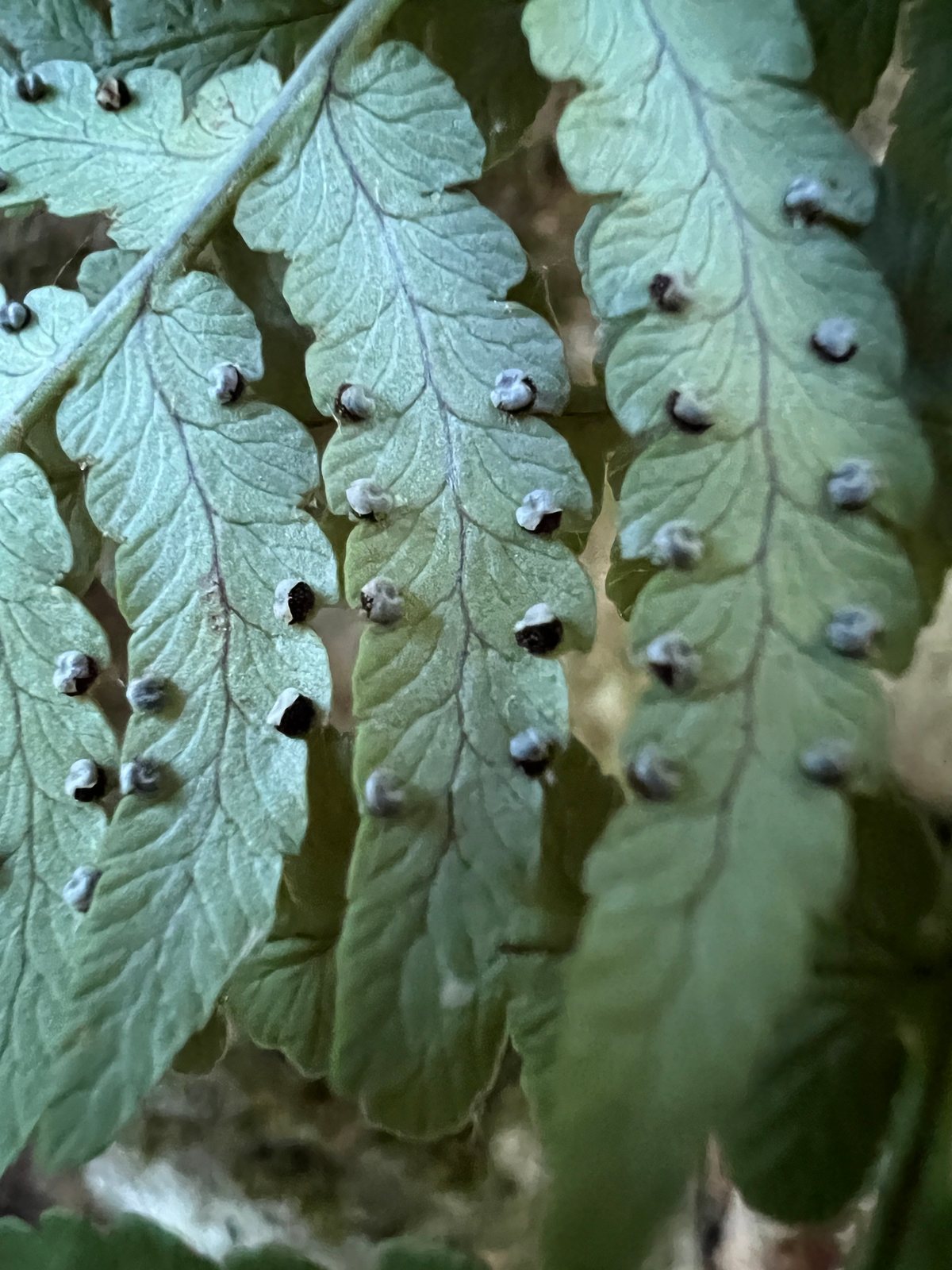
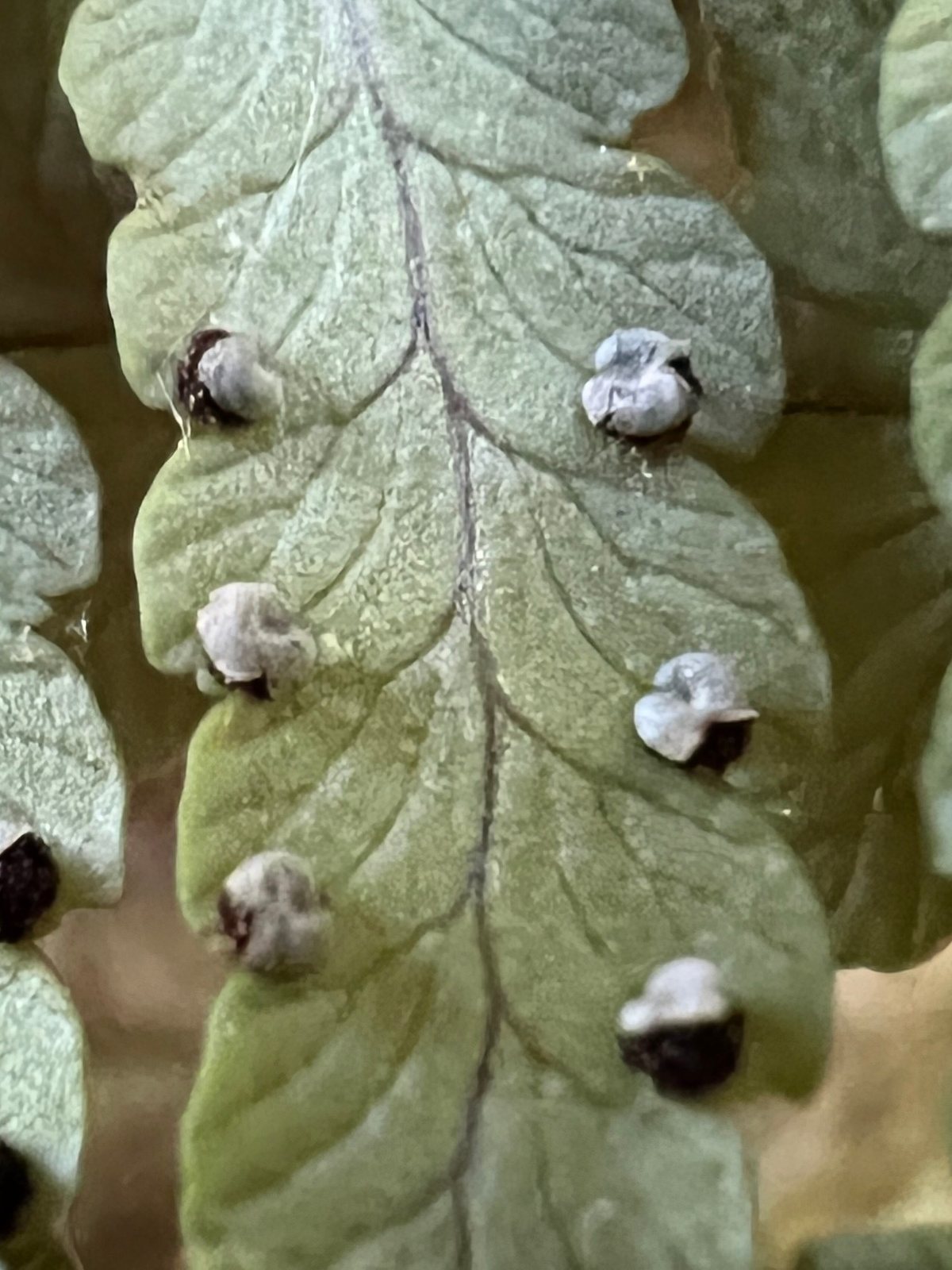
- Evergreen. Leathery, broadly lance-shaped, blue-green to dark green fronds form an upright, arching crown. Round spore clusters sit close to the margins on the undersides of mature fronds.
- Growth
- Slow to moderate
- Care needed
- Low
The year at a glance
- Deer resistant
- Cold hardy
- Wildlife
- Low allergen
| J | F | M | A | M | J | J | A | S | O | N | D | |
|---|---|---|---|---|---|---|---|---|---|---|---|---|
| Plant |
Northern hemisphere months. In Australia, shift them by six.
- Difficulty
- Easy
- Toughness
- Very tough
Will it suit your garden?
Pick your zone, country, light and whether you have pets.
Full sun is 6 or more hours of direct sun a day, part shade 3 to 6 hours, shade under 3.
How it grows
Planting day
1 ft (0.3 m)
After 1 year
1.2 ft (0.38 m)
After 2 years
1.5 ft (0.45 m)
After 3 years
1.7 ft (0.53 m)
After 5 years
2 ft (0.6 m)
full size
About 4 years to full size.
From a typical nursery size, at an average rate for this kind of plant. A rule of thumb, not a forecast.
Good to know
- Cats and dogs
- Toxic
- Native to
- the US and Canada
- Growth rate
- Slow
Care
Jobs through the year
- WaterApr–May, Sep–Oct, every 14 days
- Water established clumps only during dry spells; keep first-year plants more evenly moist.
- WaterJun–Aug, every 7 days
- Water deeply if the root zone becomes dry; skip when rainfall is sufficient.
- PruneFeb–Mar
- Remove damaged or collapsed fronds before fiddleheads emerge; retain healthy green fronds.
- MulchMar–Apr
- Top-dress with a thin layer of compost or leaf mould, leaving the crown clear.
- MulchOct
- Renew a light shredded-leaf mulch without covering the crown.
- Plant with the crown at soil level, not buried.
- Water regularly through the first growing season, allowing excess water to drain away.
- Mulch with leaf mould or shredded leaves, keeping the crown uncovered.
- Apply a thin layer of compost in spring; rich soil rarely needs additional fertilizer.
- Leave established clumps undisturbed unless division is necessary.
Pruning. In late winter or early spring, cut off damaged or collapsed fronds at their bases before new growth unfurls. Retain sound green fronds and avoid cutting emerging fiddleheads.
Through the year
- Late winter
- Remove winter-damaged fronds before the new fiddleheads emerge.
- Spring
- Plant or transplant in workable soil, then water thoroughly.
- Spring
- Top-dress with leaf mould or compost without covering the crown.
- Summer
- Check soil moisture during dry weather and water deeply when the root zone becomes dry.
- Autumn
- Renew the leaf mulch and leave healthy evergreen fronds intact.
In the garden
- Plant in small groups beneath deciduous trees for evergreen texture below bare winter branches.
- Tuck into shaded rock gardens or between large stones where drainage is good.
- Use beside woodland paths with wild ginger and foamflower for contrasting leaf shapes.
- Place behind low spring-flowering woodland plants to provide structure after their foliage fades.
Garden styles it suits: Woodland, Green on green, Winter interest, Low-maintenance, New England and Japanese.
Plant it with: Foamflower, Wild ginger, Solomon's seal, Hosta, Barrenwort and Christmas fern.
Wildlife: Dense fronds and the leaf litter beneath them provide shelter for small woodland animals and invertebrates. This fern has no flowers or nectar.
Problems to watch for
- Brown, crisp frond edges usually indicate drought or excessive sun; water the root zone and provide more shade.
- Crown or root rot can develop in saturated soil; improve drainage and keep mulch away from the crown.
- Slugs and snails may damage emerging fronds; hand-pick them or use an iron-phosphate bait according to the label.
- Winter wind can scorch exposed fronds; choose a sheltered site and remove damaged growth before spring emergence.
Safety
Reliable species-specific toxicity information for people, cats, dogs and horses is limited. Do not eat the fiddleheads, fronds or rhizomes, or allow animals to graze it: some related Dryopteris ferns contain toxic compounds, particularly in their rhizomes, and serious poisoning is possible with those species.
Easily confused with
Intermediate wood fern (Dryopteris intermedia)
Its fronds are more finely divided, and its spore clusters lie between the leaflet midrib and edge rather than close to the margin.
Goldie's wood fern (Dryopteris goldiana)
Usually much larger, with broad, deciduous fronds and spore clusters nearer the leaflet midribs.
Christmas fern (Polystichum acrostichoides)
Has narrow fronds with undivided, ear-lobed leaflets rather than the more deeply divided leaflets of marginal wood fern.
The name
The species name marginalis and the common name refer to the spore clusters positioned close to the margins of the leaf divisions.
Propagation. Raise from spores collected from mature fronds; germination and development require patience and consistently humid conditions. Large, multi-crowned plants can sometimes be divided in early spring, but the compact crown makes division difficult.
Checked against open data
- Accepted botanical name
- Dryopteris marginalis
- In the US and Canada
- Native in Canada, Greenland and the lower 48 states.
- Native range
- Alabama, Arkansas, British Columbia, Connecticut, Delaware, District of Columbia, Georgia, Greenland, Illinois, Indiana, Iowa and Kansas.
- Measured
- Average height 49 cm.
Sources: GBIF (CC BY 4.0), USDA PLANTS and Trefle (CC BY 4.0). The care and design notes are LandscapeGPT's own.
See it in your own yard.
Upload a photo of your yard and see it redesigned with plants that suit your climate, each checked against your zone.