Marguerite daisy
Argyranthemum frutescens. Family Asteraceae. Shrub.
Also called Paris daisy, Shrubby marguerite.
Marguerite daisy is a tender, evergreen shrub from the Canary Islands, grown for its long display of daisy flowers above finely divided foliage. It is grown as an annual in frosty climates, or kept in a pot and overwintered under cover. In mild coastal gardens it can become a small, woody shrub.
At a glance
- Sun
- Full sun; light afternoon shade can help in very hot climates.
- Water
- Water regularly while establishing and during flowering, allowing the soil surface to dry between waterings. Established plants tolerate brief dry spells but flower less when drought-stressed.
- Soil
- Well-drained soil of average fertility; avoid heavy, waterlogged ground. Use free-draining potting mix in containers.
- Height
- 2-3 ft (0.6-0.9 m)
- Spread
- 2-3 ft (0.6-0.9 m)
- Flowers
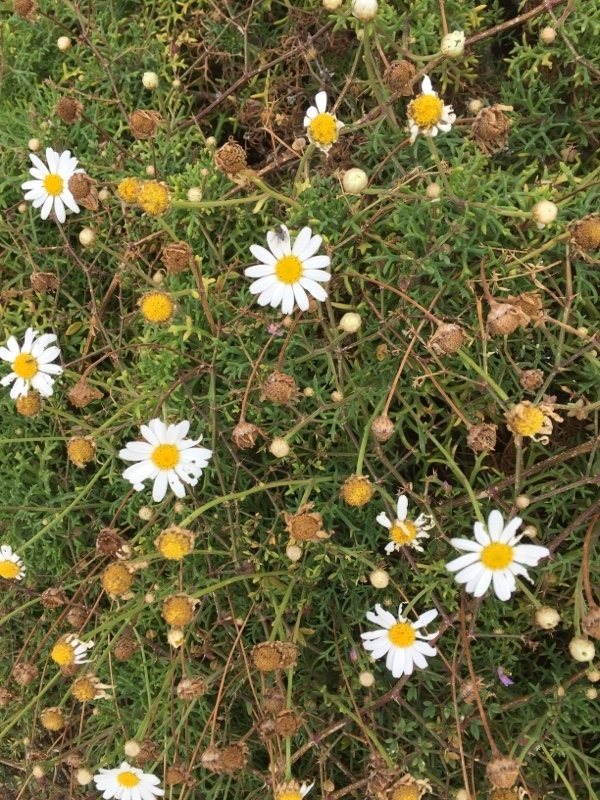
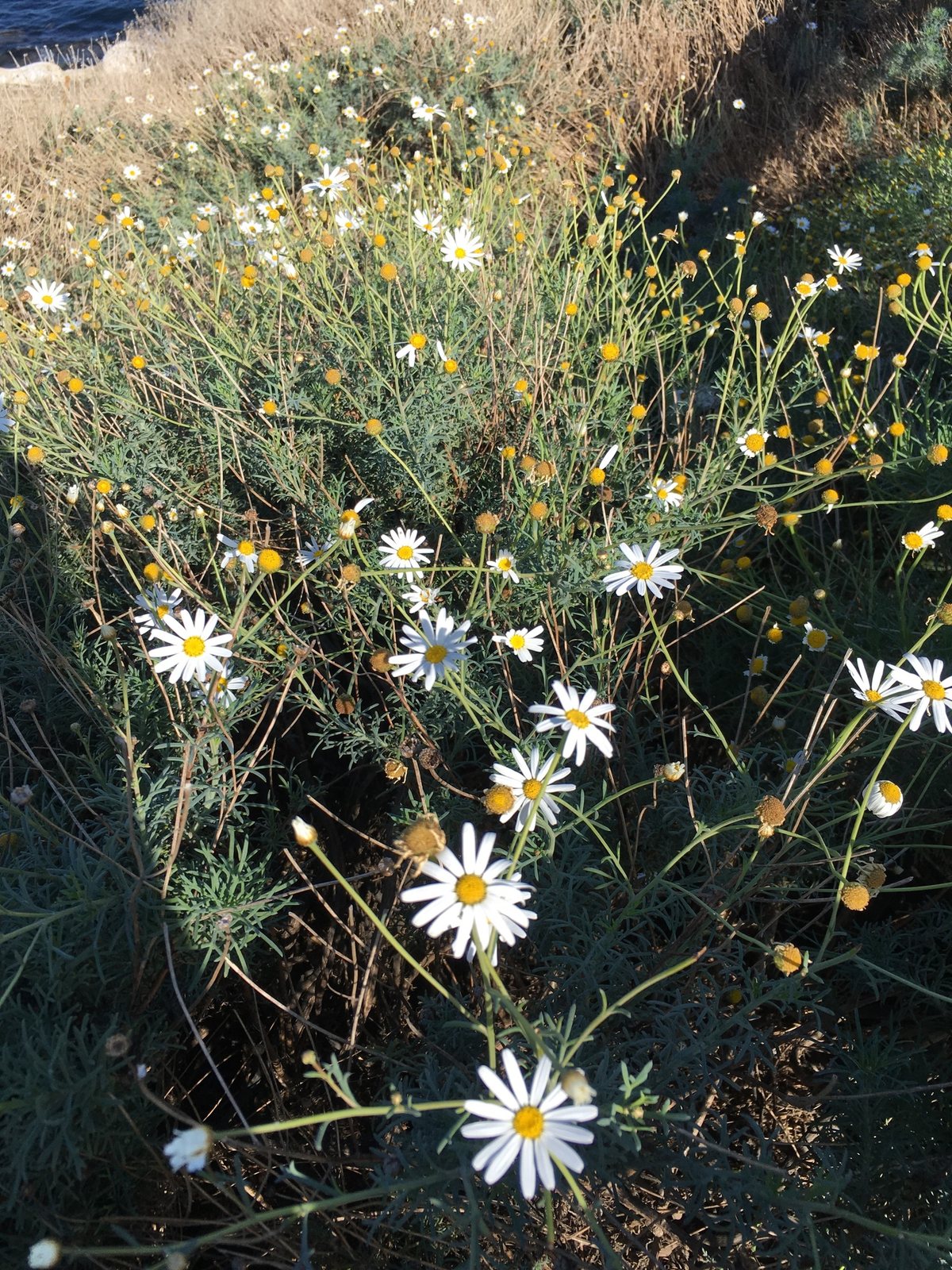
- Spring to autumn, often with a pause during intense summer heat. The species has white rays around yellow centres; garden selections also come in pink and yellow.
- Foliage
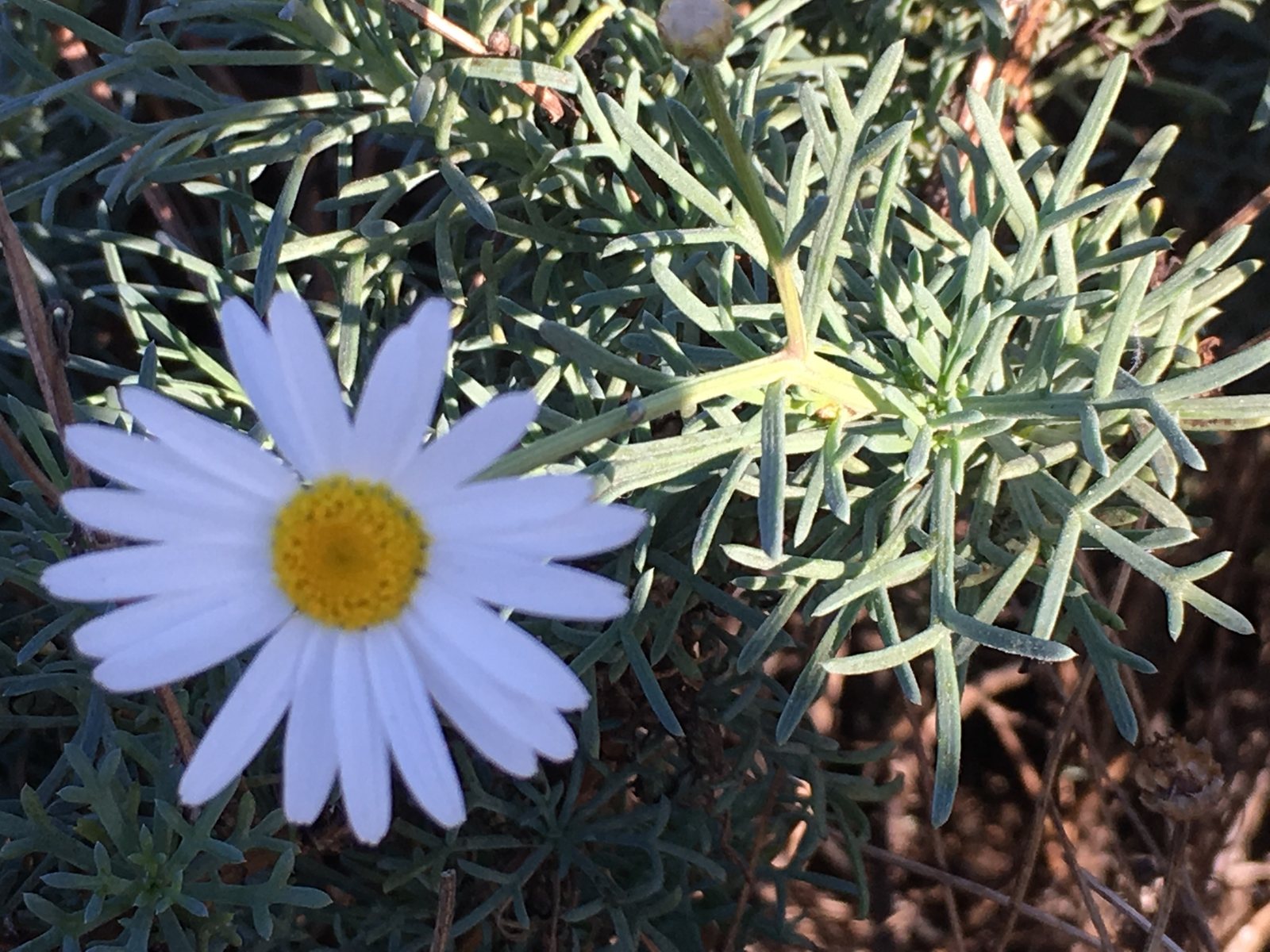
- Evergreen. Finely divided, green to grey-green leaves on branching stems that become woody with age.
- Growth
- Fast
- Care needed
- Medium
The year at a glance
- Pollinators
- Low allergen
| J | F | M | A | M | J | J | A | S | O | N | D | |
|---|---|---|---|---|---|---|---|---|---|---|---|---|
| Flowers | ||||||||||||
| Plant |
Northern hemisphere months. In Australia, shift them by six.
- Difficulty
- Moderate
- Toughness
- Needs looking after
Will it suit your garden?
Pick your zone, country, light and whether you have pets.
Full sun is 6 or more hours of direct sun a day, part shade 3 to 6 hours, shade under 3.
How it grows
Planting day
1.6 ft (0.5 m)
After 1 year
1.9 ft (0.58 m)
After 2 years
2.1 ft (0.65 m)
After 3 years
2.4 ft (0.73 m)
After 5 years
2.5 ft (0.75 m)
full size
About 3 years to full size.
From a typical nursery size, at an average rate for this kind of plant. A rule of thumb, not a forecast.
Good to know
- Cats and dogs
- Mildly toxic: may upset a stomach
- Growth rate
- Fast
Care
Jobs through the year
- WaterMay, Sep–Oct, every 7 days
- Water established outdoor plants when the surface dries; young plants and pots need more frequent checks.
- WaterJun–Aug, every 4 days
- Water flowering plants in dry weather, letting the surface dry between soakings.
- WaterJan–Apr, Nov–Dec, every 14 days
- For plants overwintered frost-free, water sparingly only when compost starts drying.
- FeedMay
- Give plants in the ground a light balanced feed if soil is poor.
- FeedMay–Sep, every 21 days
- For container plants only, apply flowering-plant fertiliser at the label rate.
- DeadheadMay–Oct, every 7 days
- Remove faded flowers to encourage continued bloom.
- PruneMar–Apr
- Lightly trim overwintered plants and pinch young tips; avoid bare old wood.
- PruneJul–Aug
- Lightly trim leafy growth after a flowering flush.
- ProtectSep–Oct
- Before the first frost, lift plants to keep and move them into bright, frost-free shelter.
- Plant outside after frost risk has passed, in a sunny, sheltered position.
- Water at soil level when the surface starts to dry; never leave pots standing in water.
- Feed container plants every two to four weeks during active growth with a flowering-plant fertiliser at the label rate.
- Remove faded flowers regularly to keep the plant flowering.
- Before frost, move plants you want to keep into a bright, frost-free place and reduce watering.
Pruning. Pinch young shoot tips in spring to encourage branching, and lightly trim leafy growth after a flowering flush. Avoid cutting hard into bare old wood, which may not regrow reliably.
Through the year
- Early spring
- Lightly trim overwintered plants as new growth begins and gradually increase watering.
- Late spring
- Harden off sheltered plants and plant outside after the last frost.
- Summer
- Deadhead, water during dry spells and feed container plants regularly.
- Late summer
- Take non-flowering shoot cuttings to produce young replacement plants.
- Autumn
- Move plants under bright, frost-free cover before the first frost, or compost plants grown as annuals.
- Winter
- Keep overwintered plants just moist, with good light and ventilation.
In the garden
- Use compact selections in patio pots for a rounded mound of flowers over a long season.
- Plant near the front of sunny borders with lavender and salvia for contrasting flower shapes.
- Repeat plants along a path or terrace edge to create an informal flowering rhythm.
- Combine white-flowered plants with silver foliage in sheltered coastal or Mediterranean-style gardens.
Garden styles it suits: Cottage garden, Coastal, Mediterranean, Modern courtyard, White garden and Pollinator garden.
Plant it with: Lavender, Salvia, Pelargonium, Verbena, Dusty miller and Sweet alyssum.
Wildlife: Open, single flowers provide pollen and nectar for bees, hoverflies and other visiting insects. Double-flowered selections offer less accessible food.
Problems to watch for
- Aphids cluster on soft shoots: wash them off with water and encourage ladybirds; use insecticidal soap if needed.
- Whitefly can build up under cover: inspect leaf undersides, improve ventilation and treat infestations with a labelled insecticidal soap.
- Root rot causes wilting in wet soil: improve drainage, empty saucers and allow the surface to dry before watering again.
- Flowering may slow in extreme heat: maintain even moisture, provide light afternoon shade and trim lightly when cooler weather returns.
Safety
Not known to be seriously toxic to people, cats, dogs or horses, though species-specific pet safety information is limited. Contact with foliage or sap can irritate sensitive skin; wear gloves if affected and discourage pets from chewing it.
Easily confused with
Shasta daisy (Leucanthemum × superbum)
A hardy herbaceous perennial with broader, toothed leaves and upright flower stems, rather than finely divided foliage on a woody shrub.
Oxeye daisy (Leucanthemum vulgare)
Has spoon-shaped lower leaves and narrower, toothed stem leaves; it is a spreading herbaceous perennial rather than a bushy evergreen shrub.
African daisy (Osteospermum)
Usually has broader, undivided leaves and often a dark or coloured flower centre, rather than the marguerite's finely cut leaves and typically yellow centre.
The name
Argyranthemum comes from Greek words meaning 'silver flower', frutescens means 'becoming shrubby', and marguerite is the French word for daisy.
Propagation. Take softwood or semi-ripe cuttings from healthy, non-flowering shoots in spring or late summer. Seed-grown plants can vary; use cuttings to preserve a named selection.
Checked against open data
- Accepted botanical name
- Argyranthemum frutescens
- In the US and Canada
- Introduced in the lower 48 states.
- Native range
- Canary Is..
- Measured
- Average height 64 cm.
Sources: GBIF (CC BY 4.0), USDA PLANTS and Trefle (CC BY 4.0). The care and design notes are LandscapeGPT's own.
See it in your own yard.
Upload a photo of your yard and see it redesigned with plants that suit your climate, each checked against your zone.