Marina strawberry tree
Arbutus 'Marina'. Family Ericaceae. Tree.
Also called Arbutus 'Marina'.
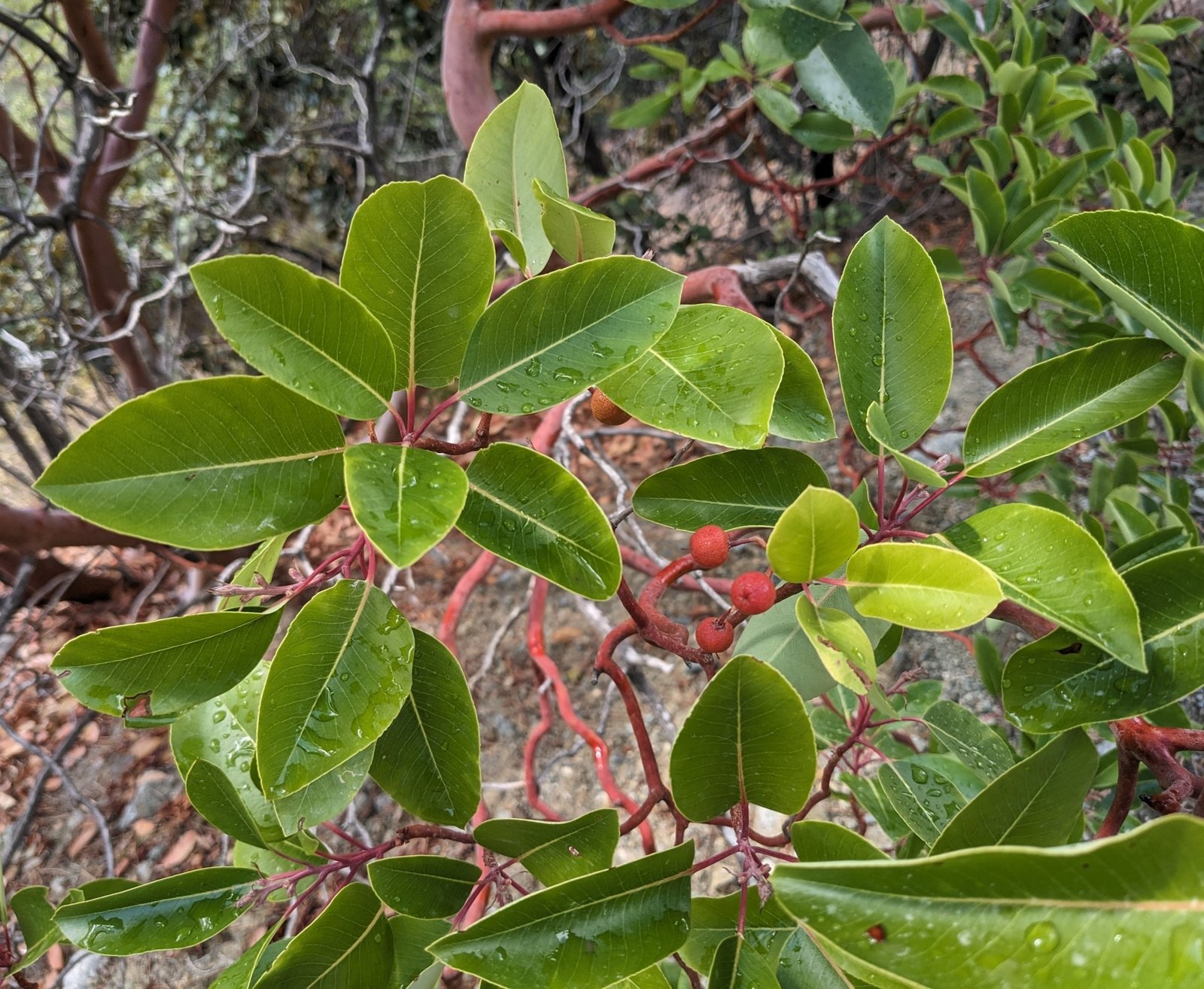
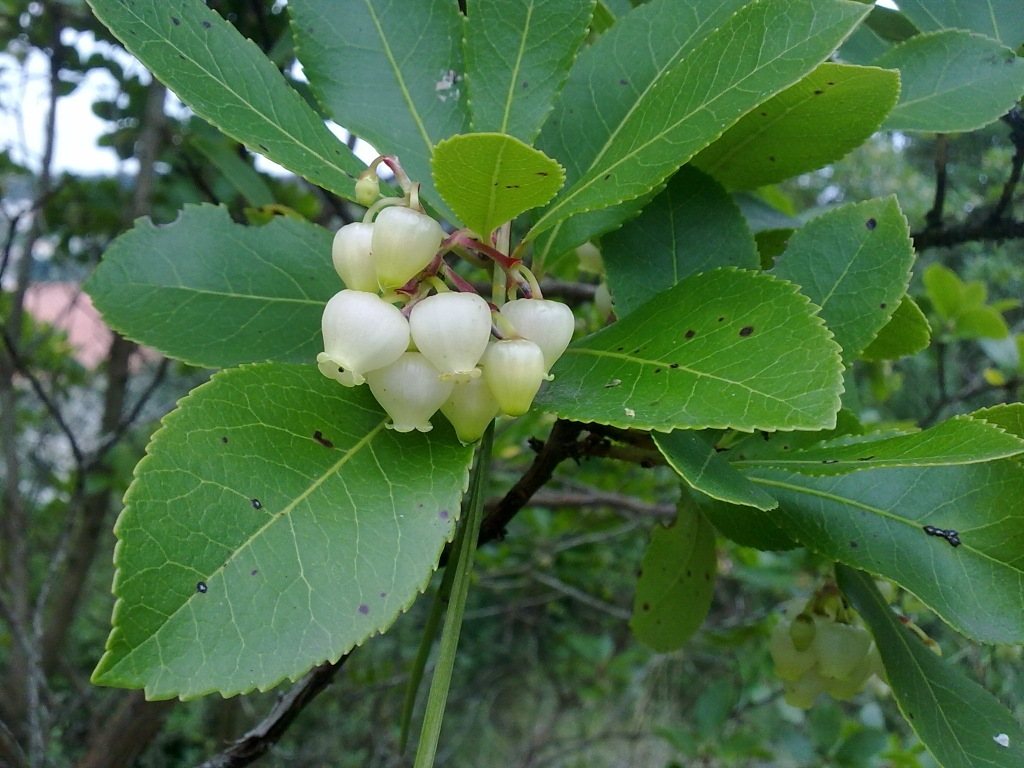
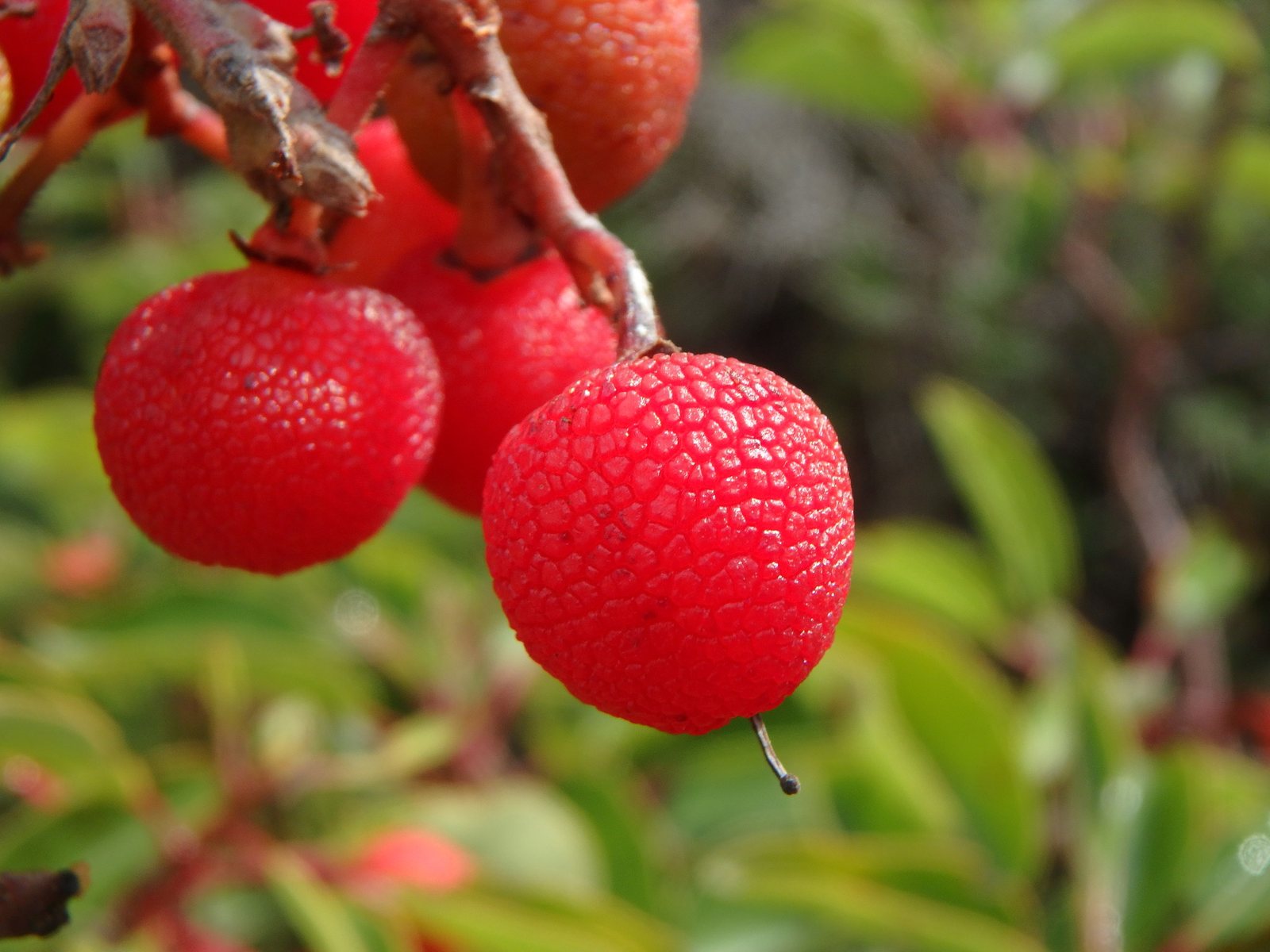
An evergreen tree grown for its smooth, peeling cinnamon-red bark, glossy leaves and clusters of pink, bell-shaped flowers. Round, strawberry-like fruits turn from yellow to red, often sharing the branches with flowers. It suits mild climates with well-drained soil, but needs room for its broad crown and a position where fallen fruit will not stain paving.
At a glance
- Sun
- Full sun; tolerates light shade, especially in hot inland gardens.
- Water
- Water deeply during establishment; drought-tolerant once established in mild climates. Avoid frequent shallow watering and constantly wet soil.
- Soil
- Well-drained sandy, loamy or gravelly soil, preferably slightly acidic to neutral. Heavy soil is suitable only where drainage is good.
- Height
- 25-50 ft (7.6-15.2 m)
- Spread
- 20-40 ft (6.1-12.2 m)
- Flowers
- Clusters of pale to rosy pink, bell-shaped flowers, mainly autumn through spring in mild climates; scattered flowers may appear at other times.
- Foliage
- Evergreen. Glossy, leathery, dark green leaves with finely toothed edges; older leaves shed throughout the year.
- Growth
- Moderate; usually faster with regular water while young.
- Care needed
- Medium
The year at a glance
- Pollinators
- Deer resistant
- Drought tolerant
- Heat tolerant
- Wildlife
- Low allergen
| J | F | M | A | M | J | J | A | S | O | N | D | |
|---|---|---|---|---|---|---|---|---|---|---|---|---|
| Flowers | ||||||||||||
| Fruit | ||||||||||||
| Plant |
Northern hemisphere months. In Australia, shift them by six.
- Difficulty
- Hard
- Toughness
- Needs looking after
Will it suit your garden?
Pick your zone, country, light and whether you have pets.
Full sun is 6 or more hours of direct sun a day, part shade 3 to 6 hours, shade under 3.
How it grows
Planting day
7 ft (2 m)
After 1 year
8 ft (2.6 m)
After 2 years
10 ft (3.2 m)
After 3 years
12 ft (3.8 m)
After 5 years
16 ft (4.9 m)
About 16 years to full size.
From a typical nursery size, at an average rate for this kind of plant. A rule of thumb, not a forecast.
Good to know
- Cats and dogs
- Safe
- Growth rate
- Fast
Care
Jobs through the year
- WaterApr–May, Sep–Oct, every 21 days
- For established trees in suitable mild gardens, water only in prolonged drought; young trees and containers need closer checks.
- WaterJun–Aug, every 14 days
- Water established trees deeply only during prolonged drought; let the surface dry between waterings.
- FeedApr
- Feed modestly only if growth is weak and soil fertility is poor.
- MulchJun
- Maintain 5–8 cm of organic mulch over the roots, leaving the trunk base clear.
- PruneMay–Jun
- After frost risk passes, remove dead or crossing branches and make only small structural cuts.
- ProtectJan–Apr, Oct–Dec
- Not reliably hardy in zones 6–7; keep movable young specimens in bright frost-free shelter rather than relying on outdoor wrapping.
- WaterJan–Mar, Nov–Dec, every 14 days
- Check sheltered container specimens and water only when the upper compost dries; never leave pots standing in water.
- Plant while young in its permanent position; established trees resent root disturbance.
- Water deeply through dry spells during the first two or three growing seasons, allowing the surface soil to dry between waterings.
- Once established, water only during prolonged drought; keep lawn sprinklers away from the trunk.
- Apply 2-3 in (5-8 cm) of organic mulch over the root area, leaving the trunk base clear.
- Do not feed routinely; use a modest spring application of balanced fertiliser only if growth is weak and soil fertility is poor.
- Stake only if the root ball moves in wind, and remove supports once the tree is firmly rooted.
Pruning. Prune lightly in late spring, after the main frost risk, removing dead, crossing or poorly attached branches. Develop the trunk structure while young, avoid large cuts, and never top the tree.
Through the year
- Spring
- Plant in colder parts of its range once severe frost has passed; water the root ball thoroughly.
- Late spring
- Remove frost-damaged growth once new shoots show which branches are alive, and make any light structural cuts.
- Early summer
- Renew mulch without burying the trunk base.
- Summer
- Check soil moisture around young trees and water deeply during dry weather.
- Autumn
- Plant in mild-winter areas with good drainage; collect fallen fruit near paths.
- Winter
- Check drainage after heavy rain and protect newly planted trees during unusually severe frost.
In the garden
- Use as a specimen tree where its peeling bark can be seen from a window or garden path.
- Train a young tree with several trunks to create a sculptural focal point in a gravel garden.
- Combine with drought-tolerant shrubs and grasses in a Mediterranean-style border.
- Use its evergreen crown for screening or light shade, set back from paving, pools and seating areas because of fruit litter.
Garden styles it suits: Mediterranean, Modern Mediterranean, Architectural minimal, Dry gravel garden, Winter interest and Pacific Northwest woodland.
Plant it with: Rockrose, Lavender, Rosemary, California lilac, Deer grass and Manzanita.
Wildlife: Flowers provide nectar and pollen for bees when few other trees are flowering. Birds eat the ripe fruit, and the evergreen crown offers shelter.
Problems to watch for
- Root and crown rot in waterlogged soil: improve drainage before planting, keep the trunk base exposed and avoid frequent irrigation.
- Fungal leaf spots in damp conditions: collect fallen leaves, avoid overhead watering and improve airflow; minor spotting rarely needs treatment.
- Aphids on young shoots: wash off small colonies with water and encourage natural predators; use insecticidal soap if infestations persist.
- Frost injury to leaves and young branches: choose a sheltered site and protect young trees during cold snaps; wait until late spring before removing damaged wood.
Safety
Not known to be toxic to people, cats or dogs. The ripe fruit is edible, though eating large amounts may cause stomach upset. Horse-specific safety information is limited, so do not offer foliage or fruit as feed.
Easily confused with
Strawberry tree (Arbutus unedo)
Usually smaller, with rougher, darker bark and predominantly white flowers; 'Marina' has more conspicuous smooth red peeling bark and pink flowers.
Pacific madrone (Arbutus menziesii)
Typically has larger leaves with mostly smooth margins, white spring flowers and smaller orange-red fruits; 'Marina' has finely toothed leaves and larger, rough-surfaced fruit.
Greek strawberry tree (Arbutus andrachne)
Also has smooth peeling reddish bark, but usually bears white spring flowers and leaves with mostly smooth edges rather than the pink flowers and toothed leaves of 'Marina'.
The name
Arbutus is the Latin name for the strawberry tree, whose common name refers to its round, red, rough-surfaced fruits rather than any close relationship to strawberries.
Propagation. Usually propagated commercially from semi-ripe cuttings, though rooting can be difficult. Seedlings will not reliably retain the characteristics of 'Marina'; buy a vegetatively propagated plant to obtain the named cultivar.
Checked against open data
- Accepted botanical name
- Arbutus
Sources: GBIF (CC BY 4.0). The care and design notes are LandscapeGPT's own.
See it in your own yard.
Upload a photo of your yard and see it redesigned with plants that suit your climate, each checked against your zone.