Maximilian sunflower
Helianthus maximiliani. Family Asteraceae. Perennial.
Also called Maximilian's sunflower, Michaelmas daisy sunflower.
Maximilian sunflower is a tall, spreading perennial native to central North America, grown for its yellow flowers late in the growing season. It suits sunny prairie-style borders and wildlife gardens where its underground stems have room to spread; in cool regions with early frosts, flowering may be cut short.
At a glance
- Sun
- Full sun; light shade reduces flowering and encourages leaning.
- Water
- Low to moderate once established; water regularly during establishment and during prolonged drought if leaves wilt.
- Soil
- Well-drained sandy, loamy or clay soil; tolerates poor soil and seasonal dryness but dislikes persistently waterlogged ground.
- Height
- 3-10 ft (0.9-3 m)
- Spread
- 2-4 ft (0.6-1.2 m) initially, expanding into wider colonies
- Flowers
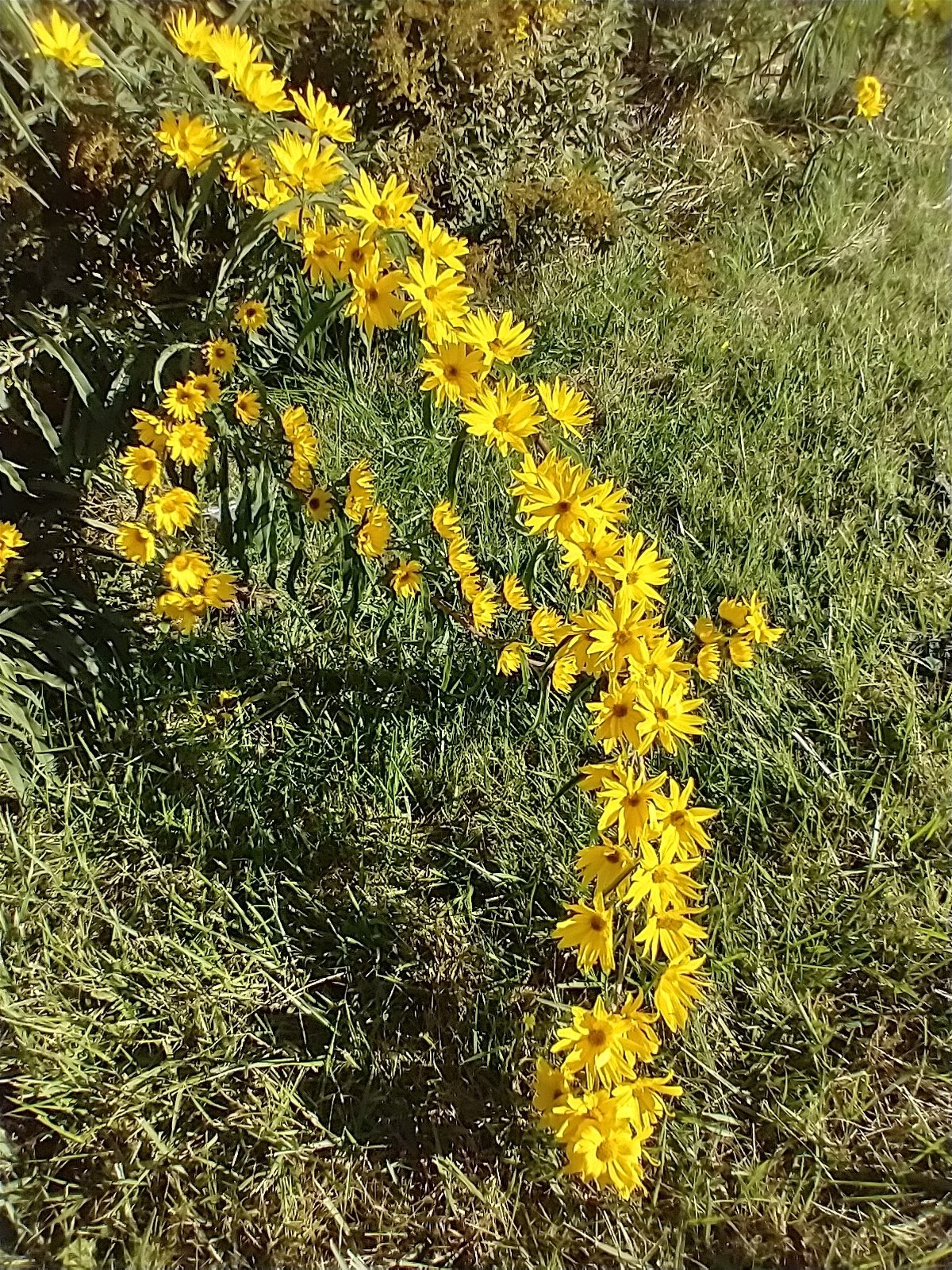
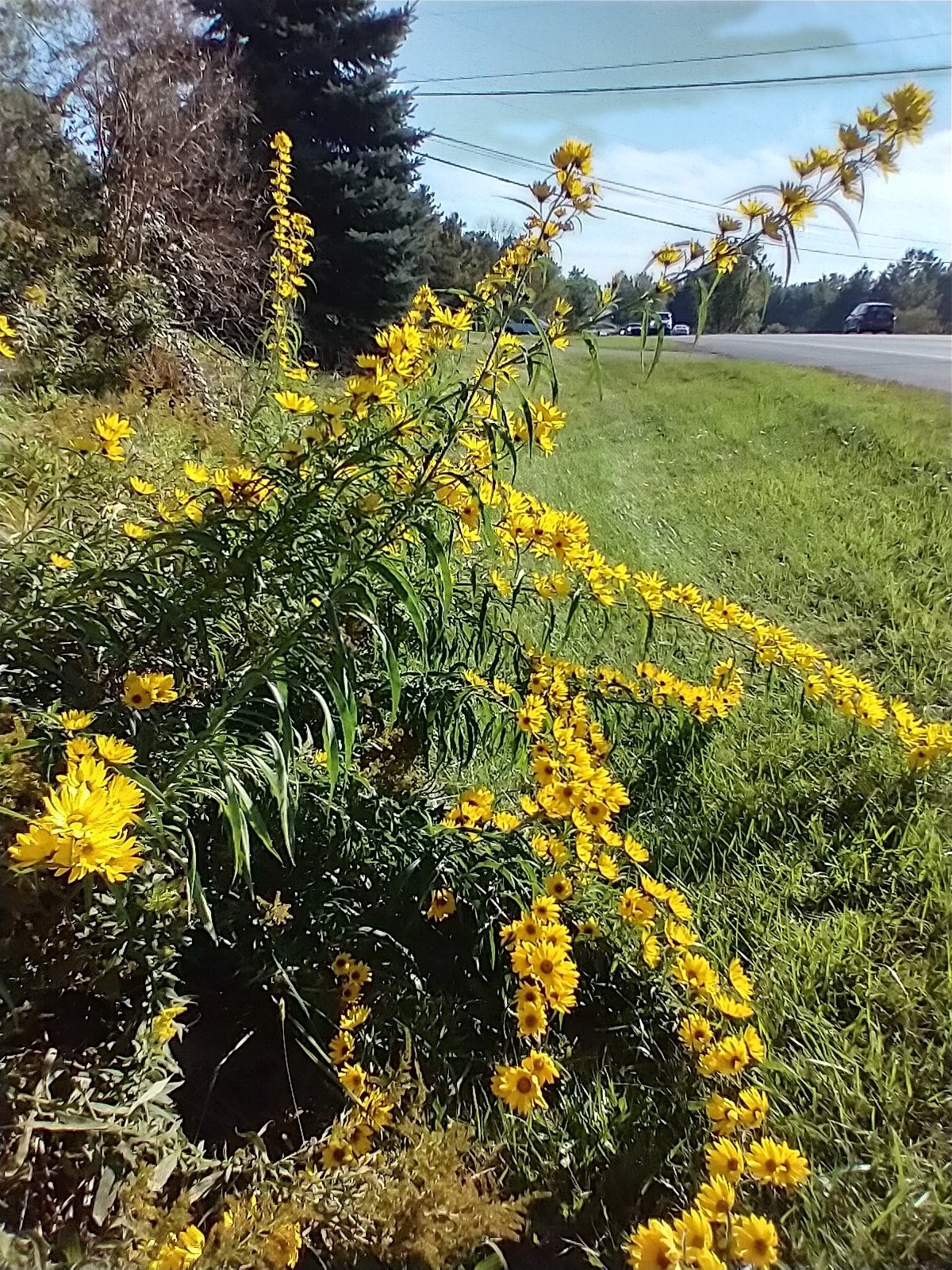
- Late summer to autumn; golden-yellow daisies with yellow to brownish-yellow centres, carried along the upper stems.
- Foliage
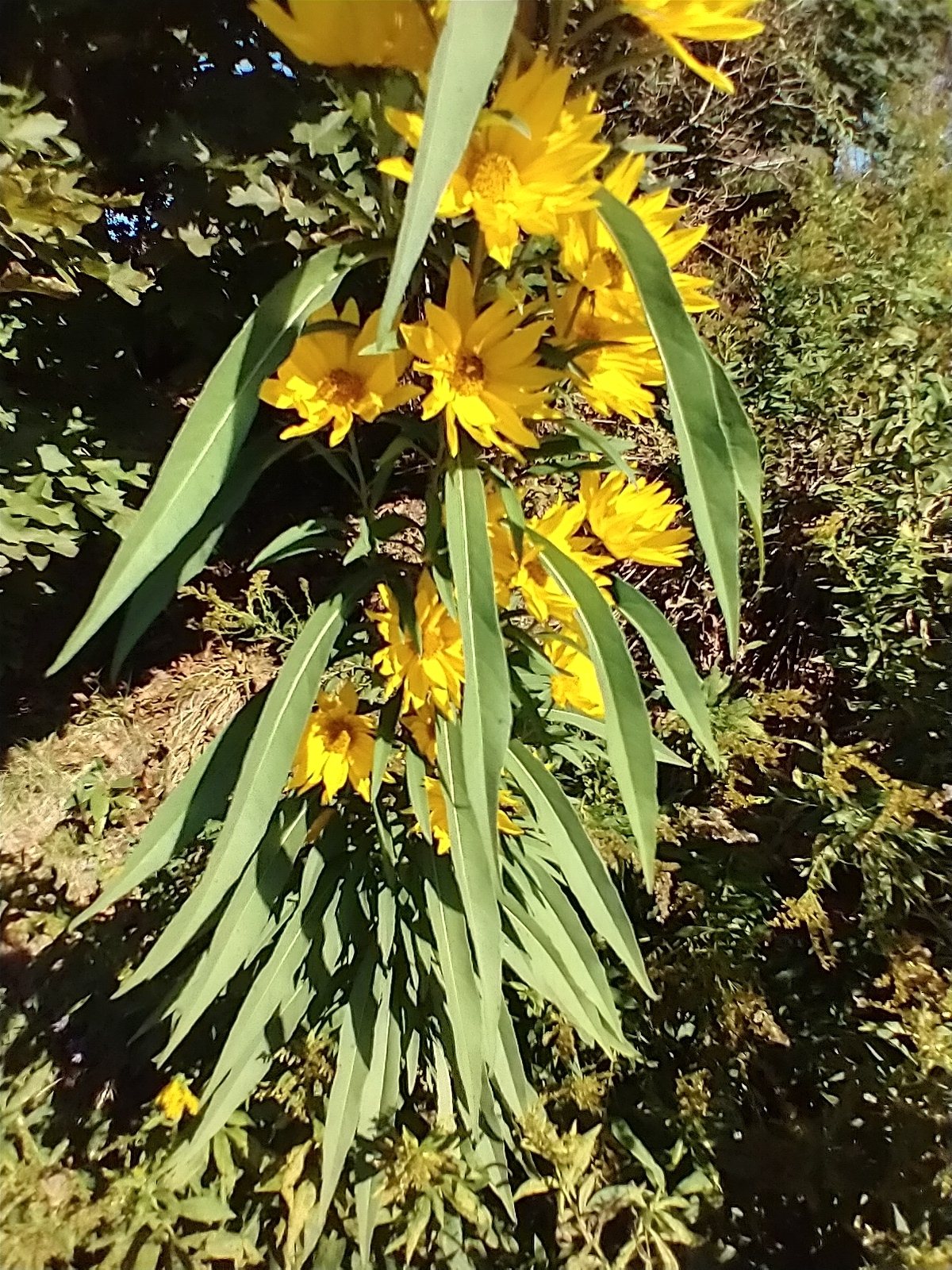
- Narrow, rough-textured, grey-green leaves, often curved and folded lengthwise; stems die back for winter.
- Growth
- Fast
- Care needed
- Medium
The year at a glance
- Pollinators
- Drought tolerant
- Cold hardy
- Heat tolerant
- Wildlife
- Low allergen
| J | F | M | A | M | J | J | A | S | O | N | D | |
|---|---|---|---|---|---|---|---|---|---|---|---|---|
| Flowers | ||||||||||||
| Fruit | ||||||||||||
| Plant |
Northern hemisphere months. In Australia, shift them by six.
- Difficulty
- Moderate
- Toughness
- Very tough
Will it suit your garden?
Pick your zone, country, light and whether you have pets.
Full sun is 6 or more hours of direct sun a day, part shade 3 to 6 hours, shade under 3.
How it grows
Planting day
1 ft (0.3 m)
After 1 year
4 ft (1.1 m)
After 2 years
6 ft (2 m)
full size
About 2 years to full size.
From a typical nursery size, at an average rate for this kind of plant. A rule of thumb, not a forecast.
Good to know
- Cats and dogs
- Safe
- Native to
- the US and Canada
- In the garden
- Spreads vigorously: plan to contain it.
- Growth rate
- Fast
Care
Jobs through the year
- WaterApr–May, Sep–Oct, every 14 days
- Check established plants and water only during prolonged drought; water first-year plants more often.
- WaterJun–Aug, every 7 days
- Check established clumps; soak deeply if drought causes wilting, allowing the surface to dry afterward.
- PruneFeb–Mar
- Cut dead stems near ground level; leave some hollow stems nearby for insects.
- PruneMay
- Optionally shorten stems by one-third; avoid late pinching in short-season gardens.
- DivideMar–Apr
- Divide congested colonies every three to four years.
- ProtectMar–May
- Dig out unwanted shoots and rhizomes to keep the colony within bounds.
- ProtectApr–May
- Stake exposed clumps before stems reach full height.
- DeadheadSep–Oct
- Remove spent heads only if seedlings are unwanted; otherwise leave seeds for birds.
- Water deeply through the first growing season, allowing the surface soil to dry between waterings.
- Avoid rich feeding; excess nitrogen encourages tall, floppy stems.
- Stake early in exposed sites, or grow among sturdy ornamental grasses.
- Divide congested clumps in spring every three to four years.
- Remove unwanted shoots and rhizomes each spring to keep the colony within bounds.
Pruning. For shorter, bushier growth, cut stems back by about one-third in late spring, accepting that flowering may be delayed. Leave seedheads standing through winter, then cut dead stems close to the ground in late winter or early spring.
Through the year
- Late winter
- Cut down old stems before new shoots emerge, leaving some hollow stems nearby as insect shelter.
- Spring
- Plant or divide clumps, water them in well and remove shoots spreading beyond the allotted space.
- Late spring
- Install supports where needed; optionally shorten stems to encourage a more compact plant.
- Summer
- Water young plants during dry spells and check lower leaves for mildew or rust.
- Autumn
- Leave flowers to set seed for birds, or remove spent heads if seedlings are unwanted.
In the garden
- Plant at the back of a deep sunny border for a tall screen of late yellow flowers.
- Combine with switchgrass and little bluestem in a prairie-style planting with contrasting upright foliage.
- Pair with purple asters for a strong late-season colour contrast.
- Use in a large wildlife border where spreading colonies and standing winter stems are welcome.
Garden styles it suits: Native meadow, Midwest prairie, New perennial (prairie), Wildlife garden, Pollinator garden and Autumn colour.
Plant it with: Switchgrass, Little bluestem, New England aster, Purple coneflower, Rough blazing star and Showy goldenrod.
Wildlife: Flowers provide late pollen and nectar for bees and other insects. Finches and other seed-eating birds take the seeds, and standing stems provide winter shelter for insects.
Problems to watch for
- Spreading beyond its space: dig out unwanted rhizomes in spring and divide the colony regularly; avoid planting beside small, slow-growing perennials.
- Flopping stems: provide full sun, avoid nitrogen-rich fertilisers and stake early where wind exposure is high.
- Powdery mildew or rust: improve airflow, water the soil rather than the leaves and remove badly affected foliage.
- Little or no flowering before frost: choose a warm, sunny position and avoid late pinching; some cool, short-season gardens will not provide enough time for reliable flowering.
Safety
Not known to be toxic to people, cats, dogs or horses. No part is recognised as a serious poisoning hazard, although species-specific pet safety information is limited and it should not be treated as pet food.
Where it spreads. Spreads vigorously by rhizomes and can form large colonies in gardens, including within its native central North American range. Give it a contained area or regularly remove spreading shoots; aggressive garden growth does not necessarily mean it is officially listed as invasive.
Easily confused with
Willow-leaved sunflower (Helianthus salicifolius)
Has much narrower, more numerous, often drooping leaves that give the stems a fine-textured appearance; Maximilian sunflower has broader, rough leaves that are often folded lengthwise.
Jerusalem artichoke (Helianthus tuberosus)
Has broad, usually coarsely toothed leaves and conspicuous knobbly underground tubers; Maximilian sunflower has narrow leaves and spreading rhizomes rather than a crop of large edible tubers.
Sawtooth sunflower (Helianthus grosseserratus)
Usually has broader, conspicuously toothed leaves and relatively smooth stems; Maximilian sunflower has rough stems and narrow leaves with little or no obvious toothing.
The name
Helianthus comes from Greek words meaning sun and flower, while maximiliani honours the German naturalist Prince Maximilian of Wied-Neuwied.
Propagation. Divide clumps in spring, keeping roots and growing shoots on each division. Sow seed outdoors in autumn, or give spring-sown seed a period of cold, moist stratification; flowering from seed may take until the second growing season.
Checked against open data
- Accepted botanical name
- Helianthus maximiliani
- In the US and Canada
- Native in Canada and the lower 48 states.
- Native range
- Alabama, Alberta, Arkansas, British Columbia, California, Colorado, Connecticut, Delaware, District of Columbia, Idaho, Illinois and Indiana.
- Measured
- Soil pH 6 to 8. Average height 95 cm.
Sources: GBIF (CC BY 4.0), USDA PLANTS and Trefle (CC BY 4.0). The care and design notes are LandscapeGPT's own.
See it in your own yard.
Upload a photo of your yard and see it redesigned with plants that suit your climate, each checked against your zone.