Meadow clary
Salvia pratensis. Family Lamiaceae. Perennial.
Also called Meadow sage.
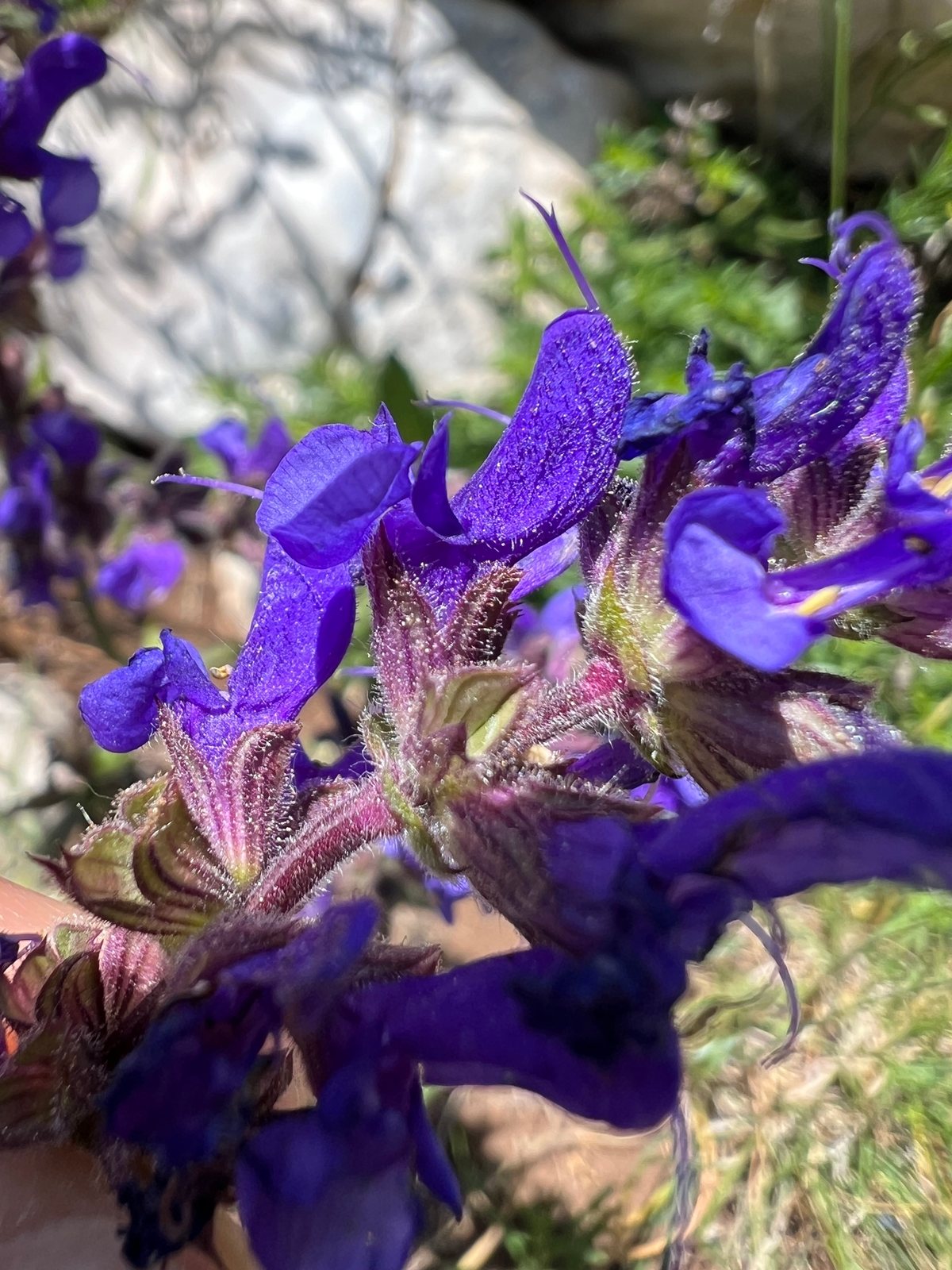
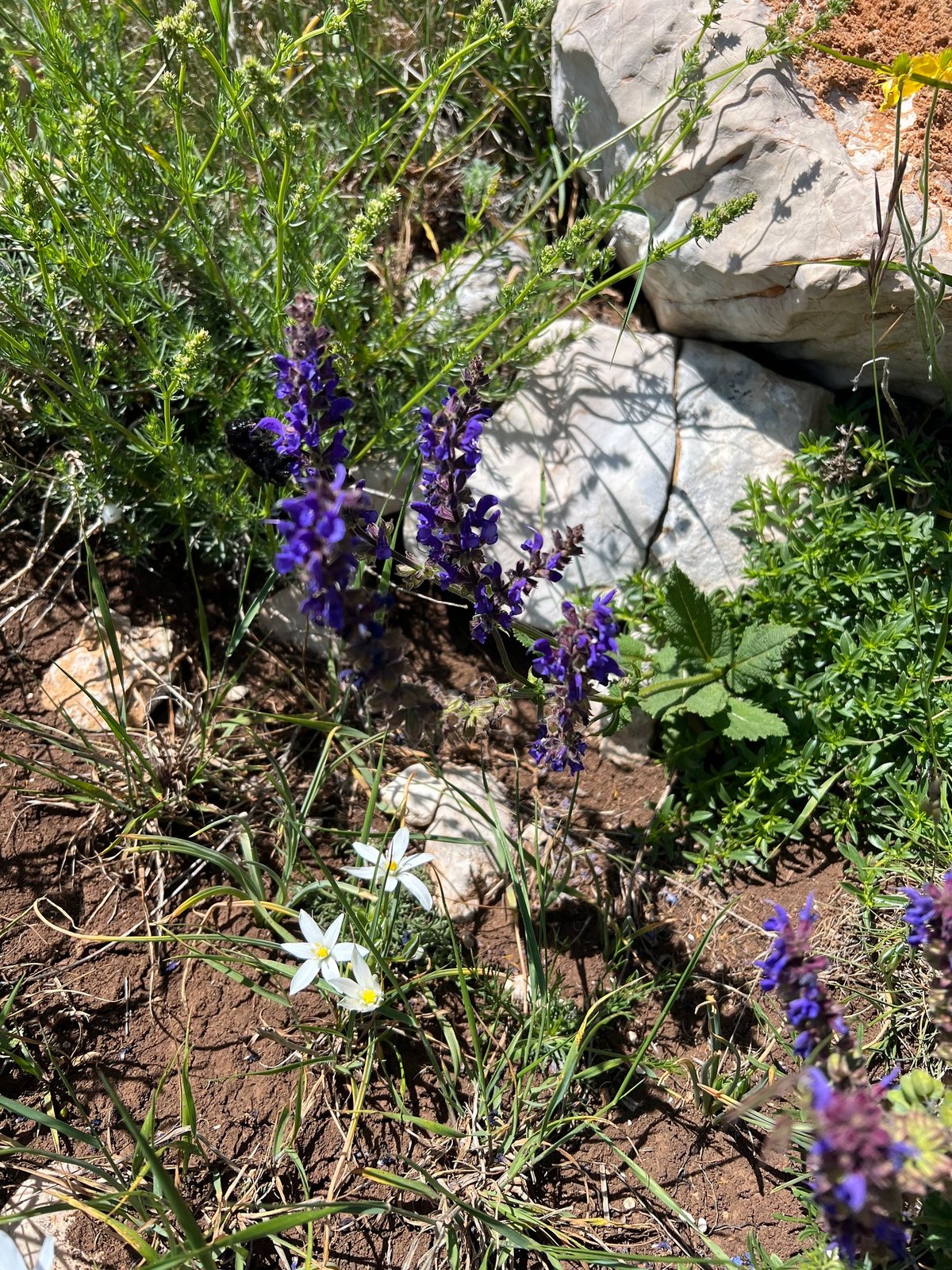
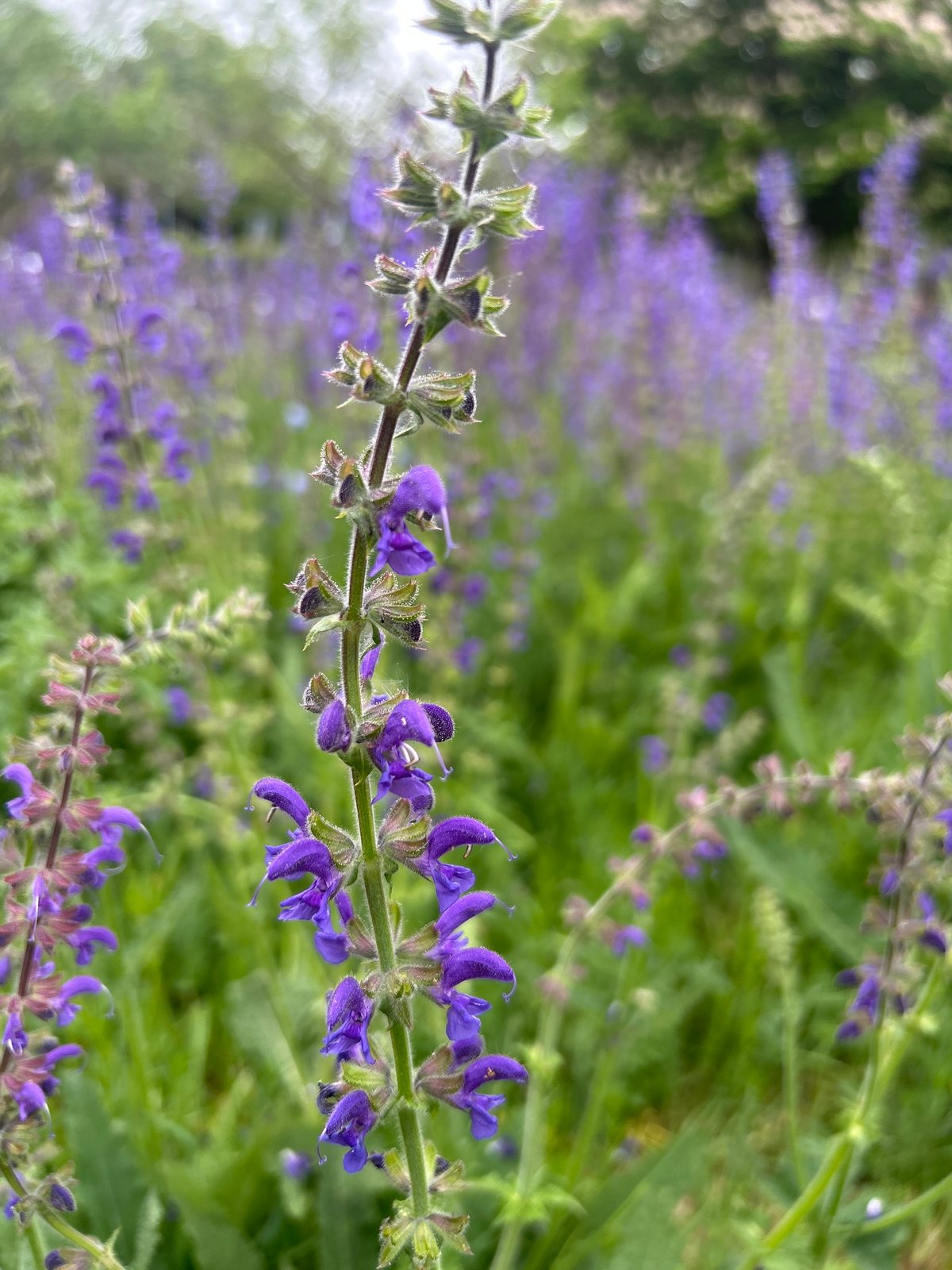
Meadow clary is a clump-forming perennial with wrinkled basal leaves and upright spikes of violet-blue flowers in late spring and summer. Gardeners grow it for its bee-friendly flowers and its tolerance of dry, sunny conditions once established. Check local weed restrictions before planting, particularly in the northwestern United States.
At a glance
- Sun
- Full sun; light shade is tolerated, but flowering is reduced and stems may lean.
- Water
- Water regularly during establishment, then mainly during prolonged dry spells. Avoid persistently wet soil, especially in winter.
- Soil
- Well-drained soil, preferably moderately fertile and neutral to alkaline. Tolerates chalk, limestone and gravelly ground; struggles in waterlogged clay.
- Height
- 1.5-3 ft (0.45-0.9 m)
- Spread
- 1-2 ft (0.3-0.6 m)
- Flowers
- Late spring to midsummer, sometimes repeating after cutting back; usually violet-blue, with pink or white forms also available.
- Foliage
- Coarse, wrinkled, mid-green leaves form a basal rosette, with smaller paired leaves on square flowering stems. Usually dies back in cold winters; some basal leaves may persist in mild conditions.
- Growth
- Moderate
- Care needed
- Low
The year at a glance
- Pollinators
- Deer resistant
- Drought tolerant
- Cold hardy
- Wildlife
- Low allergen
| J | F | M | A | M | J | J | A | S | O | N | D | |
|---|---|---|---|---|---|---|---|---|---|---|---|---|
| Flowers | ||||||||||||
| Plant |
Northern hemisphere months. In Australia, shift them by six.
- Difficulty
- Easy
- Toughness
- Very tough
Will it suit your garden?
Pick your zone, country, light and whether you have pets.
Full sun is 6 or more hours of direct sun a day, part shade 3 to 6 hours, shade under 3.
How it grows
Planting day
1 ft (0.3 m)
After 1 year
1.4 ft (0.43 m)
After 2 years
1.8 ft (0.55 m)
After 3 years
2.2 ft (0.68 m)
full size
About 3 years to full size.
From a typical nursery size, at an average rate for this kind of plant. A rule of thumb, not a forecast.
Good to know
- Cats and dogs
- Safe
- Native to
- the UK
- Invasive in
- the US
- In the garden
- Spreads vigorously: plan to contain it.
- Growth rate
- Moderate
Care
Jobs through the year
- WaterApr–May, Sep, every 21 days
- Water established plants only during prolonged dry spells; water new plants whenever the root zone dries.
- WaterJun–Aug, every 14 days
- Water deeply only during prolonged drought; allow soil to dry between waterings.
- FeedMar–Apr
- On poor soil only, apply a light compost dressing; otherwise omit feeding.
- MulchMar–Apr
- Use a light gravel mulch on damp sites, keeping the crown exposed.
- DivideMar–Apr
- Divide crowded clumps if flowering declines.
- PruneFeb–Mar
- Remove dead stems without cutting into the crown or healthy basal foliage.
- PruneJun–Jul
- After the main flowering flush, cut flower stems to basal leaves to encourage a smaller repeat.
- DeadheadAug–Sep, every 14 days
- Remove remaining faded flower stems before seed ripens where self-seeding is unwanted.
- ProtectJan–Feb, Nov–Dec
- Keep the crown clear of wet debris and prevent winter waterlogging.
- Water new plants deeply when the surrounding soil begins to dry; reduce watering once roots are established.
- Avoid rich feeding: a light spring dressing of compost is enough on poor soil.
- Keep mulch away from the crown; use gravel rather than moisture-holding mulch on damp sites.
- Divide crowded clumps in spring if flowering declines.
- Remove unwanted seedlings promptly and prevent seed production where escape is a concern.
Pruning. After the main flowering flush, cut spent flower stems back to the basal leaves to encourage a smaller repeat display. Remove dead stems in late winter or early spring without cutting into the crown.
Through the year
- Late winter
- Remove dead stems and check that the crown is not sitting in wet soil or buried under mulch.
- Spring
- Plant or divide clumps in well-drained soil, and water them in thoroughly.
- Late spring
- Check developing shoots for aphids and remove unwanted seedlings.
- Summer
- Cut spent flower stems back to the basal foliage after the first flush.
- Late summer
- Water during prolonged drought if leaves remain wilted in the morning.
- Autumn
- Remove remaining seed heads where self-seeding is unwanted; leave healthy basal foliage intact.
In the garden
- Plant in small groups through a sunny cottage border with yarrow and cranesbills for contrasting flower shapes.
- Mix with fine-textured ornamental grasses in naturalistic planting, where its upright flowers stand above lower foliage.
- Use in a sunny gravel garden with catmint and low-growing thymes, keeping the crown clear of damp mulch.
- Add to a flowering meadow on suitable, relatively lean soil where it is locally appropriate and not restricted.
Garden styles it suits: Cottage garden, Wildflower, New perennial (prairie), Pollinator garden, Dry gravel garden and Low-maintenance.
Plant it with: Yarrow, Catmint, Cranesbill, Oxeye daisy, Tufted hair grass and Creeping thyme.
Wildlife: Flowers attract bumblebees and other bees, with butterflies also visiting. Its deep flowers are particularly useful to long-tongued bees.
Problems to watch for
- Crown or root rot in wet soil: improve drainage or move the plant to a raised, freer-draining position; avoid winter irrigation.
- Slugs and snails damaging spring shoots: inspect young growth and use barriers, hand removal or an approved iron-phosphate bait.
- Powdery mildew in crowded or stressed plants: improve airflow, water the soil rather than the leaves, and remove badly affected foliage.
- Flopping stems and weak flowering in shade or rich soil: move to full sun and stop high-nitrogen feeding.
Safety
Not known to be toxic to people, cats, dogs or horses. Species-specific toxicity information is limited; it is an ornamental plant rather than a recommended culinary substitute for common sage.
Where it spreads. Listed as a noxious weed in Washington and Oregon, United States, where it can establish in grassland and pasture. It can self-seed elsewhere; check current local restrictions before buying, planting or sharing seed.
Easily confused with
Woodland sage (Salvia nemorosa)
Usually has denser spikes of smaller flowers and more leafy flowering stems. Meadow clary generally has larger, more widely spaced flowers above a prominent basal rosette.
Clary sage (Salvia sclarea)
Has much larger, softly hairy leaves, sticky branched flower stems and conspicuous pinkish or pale bracts around the flowers; it is usually biennial or short-lived.
Mediterranean sage (Salvia aethiopis)
Has a conspicuously woolly, grey-white rosette and broad, branching heads of white flowers rather than meadow clary's usually violet-blue spikes.
The name
Salvia comes from the Latin salvare, meaning to heal or save, while pratensis means 'of meadows', referring to its typical habitat.
Propagation. Divide established clumps in spring, or sow seed in spring or autumn. Seed-grown plants can vary in colour and habit; divide named cultivars to preserve their characteristics.
Checked against open data
- Accepted botanical name
- Salvia pratensis
- In the US and Canada
- Introduced in Canada and the lower 48 states.
- Native range
- Albania, Austria, Baltic States, Belarus, Belgium, Bulgaria, Central European Rus, Corse, Czechoslovakia, East European Russia, France and Germany.
- Measured
- Soil pH 7.5 to 8. Average height 16 cm.
Sources: GBIF (CC BY 4.0), USDA PLANTS and Trefle (CC BY 4.0). The care and design notes are LandscapeGPT's own.
See it in your own yard.
Upload a photo of your yard and see it redesigned with plants that suit your climate, each checked against your zone.