Medlar
Mespilus germanica. Family Rosaceae. Tree.
Also called Common medlar.
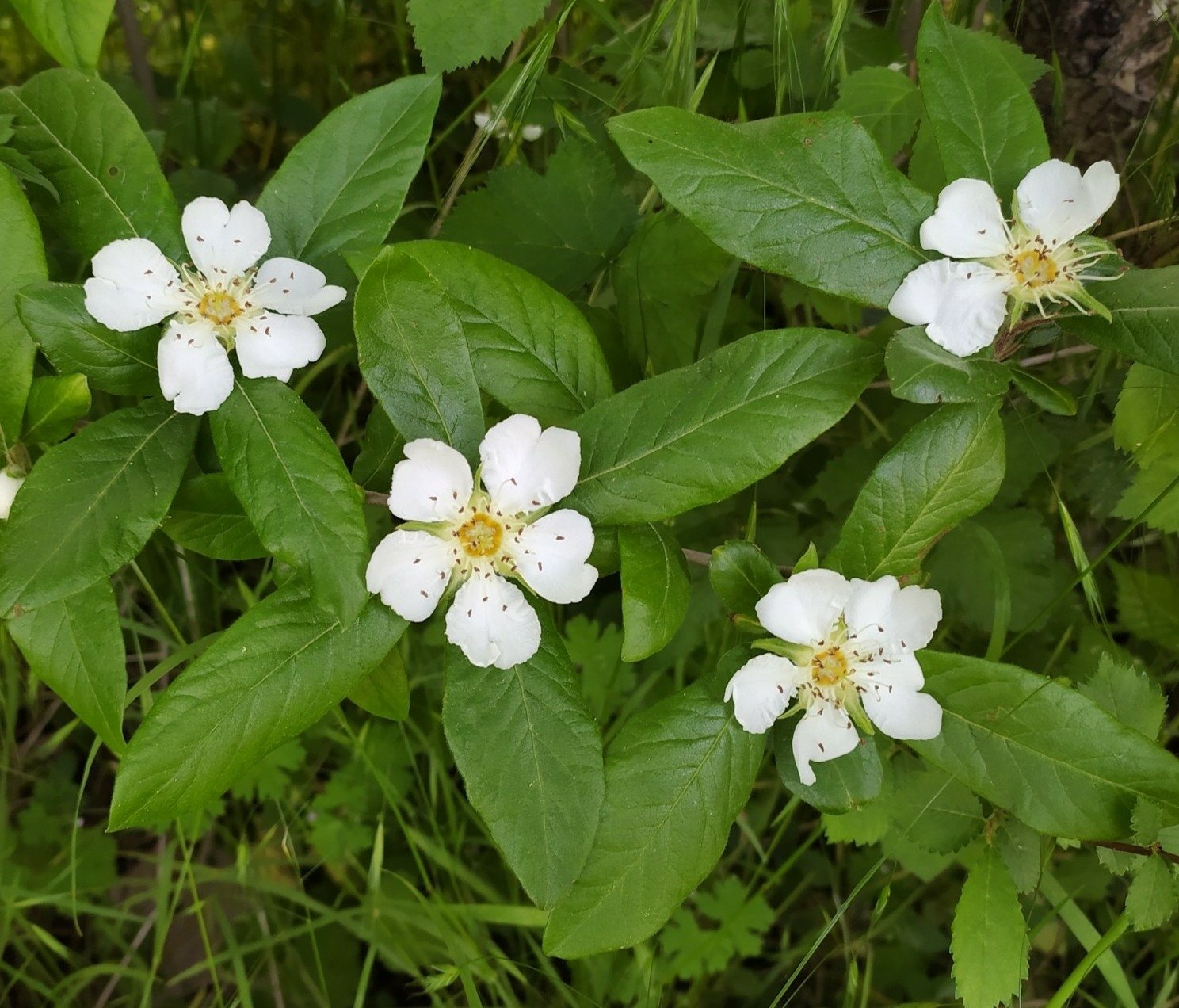
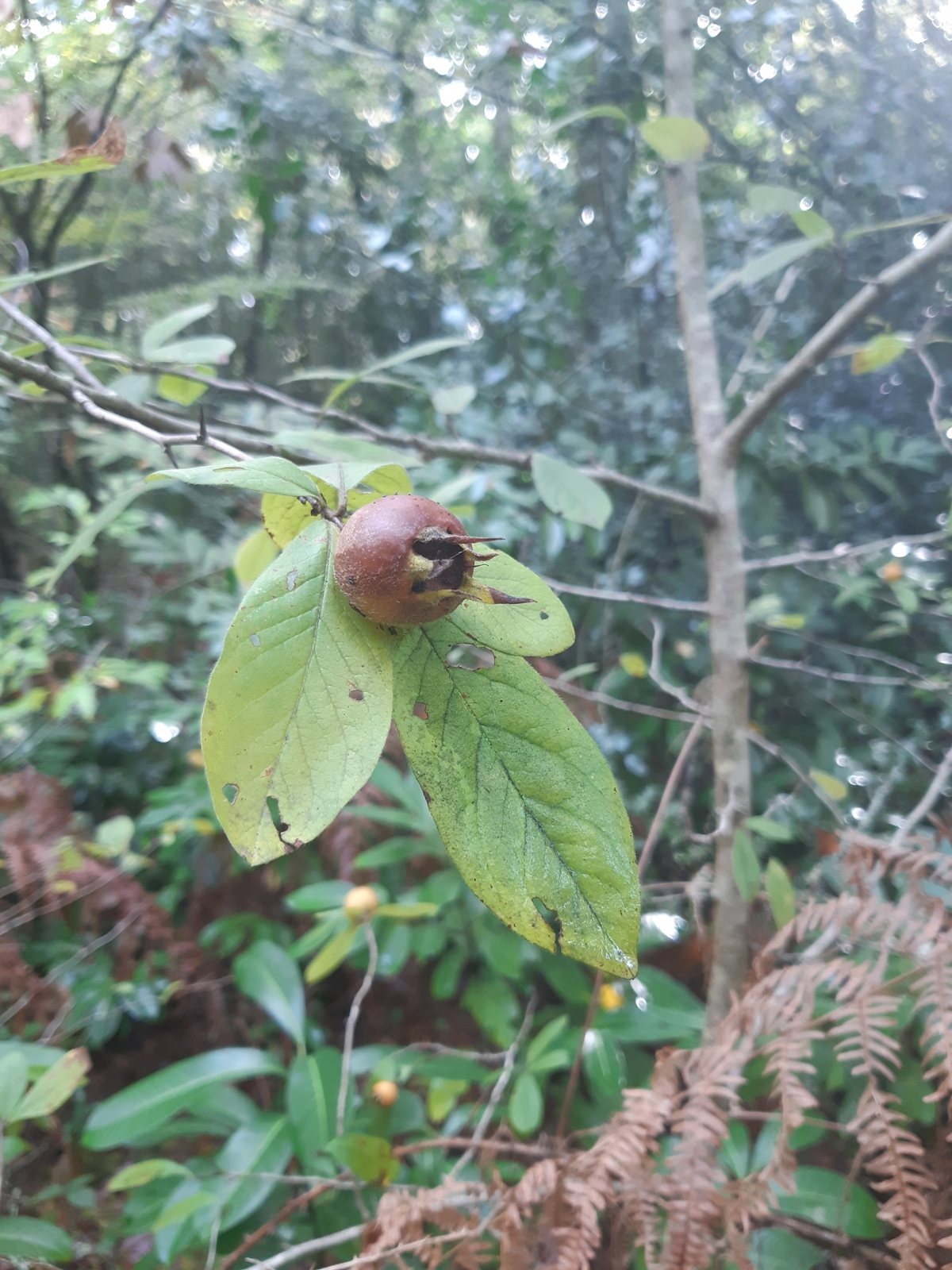
Medlar is a small deciduous fruit tree with a spreading crown, large white spring flowers and russet-brown autumn fruit. Gardeners grow it for its characterful shape and unusual fruit, which becomes edible after softening through a process called bletting. It is self-fertile, so one tree can produce a crop.
At a glance
- Sun
- Full sun for the best fruit; tolerates partial shade with lighter cropping.
- Water
- Water regularly while establishing and during prolonged dry spells; established trees tolerate some drought.
- Soil
- Moist but well-drained soil, preferably reasonably fertile; tolerates clay and chalk provided drainage is adequate.
- Height
- 13-20 ft (4-6 m)
- Spread
- 13-20 ft (4-6 m)
- Flowers
- Late spring to early summer; large, single white flowers borne at shoot tips.
- Foliage
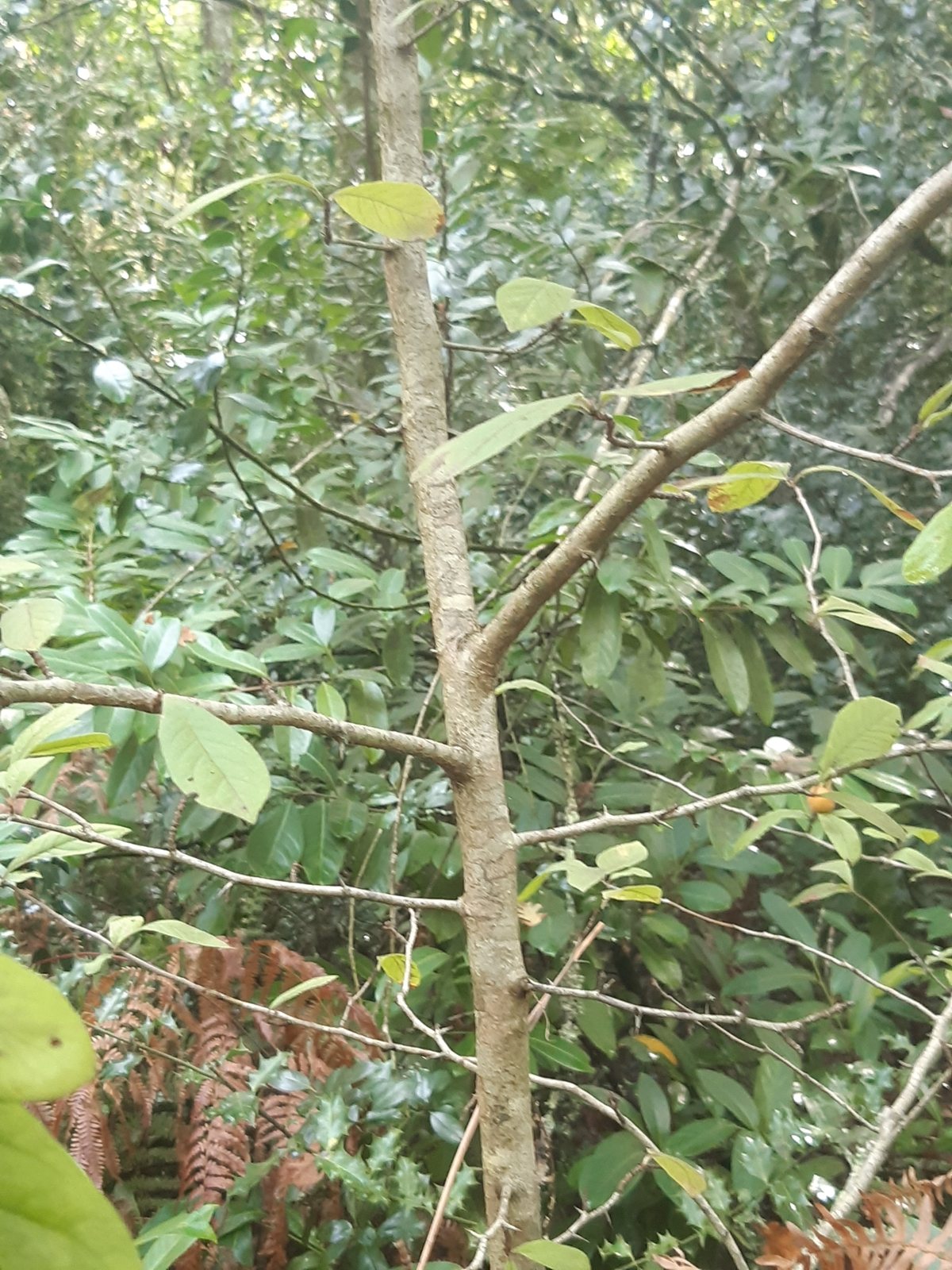
- Long, dull-green leaves with softly hairy undersides, turning yellow to russet-brown in autumn.
- Growth
- Slow to moderate
- Care needed
- Low
The year at a glance
- Pollinators
- Drought tolerant
- Wildlife
- Low allergen
- Edible
| J | F | M | A | M | J | J | A | S | O | N | D | |
|---|---|---|---|---|---|---|---|---|---|---|---|---|
| Flowers | ||||||||||||
| Fruit | ||||||||||||
| Plant |
Northern hemisphere months. In Australia, shift them by six.
- Difficulty
- Easy
- Toughness
- Very tough
Will it suit your garden?
Pick your zone, country, light and whether you have pets.
Full sun is 6 or more hours of direct sun a day, part shade 3 to 6 hours, shade under 3.
How it grows
Planting day
7 ft (2 m)
After 1 year
7 ft (2.1 m)
After 2 years
7 ft (2.2 m)
After 3 years
8 ft (2.3 m)
After 5 years
8 ft (2.6 m)
About 26 years to full size.
From a typical nursery size, at an average rate for this kind of plant. A rule of thumb, not a forecast.
Good to know
- Cats and dogs
- Toxic
- Growth rate
- Slow
Care
Jobs through the year
- WaterApr–May, Sep, every 14 days
- Water established trees only if soil is dry; water more regularly during the first two seasons.
- WaterJun–Aug, every 14 days
- Water established trees deeply during prolonged drought; young trees usually need weekly watering in dry weather.
- MulchMar–Apr
- Renew organic mulch over the root area, keeping it clear of the trunk.
- FeedMar–Apr
- Apply a modest balanced feed only if growth is weak.
- PruneFeb–Mar
- Remove dead, damaged and crossing branches; retain healthy shoot tips where fruit develops.
- HarvestOct–Nov, every 7 days
- Pick brown fruit that detaches readily; blet in a cool frost-free place for 2–4 weeks and discard mouldy fruit.
- ProtectJan–Feb, Nov–Dec
- Check young-tree stakes, ties and browsing guards, loosening anything that rubs or constricts.
- Plant while dormant, keeping the graft union above soil level.
- Water deeply during dry weather for the first two growing seasons.
- Apply an organic mulch each spring, keeping it clear of the trunk.
- Stake young trees on exposed sites and remove the stake once the roots hold firmly.
- Use a modest balanced feed in spring only if growth is weak; excessive nitrogen encourages leafy growth rather than fruit.
Pruning. Prune lightly in late winter, removing dead, damaged and crossing branches to maintain an open crown. Avoid routinely shortening shoot tips, where flowers and fruit develop.
Harvest
Pick the brown fruit in late autumn when it detaches readily; a light frost can help, but is not essential. Lay sound fruit in a single layer in a cool, frost-free place for roughly 2-4 weeks, until the flesh is uniformly soft and brown with a sweet, spiced aroma; discard mouldy or foul-smelling fruit. Grafted trees usually give their first worthwhile crop about 3-5 years after planting.
Through the year
- Late autumn
- Harvest mature fruit and set it aside to blet.
- Winter
- Plant dormant trees when the soil is neither frozen nor waterlogged.
- Late winter
- Remove damaged or crossing branches and check tree ties.
- Spring
- Mulch over the root area, keeping the trunk clear.
- Late spring
- Check tender shoots for aphids and avoid spraying open flowers.
- Summer
- Water young trees during dry spells and remove any rotting fruit.
In the garden
- Use as a small specimen tree in a lawn, allowing room for its broad, irregular crown.
- Plant beside a kitchen garden for fruit, spring blossom and autumn colour.
- Include in a mixed orchard with apples, pears and quinces.
- Underplant with spring bulbs and low groundcover, leaving a clear mulched area around young trunks.
Garden styles it suits: English country, Cottage garden, Backyard orchard, Edible landscape, Potager (kitchen garden) and Food forest.
Plant it with: Crocus, Snowdrops, Wild strawberries, Chives, Cranesbill geraniums and Quince.
Wildlife: Open flowers provide pollen and nectar for insects. The crown offers shelter for birds, and unharvested softened fruit may be eaten by birds and mammals.
Problems to watch for
- Aphids can curl young leaves: encourage natural predators and wash small colonies off with water.
- Brown rot can spoil fruit: remove affected fruit promptly and clear any shrivelled fruit left on the tree.
- Fire blight can blacken blossom and shoots in affected regions: cut out infected growth well below visible damage, disinfect tools and follow local plant-health guidance.
- Poor cropping can follow shade, excessive nitrogen or repeated tip-pruning: provide more sun where possible, reduce feeding and retain healthy shoot tips.
Safety
Bletted fruit flesh is edible for people and is not known to be toxic to cats, dogs or horses. The hard seeds contain cyanogenic compounds and should not be chewed or crushed for eating; swallowing whole fruit or seeds also presents a choking or blockage risk for pets.
Easily confused with
Loquat (Eriobotrya japonica)
Sometimes called Japanese medlar, loquat is evergreen with large, leathery, strongly ribbed leaves and yellow-orange fruit; medlar is deciduous with brown fruit.
Quince (Cydonia oblonga)
Quince has much larger yellow, fragrant, apple- or pear-shaped fruit; medlar fruit is smaller and brown with a conspicuous open, star-shaped calyx.
The name
Mespilus comes from the ancient Greek name for medlar, while germanica means 'of Germany', although the tree's native range lies farther southeast.
Propagation. Named varieties are usually grafted or budded onto compatible rootstocks, commonly quince or hawthorn. Seed germination is slow and irregular, and seedlings may differ from the parent and take many years to fruit.
Checked against open data
- Accepted botanical name
- Mespilus germanica
Sources: GBIF (CC BY 4.0). The care and design notes are LandscapeGPT's own.
See it in your own yard.
Upload a photo of your yard and see it redesigned with plants that suit your climate, each checked against your zone.