Mexican hat
Ratibida columnifera. Family Asteraceae. Perennial.
Also called Upright prairie coneflower, Prairie coneflower, Long-headed coneflower.
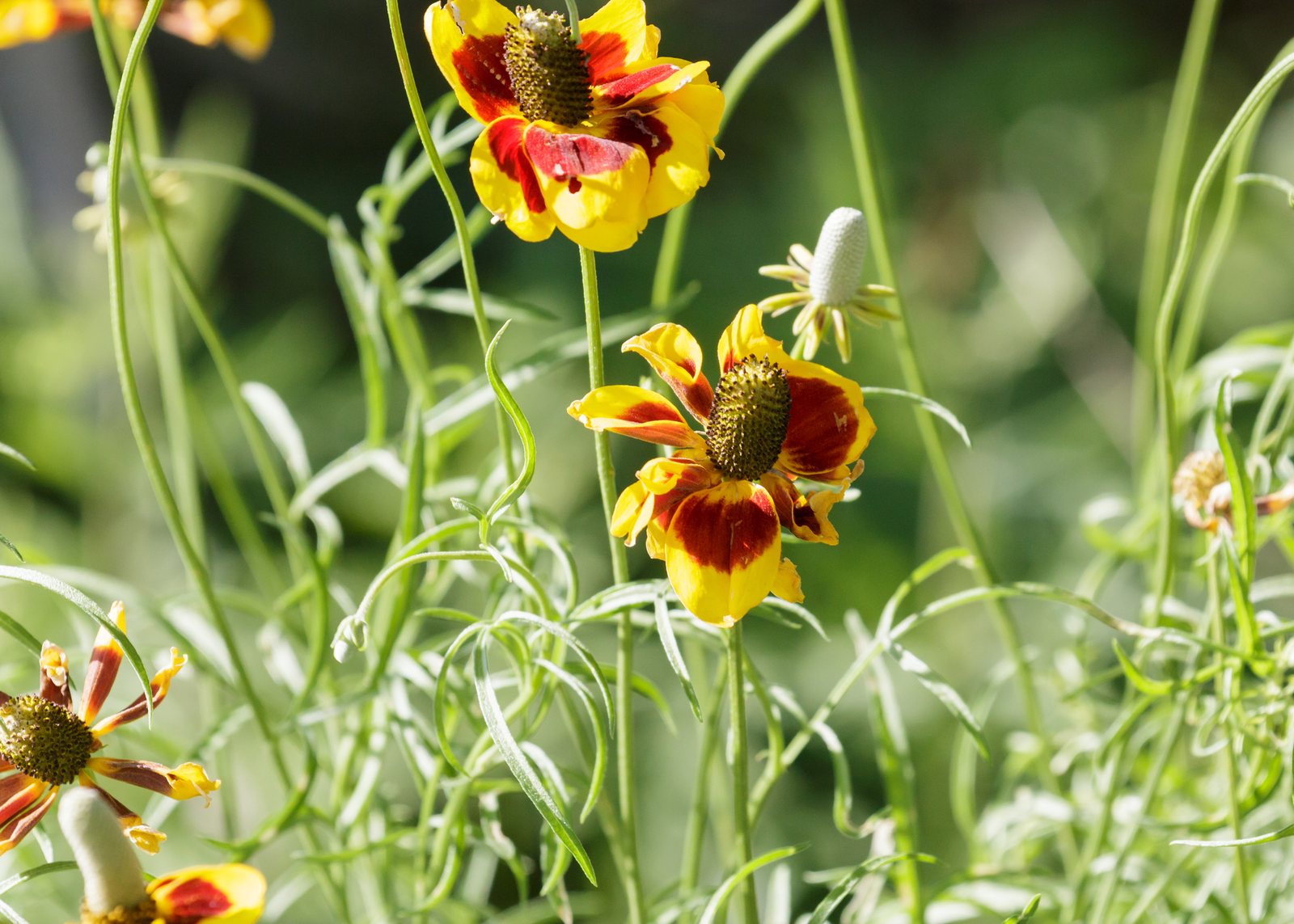
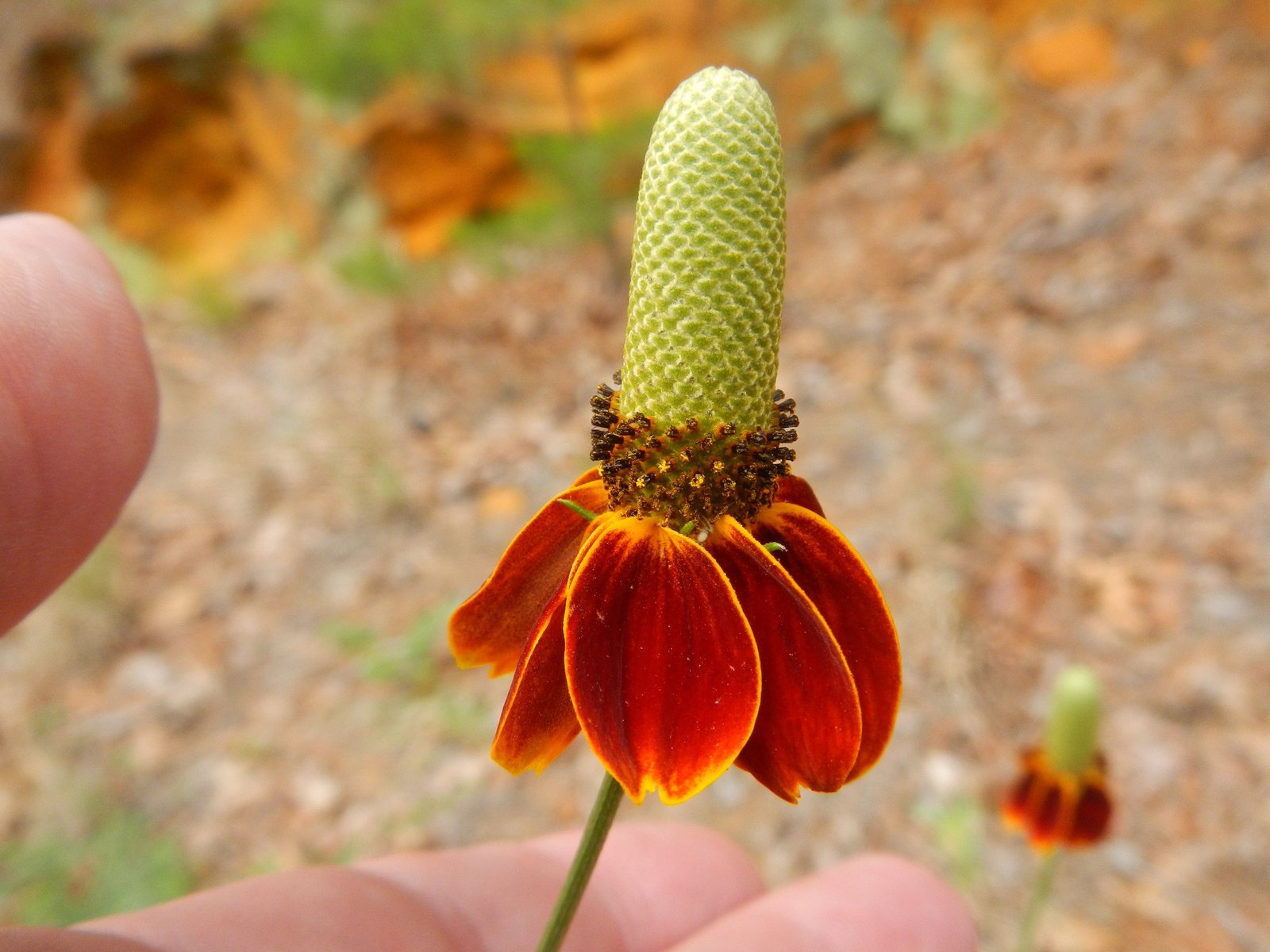
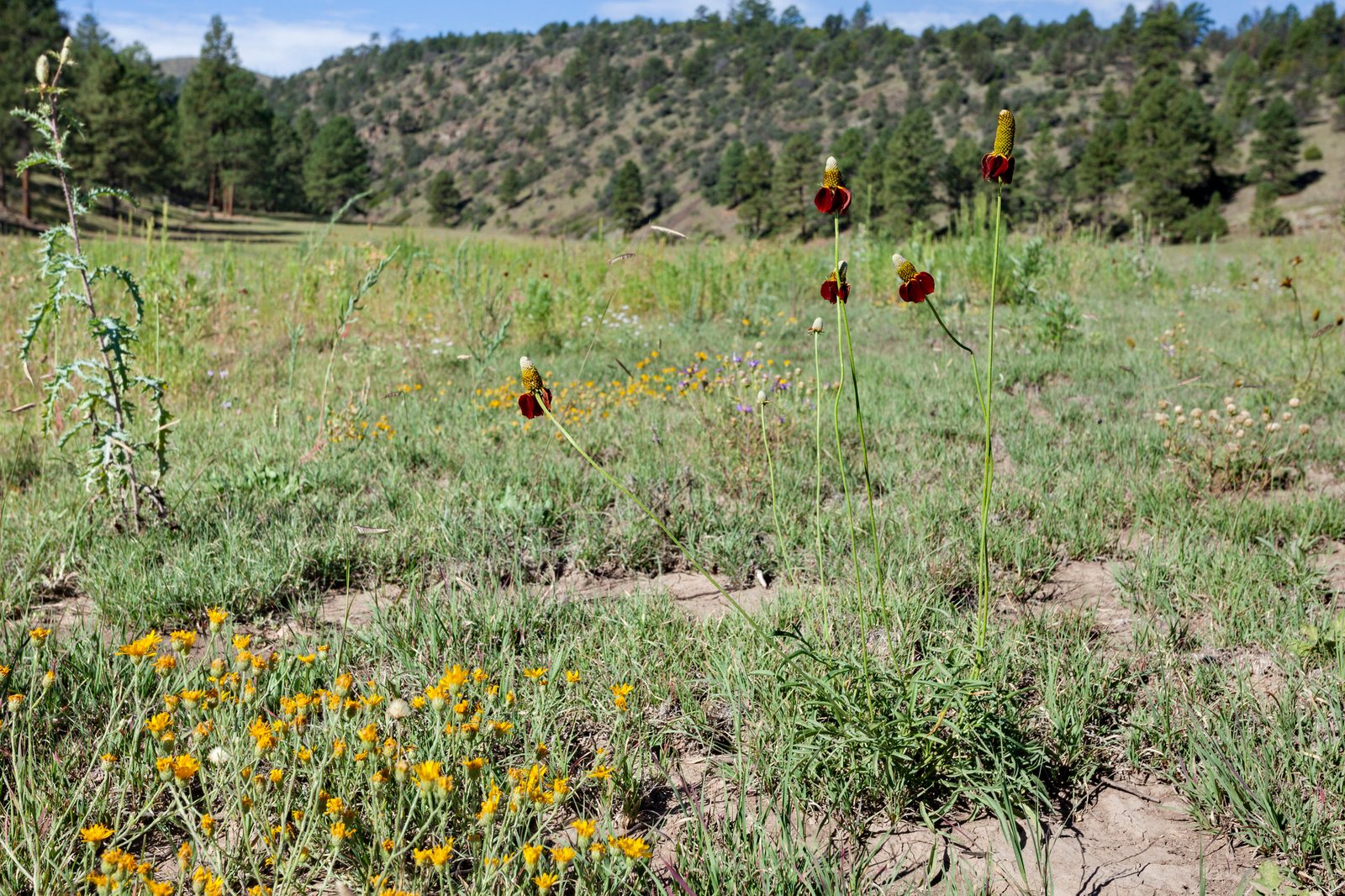
Mexican hat is a short-lived perennial native to North America, with drooping yellow or reddish-brown petals around a tall central cone. Grow it for summer flowers, pollinators and a loose prairie effect in sunny, dry borders; it often maintains itself by self-seeding.
At a glance
- Sun
- Full sun; flowering and stem strength decline in shade.
- Water
- Low once established. Water young plants regularly, then water established plants only during prolonged dry spells.
- Soil
- Well-drained sandy, gravelly, loamy or clay soil; tolerates poor soil and limestone. Avoid ground that stays wet in winter.
- Height
- 1-3 ft (0.3-0.9 m)
- Spread
- 1-1.5 ft (0.3-0.45 m)
- Flowers
- Summer into early autumn; drooping petals are yellow, reddish-brown, or reddish-brown edged with yellow, surrounding a tall brown cone.
- Foliage
- Green to grey-green, deeply divided leaves with narrow segments, concentrated toward the lower stems.
- Growth
- Fast; seed-grown plants may flower in their first year.
- Care needed
- Low
The year at a glance
- Pollinators
- Deer resistant
- Drought tolerant
- Cold hardy
- Heat tolerant
- Wildlife
- Low allergen
| J | F | M | A | M | J | J | A | S | O | N | D | |
|---|---|---|---|---|---|---|---|---|---|---|---|---|
| Flowers | ||||||||||||
| Fruit | ||||||||||||
| Plant |
Northern hemisphere months. In Australia, shift them by six.
- Difficulty
- Easy
- Toughness
- Very tough
Will it suit your garden?
Pick your zone, country, light and whether you have pets.
Full sun is 6 or more hours of direct sun a day, part shade 3 to 6 hours, shade under 3.
How it grows
Planting day
1 ft (0.3 m)
After 1 year
1.5 ft (0.45 m)
After 2 years
2 ft (0.6 m)
full size
About 2 years to full size.
From a typical nursery size, at an average rate for this kind of plant. A rule of thumb, not a forecast.
Good to know
- Cats and dogs
- Safe
- Native to
- the US and Canada
- Growth rate
- Fast
Care
Jobs through the year
- WaterApr–May, Sep–Oct, every 21 days
- Water established plants only during prolonged drought; water young plants regularly.
- WaterJun–Aug, every 14 days
- Water established plants deeply only in prolonged drought; let soil dry between waterings.
- PruneFeb–Mar
- Cut dead stems close to ground level before new growth.
- DeadheadJun–Sep, every 14 days
- Remove faded heads to prolong flowering; leave selected cones for birds.
- MulchApr
- Use light gravel mulch if needed, keeping the crown uncovered.
- Water at soil level during establishment, allowing the surface to dry between waterings.
- Avoid routine feeding; rich soil and excess fertiliser encourage floppy growth.
- Keep mulch away from the crown; use a light gravel mulch where winter moisture is a problem.
- Thin crowded seedlings to about 12-18 in (30-45 cm) apart.
- Remove unwanted seedlings while small, before their taproots develop.
Pruning. Deadhead during summer to encourage further flowers and limit self-seeding, or leave some cones for birds and seed. Cut dead stems close to the ground in late winter or early spring before new growth begins.
Through the year
- Late winter
- Cold-stratify seed in a moist medium in the refrigerator for 4-6 weeks before spring sowing to improve germination consistency.
- Early spring
- Cut back standing dead stems and remove weeds around emerging growth.
- Spring
- Sow seed shallowly or plant young plants after hard frosts; water while roots establish.
- Early summer
- Thin volunteer seedlings and check that neighbouring plants are not shading the crowns.
- Summer
- Deadhead for continued flowering, leaving selected cones if you want seed or bird food.
- Autumn
- Collect dry seed or sow outdoors so winter provides natural cold treatment; leave some stems standing for wildlife.
In the garden
- Scatter through a sunny meadow with little bluestem and other open-growing prairie grasses.
- Plant in repeated groups in a gravel garden for upright cones and warm flower colours.
- Use near the front or middle of a dry border with butterfly weed and purple coneflower.
- Include in a sunny wildlife planting where some self-seeding and standing winter stems are welcome.
Garden styles it suits: Native meadow, Midwest prairie, Pollinator garden, Dry gravel garden, Desert / xeriscape and Wildflower.
Plant it with: Little bluestem, Prairie dropseed, Butterfly weed, Purple coneflower, Lanceleaf coreopsis and Blanket flower.
Wildlife: Flowers provide pollen and nectar for bees and other insects, including butterflies. Finches and other seed-eating birds may feed on mature cones.
Problems to watch for
- Crown or root rot in wet soil: improve drainage or move plants to a raised, freely draining position.
- Floppy stems in rich soil or shade: stop feeding and grow in full sun; discreetly support existing stems if needed.
- Powdery mildew during humid weather: thin crowded growth, improve air circulation and avoid wetting the foliage.
- Too many seedlings: deadhead before cones shed seed and pull unwanted seedlings promptly.
Safety
Not known to be toxic to people, cats, dogs or horses. Species-specific toxicity information is limited, and the plant is not intended for eating.
Easily confused with
Grey-headed coneflower (Ratibida pinnata)
Usually taller, with yellow petals and a much shorter, rounded or egg-shaped central cone rather than Mexican hat's elongated column.
Black-eyed Susan (Rudbeckia hirta)
Has broad, undivided, hairy leaves and a broad dark central dome, rather than finely divided leaves and a tall narrow cone.
The name
The common name Mexican hat refers to the flower's resemblance to a sombrero, while columnifera means column-bearing and describes its elongated central cone.
Propagation. Usually grown from seed. Sow outdoors in autumn, or cold-stratify seed for 4-6 weeks before spring sowing; press onto the surface and cover only very lightly. Move seedlings while young because established taproots dislike disturbance.
Checked against open data
- Accepted botanical name
- Ratibida columnifera
- In the US and Canada
- Native in Canada and the lower 48 states.
- Native range
- Alberta, Arizona, Arkansas, British Columbia, Colorado, Illinois, Indiana, Iowa, Kansas, Louisiana, Manitoba and Masachusettes.
- Measured
- Soil pH 5.9 to 7. Average height 40 cm.
Sources: GBIF (CC BY 4.0), USDA PLANTS and Trefle (CC BY 4.0). The care and design notes are LandscapeGPT's own.
See it in your own yard.
Upload a photo of your yard and see it redesigned with plants that suit your climate, each checked against your zone.