Mexican plum
Prunus mexicana. Family Rosaceae. Tree.
Also called Bigtree plum.
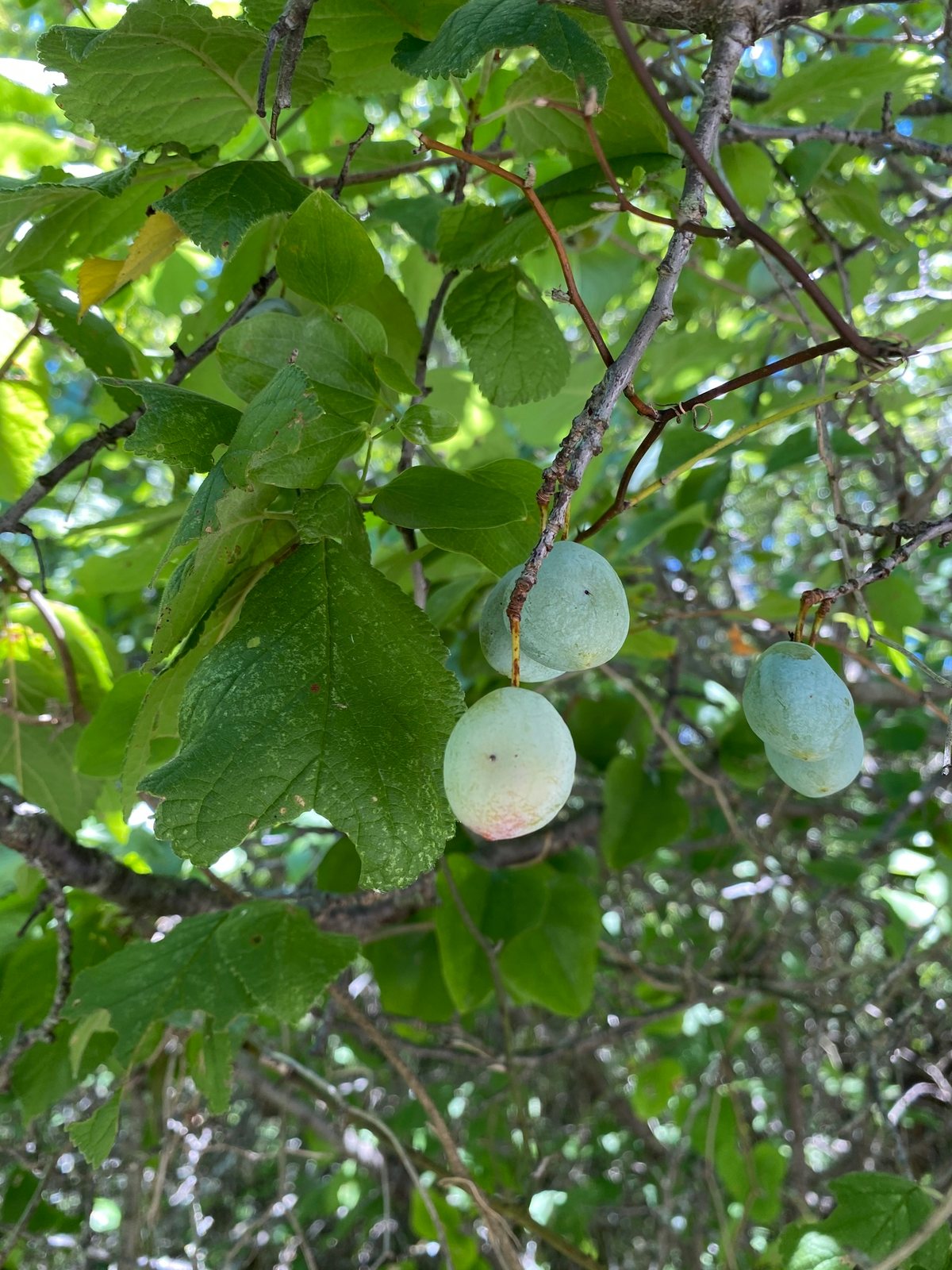
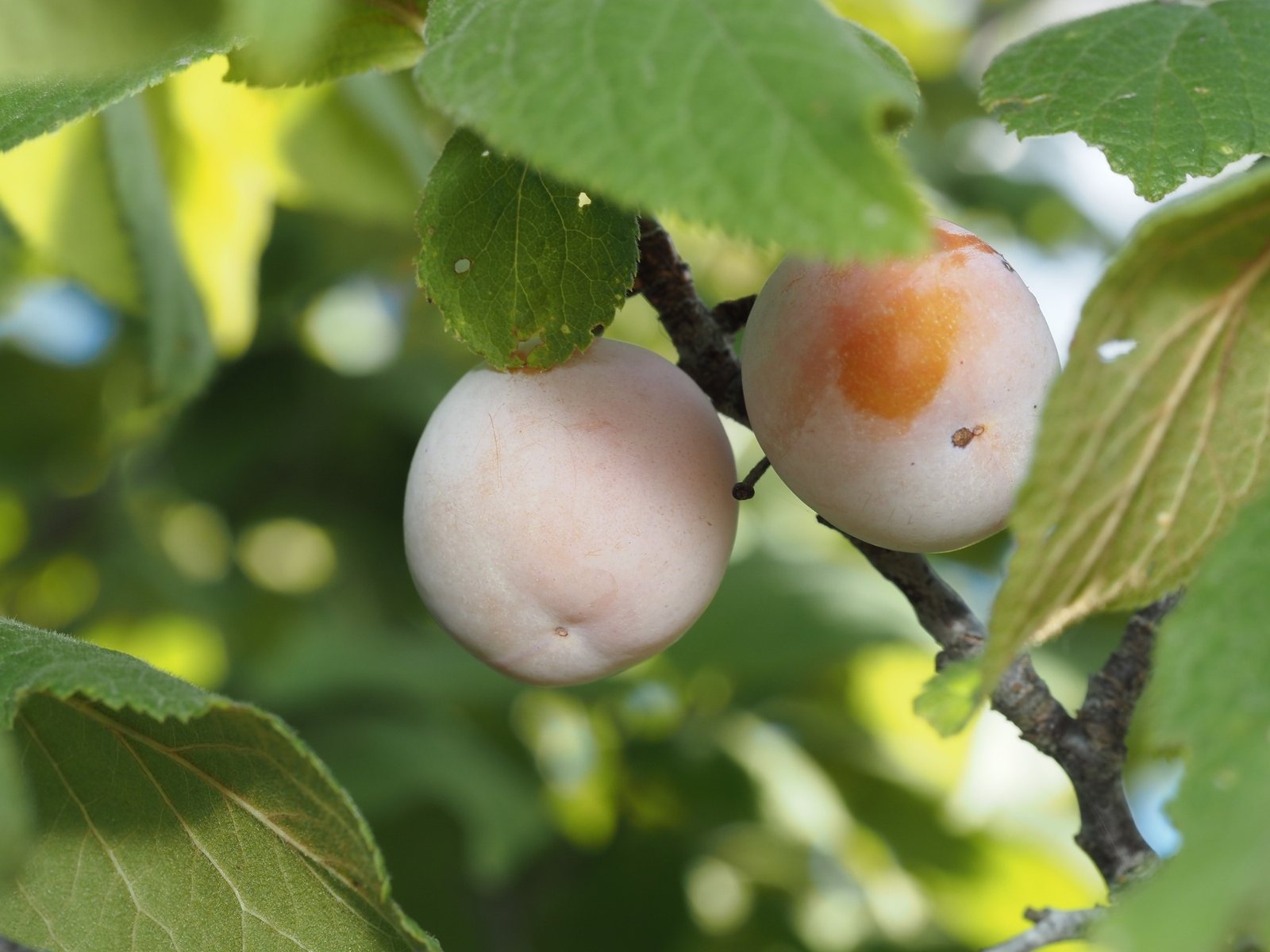
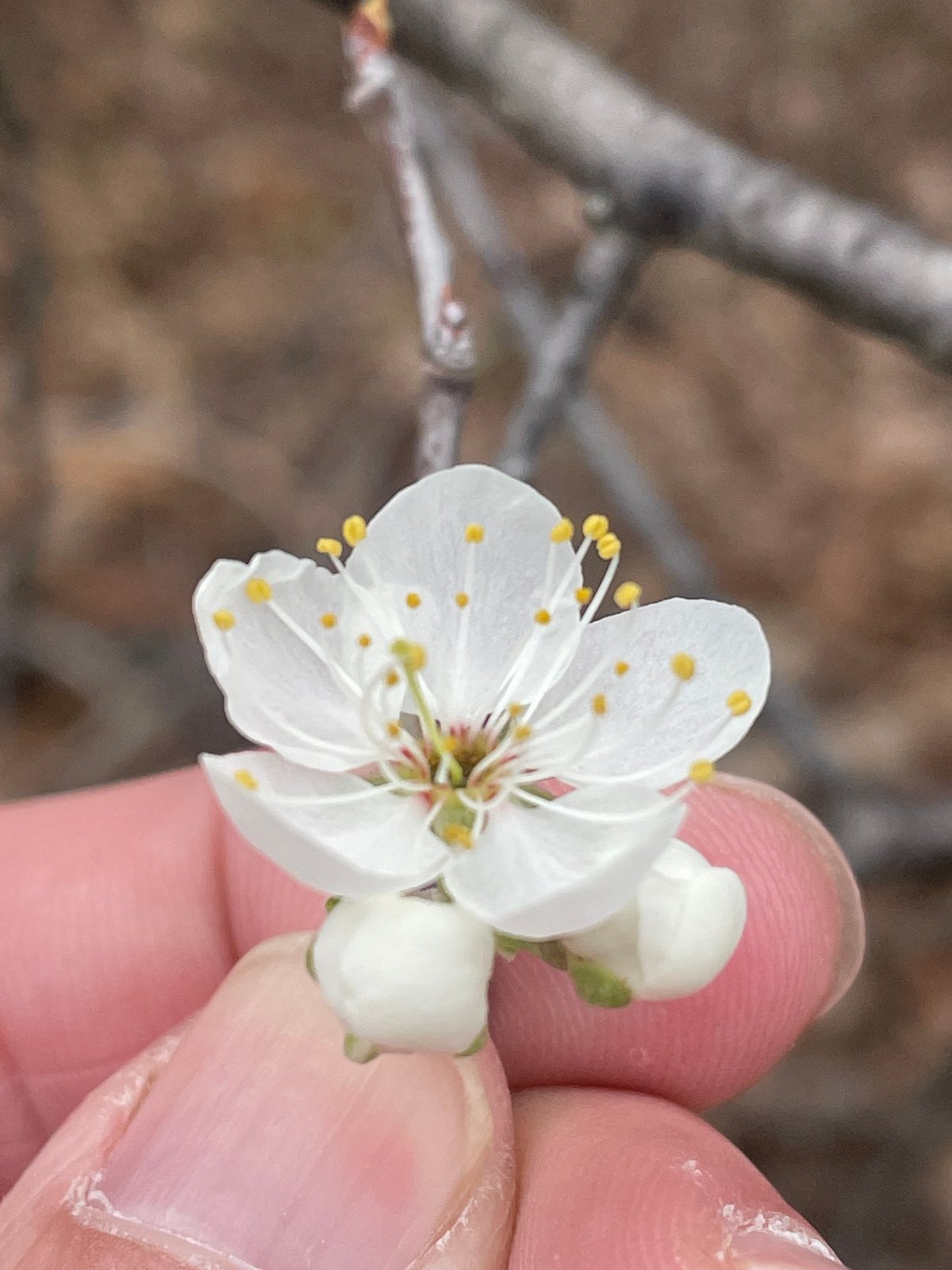
Mexican plum is a small deciduous tree native to the central and southern United States and Mexico. Gardeners grow it for fragrant white blossom before the leaves, edible plums, and bark that becomes attractively peeling with age. It usually develops a single trunk and makes fewer suckers than many other native American plums.
At a glance
- Sun
- Full sun to partial shade; flowering and fruiting are best in full sun.
- Water
- Moderate while establishing; established trees tolerate periods of drought but benefit from deep watering during prolonged dry weather.
- Soil
- Well-drained loam, clay or sandy soil, including limestone soils; avoid sites that remain waterlogged.
- Height
- 15-25 ft (4.6-7.6 m)
- Spread
- 15-25 ft (4.6-7.6 m)
- Flowers
- Late winter to early spring, depending on climate; fragrant white flowers open before the leaves.
- Foliage
- Deciduous, oval green leaves with toothed edges, a somewhat rough upper surface and hairy undersides; often yellow in autumn.
- Growth
- Moderate
- Care needed
- Medium
The year at a glance
- Pollinators
- Drought tolerant
- Heat tolerant
- Wildlife
- Low allergen
- Fragrant
- Edible
| J | F | M | A | M | J | J | A | S | O | N | D | |
|---|---|---|---|---|---|---|---|---|---|---|---|---|
| Flowers | ||||||||||||
| Fruit | ||||||||||||
| Plant |
Northern hemisphere months. In Australia, shift them by six.
- Difficulty
- Moderate
- Toughness
- Fairly tough
Will it suit your garden?
Pick your zone, country, light and whether you have pets.
Full sun is 6 or more hours of direct sun a day, part shade 3 to 6 hours, shade under 3.
How it grows
Planting day
7 ft (2 m)
After 1 year
7 ft (2.2 m)
After 2 years
8 ft (2.4 m)
After 3 years
9 ft (2.6 m)
After 5 years
10 ft (3 m)
About 20 years to full size.
From a typical nursery size, at an average rate for this kind of plant. A rule of thumb, not a forecast.
Good to know
- Cats and dogs
- Toxic
- Native to
- the US
- Growth rate
- Moderate
Care
Jobs through the year
- WaterApr–May, Sep–Oct, every 21 days
- Deep-water established trees only in prolonged dry weather; water regularly for the first two seasons.
- WaterJun–Aug, every 14 days
- Soak the root zone during dry spells, especially while fruit develops; skip when soil is moist.
- MulchMar–Apr
- Maintain 5–8 cm of organic mulch over the root zone, keeping it clear of the trunk.
- FeedMar–Apr
- Feed only for weak growth or a confirmed soil deficiency; avoid excess nitrogen.
- PruneMay–Jul
- Prune lightly in dry weather to remove dead or crowded branches and small basal shoots; avoid winter pruning.
- ProtectJul–Sep, every 7 days
- Remove damaged, rotting and fallen fruit promptly to limit pests and disease.
- HarvestAug–Sep
- Pick softened purple plums that detach easily; remove stones before processing.
- Water deeply during dry spells for the first two growing seasons, allowing the soil surface to dry between waterings.
- Spread 2-3 in (5-8 cm) of organic mulch over the root zone, keeping it clear of the trunk.
- Feed only if growth is weak or a soil test shows a deficiency; excessive nitrogen encourages shoots rather than fruit.
- Remove unwanted basal shoots while they are small.
- Clear fallen fruit promptly to reduce pests, disease and slippery patches.
Pruning. Prune in dry weather from late spring to midsummer, removing dead, crossing or crowded branches and developing a balanced framework. Avoid heavy pruning and winter pruning, particularly in cool, damp climates where silver leaf can infect pruning wounds.
Harvest
Pick the plums in late summer or early autumn when they turn reddish-purple to purple, soften slightly and detach with a gentle twist; flavour varies, and tart fruit is useful for preserves. Expect a first worthwhile crop roughly 3-5 years after planting a young nursery tree, although seed-grown trees can take longer. Remove the stones before processing.
Through the year
- Autumn
- Plant while the soil is workable in mild climates; water thoroughly and mulch.
- Early spring
- Plant in colder climates once the soil is workable, and check established trees for damaged branches.
- Spring
- Watch blossom and new shoots for caterpillars and disease; avoid spraying insecticides while pollinators visit flowers.
- Late spring
- Prune lightly in dry weather after flowering and remove unwanted basal shoots.
- Summer
- Water young trees deeply during dry spells and remove damaged or rotting fruit.
- Late summer to early autumn
- Harvest soft, fully coloured plums and collect fallen fruit.
In the garden
- Use as a small specimen tree near a seating area where its spring fragrance and mature bark can be appreciated.
- Plant along a sunny woodland edge with redbuds and shade-tolerant grasses beneath.
- Include in a wildlife garden or mixed native boundary for early flowers and fruit.
- Place in an informal orchard or edible landscape, away from paving where fallen fruit would be troublesome.
Garden styles it suits: Woodland, Wildlife garden, Backyard orchard, Edible landscape, Modern rustic and Texas Hill Country.
Plant it with: Eastern redbud, Autumn sage, Little bluestem, Purple coneflower, Aromatic aster and Inland sea oats.
Wildlife: Early flowers provide pollen and nectar for bees and other insects. Birds and mammals eat the fruit, and the foliage supports caterpillars, including some native butterflies in its North American range.
Problems to watch for
- Plum curculio can scar young fruit and cause premature drop in eastern North America; collect dropped fruit frequently and seek local advice on controls timed after flowering.
- Brown rot causes fruit to soften and decay; remove infected and mummified fruit, clear fallen fruit and maintain an open canopy.
- Black knot produces swollen black growths on branches; prune well below affected wood in dry weather and dispose of the cuttings.
- Tent caterpillars can strip young branches; remove small tents and caterpillars by hand when practical.
Safety
The ripe fruit flesh is edible. Leaves, stems and the kernels inside the stones contain cyanogenic compounds and can cause serious, potentially fatal poisoning in people, cats, dogs and horses if eaten in sufficient quantity; wilted foliage is a particular livestock hazard. Do not chew or crush the stones, and keep pruning waste away from animals.
Easily confused with
American plum (Prunus americana)
Usually produces abundant root suckers and forms thickets; Mexican plum more often grows as a single-trunked tree with fewer suckers and develops conspicuously peeling bark.
Chickasaw plum (Prunus angustifolia)
Has much narrower leaves and commonly forms low, dense, suckering thickets, unlike the broader-leaved, more tree-like Mexican plum.
Cherry plum (Prunus cerasifera)
Typically has smoother, less hairy leaves; many garden forms have purple foliage. Mexican plum has green leaves with a rougher upper surface and noticeably hairy undersides.
The name
The epithet mexicana means 'of Mexico', referring to part of the species' native range.
Propagation. Grow from cleaned fresh seed given a period of moist cold stratification; germination can be slow and uneven. Seedlings vary in fruit quality. Budding or grafting onto a compatible plum rootstock preserves a selected tree's characteristics.
Checked against open data
- Accepted botanical name
- Prunus mexicana
- In the US and Canada
- Native in the lower 48 states.
- Native range
- Alabama, Arkansas, Illinois, Indiana, Iowa, Kansas, Kentucky, Louisiana, Mexico Northeast, Mississippi, Missouri and Oklahoma.
- Measured
- Average height 420 cm.
Sources: GBIF (CC BY 4.0), USDA PLANTS and Trefle (CC BY 4.0). The care and design notes are LandscapeGPT's own.
See it in your own yard.
Upload a photo of your yard and see it redesigned with plants that suit your climate, each checked against your zone.