Mexican sunflower
Tithonia rotundifolia. Family Asteraceae. Annual.
Also called Red sunflower, Tithonia.
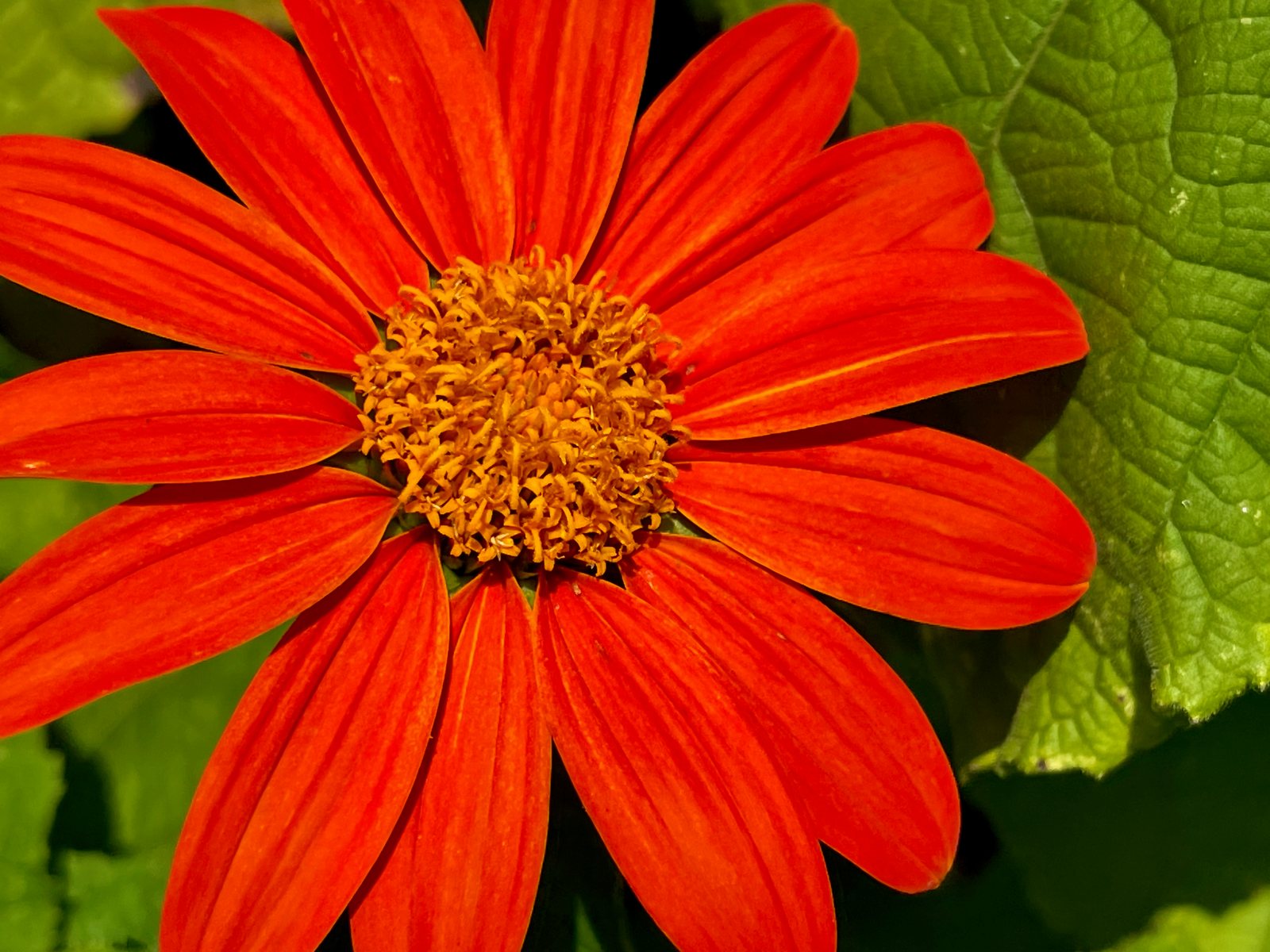
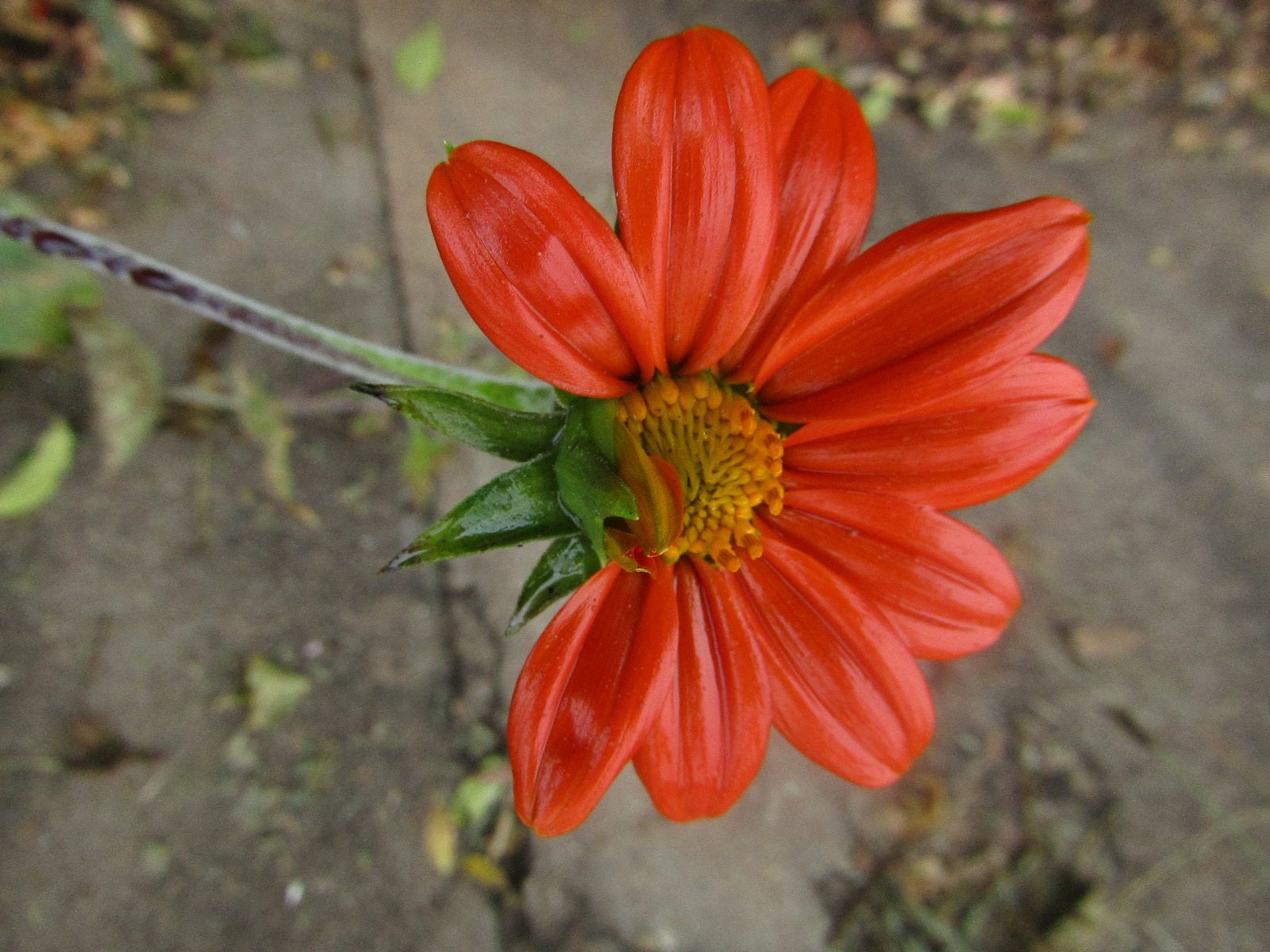
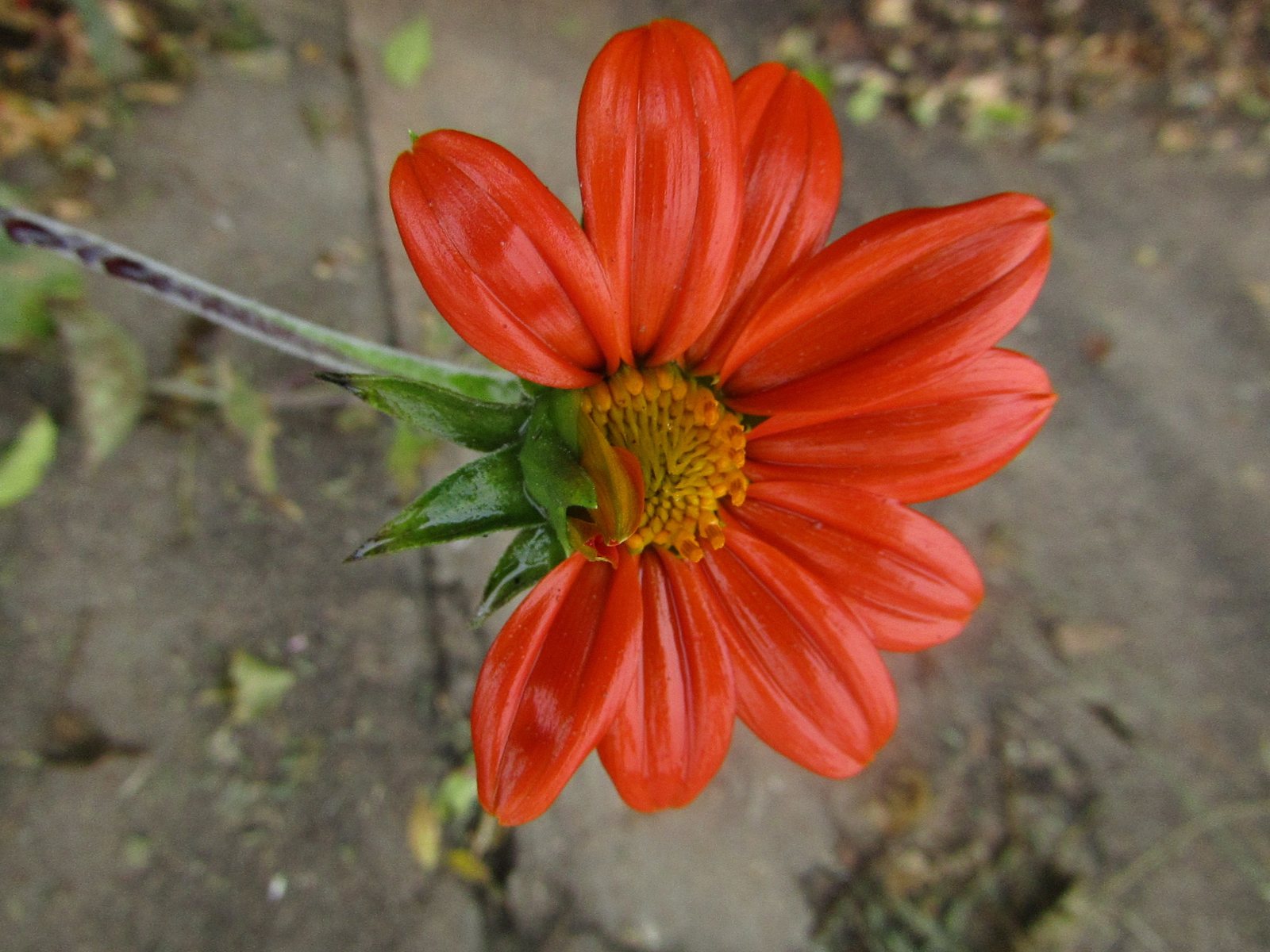
Mexican sunflower is a fast-growing, branching plant grown as an annual for its orange-red, daisy-like flowers from summer until frost. Its tall stems and broad leaves give sunny borders a bold backdrop, while the flowers attract butterflies and bees. It performs best with a warm summer and may flower late in cool climates.
At a glance
- Sun
- Full sun; choose a warm position sheltered from strong winds.
- Water
- Water regularly while establishing, then deeply during prolonged dry spells. Established plants tolerate some drought.
- Soil
- Well-drained soil of average to modest fertility; avoid waterlogged ground and heavy nitrogen feeding.
- Height
- 4-6 ft (1.2-1.8 m)
- Spread
- 2-3 ft (0.6-0.9 m)
- Flowers
- Summer to the first frost; orange to orange-red flowers with yellow centres. Yellow-flowered cultivars are also available.
- Foliage
- Broad, rough-textured, softly hairy green leaves, often with three shallow lobes.
- Growth
- Fast; reaches flowering size in one growing season.
- Care needed
- Low
The year at a glance
- Pollinators
- Deer resistant
- Drought tolerant
- Heat tolerant
- Wildlife
- Low allergen
| J | F | M | A | M | J | J | A | S | O | N | D | |
|---|---|---|---|---|---|---|---|---|---|---|---|---|
| Flowers | ||||||||||||
| Fruit | ||||||||||||
| Plant |
Northern hemisphere months. In Australia, shift them by six.
- Difficulty
- Easy
- Toughness
- Fairly tough
Will it suit your garden?
Pick your zone, country, light and whether you have pets.
Full sun is 6 or more hours of direct sun a day, part shade 3 to 6 hours, shade under 3.
How it grows
Planting day
0.6 ft (0.18 m)
After 1 year
5 ft (1.5 m)
full size
Full size in one season.
From a typical nursery size, at an average rate for this kind of plant. A rule of thumb, not a forecast.
Good to know
- Cats and dogs
- Safe
- Invasive in
- Australia
- In the garden
- Spreads vigorously: plan to contain it.
- Growth rate
- Fast
Care
Jobs through the year
- WaterMay–Jun, every 7 days
- Water established plants if dry; recently planted seedlings need more frequent checks and watering.
- WaterJul–Oct, every 14 days
- Deeply water established plants during prolonged dry weather; skip after sufficient rain.
- PruneMay–Jun
- Optionally pinch out young growing tips once for bushier plants.
- MulchJun
- Apply a light mulch after the soil warms, keeping it away from stems.
- DeadheadJul–Oct, every 7 days
- Snip off faded heads gently; leave a few late heads for birds or seed if self-seeding is acceptable.
- ProtectMay–Jun
- Protect seedlings from slugs and stake tall varieties early in exposed sites.
- PruneOct–Nov
- After frost kills the plants, cut down and compost healthy stems.
- Plant out only after frost danger has passed and the soil has warmed; space plants 2-3 ft (0.6-0.9 m) apart.
- Water at the base until established, then during extended dry weather.
- Avoid rich manure and frequent feeding, which encourage leafy growth at the expense of flowers.
- Apply a light mulch after the soil warms, keeping it away from the stems.
- Stake tall plants early in exposed gardens; their stems can break in strong wind.
Pruning. Pinch out the growing tip of young plants if you want bushier growth. During flowering, snip off faded heads just above a leaf joint, handling the brittle stems gently.
Through the year
- Early spring
- In short-summer climates, sow seed indoors about 6-8 weeks before the last expected frost.
- Late spring
- Harden off seedlings and plant out after frost danger passes, or sow directly into warm soil.
- Early summer
- Install stakes before plants become tall and mulch once the ground is warm.
- Summer
- Water during prolonged dry spells and remove faded flowers to prolong the display.
- Early autumn
- Where the plant is not invasive, allow a few heads to ripen if you want to collect seed.
- Late autumn
- After frost kills the plants, remove the stems and compost healthy material.
In the garden
- Place at the back of a sunny border for height and a long season of orange flowers.
- Combine with purple salvias and blue-flowered annuals for strong colour contrast.
- Plant in loose groups with ornamental grasses for a late-summer display.
- Use along a vegetable garden edge to bring flowers and pollinating insects close to crops.
Garden styles it suits: Cottage garden, Hot border, Pollinator garden, Wildlife garden, Mexican hacienda and Tropical.
Plant it with: Mealycup sage, Zinnias, Cosmos, Verbena, Fountain grass and French marigolds.
Wildlife: The open flowers provide nectar and pollen for butterflies and bees. Seed heads may attract seed-eating birds if left to ripen where self-seeding is acceptable.
Problems to watch for
- Slugs and snails can destroy young seedlings; inspect after dark, remove pests and use wildlife-conscious slug controls where needed.
- Aphids may gather on soft shoots; wash them off with water and encourage ladybirds and other predators.
- Tall stems may snap in wind; plant in shelter and support them with stakes before they reach full height.
- Poor flowering often follows cool weather, shade or excessive nitrogen; choose the warmest sunny site and reduce feeding.
Safety
Not known to be toxic to people, cats, dogs or horses, but species-specific safety information is limited. It is not an edible plant; discourage eating any part. Rough foliage may irritate sensitive skin.
Where it spreads. Invasive in parts of South Africa and recorded as an environmental weed in Queensland, Australia. It can self-seed readily in warm climates; check local guidance before planting and prevent seed production where escape is a concern.
Easily confused with
Tree marigold (Tithonia diversifolia)
Usually a larger, woody perennial shrub with more deeply divided leaves and predominantly yellow flowers; Mexican sunflower is an herbaceous annual with shallower leaf lobes and usually orange-red flowers.
Common sunflower (Helianthus annuus)
Usually has more distinctly heart-shaped, toothed leaves and larger flower heads with prominent seed-forming centres; Mexican sunflower has smaller heads on long stalks and often lobed leaves.
The name
The common name refers to its Mexican origin and sunflower-like flower heads.
Propagation. Grow from seed, sown indoors before the last frost or directly outdoors once the soil is warm. Cover lightly and keep evenly moist until germination. Saved seed from named cultivars may not produce identical plants.
Checked against open data
- Accepted botanical name
- Tithonia rotundifolia
- In the US and Canada
- Introduced in the lower 48 states, Puerto Rico and US Virgin Islands.
- Native range
- Belize, Costa Rica, El Salvador, Guatemala, Honduras, Mexico Central, Mexico Gulf, Mexico Northeast, Mexico Southeast, Mexico Southwest, Nicaragua and Panamá.
Sources: GBIF (CC BY 4.0), USDA PLANTS and Trefle (CC BY 4.0). The care and design notes are LandscapeGPT's own.
See it in your own yard.
Upload a photo of your yard and see it redesigned with plants that suit your climate, each checked against your zone.