Midwinter Fire dogwood
Cornus sanguinea 'Midwinter Fire'. Family Cornaceae. Shrub.
Also called Bloodtwig dogwood 'Midwinter Fire', Common dogwood 'Midwinter Fire'.
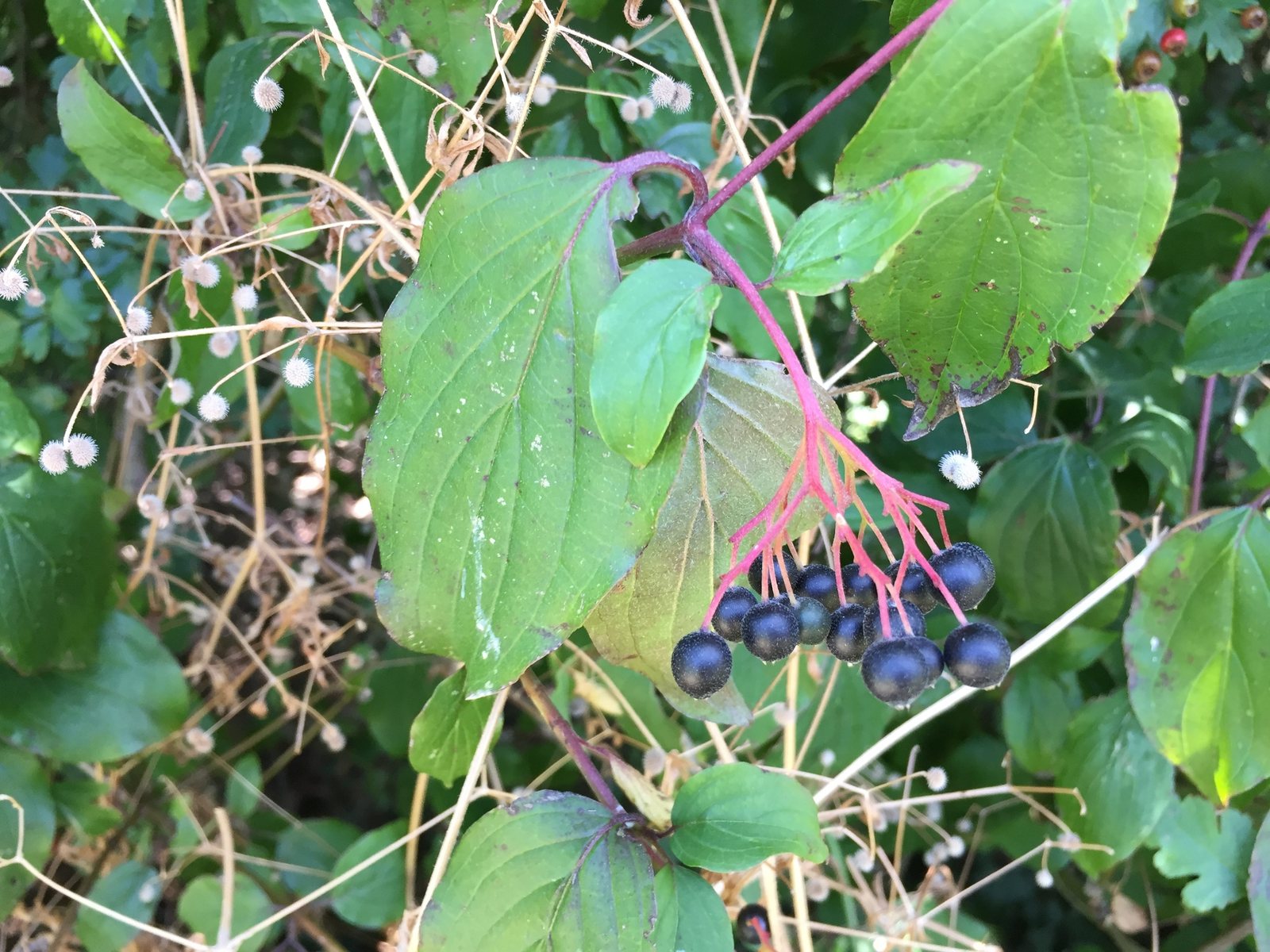
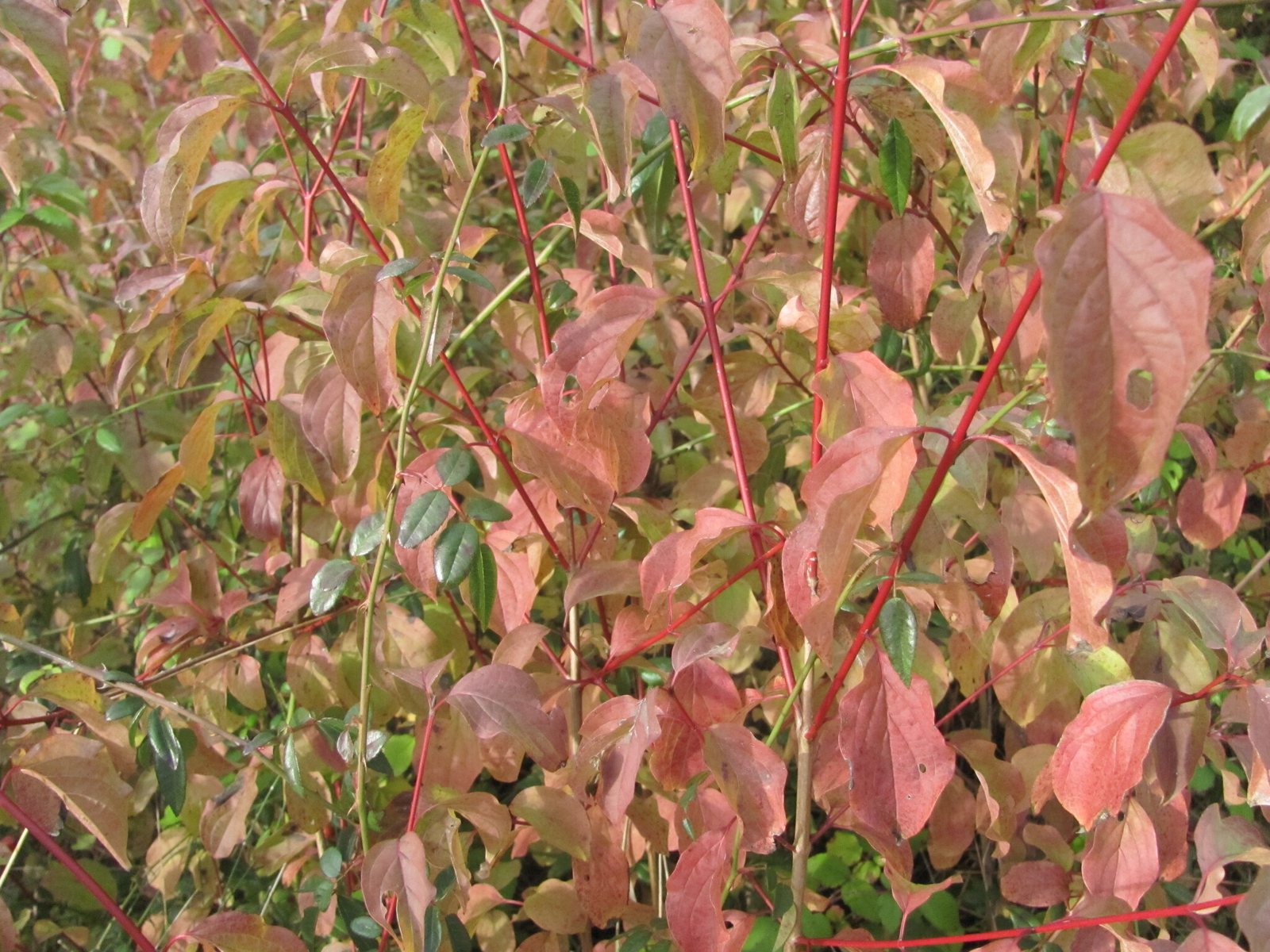
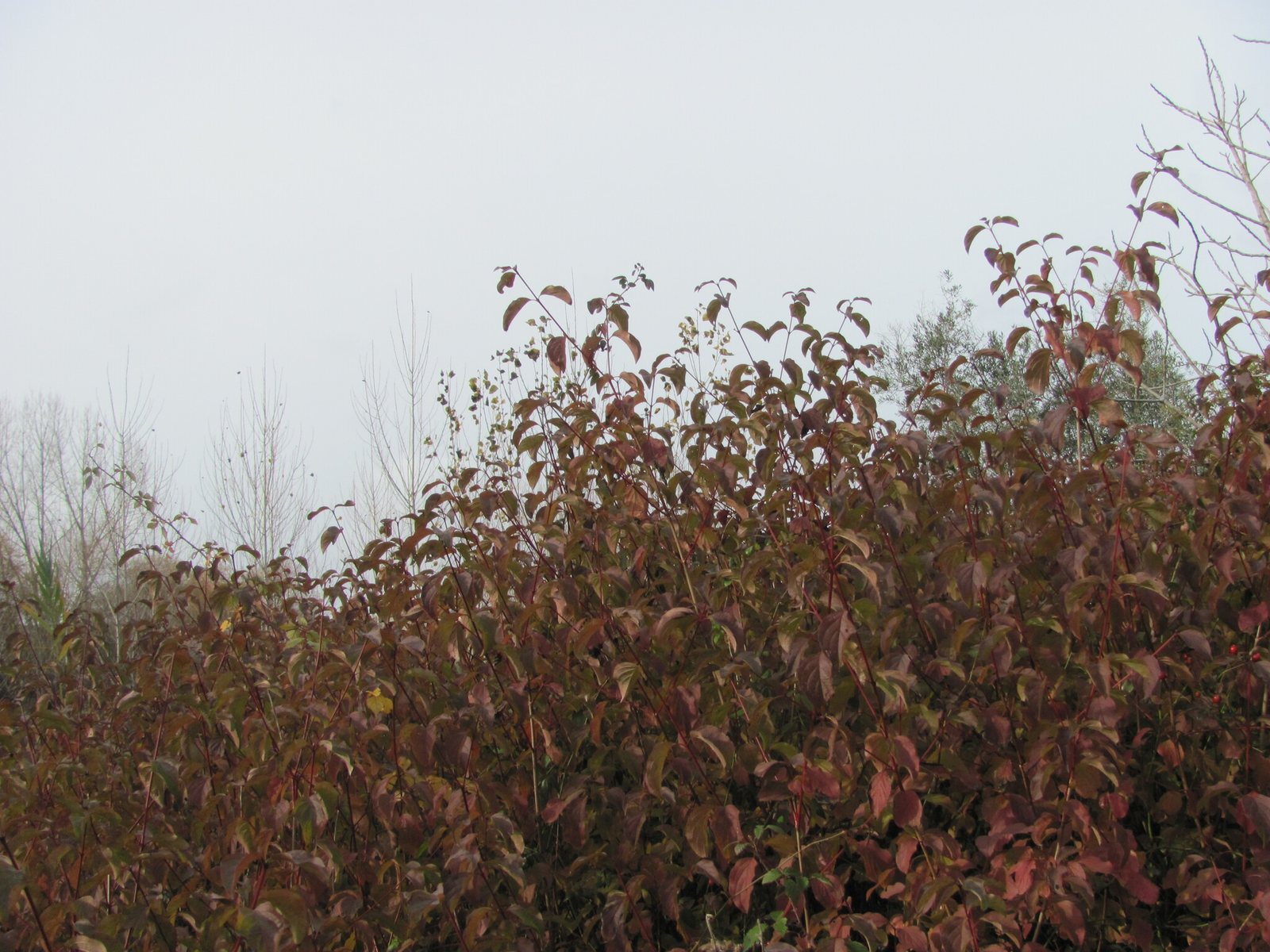
Cornus sanguinea 'Midwinter Fire' is a deciduous shrub grown for winter stems that shade from yellow at the base through orange to red at the tips. Its green summer foliage turns yellow in autumn, and the brightest stem colour develops on young growth grown in good light.
At a glance
- Sun
- Full sun to partial shade; full sun gives the strongest winter stem colour.
- Water
- Keep the root zone evenly moist while establishing. Established plants tolerate brief dry spells, but need watering during prolonged drought.
- Soil
- Moist, well-drained soil, including clay, loam and chalk; tolerates a wide pH range. Avoid persistently waterlogged ground.
- Height
- 5-8 ft (1.5-2.4 m)
- Spread
- 5-8 ft (1.5-2.4 m), potentially wider through suckering
- Flowers
- Late spring to early summer; small creamy-white flowers in flat clusters.
- Foliage
- Opposite, oval green leaves with curved veins; usually yellow to orange-yellow in autumn.
- Growth
- Moderate
- Care needed
- Medium
The year at a glance
- Pollinators
- Cold hardy
- Wildlife
- Low allergen
| J | F | M | A | M | J | J | A | S | O | N | D | |
|---|---|---|---|---|---|---|---|---|---|---|---|---|
| Flowers | ||||||||||||
| Fruit | ||||||||||||
| Plant |
Northern hemisphere months. In Australia, shift them by six.
- Difficulty
- Easy
- Toughness
- Very tough
Will it suit your garden?
Pick your zone, country, light and whether you have pets.
Full sun is 6 or more hours of direct sun a day, part shade 3 to 6 hours, shade under 3.
How it grows
Planting day
1.6 ft (0.5 m)
After 1 year
2.6 ft (0.79 m)
After 2 years
4 ft (1.1 m)
After 3 years
4 ft (1.4 m)
After 5 years
6 ft (2 m)
full size
About 5 years to full size.
From a typical nursery size, at an average rate for this kind of plant. A rule of thumb, not a forecast.
Good to know
- Cats and dogs
- Mildly toxic: may upset a stomach
- Native to
- the UK
- Growth rate
- Moderate
Care
Jobs through the year
- WaterApr–May, Sep–Oct, every 14 days
- Water established shrubs if soil is drying; check young plants more frequently for their first two years.
- WaterJun–Aug, every 7 days
- During prolonged drought, water established shrubs deeply when soil is dry; young plants need closer monitoring.
- PruneFeb–Mar
- Once established for two to three years, remove one-third of the oldest stems; do not cut all stems annually.
- MulchMar–Apr
- Apply 5–8 cm of compost or leaf mould, keeping stems clear.
- FeedApr
- Feed lightly only if growth is weak; omit on fertile soil.
- PruneJun–Aug
- Remove unwanted suckers with their connecting roots before they expand the clump.
- Water deeply during dry spells for the first two growing seasons.
- Apply a 2-3 in (5-8 cm) mulch of compost or leaf mould in spring, keeping it clear of the stems.
- Feed lightly in spring only if growth is weak; rich soil usually needs no additional fertiliser.
- Remove unwanted suckers at their point of origin to keep the clump within bounds.
- Allow new plants to establish for two or three years before starting renewal pruning.
Pruning. In late winter or early spring, remove about one-third of the oldest stems near ground level to encourage colourful replacements. This cultivar is less vigorous than many red-stemmed dogwoods, so avoid cutting the whole shrub down every year.
Through the year
- Late winter
- Enjoy the coloured stems, then remove old, dull-coloured wood before new growth begins.
- Early spring
- Mulch the root zone and check that young plants have adequate moisture.
- Late spring
- Check new shoots for aphids and wash off small colonies with water.
- Summer
- Water during prolonged dry weather and remove suckers spreading beyond the planting area.
- Autumn
- Plant while the soil is workable and watch for yellow autumn foliage.
- Late autumn
- Take hardwood cuttings after leaf fall if you want additional plants.
In the garden
- Plant in groups where low winter sunlight can illuminate the orange and red stems.
- Set against dark evergreen shrubs or a hedge to make the winter colours stand out.
- Underplant with snowdrops, winter aconites and hellebores for a late-winter display.
- Use along a moist woodland edge or informal boundary, allowing room for suckering.
Garden styles it suits: Winter interest, Woodland, Wildlife garden, English country, Cottage garden and New perennial (prairie).
Plant it with: Snowdrops, Winter aconites, Lenten roses, Bergenias, Purple moor grass and Yew.
Wildlife: Flowers provide food for visiting insects, and birds eat the small black fruits when these develop. Dense growth offers shelter; heavy renewal pruning reduces flowering and fruiting.
Problems to watch for
- Dull winter stems: improve light levels and remove a proportion of old stems each year; older wood naturally loses its bright colour.
- Unwanted suckers: dig out shoots with their connecting roots before they form a wider thicket.
- Aphids on soft shoots: wash off with water and allow ladybirds and other predators to control small colonies.
- Leaf spots or powdery mildew: clear badly affected fallen leaves, avoid wetting foliage when watering, and improve air circulation.
Safety
The berries are not edible and can cause mild stomach upset in people. Toxicity to cats, dogs and horses is not well documented; do not assume the berries or other plant parts are safe for them to eat.
Easily confused with
Red-barked dogwood 'Sibirica' (Cornus alba 'Sibirica')
Young winter stems are strong coral-red rather than grading from yellow through orange to red; its fruits are whitish rather than black.
Yellow-twig dogwood (Cornus sericea 'Flaviramea')
Winter stems are predominantly yellow-green, without the orange-red tips typical of 'Midwinter Fire'; fruits are white.
Common dogwood (Cornus sanguinea)
The unselected species usually has duller red or purple-red young stems rather than the cultivar's conspicuous yellow-orange-red gradient.
The name
The Latin sanguinea means blood-red, referring to the stems, while 'Midwinter Fire' describes the cultivar's flame-coloured winter display.
Propagation. Take hardwood cuttings from healthy young stems in late autumn or winter, or lift rooted suckers while dormant. Vegetative propagation preserves the cultivar; seedlings will not reliably retain its stem colours.
Checked against open data
- Accepted botanical name
- Cornus sanguinea
- In the US and Canada
- Introduced in the lower 48 states.
- Native range
- Albania, Austria, Baltic States, Belarus, Belgium, Bulgaria, Central European Rus, Corse, Czechoslovakia, Denmark, East European Russia and France.
- Measured
- Soil pH 7 to 7.5. Average height 325 cm.
Sources: GBIF (CC BY 4.0), USDA PLANTS and Trefle (CC BY 4.0). The care and design notes are LandscapeGPT's own.
See it in your own yard.
Upload a photo of your yard and see it redesigned with plants that suit your climate, each checked against your zone.