Purple moor grass
Molinia caerulea. Family Poaceae. Ornamental grass.
Also called Purple moor-grass, Moor grass.
Purple moor grass is a deciduous, clump-forming grass with narrow leaves and airy flower stems that rise above the foliage. Gardeners grow it for its light, see-through texture, movement in wind and golden autumn colour; taller forms make particularly effective border accents.
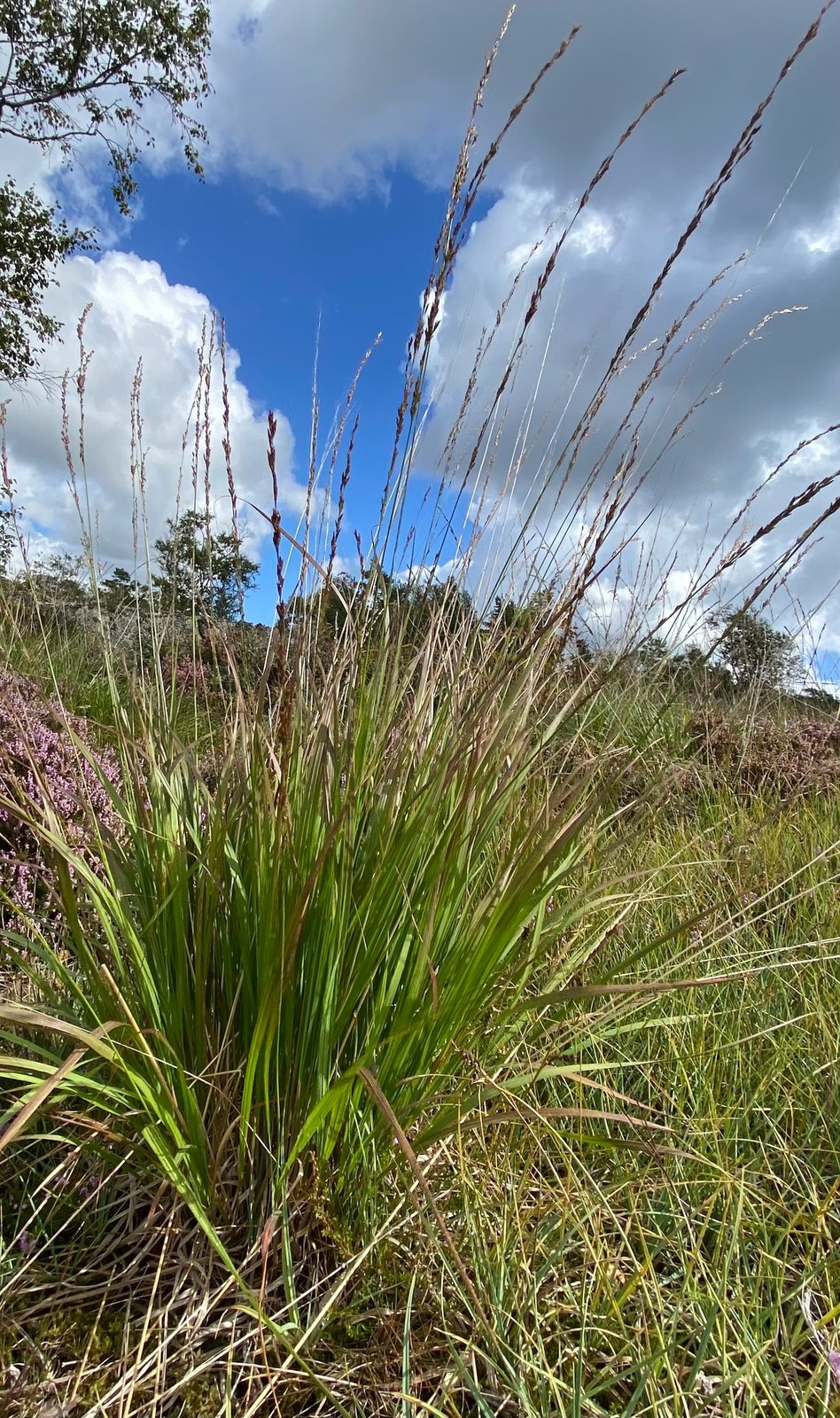
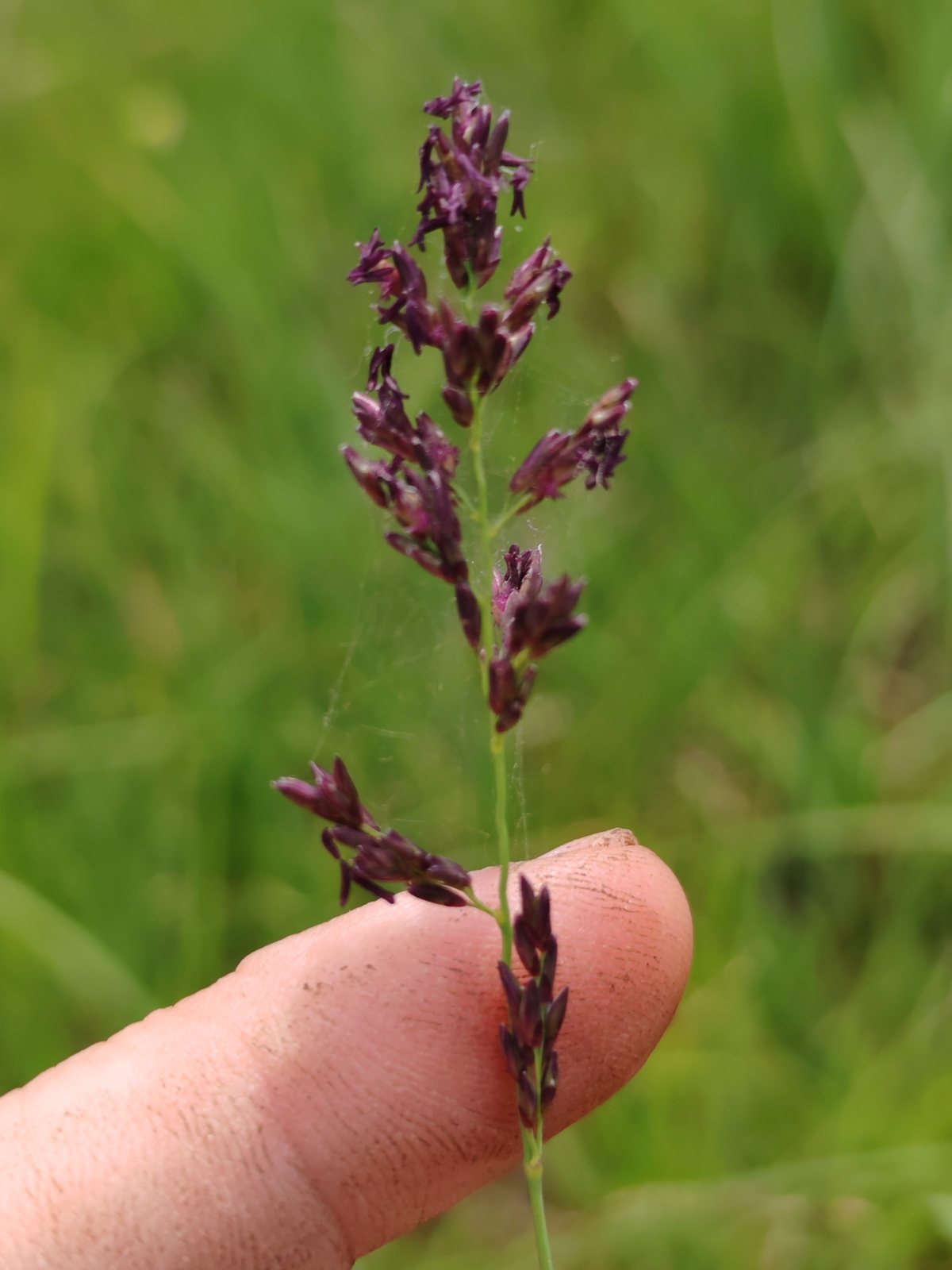
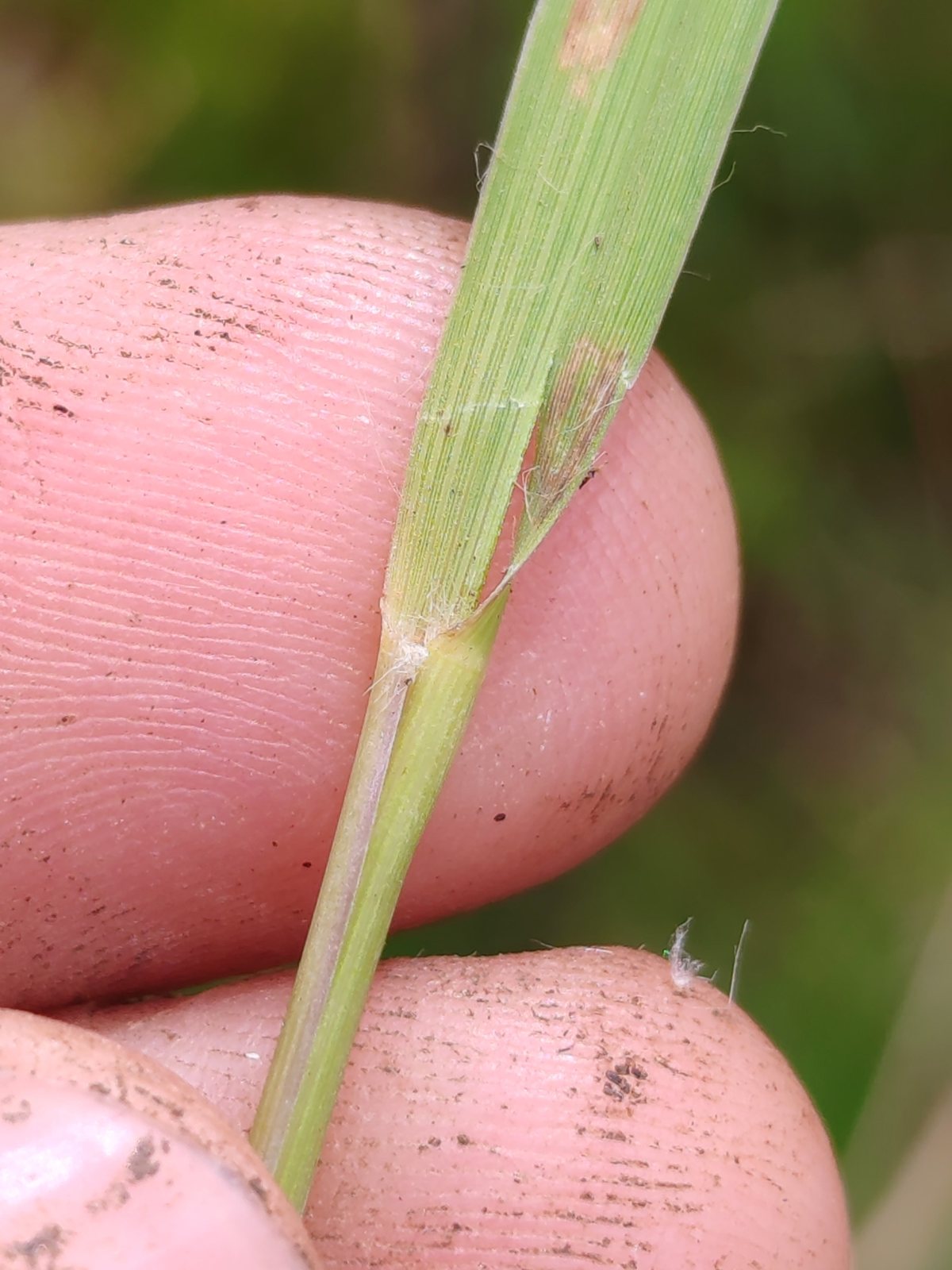
At a glance
- Sun
- Full sun to partial shade; flowering and upright growth are usually best in sun.
- Water
- Keep the soil evenly moist while establishing. Established clumps tolerate short dry spells, but grow best with dependable moisture.
- Soil
- Moist, humus-rich soil, preferably acidic to neutral. Tolerates clay and seasonally wet ground, but avoid permanently submerged crowns.
- Height
- 2-4 ft (0.6-1.2 m) including flower stems; tall forms can reach 6-8 ft (1.8-2.4 m)
- Spread
- 1.5-3 ft (0.45-0.9 m)
- Flowers
- Summer to early autumn; fine, open panicles of purple-tinged to purplish-brown flowers, fading to straw colour.
- Foliage
- Narrow, arching green leaves form a basal mound and turn golden yellow in autumn before dying back.
- Growth
- Moderate; slow to start growing in spring.
- Care needed
- Low
The year at a glance
- Deer resistant
- Wildlife
| J | F | M | A | M | J | J | A | S | O | N | D | |
|---|---|---|---|---|---|---|---|---|---|---|---|---|
| Flowers | ||||||||||||
| Fruit | ||||||||||||
| Plant |
Northern hemisphere months. In Australia, shift them by six.
- Difficulty
- Easy
- Toughness
- Very tough
Will it suit your garden?
Pick your zone, country, light and whether you have pets.
Full sun is 6 or more hours of direct sun a day, part shade 3 to 6 hours, shade under 3.
How it grows
Planting day
1.1 ft (0.35 m)
After 1 year
1.7 ft (0.52 m)
After 2 years
2.3 ft (0.69 m)
After 3 years
2.8 ft (0.86 m)
After 5 years
3 ft (0.9 m)
full size
About 3 years to full size.
From a typical nursery size, at an average rate for this kind of plant. A rule of thumb, not a forecast.
Good to know
- Cats and dogs
- Safe
- Native to
- the UK
- Invasive in
- the US
- In the garden
- Spreads vigorously: plan to contain it.
- Growth rate
- Slow
Care
Jobs through the year
- WaterApr–May, Sep, every 14 days
- Water established clumps if rain is insufficient; keep newly planted clumps consistently moist.
- WaterJun–Aug, every 7 days
- Water deeply during dry spells, especially on sandy soil; skip if soil remains moist.
- PruneFeb–Mar
- Cut dead foliage and stems to 8–10 cm before new shoots lengthen.
- MulchApr–May
- Apply a thin compost mulch around the clump, keeping the crown clear; avoid heavy feeding.
- DivideApr–May
- Divide only congested clumps as new growth begins, then replant and water thoroughly.
- DeadheadSep
- Remove heads before seeds shed only where unwanted seedlings are a concern; otherwise retain for autumn interest.
- Water deeply during the first growing season and during prolonged dry weather.
- Apply a thin layer of compost in spring; avoid heavy feeding, which encourages floppy growth.
- Mulch around the clump to conserve moisture, keeping mulch away from the crown.
- Divide congested clumps in spring as new shoots appear.
- Avoid staking routinely; if stems repeatedly flop, reduce feeding or move the plant into better light.
Pruning. Cut dead leaves and flower stems to about 3-4 in (8-10 cm) above ground in late winter or early spring, before new shoots lengthen. Remove collapsed stems earlier if they become untidy.
Through the year
- Late winter
- Cut back old growth before fresh shoots emerge.
- Spring
- Plant or divide clumps as growth begins, and water thoroughly.
- Late spring
- Apply a thin compost mulch and remove weeds from around the crown.
- Summer
- Water during prolonged dry spells, especially on sandy soil.
- Early autumn
- Remove flower heads before seed sheds where unwanted seedlings or local spread are a concern.
- Late autumn
- Leave upright golden stems for seasonal structure, removing any that collapse across paths.
In the garden
- Repeat clumps through perennial borders to link flowering plants with fine-textured foliage.
- Use tall forms as a transparent screen, allowing views through their widely spaced flower stems.
- Plant beside a pond or rain garden on moist ground above the permanently flooded edge.
- Combine with autumn-flowering perennials for contrasting flower shapes and golden seasonal colour.
- Place where low sunlight can catch the flower panicles, with a dark hedge or woodland edge behind.
Garden styles it suits: New perennial (prairie), English country, Wildlife garden, Bog garden, Autumn colour and Modern.
Plant it with: Great burnet, Joe-Pye weed, Meadowsweet, Siberian iris, Japanese anemone and Devil's-bit scabious.
Wildlife: Dense basal growth provides shelter for small invertebrates. In its native European range, the foliage feeds several butterfly and moth caterpillars; the wind-pollinated flowers are not a significant nectar source.
Problems to watch for
- Flopping stems: excessive fertiliser, rich soil or shade can weaken growth; stop feeding and provide more sun.
- Brown leaf tips and weak flowering: dry soil can cause stress; water deeply and mulch to conserve moisture.
- Sparse flowering in deep shade: move the clump to a brighter position with moist soil.
- Unwanted seedlings: remove flower heads before seed ripens and pull seedlings while small.
Safety
Not known to be toxic to cats, dogs, horses or people. No part is recognised as poisonous, though it is not grown as an edible plant.
Where it spreads. Can self-seed into damp ground and is reported as invasive in parts of the Pacific Northwest of the United States, including Oregon and Washington. Avoid planting near sensitive wetlands there and check local guidance. In its native British range, it can also become dominant on poorly managed heath and moorland.
Easily confused with
Tufted hair grass (Deschampsia cespitosa)
Usually flowers earlier and has a denser cloud of finely branched flowers above a tussock of rough-textured leaves; purple moor grass generally has more open flower stems.
Switchgrass (Panicum virgatum)
Has leafy stems with visible joints along their length; purple moor grass carries most leaves at the base, with stem joints concentrated close to the ground.
The name
Molinia honours the Chilean naturalist Juan Ignacio Molina, while caerulea means blue or dark blue, referring to the bluish-purple flower colour.
Propagation. Divide established clumps in spring as growth starts. The species can also be raised from seed, but named cultivars should be divided because seedlings may not retain their parent's characteristics.
Checked against open data
- Accepted botanical name
- Molinia caerulea
- In the US and Canada
- Introduced in Canada and the lower 48 states.
- Native range
- Albania, Algeria, Austria, Baltic States, Belarus, Belgium, Bulgaria, Central European Rus, Czechoslovakia, Denmark, East European Russia and Ethiopia.
- Measured
- Soil pH 5.5 to 6.5. Average height 35 cm.
Sources: GBIF (CC BY 4.0), USDA PLANTS and Trefle (CC BY 4.0). The care and design notes are LandscapeGPT's own.
See it in your own yard.
Upload a photo of your yard and see it redesigned with plants that suit your climate, each checked against your zone.