Great burnet
Sanguisorba officinalis. Family Rosaceae. Perennial.
Also called Greater burnet, Official burnet.
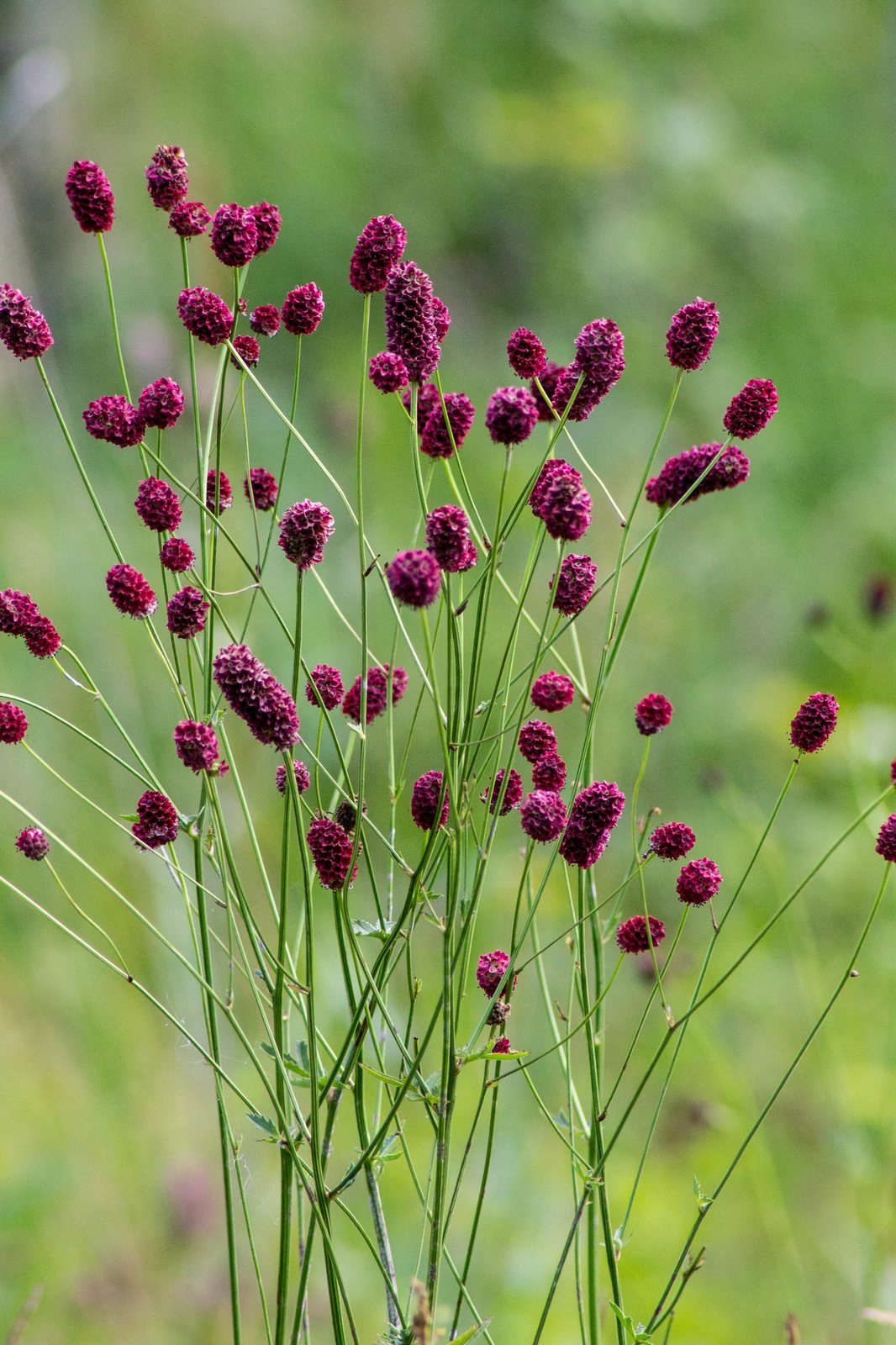
Great burnet is a clump-forming perennial with divided leaves and small, dark crimson flowerheads held on tall, branching stems. Gardeners grow it for its airy outline, long summer display and ability to weave through grasses and other perennials in moist borders and meadow-style planting.
At a glance
- Sun
- Full sun or light partial shade; flowering and stem strength are usually best in sun.
- Water
- Keep the soil evenly moist, especially during establishment and hot weather. Established plants tolerate brief dry spells but perform poorly in prolonged drought.
- Soil
- Moisture-retentive, humus-rich soil with reasonable drainage; clay and loam suit it well. Tolerates acid, neutral and alkaline conditions.
- Height
- 3-5 ft (0.9-1.5 m)
- Spread
- 2-3 ft (0.6-0.9 m)
- Flowers
- Summer into early autumn; small, rounded to oval, dark crimson or burgundy flowerheads.
- Foliage
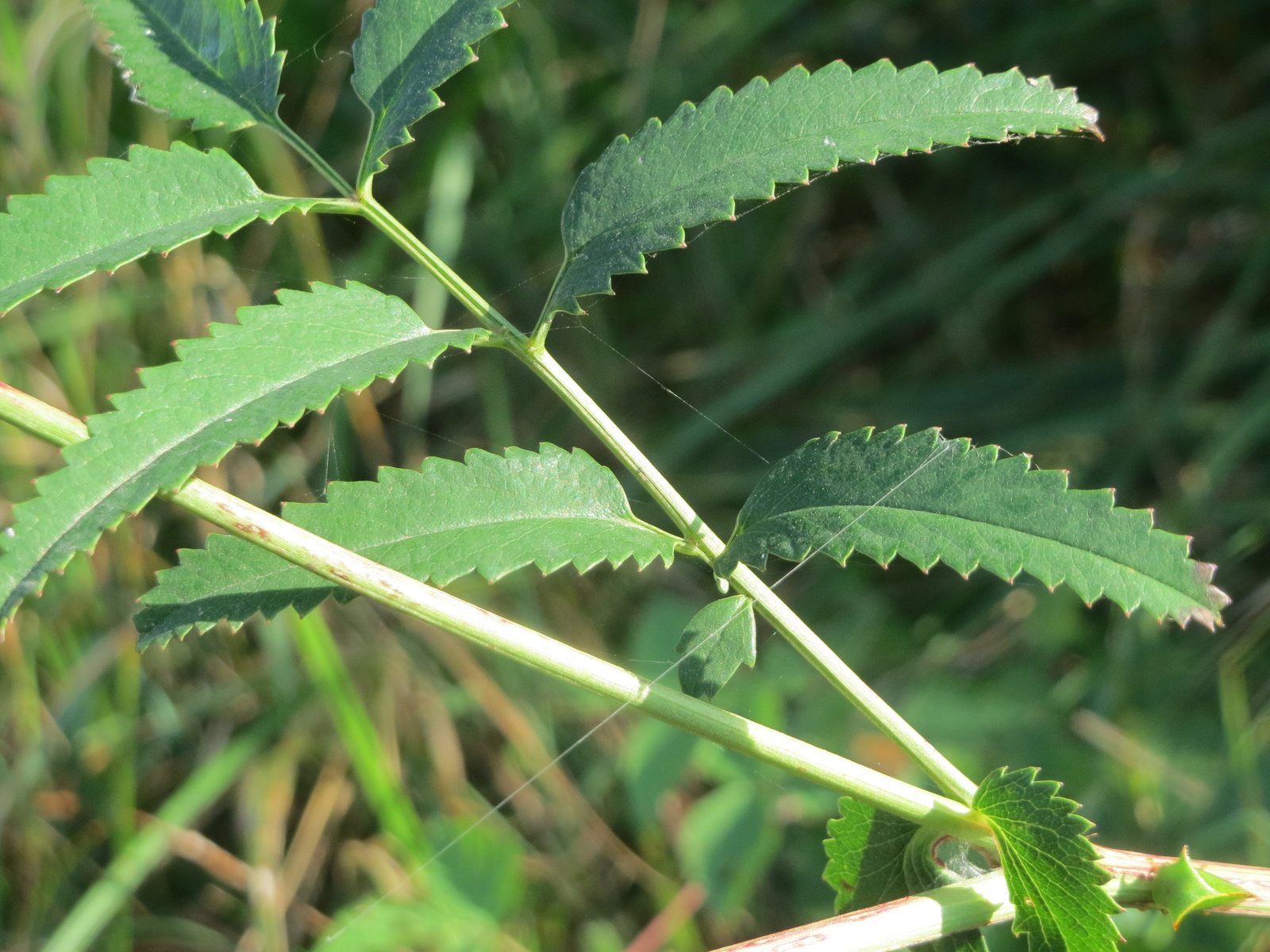
- Green, pinnate leaves with rounded to oval, toothed leaflets, forming a low mound beneath the flowering stems.
- Growth
- Moderate
- Care needed
- Low
The year at a glance
- Pollinators
- Cold hardy
- Wildlife
- Low allergen
| J | F | M | A | M | J | J | A | S | O | N | D | |
|---|---|---|---|---|---|---|---|---|---|---|---|---|
| Flowers | ||||||||||||
| Fruit | ||||||||||||
| Plant |
Northern hemisphere months. In Australia, shift them by six.
- Difficulty
- Easy
- Toughness
- Fairly tough
Will it suit your garden?
Pick your zone, country, light and whether you have pets.
Full sun is 6 or more hours of direct sun a day, part shade 3 to 6 hours, shade under 3.
How it grows
Planting day
1 ft (0.3 m)
After 1 year
2 ft (0.6 m)
After 2 years
3 ft (0.9 m)
After 3 years
4 ft (1.2 m)
full size
About 3 years to full size.
From a typical nursery size, at an average rate for this kind of plant. A rule of thumb, not a forecast.
Good to know
- Cats and dogs
- Safe
- Native to
- the US, Canada and the UK
- Growth rate
- Moderate
Care
Jobs through the year
- WaterApr–May, Sep–Oct, every 14 days
- Water established clumps deeply if rain is insufficient to keep soil moist; water new plants more often.
- WaterJun–Aug, every 7 days
- Water established clumps deeply in dry weather, keeping the root zone evenly moist.
- FeedMar–Apr
- Top-dress with a thin layer of compost; avoid rich feeding.
- MulchMar–Apr
- Renew moisture-conserving mulch without covering the crown.
- DivideMar–Apr
- Divide crowded clumps when flowering declines.
- PruneFeb–Mar
- Cut dead stems and foliage close to the ground before new growth emerges.
- DeadheadAug–Sep, every 14 days
- Remove fading heads only if seedlings are unwanted; otherwise retain them for winter structure.
- Water deeply during the first growing season and during extended dry spells.
- Apply a thin layer of compost in spring; rich feeding is usually unnecessary.
- Mulch to conserve moisture, keeping mulch clear of the crown.
- Use discreet supports early if stems lean in shade or exposed positions.
- Divide crowded clumps in spring when flowering declines.
Pruning. Leave the seedheads standing through autumn and winter if you enjoy their structure. Cut dead stems and foliage close to the ground in late winter or early spring before new growth develops; remove spent heads earlier if unwanted seedlings appear.
Through the year
- Spring
- Plant or divide clumps as growth begins, then water thoroughly.
- Spring
- Top-dress with compost and renew the moisture-conserving mulch.
- Early summer
- Add discreet supports where stems are likely to lean.
- Summer
- Water during dry spells and check that the root zone stays moist.
- Autumn
- Leave seedheads for structure, or remove them before seed falls to limit seedlings.
- Late winter
- Cut down dead growth before fresh shoots emerge.
In the garden
- Thread through ornamental grasses so the dark flowerheads appear to float above the planting.
- Plant in groups through a sunny, moisture-retentive border with meadow cranesbill and other summer perennials.
- Use beside a pond or rain garden on moist ground above the permanently flooded zone.
- Repeat through meadow-style planting to provide dark accents among paler flowers.
Garden styles it suits: New perennial (prairie), Cottage garden, Wildflower, Pollinator garden, Wildlife garden and English country.
Plant it with: Tufted hair grass, Purple moor grass, Meadow cranesbill, Great masterwort, Siberian iris and Meadowsweet.
Wildlife: The flowers provide pollen and nectar for bees, hoverflies and other insects. In parts of Europe, it is also a food plant for specialist butterfly larvae, although these butterflies require particular habitats and ant hosts.
Problems to watch for
- Wilting or scorched leaf edges in dry soil: water deeply and mulch; move plants out of drought-prone ground if the problem recurs.
- Flopping stems in shade or over-rich soil: increase sunlight, avoid heavy feeding and provide discreet support.
- Slugs and snails damaging young shoots: inspect new growth and use barriers, hand-picking or locally approved controls where needed.
- Powdery mildew during dry, stressful conditions: maintain root moisture, improve airflow and remove badly affected foliage.
Safety
Not known to be toxic to people, cats, dogs or horses; no parts are generally recognised as poisonous. This does not establish the safety of concentrated extracts or large quantities.
Easily confused with
Salad burnet (Sanguisorba minor)
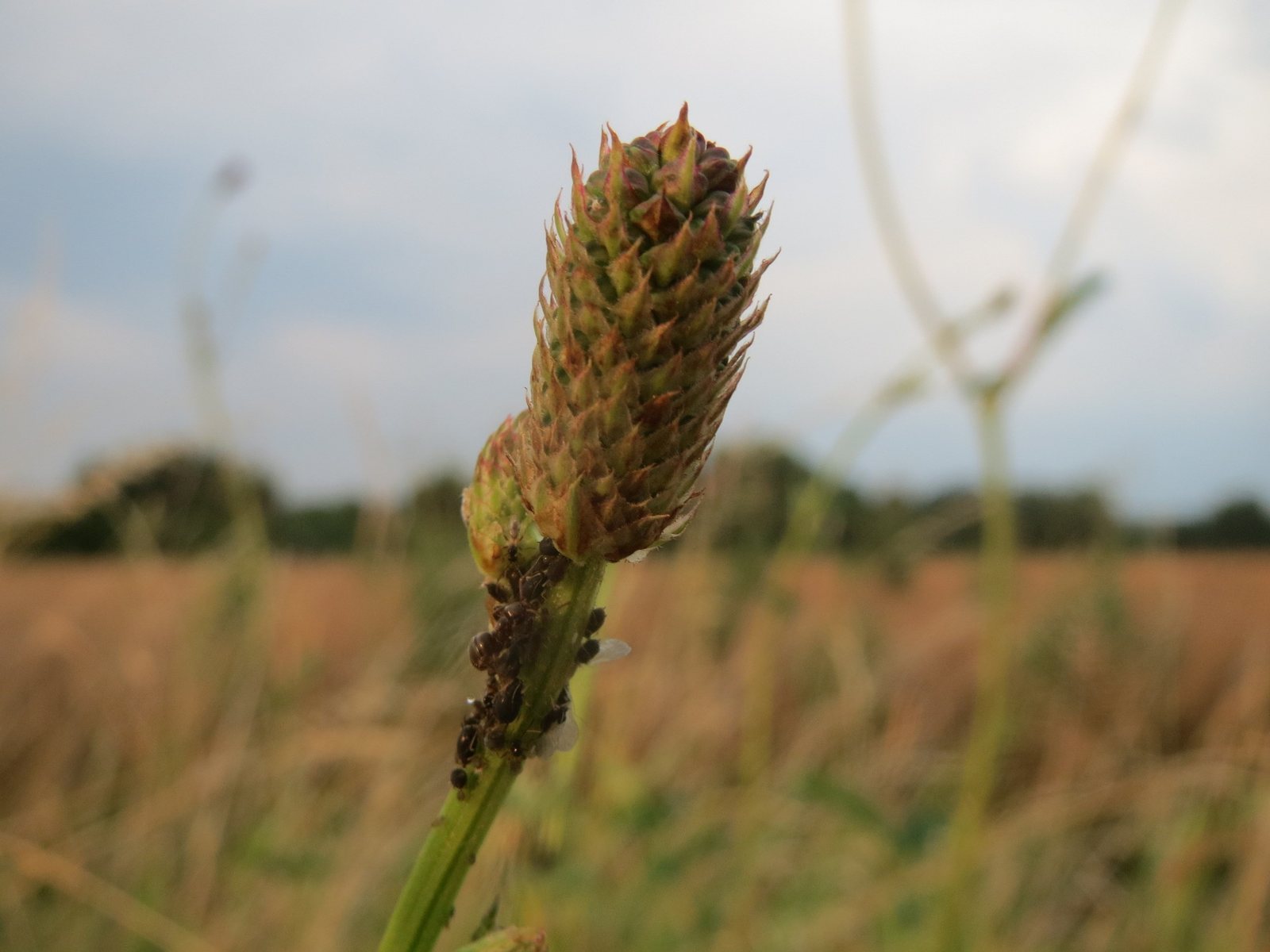
Usually shorter, with smaller leaflets and greenish flowerheads that develop reddish details, rather than the uniformly dark crimson heads of great burnet. It favours drier ground.
Canadian burnet (Sanguisorba canadensis)
Produces long, fluffy white flower spikes rather than short, dark crimson heads.
The name
Sanguisorba comes from Latin words meaning 'blood' and 'to absorb', referring to its historical use to staunch bleeding, while officinalis indicates a plant formerly used in medicine.
Propagation. Divide established clumps in spring. Sow fresh seed in autumn, or give stored seed a period of moist cold before spring sowing; germination can be slow and uneven. Seedlings from named cultivars may not resemble the parent.
Checked against open data
- Accepted botanical name
- Sanguisorba officinalis
- In the US and Canada
- Native in Alaska, Canada and the lower 48 states.
- Native range
- Alaska, Albania, Altay, Amur, Austria, Baltic States, Belarus, Belgium, British Columbia, Bulgaria, Buryatiya and California.
- Measured
- Soil pH 7 to 7.5. Average height 32 cm.
Sources: GBIF (CC BY 4.0), USDA PLANTS and Trefle (CC BY 4.0). The care and design notes are LandscapeGPT's own.
See it in your own yard.
Upload a photo of your yard and see it redesigned with plants that suit your climate, each checked against your zone.