Devil's-bit scabious
Succisa pratensis. Family Caprifoliaceae. Perennial.
Also called Devil's-bit, Meadow scabious.
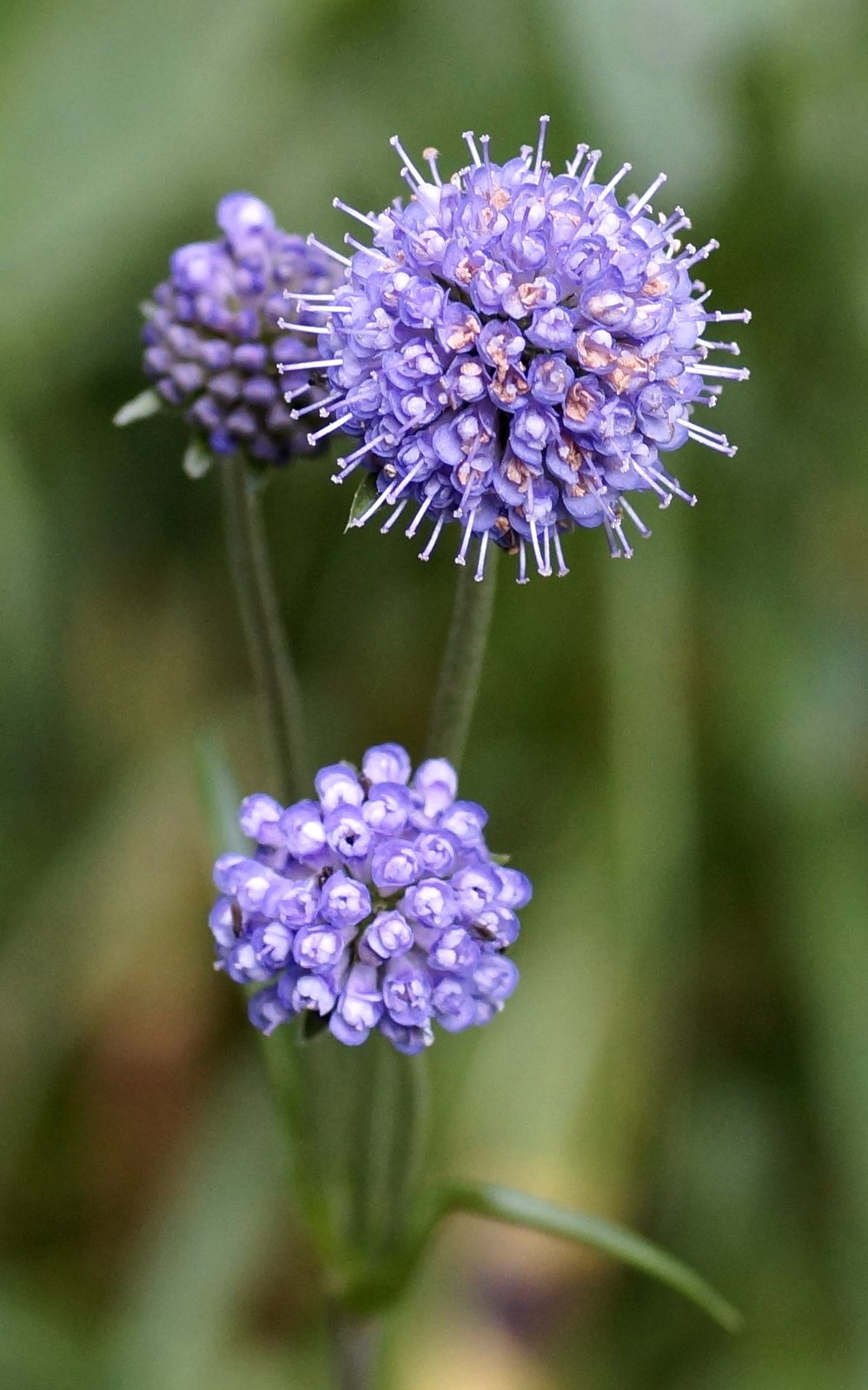
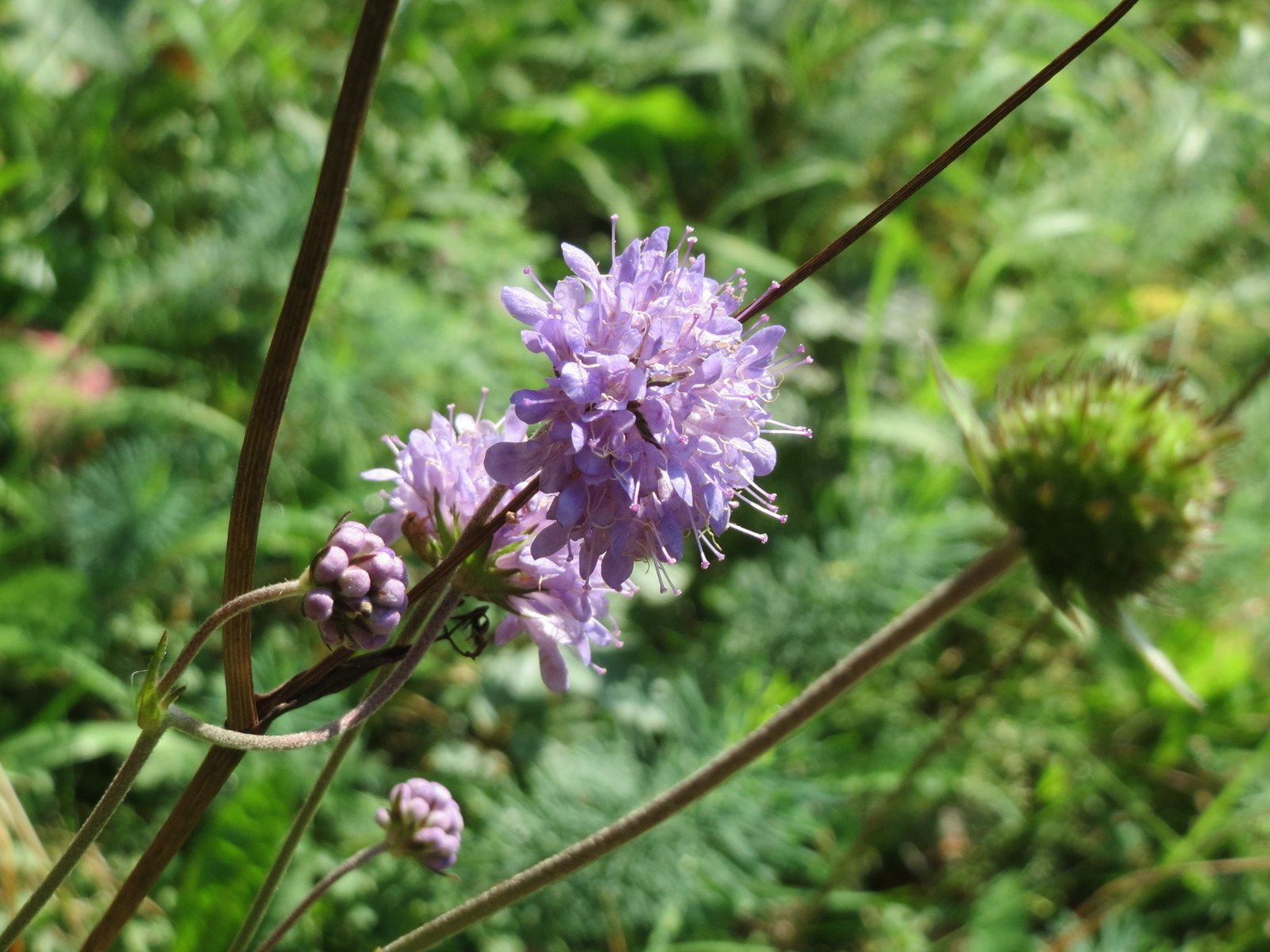
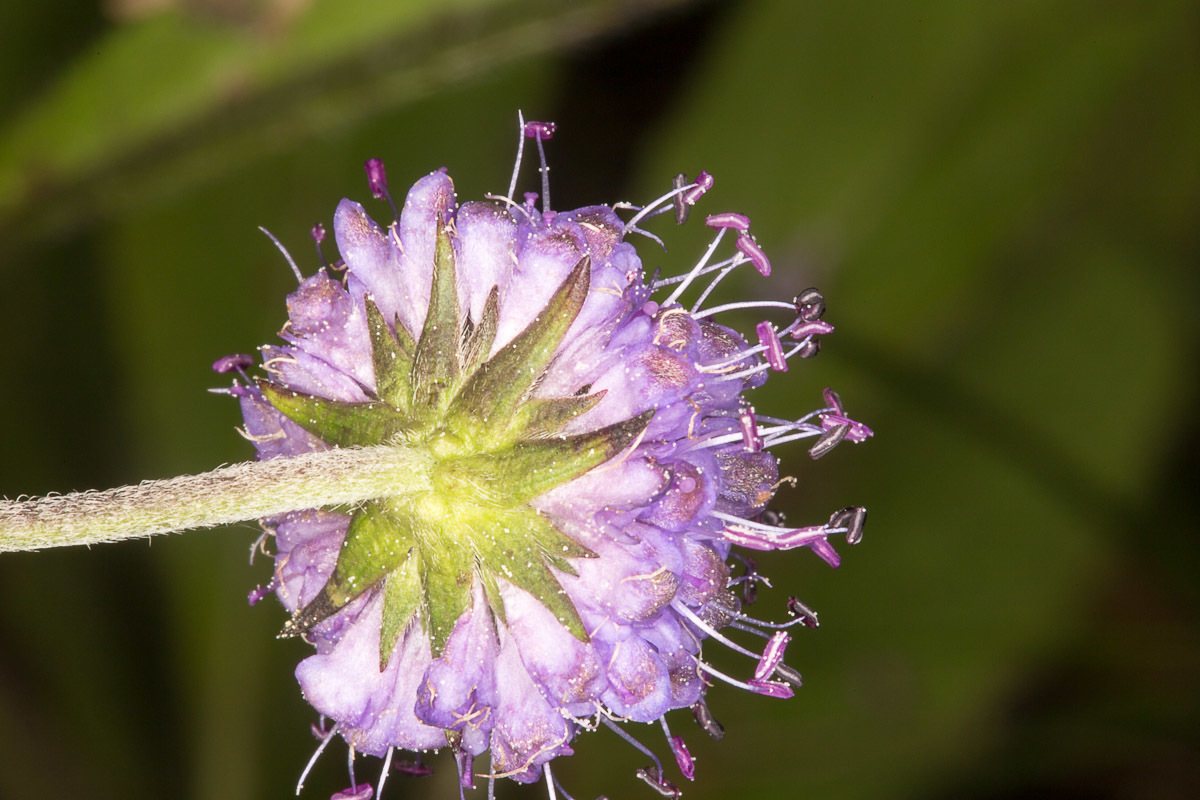
Devil's-bit scabious is a clump-forming perennial native to Europe and parts of Asia, with rounded violet-blue flower heads held above a low rosette of leaves. Gardeners grow it for late-season colour, its value to pollinating insects and its ability to fit into damp meadows and informal borders.
At a glance
- Sun
- Full sun or light partial shade; flowering is best in sun where the soil stays moist.
- Water
- Keep evenly moist while establishing. Established plants tolerate brief dry spells, but prolonged summer drought reduces growth and flowering.
- Soil
- Moist, humus-rich soil that does not remain stagnant or waterlogged. Tolerates clay and a broad range of soil pH, including acidic soils.
- Height
- 2-3 ft (0.6-0.9 m)
- Spread
- 1-1.5 ft (0.3-0.45 m)
- Flowers
- Late summer to autumn; rounded violet-blue to blue-purple flower heads, occasionally pink or white.
- Foliage
- A basal rosette of oval to lance-shaped green leaves, with smaller opposite leaves on the flowering stems.
- Growth
- Moderate; usually takes two or three growing seasons to form a substantial clump.
- Care needed
- Low
The year at a glance
- Pollinators
- Cold hardy
- Wildlife
- Low allergen
| J | F | M | A | M | J | J | A | S | O | N | D | |
|---|---|---|---|---|---|---|---|---|---|---|---|---|
| Flowers | ||||||||||||
| Fruit | ||||||||||||
| Plant |
Northern hemisphere months. In Australia, shift them by six.
- Difficulty
- Easy
- Toughness
- Fairly tough
Will it suit your garden?
Pick your zone, country, light and whether you have pets.
Full sun is 6 or more hours of direct sun a day, part shade 3 to 6 hours, shade under 3.
How it grows
Planting day
1 ft (0.3 m)
After 1 year
1.5 ft (0.45 m)
After 2 years
2 ft (0.6 m)
After 3 years
2.5 ft (0.75 m)
full size
About 3 years to full size.
From a typical nursery size, at an average rate for this kind of plant. A rule of thumb, not a forecast.
Good to know
- Cats and dogs
- Safe
- Native to
- the UK
- Growth rate
- Moderate
Care
Jobs through the year
- WaterApr–May, Sep–Oct, every 14 days
- Water established clumps if dry; keep first-season plants evenly moist.
- WaterJun–Aug, every 7 days
- Water deeply during prolonged drought, especially where roots compete with grasses.
- MulchMar–Apr
- Apply a light leaf-mould mulch, keeping the basal crown clear.
- PruneFeb–Mar
- Cut old flower stems back to the basal rosette without damaging new leaves.
- DivideMar–Apr
- Divide only crowded clumps whose flowering has declined.
- ProtectMar–May
- Check young growth for slugs and snails and remove pests by hand.
- DeadheadAug–Oct
- Remove faded heads only to limit seedlings; otherwise retain seedheads for winter structure.
- PruneNov
- In meadow plantings only, cut after seed falls and remove cuttings to keep fertility low.
- Water newly planted clumps during dry weather through their first growing season.
- During prolonged summer drought, water deeply rather than giving frequent light sprinklings.
- Apply a light leaf-mould mulch in spring, keeping it clear of the crown.
- Avoid rich feeding, which can produce floppy growth and favour competing grasses.
- Divide crowded clumps in spring if flowering declines; routine division is not necessary.
Pruning. Leave the flower stems standing through autumn if you want seed and winter structure. Cut old stems back to the basal rosette in late winter or early spring, taking care not to damage new leaves.
Through the year
- Early spring
- Cut away old flowering stems and remove weeds from around the basal rosette.
- Spring
- Plant or divide clumps, water thoroughly and add a light leaf-mould mulch.
- Summer
- Water during prolonged dry spells, especially where plants compete with grasses.
- Late summer
- Allow flowers to remain for pollinators; remove fading heads only if you need to limit self-seeding.
- Autumn
- Collect ripe seed when the heads turn brown and sow it promptly outdoors.
- Late autumn
- In a meadow planting, cut after seed has fallen and remove the cut material to keep soil fertility low.
In the garden
- Thread through a damp meadow with fine grasses for scattered late-season colour.
- Plant in loose groups in an informal border with great burnet and purple moor-grass.
- Use on the upper edge of a pond or rain garden, above the permanently flooded zone.
- Include in a sunny wildlife border to extend the supply of nectar into autumn.
Garden styles it suits: Wildflower, Cottage garden, New perennial (prairie), Wildlife garden, Pollinator garden and Rewilded.
Plant it with: Great burnet, Purple moor-grass, Tufted hair-grass, Meadowsweet, Ragged robin and Sneezewort.
Wildlife: Flowers provide nectar and pollen for bees, hoverflies and butterflies late in the season. In Britain and parts of Europe, the leaves are an important food plant for marsh fritillary butterfly caterpillars, though attracting this butterfly depends on suitable habitat and a nearby population.
Problems to watch for
- Slugs and snails can damage young spring growth; check plants after dark and remove pests by hand.
- Powdery mildew may develop during dry weather; water the root zone and improve airflow around crowded plants.
- Poor flowering and weak stems often follow heavy feeding or deep shade; stop fertilising and move plants to a brighter position.
- Summer drought can cause wilting and premature browning; water deeply and mulch lightly to conserve moisture.
Safety
Not known to be toxic to people, cats, dogs or horses. No particular part is recognised as poisonous, but species-specific safety information is limited; do not treat it as an edible plant.
Easily confused with
Field scabious (Knautia arvensis)
Usually has flatter, broader lilac flower heads with noticeably enlarged outer florets, and deeply divided upper leaves. Devil's-bit scabious has more rounded heads and undivided leaves.
Small scabious (Scabiosa columbaria)
Has finely divided stem leaves and flatter flower heads with larger outer florets. Devil's-bit scabious has simple leaves and a more compact, rounded flower head.
The name
Succisa means 'cut off', referring to the abruptly ending rootstock that folklore said the devil had bitten away, while pratensis means 'of meadows'.
Propagation. Sow fresh seed in autumn in pots or trays outdoors, protected from disturbance. Germination can be slow and uneven, and winter cold may help; keep the compost moist and retain ungerminated trays through the following spring. Divide established clumps in spring.
Checked against open data
- Accepted botanical name
- Succisa pratensis
- In the US and Canada
- Introduced in Canada and the lower 48 states.
- Native range
- Albania, Algeria, Altay, Austria, Baltic States, Belarus, Belgium, Bulgaria, Central European Rus, Czechoslovakia, Denmark and East European Russia.
- Measured
- Soil pH 5.5 to 6.5. Average height 15 cm.
Sources: GBIF (CC BY 4.0), USDA PLANTS and Trefle (CC BY 4.0). The care and design notes are LandscapeGPT's own.
See it in your own yard.
Upload a photo of your yard and see it redesigned with plants that suit your climate, each checked against your zone.