Ragged robin
Silene flos-cuculi. Family Caryophyllaceae. Perennial.
Also called Ragged-robin, Lychnis flos-cuculi, Cuckoo flower.
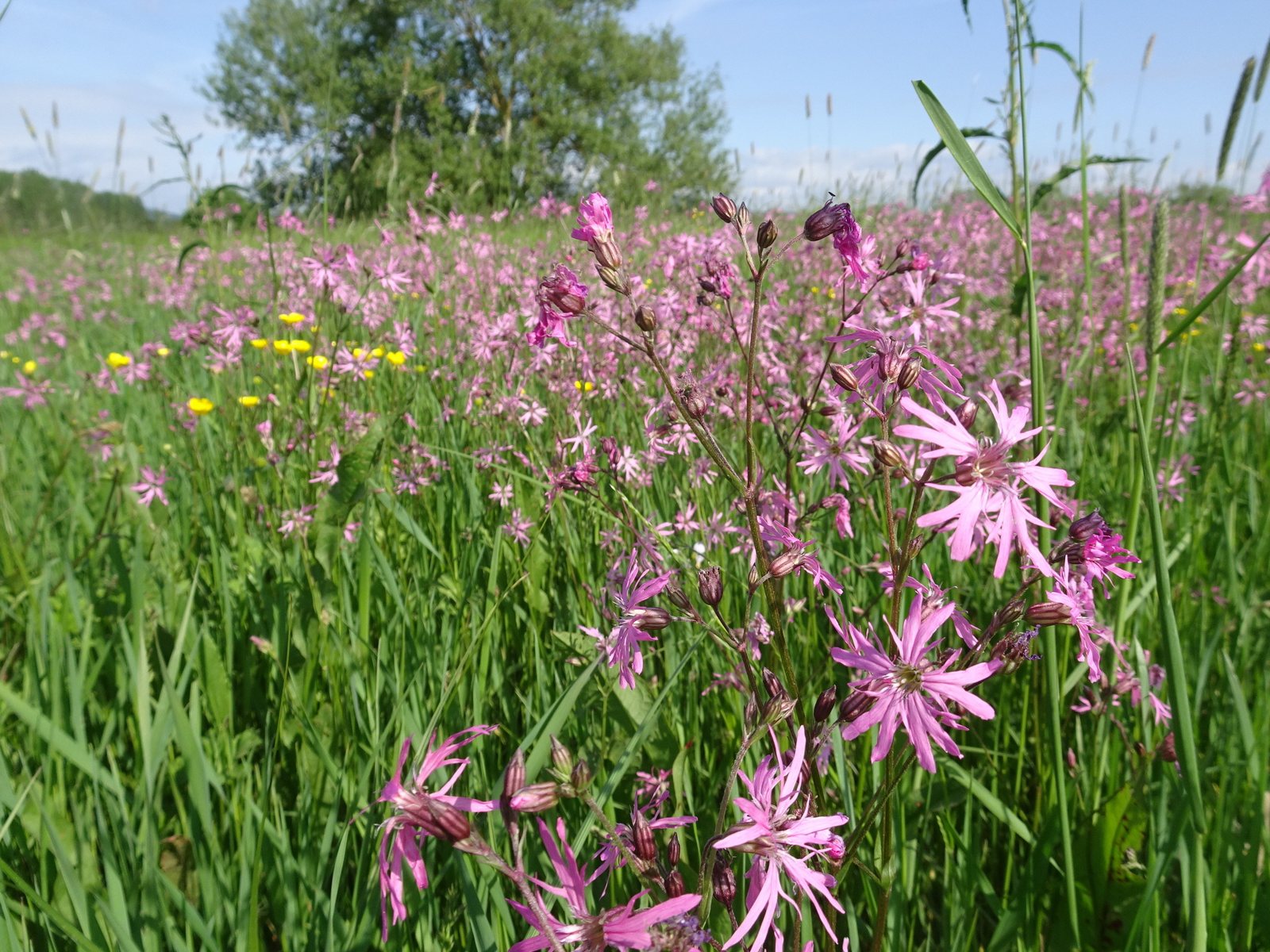
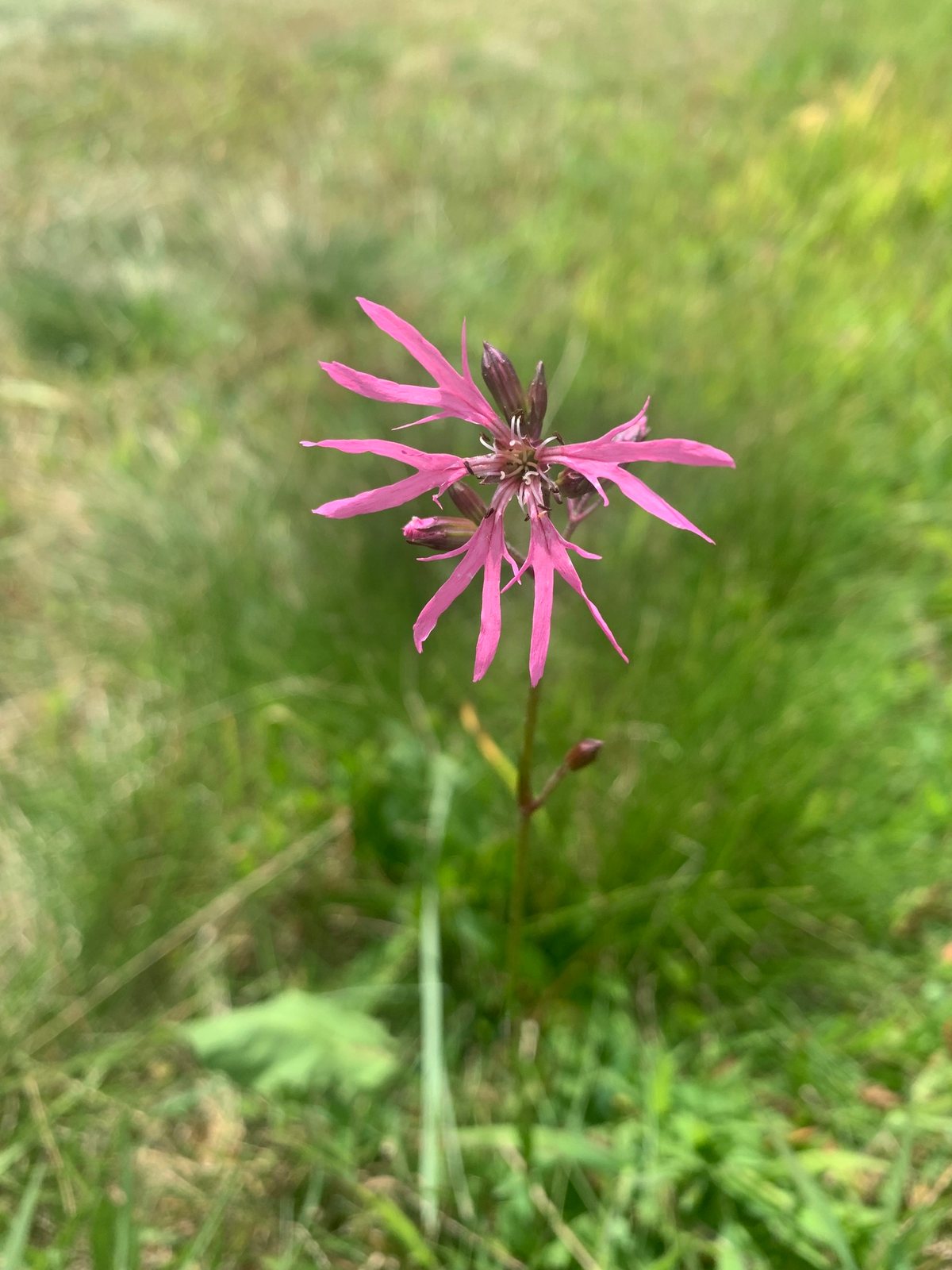
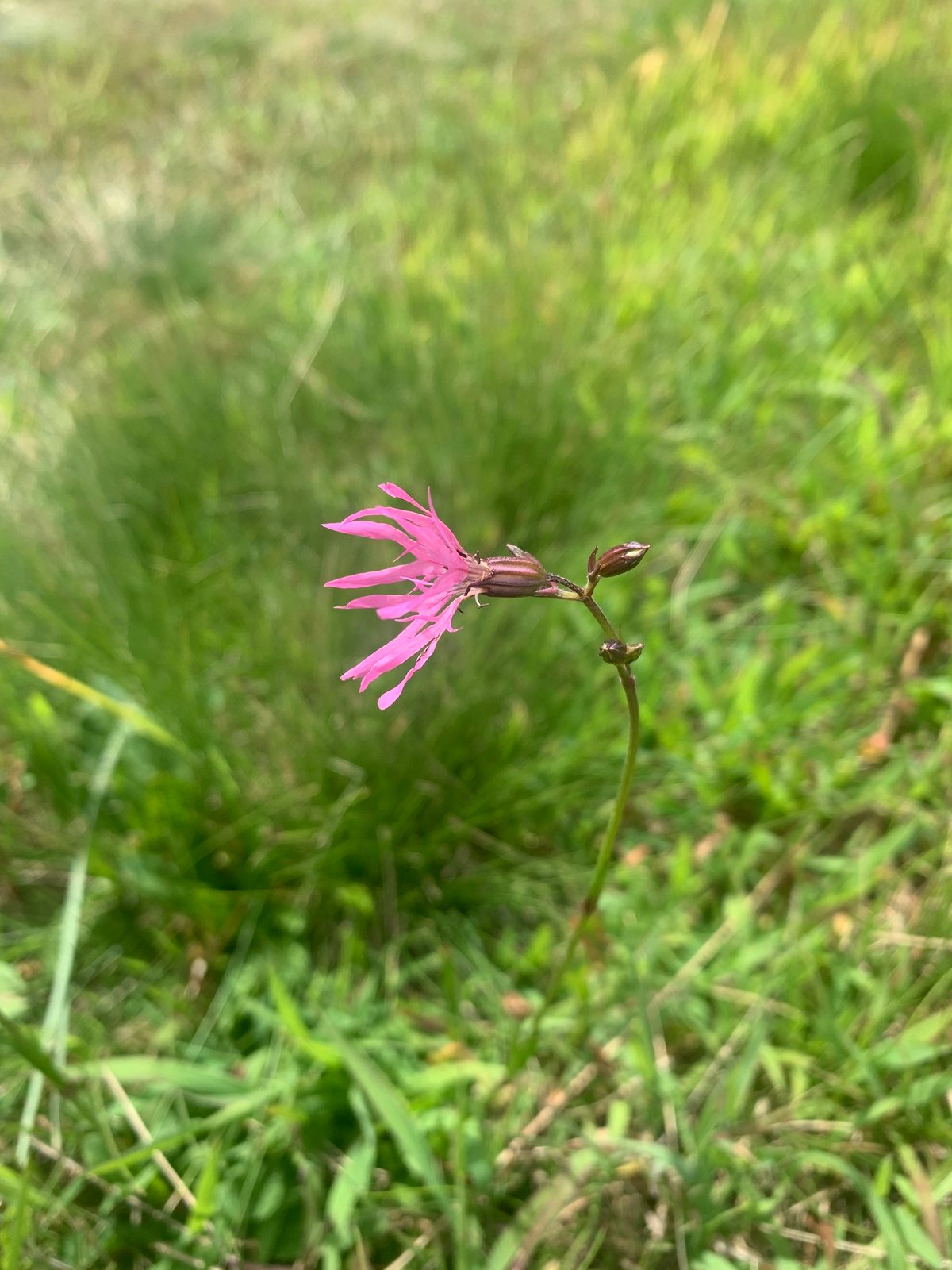
Ragged robin is a clump-forming perennial with slender stems and pink flowers whose deeply divided petals look finely shredded. Grow it for its airy flowers in damp borders, pond margins and meadow-style planting where the soil stays moist.
At a glance
- Sun
- Full sun or light partial shade; afternoon shade helps in hot climates.
- Water
- Keep consistently moist, especially during establishment and flowering. It tolerates wet soil but is not a submerged aquatic plant.
- Soil
- Moisture-retentive, humus-rich soil, including damp clay; tolerates acidic, neutral and alkaline conditions. Avoid dry, sandy sites unless regularly watered.
- Height
- 1-3 ft (0.3-0.9 m)
- Spread
- 1-1.5 ft (0.3-0.45 m)
- Flowers
- Late spring to early summer; pink flowers, occasionally followed by a lighter repeat flowering.
- Foliage
- Narrow green leaves form a low basal rosette, with smaller paired leaves along the flowering stems. Some basal foliage may persist through mild winters.
- Growth
- Moderate; usually flowers in its first or second growing season.
- Care needed
- Low
The year at a glance
- Pollinators
- Cold hardy
- Heat tolerant
- Low allergen
| J | F | M | A | M | J | J | A | S | O | N | D | |
|---|---|---|---|---|---|---|---|---|---|---|---|---|
| Flowers | ||||||||||||
| Fruit | ||||||||||||
| Plant |
Northern hemisphere months. In Australia, shift them by six.
- Difficulty
- Easy
- Toughness
- Fairly tough
Will it suit your garden?
Pick your zone, country, light and whether you have pets.
Full sun is 6 or more hours of direct sun a day, part shade 3 to 6 hours, shade under 3.
How it grows
Planting day
1 ft (0.3 m)
After 1 year
1.3 ft (0.4 m)
After 2 years
1.6 ft (0.5 m)
After 3 years
2 ft (0.6 m)
full size
About 3 years to full size.
From a typical nursery size, at an average rate for this kind of plant. A rule of thumb, not a forecast.
Good to know
- Cats and dogs
- Safe
- Native to
- the UK
- Invasive in
- the US
- In the garden
- Spreads vigorously: plan to contain it.
- Growth rate
- Moderate
Care
Jobs through the year
- WaterApr–May, Sep–Oct, every 7 days
- Water established clumps if rain fails to keep soil consistently moist; new plants need closer attention.
- WaterJun–Aug, every 4 days
- In dry weather, water established clumps deeply enough to prevent the root zone drying out.
- MulchMar–Apr
- Apply a thin compost mulch to conserve moisture, keeping crowns clear.
- PruneFeb–Mar
- Remove dead stems while retaining healthy basal rosettes.
- DeadheadJun–Aug
- Cut spent stems back to basal leaves for possible repeat bloom, or leave a few for seed.
- DivideMar–Apr
- Divide crowded or thinning clumps every three to four years.
- ProtectMar–May
- Inspect emerging growth for slugs and snails and protect if needed.
- Water during dry spells so the root zone does not dry out.
- Apply a thin layer of compost in spring; avoid heavy feeding that encourages floppy growth.
- Mulch around plants to conserve moisture, keeping mulch clear of the crowns.
- Divide crowded or thinning clumps in spring every three to four years.
- Remove seed heads before they ripen if you do not want seedlings.
Pruning. Cut spent flowering stems back to the basal leaves after the main display to encourage a possible second flush. Remove dead stems in late winter or early spring, leaving healthy basal foliage intact.
Through the year
- Late winter
- Remove dead stems and clear debris without damaging the basal rosettes.
- Spring
- Plant or divide clumps and water them in thoroughly.
- Spring
- Apply a light compost dressing and mulch if the soil tends to dry out.
- Late spring to early summer
- Check soil moisture regularly while plants are flowering.
- Summer
- Cut back spent flower stems, or retain a few seed heads where self-seeding is welcome.
- Autumn
- Sow fresh seed in pots or a prepared damp seedbed, where local conditions and invasive-plant guidance allow.
In the garden
- Plant in loose groups beside a pond, above the permanently submerged zone.
- Weave through damp meadow planting with fine grasses for an open, informal effect.
- Use among irises and other moisture-loving perennials to soften their stronger leaf shapes.
- Place near the front or middle of a cottage border where the fine flowers can be seen against fuller foliage.
Garden styles it suits: Cottage garden, Wildflower, Wildlife garden, Pollinator garden, Bog garden and Romantic rose garden.
Plant it with: Siberian iris, Marsh marigold, Meadowsweet, Water avens, Cuckooflower and Tufted hair grass.
Wildlife: Flowers provide nectar and pollen for insects, including bees, butterflies and moths. It is native to Europe and parts of Asia, rather than North America or Australia.
Problems to watch for
- Wilting and poor flowering in dry soil: water deeply and mulch, or move plants to a consistently moist position.
- Slugs and snails damaging young growth: inspect new shoots and use barriers, hand removal or an approved iron-phosphate bait.
- Powdery mildew: improve air circulation, keep roots moist and remove badly affected foliage.
- Unwanted seedlings: remove fading flower stems before seed capsules mature and pull surplus seedlings while small.
Safety
Not known to be toxic to people, cats, dogs or horses. No particular part is established as a significant poisoning hazard, but it is not a food plant and should not be eaten.
Where it spreads. Naturalized in parts of the northeastern United States and eastern Canada, and listed as potentially invasive in Connecticut. It can spread by seed in damp ground; check local guidance before planting near wetlands.
Easily confused with
Ragged sailor (Silene caroliniana)
Usually forms a lower, spreading plant with broader-looking pink petals that are not divided into the long, narrow strips typical of ragged robin.
Red campion (Silene dioica)
Has broader, hairier leaves and pink petals divided into two broad lobes rather than several narrow, ragged segments.
Cuckooflower (Cardamine pratensis)
Also grows in damp grassland, but has four pale lilac or white petals per flower and divided leaves, rather than ragged robin's five deeply cut petals and simple leaves.
The name
Ragged robin refers to the tattered-looking petals, while flos-cuculi means 'flower of the cuckoo', linking its flowering season with the cuckoo's spring calls.
Propagation. Divide established clumps in spring. Sow seed thinly on the surface of moist seed compost in autumn or spring, pressing it in without burying it deeply; seed-grown plants can vary.
Checked against open data
- Accepted botanical name
- Silene flos-cuculi
- In the US and Canada
- Introduced in Canada and the lower 48 states.
- Native range
- Albania, Altay, Austria, Baltic States, Belarus, Belgium, Bulgaria, Central European Rus, Corse, Czechoslovakia, Denmark and East European Russia.
- Measured
- Average height 25 cm.
Sources: GBIF (CC BY 4.0), USDA PLANTS and Trefle (CC BY 4.0). The care and design notes are LandscapeGPT's own.
See it in your own yard.
Upload a photo of your yard and see it redesigned with plants that suit your climate, each checked against your zone.