Sneezewort
Achillea ptarmica. Family Asteraceae. Perennial.
Also called Sneezewort yarrow, Sneezeweed.
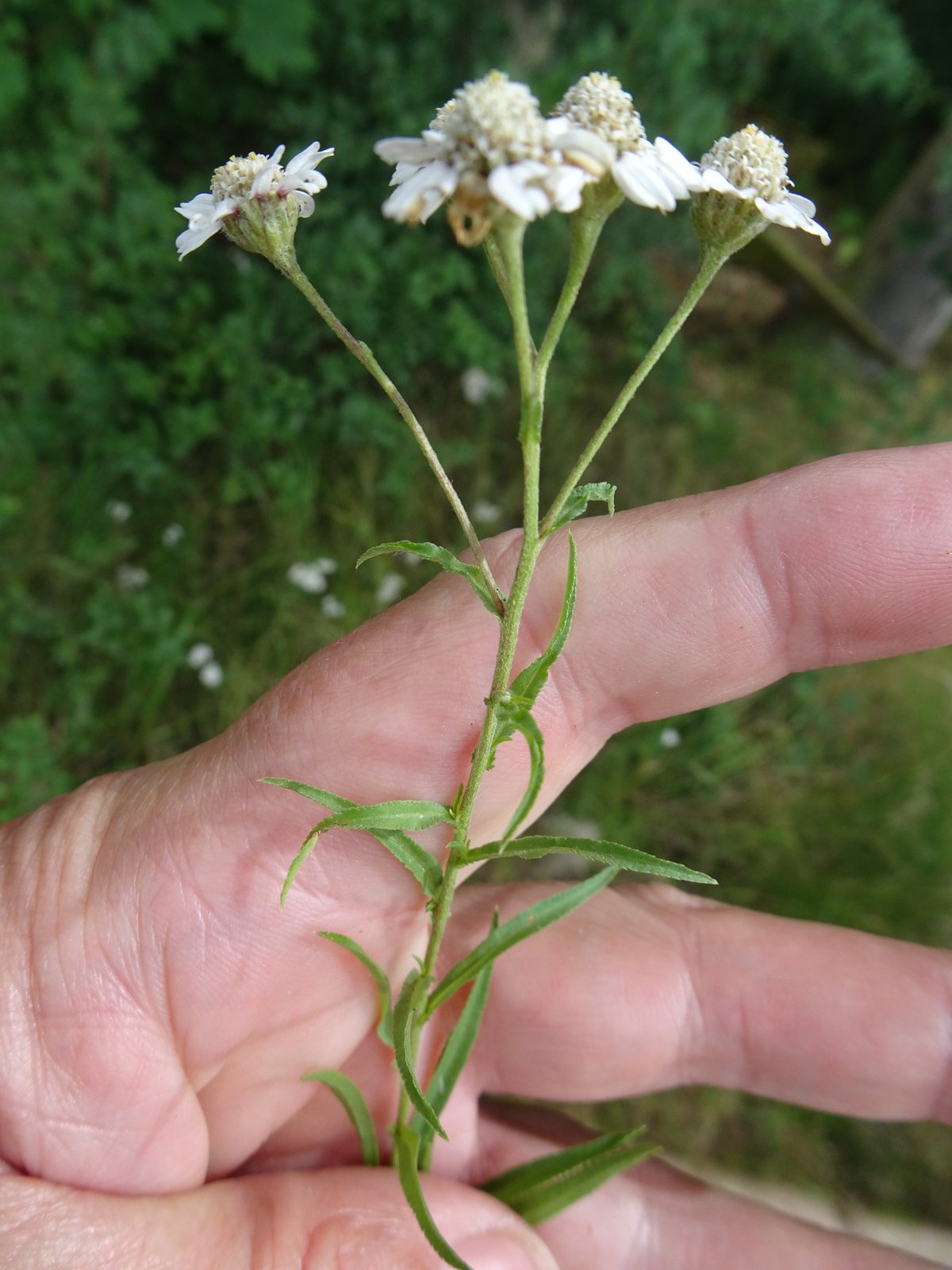
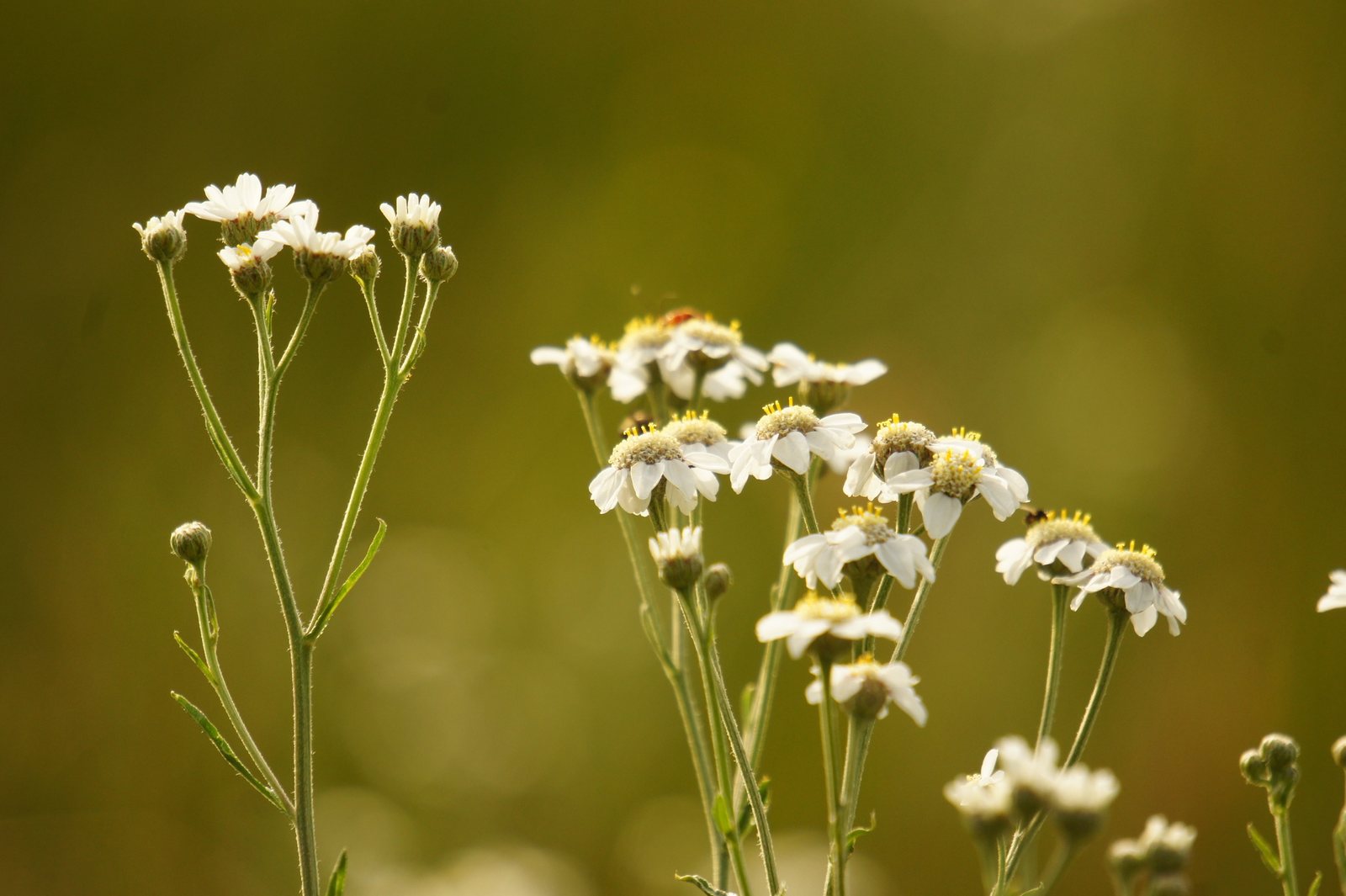
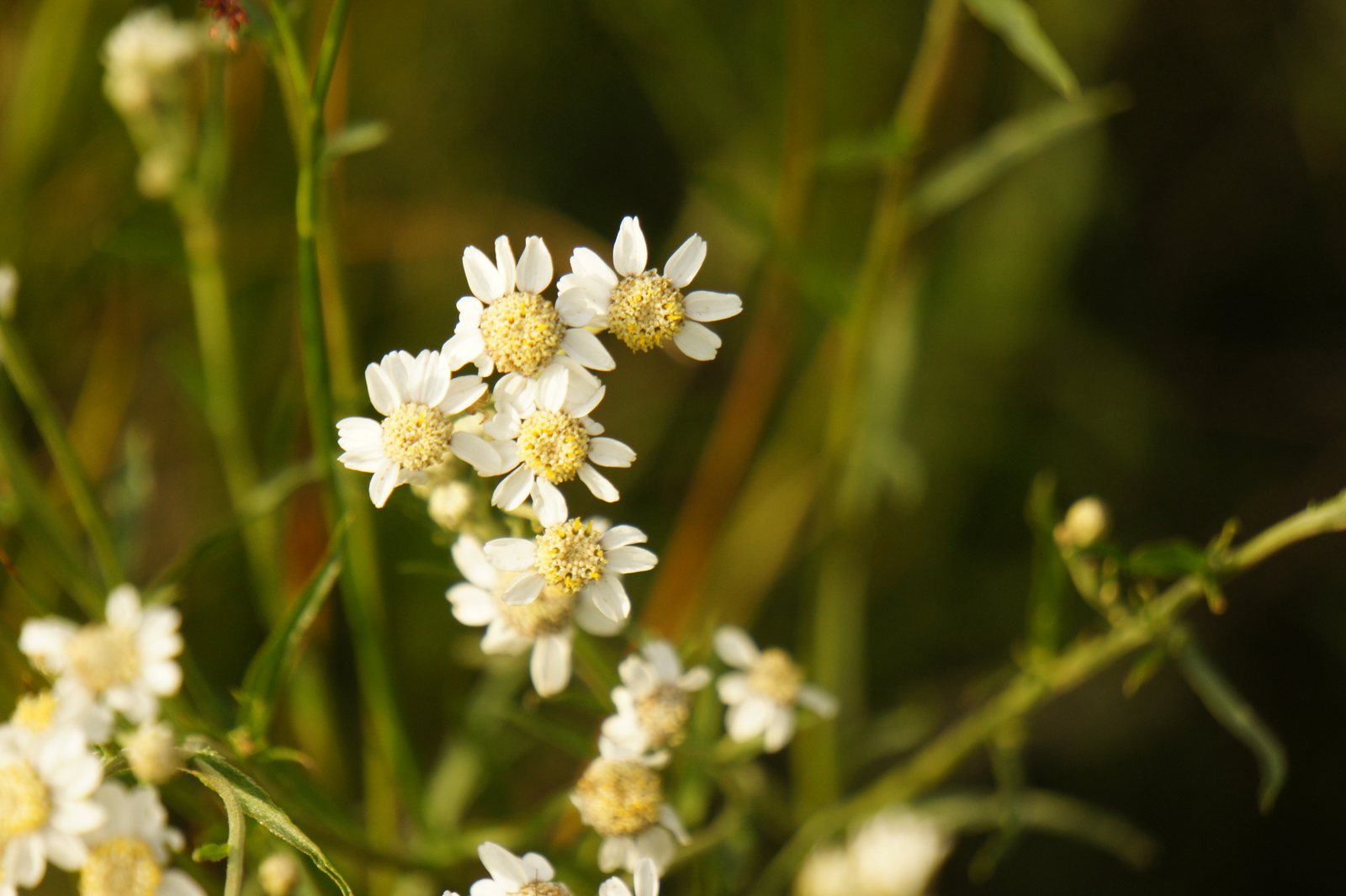
Sneezewort is a spreading, herbaceous perennial with narrow green leaves and loose clusters of small white flower heads. Gardeners grow it for its long summer flowering season, useful cut stems and informal appearance in borders and meadow-style planting. Unlike many yarrows, it prefers soil that stays moist.
At a glance
- Sun
- Full sun is best; tolerates light partial shade, but stems may lean and flowering may decrease.
- Water
- Keep the soil evenly moist, especially during establishment and hot weather. Established plants tolerate brief dry spells, but prolonged drought reduces flowering.
- Soil
- Moist, well-drained soil, including moisture-retentive loam or clay; tolerates a broad pH range. Avoid very rich soil and permanently stagnant, waterlogged ground.
- Height
- 1.5-3 ft (0.45-0.9 m)
- Spread
- 1-2 ft (0.3-0.6 m) initially; underground rhizomes can spread much farther over time.
- Flowers
- Early summer to early autumn; small white flower heads with pale cream centres. Double-flowered garden forms have fuller, button-like heads.
- Foliage
- Narrow, lance-shaped, finely toothed green leaves; not feathery like those of common yarrow.
- Growth
- Moderate to fast, especially in moist soil.
- Care needed
- Medium
The year at a glance
- Pollinators
- Deer resistant
- Cold hardy
- Heat tolerant
- Low allergen
| J | F | M | A | M | J | J | A | S | O | N | D | |
|---|---|---|---|---|---|---|---|---|---|---|---|---|
| Flowers | ||||||||||||
| Plant |
Northern hemisphere months. In Australia, shift them by six.
- Difficulty
- Easy
- Toughness
- Very tough
Will it suit your garden?
Pick your zone, country, light and whether you have pets.
Full sun is 6 or more hours of direct sun a day, part shade 3 to 6 hours, shade under 3.
How it grows
Planting day
1 ft (0.3 m)
After 1 year
1.5 ft (0.46 m)
After 2 years
2 ft (0.61 m)
After 3 years
2.2 ft (0.68 m)
full size
About 2 years to full size.
From a typical nursery size, at an average rate for this kind of plant. A rule of thumb, not a forecast.
Good to know
- Cats and dogs
- Toxic
- Native to
- the UK
- In the garden
- Spreads vigorously: plan to contain it.
- Growth rate
- Fast
Care
Jobs through the year
- WaterApr–May, Sep–Oct, every 10 days
- Water established clumps during dry spells to keep soil evenly moist; new plants need more frequent watering.
- WaterJun–Aug, every 7 days
- Water deeply when rainfall is insufficient; avoid repeated drying of the root zone.
- MulchMar–Apr
- Apply a thin compost or leaf-mould mulch, keeping emerging shoots clear.
- PruneFeb–Mar
- Cut dead stems close to ground level before new growth.
- DivideMar–Apr, Sep
- Divide every two to three years and remove wandering rhizomes; use autumn only in mild conditions.
- DeadheadJun–Sep, every 7 days
- Remove faded clusters to leafy side shoots to encourage bloom and limit self-seeding.
- ProtectMay
- Support tall stems before flowering if the site is exposed or partly shaded.
- Water deeply during dry spells rather than allowing the root zone to dry out repeatedly.
- Apply a thin layer of compost in spring; avoid heavy feeding, which encourages floppy stems.
- Mulch with leaf mould or compost to conserve moisture, keeping it clear of emerging shoots.
- Support tall stems early if growing in partial shade or an exposed position.
- Divide crowded clumps every two to three years and remove unwanted rhizomes before they enter neighbouring plants.
Pruning. Remove faded flower clusters back to a leafy side shoot to encourage further bloom and limit self-seeding. Cut dead stems close to ground level in late winter or early spring before new shoots grow.
Through the year
- Late winter
- Cut down dead stems before fresh growth starts.
- Spring
- Plant or divide clumps, water them in well and apply a light compost mulch.
- Late spring
- Remove shoots spreading beyond their allotted space and add supports where needed.
- Summer
- Water during dry spells and remove fading flower clusters.
- Early autumn
- Remove unwanted seed heads and check for rhizomes spreading into nearby planting.
- Autumn
- Divide established clumps in mild regions while the soil is still warm; in cold regions, wait until spring.
In the garden
- Thread through cottage borders with garden phlox and bellflowers for a light, informal layer of white flowers.
- Plant in repeated groups through a moist meadow-style border, allowing space for its spreading roots.
- Use in a white garden with astrantias and green foliage to link larger flower shapes.
- Grow in a cutting border for airy stems that soften mixed bouquets.
Garden styles it suits: Cottage garden, English country, White garden, New perennial (prairie), Wildflower and Pollinator garden.
Plant it with: Garden phlox, Siberian iris, Astrantia, Bee balm, Meadowsweet and Tufted hair grass.
Wildlife: Single flowers provide accessible pollen and nectar for bees, hoverflies and other insects. Very double forms generally offer less accessible food.
Problems to watch for
- Powdery mildew: improve airflow, divide crowded clumps and avoid letting roots become severely dry.
- Aphids on young shoots: wash off small colonies with water and encourage natural predators.
- Flopping stems: provide more sun, reduce fertiliser and support stems before flowering.
- Excessive spreading: lift wandering rhizomes each spring and divide the clump regularly; avoid planting beside small, slow-growing plants.
Safety
Treat leaves, stems and flowers as potentially toxic to cats, dogs and horses if eaten; Achillea plants can cause digestive upset, including vomiting or diarrhoea where the animal is able to vomit. People should not eat it, and handling the foliage may cause dermatitis in sensitive individuals. Species-specific information on poisoning severity is limited.
Where it spreads. Can spread aggressively by rhizomes in moist garden soil. It is introduced and locally naturalized in the northeastern and north-central United States and southern Canada; keep it out of nearby natural meadows and wetlands in these regions.
Easily confused with
Common yarrow (Achillea millefolium)
Common yarrow has finely divided, feathery leaves and dense, flat-topped flower clusters; sneezewort has narrow, undivided, toothed leaves and larger individual flower heads in looser clusters.
Oxeye daisy (Leucanthemum vulgare)
Oxeye daisy has much larger white daisies with conspicuous yellow centres, usually carried singly on stems, and broader lower leaves.
Common sneezeweed (Helenium autumnale)
Common sneezeweed has yellow flowers with raised central discs and broader leaves that extend down the stems; sneezewort has small white flower heads and narrow leaves.
The name
The epithet ptarmica comes from Greek for causing sneezing, referring to the historical use of the dried, powdered plant as sneezing powder.
Propagation. Divide clumps in spring, or in early autumn where winters are mild. The species can also be raised from seed, but seedlings of named garden forms may not resemble the parent; divide those plants to retain their characteristics.
Checked against open data
- Accepted botanical name
- Achillea ptarmica
- In the US and Canada
- Introduced in Alaska, Canada, Greenland, the lower 48 states and St. Pierre and Miquelon.
- Native range
- Austria, Baltic States, Belarus, Belgium, Central European Rus, Czechoslovakia, Denmark, East European Russia, Finland, France, Føroyar and Germany.
- Measured
- Soil pH 5 to 5.5. Average height 65 cm.
Sources: GBIF (CC BY 4.0), USDA PLANTS and Trefle (CC BY 4.0). The care and design notes are LandscapeGPT's own.
See it in your own yard.
Upload a photo of your yard and see it redesigned with plants that suit your climate, each checked against your zone.