Molded wax agave
Echeveria agavoides. Family Crassulaceae. Succulent.
Also called Wax agave, Lipstick echeveria.
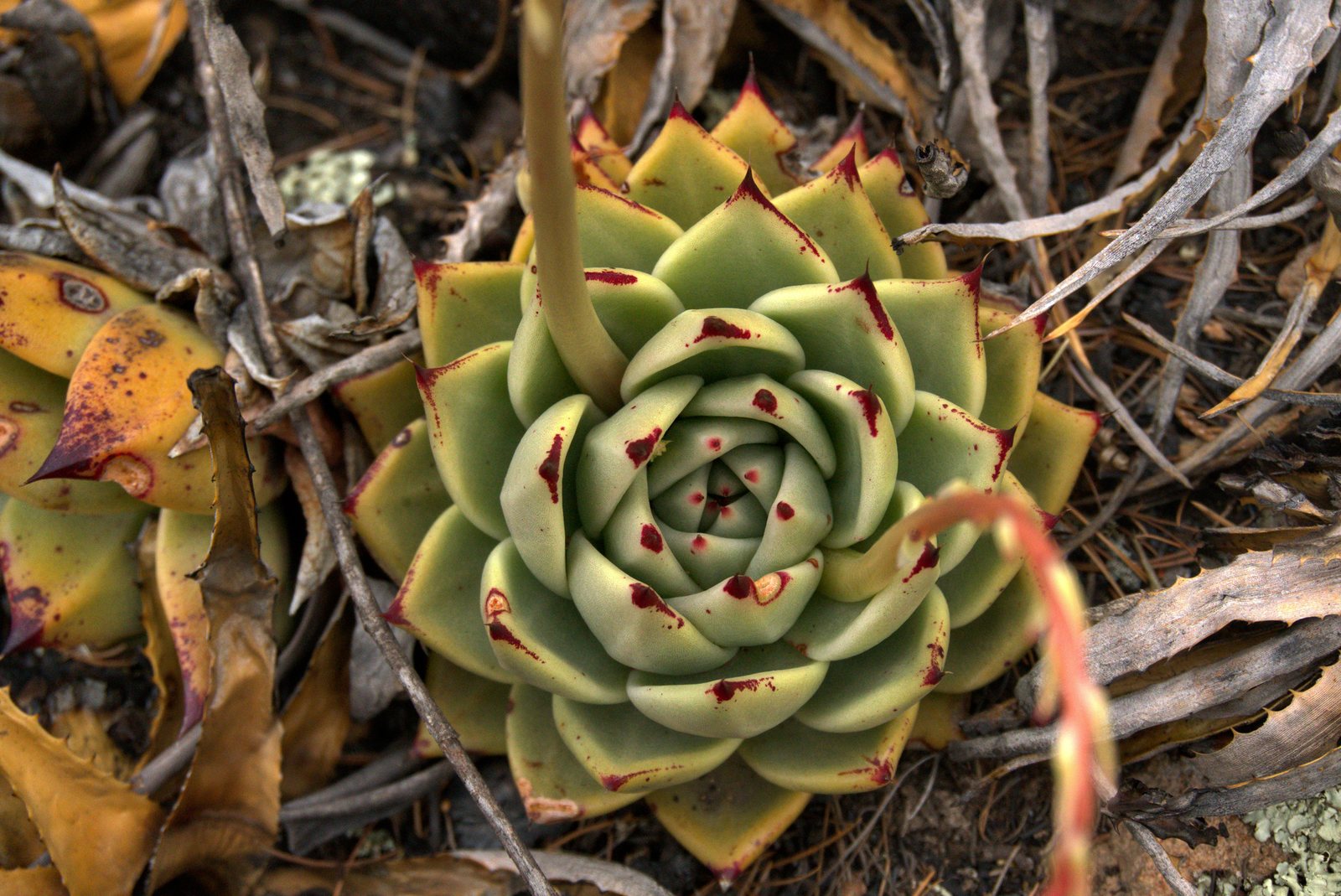
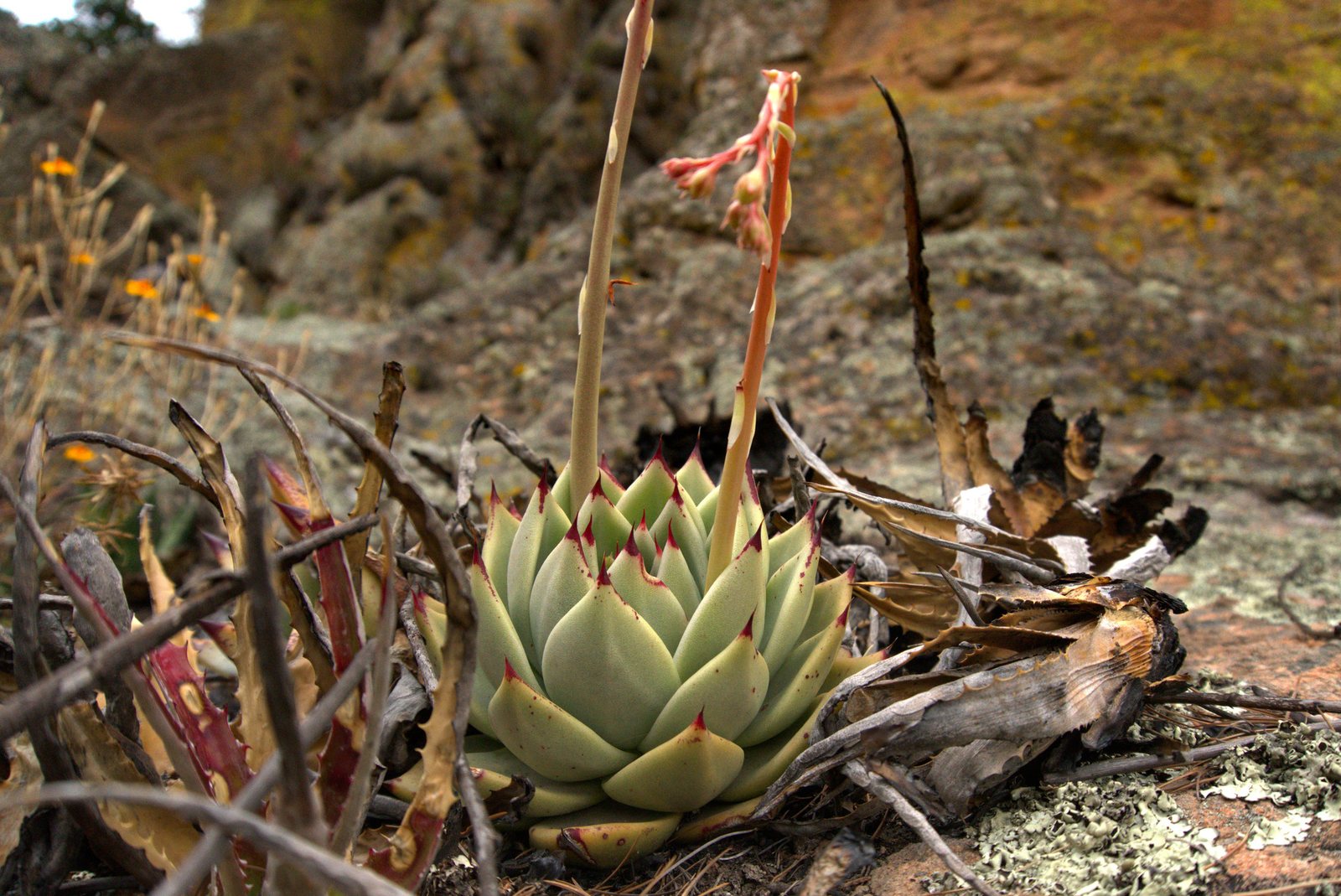
Echeveria agavoides is a small, evergreen Mexican succulent with firm, pointed leaves arranged in a neat rosette. Gardeners grow it for its sculptural shape and red leaf tips, which usually become stronger in bright light. Despite its common name, it is not an agave; outside mild climates, grow it in a container and bring it under cover before frost.
At a glance
- Sun
- Full sun to light shade; provide afternoon shade in very hot climates. Indoors, use your brightest window and introduce outdoor sun gradually to prevent scorching.
- Water
- Water thoroughly, then let the potting mix dry out before watering again. Water much less in cool winter conditions, and keep water out of the rosette.
- Soil
- Very free-draining, gritty soil or cactus compost amended with pumice, perlite or horticultural grit. Use containers with drainage holes; avoid heavy clay and persistently damp sites.
- Height
- 0.5 ft (0.15 m), with flower stems reaching 1-2 ft (0.3-0.6 m)
- Spread
- 0.5-1 ft (0.15-0.3 m) per rosette; offsetting plants may gradually form wider clumps
- Flowers
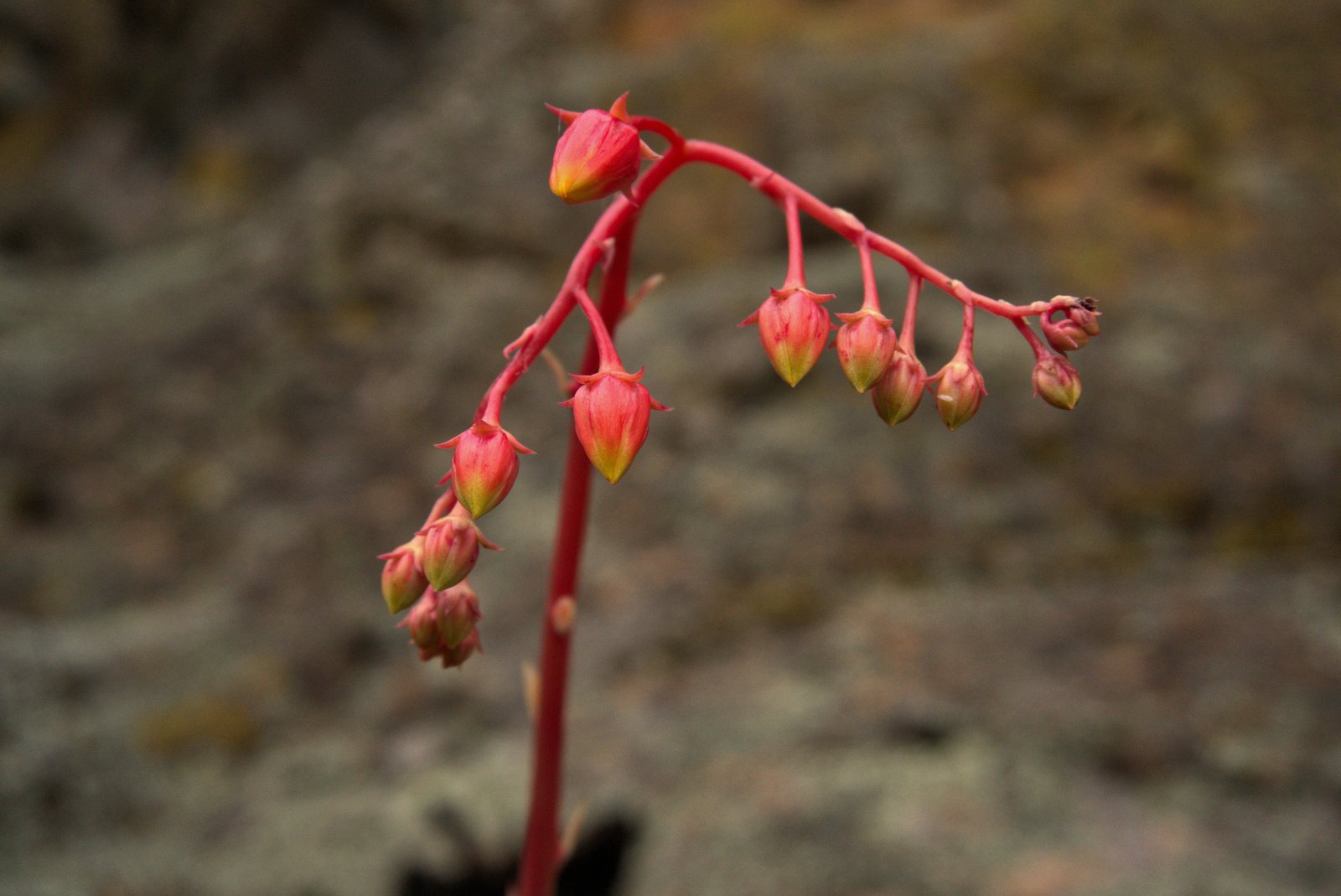
- Spring to early summer; slender stems carry small, bell-shaped red to pinkish-red flowers with yellow tips.
- Foliage
- Evergreen. Thick, smooth, triangular green leaves with pointed tips and variable red margins; forms a compact, usually stemless rosette.
- Growth
- Slow to moderate in warm, bright conditions
- Care needed
- Low
The year at a glance
- Drought tolerant
- Heat tolerant
- Low allergen
| J | F | M | A | M | J | J | A | S | O | N | D | |
|---|---|---|---|---|---|---|---|---|---|---|---|---|
| Flowers | ||||||||||||
| Plant |
Northern hemisphere months. In Australia, shift them by six.
- Difficulty
- Easy
- Toughness
- Fairly tough
Will it suit your garden?
Pick your zone, country, light and whether you have pets.
Full sun is 6 or more hours of direct sun a day, part shade 3 to 6 hours, shade under 3.
How it grows
Planting day
0.5 ft (0.15 m)
full size
About 8 years to full size.
From a typical nursery size, at an average rate for this kind of plant. A rule of thumb, not a forecast.
Good to know
- Cats and dogs
- Safe
- Growth rate
- Slow
Care
Jobs through the year
- WaterMar–May, Sep–Oct, every 14 days
- Grow in a draining pot; water only when the mix is dry and keep the rosette dry.
- WaterJun–Aug, every 10 days
- Water thoroughly only after the potting mix dries; skip after sufficient rain.
- WaterJan–Feb, Nov–Dec, every 30 days
- In frost-free shelter, water sparingly only if soil is dry and leaves lose firmness.
- FeedApr, Jun
- Give dilute cactus fertiliser once in each listed month during active growth.
- PruneJun–Jul
- Cut finished flower stems at the base and gently remove fully dry lower leaves.
- ProtectJan–Apr, Oct–Dec
- Keep in bright, frost-free shelter away from persistent cold rain.
- ProtectMay–Jun
- After frost risk passes, introduce outdoor sunshine gradually to prevent scorching.
- Use a pot with drainage holes and empty any saucer after watering.
- Allow the growing mix to dry between thorough waterings; reduce watering sharply during cool weather.
- Move container plants into bright, frost-free shelter before freezing weather or prolonged cold rain.
- Feed once or twice in spring and early summer with a dilute cactus fertiliser; avoid heavy feeding.
- Repot in spring only when crowded, keeping the lowest leaves above the compost.
Pruning. Remove completely dry lower leaves gently, without tearing healthy tissue. Cut spent flower stems close to their base with clean scissors once flowering finishes.
Through the year
- Spring
- Check roots and repot crowded plants into fresh, gritty compost.
- Spring
- Increase watering as growth resumes and apply a dilute cactus fertiliser.
- Early summer
- Acclimatise sheltered plants to outdoor light gradually, after frost risk has passed.
- Summer
- Check soil before watering and watch for mealybugs between the leaves.
- Autumn
- Move pots into bright, frost-free shelter before cold nights and persistent rain.
- Winter
- Keep plants bright and mostly dry; water sparingly only when the compost is dry and leaves begin to lose firmness.
In the garden
- Use a single rosette in a shallow, well-drained pot as a small tabletop or windowsill specimen.
- Repeat plants in simple containers along a sunny patio for a restrained, architectural effect.
- Combine with low sedums and other small succulents in a trough, leaving space around each rosette.
- Plant among gravel and rocks in frost-free, dry gardens, where its compact shape contrasts with finer foliage.
Garden styles it suits: Contemporary minimal, Desert modern, Architectural minimal, Dry gravel garden, Desert / xeriscape and Small-space.
Plant it with: Jelly bean plant, Ghost plant, Blue chalksticks, Zebra haworthia and Golden stonecrop.
Wildlife: Flowers can provide nectar for visiting insects and, where present, hummingbirds. It is not a major wildlife-supporting plant.
Problems to watch for
- Root or crown rot: prevent with sharp drainage and drying between waterings; remove affected tissue and reroot healthy offsets if the base has rotted.
- Mealybugs: isolate affected pots, remove visible insects with a cotton bud and use a labelled treatment if they persist.
- Sunburn: pale or brown patches follow sudden exposure to strong sun; acclimatise gradually and provide afternoon shade in intense heat.
- Stretched, open growth: insufficient light causes elongated growth and weaker colour; move to a brighter position gradually.
Safety
Not known to be toxic to cats, dogs or people. Reliable horse-specific information is limited, but no particular toxicity is established; it is not a forage plant. The firm leaf tips can scratch skin, and eating plant material may cause mild stomach upset.
Easily confused with
Century plant (Agave americana)
Develops a much larger rosette with tough, fibrous leaves, prominent marginal teeth and a hard terminal spine; Echeveria agavoides has small, fleshy leaves with smooth margins.
Painted echeveria (Echeveria nodulosa)
Has red markings running along the leaf surfaces as well as the margins, and usually develops more obvious branching stems.
Mexican snowball (Echeveria elegans)
Has rounded, spoon-shaped, pale blue-green leaves with a powdery coating rather than the smooth, pointed green leaves of Echeveria agavoides.
The name
Echeveria honours Mexican botanical artist Atanasio Echeverría y Godoy, while agavoides means agave-like, referring to the pointed rosette.
Propagation. Separate offsets in spring or early summer when they are large enough to handle. Let cut surfaces dry and callus for several days before placing them in gritty compost; water cautiously while roots form. Leaf cuttings are possible but less dependable than offsets.
Checked against open data
- Accepted botanical name
- Echeveria agavoides
- Native range
- Mexico Northeast and Mexico Southwest.
Sources: GBIF (CC BY 4.0) and Trefle (CC BY 4.0). The care and design notes are LandscapeGPT's own.
See it in your own yard.
Upload a photo of your yard and see it redesigned with plants that suit your climate, each checked against your zone.