Monkey puzzle tree
Araucaria araucana. Family Araucariaceae. Tree.
Also called Chilean pine, Pehuén.
An evergreen conifer from Chile and Argentina, with tiered branches densely covered in stiff, sharply pointed leaves. Gardeners grow it as a striking specimen tree, but it needs a large, permanent site well away from paths and buildings. It performs best in mild climates with cool summers and dependable moisture.
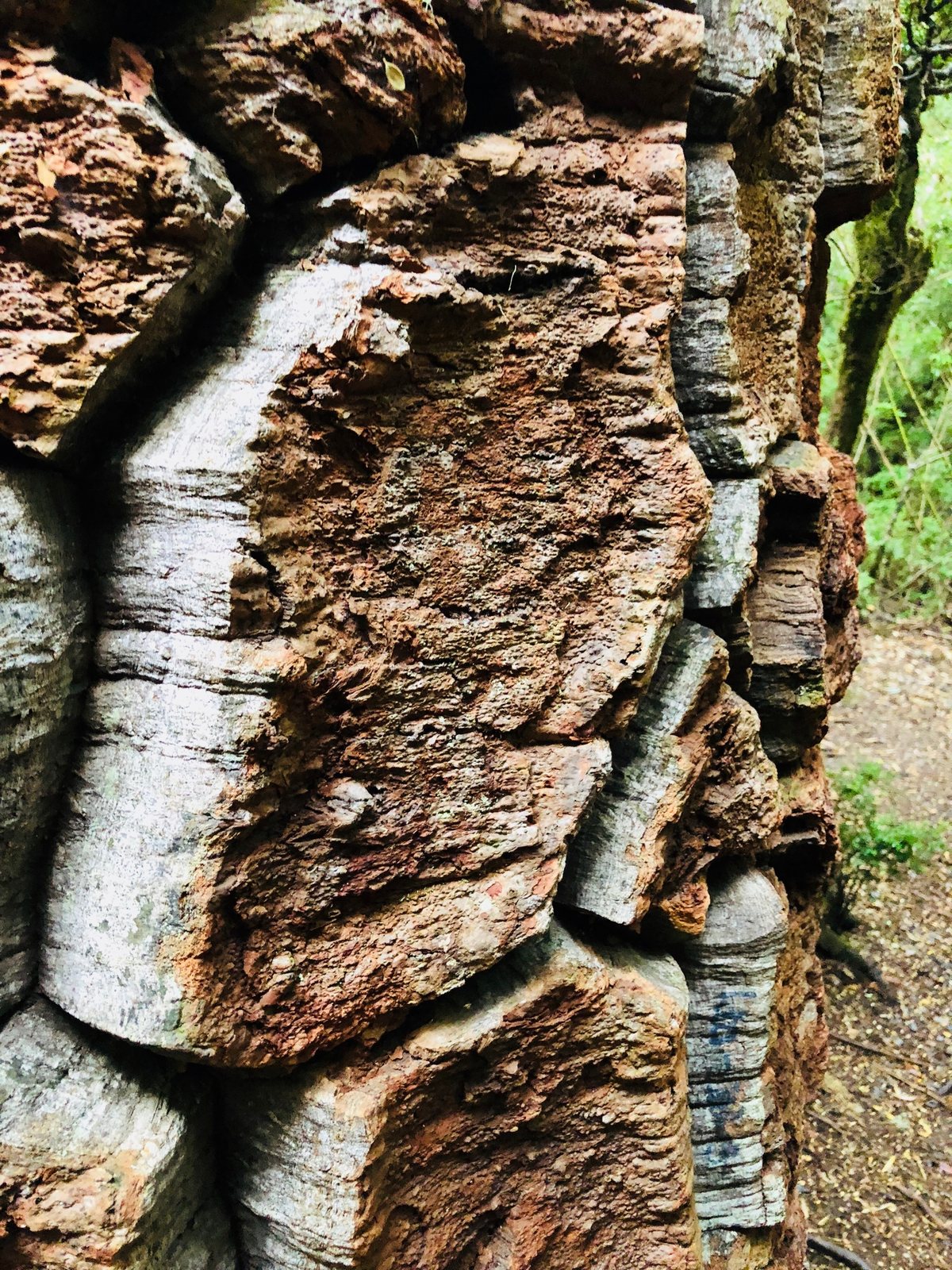
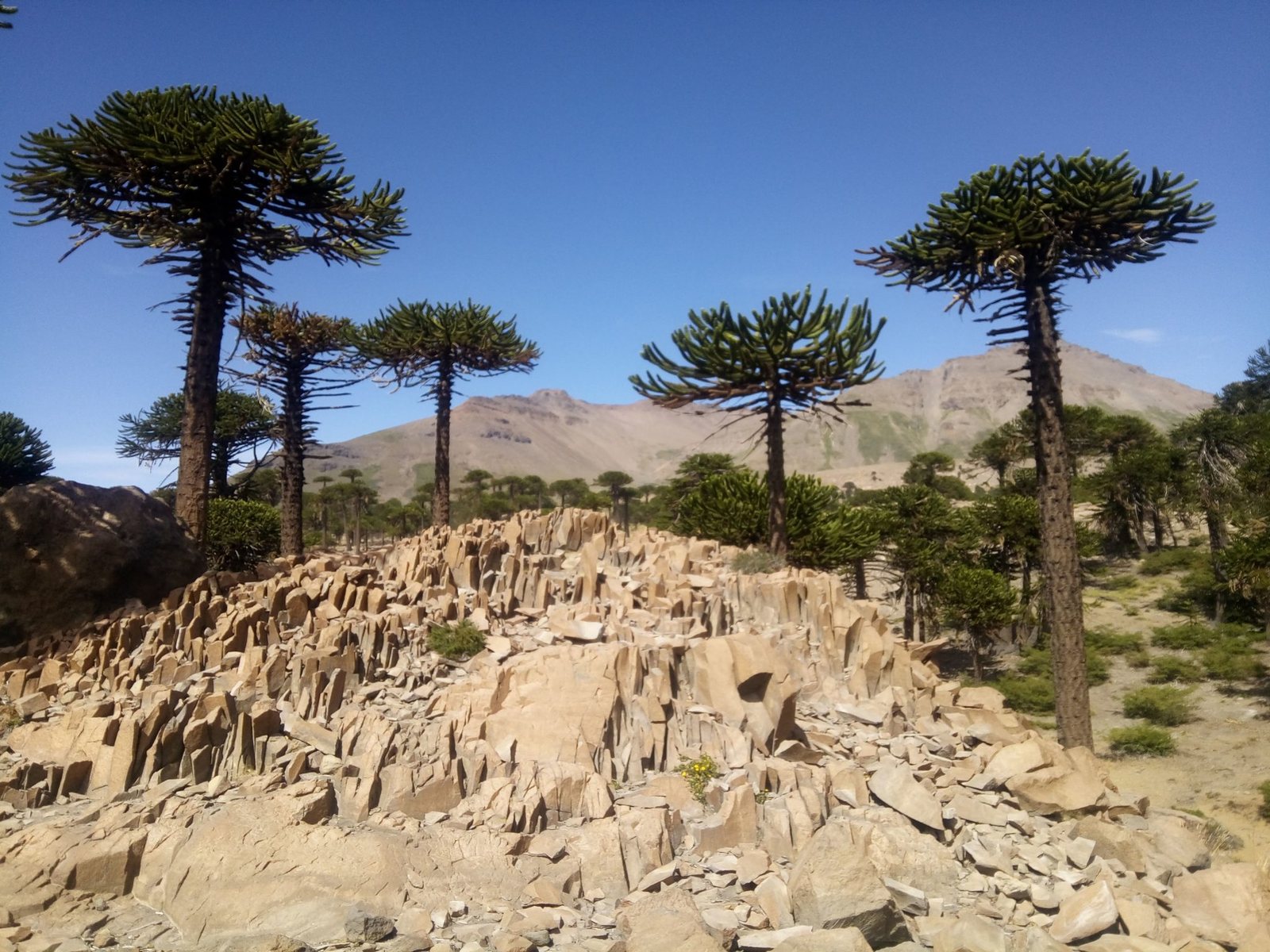
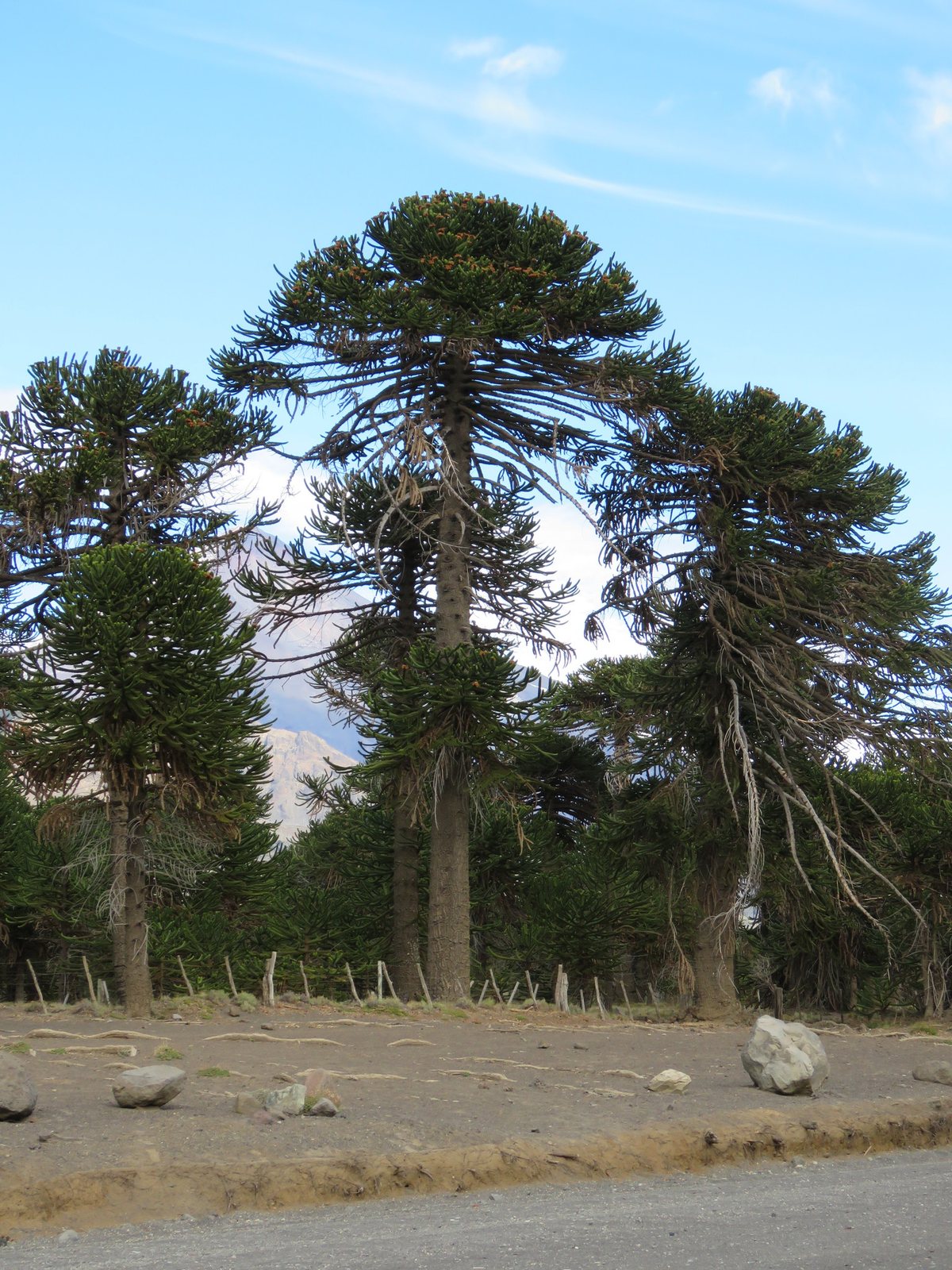
At a glance
- Sun
- Full sun; tolerates light shade when young.
- Water
- Moderate; keep young trees evenly moist and water established trees during prolonged drought. Avoid waterlogged ground.
- Soil
- Deep, well-drained soil that retains some moisture; tolerates clay, loam and sand if drainage is good. Slightly acidic to neutral soil is ideal.
- Height
- 50-80 ft (15-24 m) in gardens; potentially taller with age
- Spread
- 20-35 ft (6-11 m)
- Foliage
- Evergreen. Dark green, broad triangular leaves overlap tightly around the branches. Each leaf is leathery, long-lived and sharply pointed.
- Growth
- Slow when young, becoming moderate once established.
- Care needed
- Low
The year at a glance
- Deer resistant
- Wildlife
| J | F | M | A | M | J | J | A | S | O | N | D | |
|---|---|---|---|---|---|---|---|---|---|---|---|---|
| Fruit | ||||||||||||
| Plant |
Northern hemisphere months. In Australia, shift them by six.
- Difficulty
- Moderate
- Toughness
- Fairly tough
Will it suit your garden?
Pick your zone, country, light and whether you have pets.
Full sun is 6 or more hours of direct sun a day, part shade 3 to 6 hours, shade under 3.
How it grows
Planting day
8 ft (2.3 m)
After 1 year
10 ft (3 m)
After 2 years
12 ft (3.7 m)
After 3 years
14 ft (4.3 m)
After 5 years
19 ft (5.6 m)
About 26 years to full size.
From a typical nursery size, at an average rate for this kind of plant. A rule of thumb, not a forecast.
Good to know
- Cats and dogs
- Safe
- Growth rate
- Slow
Care
Jobs through the year
- WaterApr–May, Sep–Oct, every 14 days
- Water established trees deeply only in dry weather; young trees need more frequent watering.
- WaterJun–Aug, every 14 days
- During prolonged drought, soak the root zone without leaving it waterlogged.
- MulchApr–May
- Maintain 5–8 cm of organic mulch, keeping it clear of the trunk.
- PruneFeb–Mar
- Remove dead or damaged branches only; never top or shorten the central leader.
- FeedApr
- Feed modestly only if poor growth and a soil test indicate a deficiency.
- ProtectJan–Feb, Nov–Dec
- Shelter young trees from drying winds; zone 6 sites are generally too cold.
- Plant while young in its permanent position; established trees are difficult to move.
- Water deeply during dry spells for the first two or three growing seasons.
- Apply 2-3 in (5-8 cm) of organic mulch over the root area, keeping it clear of the trunk.
- Do not feed routinely; use a modest slow-release fertilizer in spring only if growth is weak and a soil test indicates a deficiency.
- Stake only if the root ball rocks in wind, and remove supports once the tree is firmly rooted.
Pruning. Little pruning is needed. Remove dead or damaged branches in late winter or early spring, using an arborist for large limbs; never top the tree or shorten its central leader.
Through the year
- Spring
- Plant young trees after severe frost has passed, allowing space for their eventual crown and roots.
- Late spring
- Refresh mulch and check that ties are not rubbing or constricting the trunk.
- Summer
- Water young trees deeply during dry weather; check moisture below the surface before watering again.
- Autumn
- Check drainage before wet weather and remove fallen sharp branches or cone debris from nearby access areas.
- Winter
- Check young trees after storms for loosened roots or damaged stakes; keep de-icing salt away from the root zone.
In the garden
- Use as a solitary specimen in a large lawn, where its symmetrical young crown can be seen clearly.
- Place among low grasses and groundcovers to emphasize its unusual branch structure without crowding it.
- Use in a spacious Victorian or estate garden as a long-lived focal point.
- Frame distant views with it in a large architectural planting, well away from seating and circulation routes.
Garden styles it suits: Architectural minimal, Victorian, Grand estate, Winter interest and Pacific Northwest woodland.
Plant it with: Japanese forest grass, Bergenia, Hardy cyclamen, Epimedium and Soft shield fern.
Wildlife: Large seeds provide food for birds and mammals. Mature crowns can provide shelter and nesting sites, although its ecological value outside its native range varies.
Problems to watch for
- Root rot in waterlogged soil: choose a freely draining site and avoid excessive irrigation; seek an arborist's assessment if the crown declines.
- Browning after drought or hot, drying winds: water deeply during extended dry spells and maintain mulch over the root area.
- Scale insects: inspect for fixed bumps and sticky honeydew; treat accessible young trees with a horticultural oil labelled for the pest and plant.
- Winter scorch on exposed young trees: shelter from cold, drying winds and keep the soil moist, but not saturated, before freezing weather.
Safety
Not known to be toxic to people, cats, dogs or horses. The seeds are edible, but the sharp leaves can cause puncture injuries, and large falling cones can seriously injure people or animals; keep play and seating areas away from mature female trees.
Easily confused with
Bunya pine (Araucaria bidwillii)
Has narrower, flatter leaves that spread away from the shoots rather than forming the monkey puzzle's dense covering of broad, overlapping triangular scales.
Paraná pine (Araucaria angustifolia)
Has longer, narrower, lance-shaped leaves and develops a broad, umbrella-like crown with age.
Norfolk Island pine (Araucaria heterophylla)
Has much finer, softer-looking foliage and more delicate, feathery branchlets; it is also much less cold-hardy.
The name
Araucaria and araucana refer to Arauco in Chile, while the common name recalls a nineteenth-century remark that climbing its prickly branches would puzzle a monkey.
Propagation. Sow fresh seeds promptly in deep pots of freely draining compost and protect them from rodents. Seeds lose viability if allowed to dry out. Trees are usually male or female, so seed production generally requires a mature tree of each sex within pollinating distance.
Checked against open data
- Accepted botanical name
- Araucaria araucana
- Native range
- Argentina South, Chile Central and Chile South.
- Measured
- Average height 3000 cm.
Sources: GBIF (CC BY 4.0) and Trefle (CC BY 4.0). The care and design notes are LandscapeGPT's own.
See it in your own yard.
Upload a photo of your yard and see it redesigned with plants that suit your climate, each checked against your zone.