Moonflower
Ipomoea alba. Family Convolvulaceae. Climber.
Also called Moon vine, White morning glory, Tropical white morning glory.
Moonflower is a frost-tender perennial climber, grown as an annual in colder climates, with large white flowers that open around dusk and fade the following morning. Grow it near an evening seating area for its fragrance, but allow plenty of climbing space; flowering can be late or unreliable in cool, short summers.
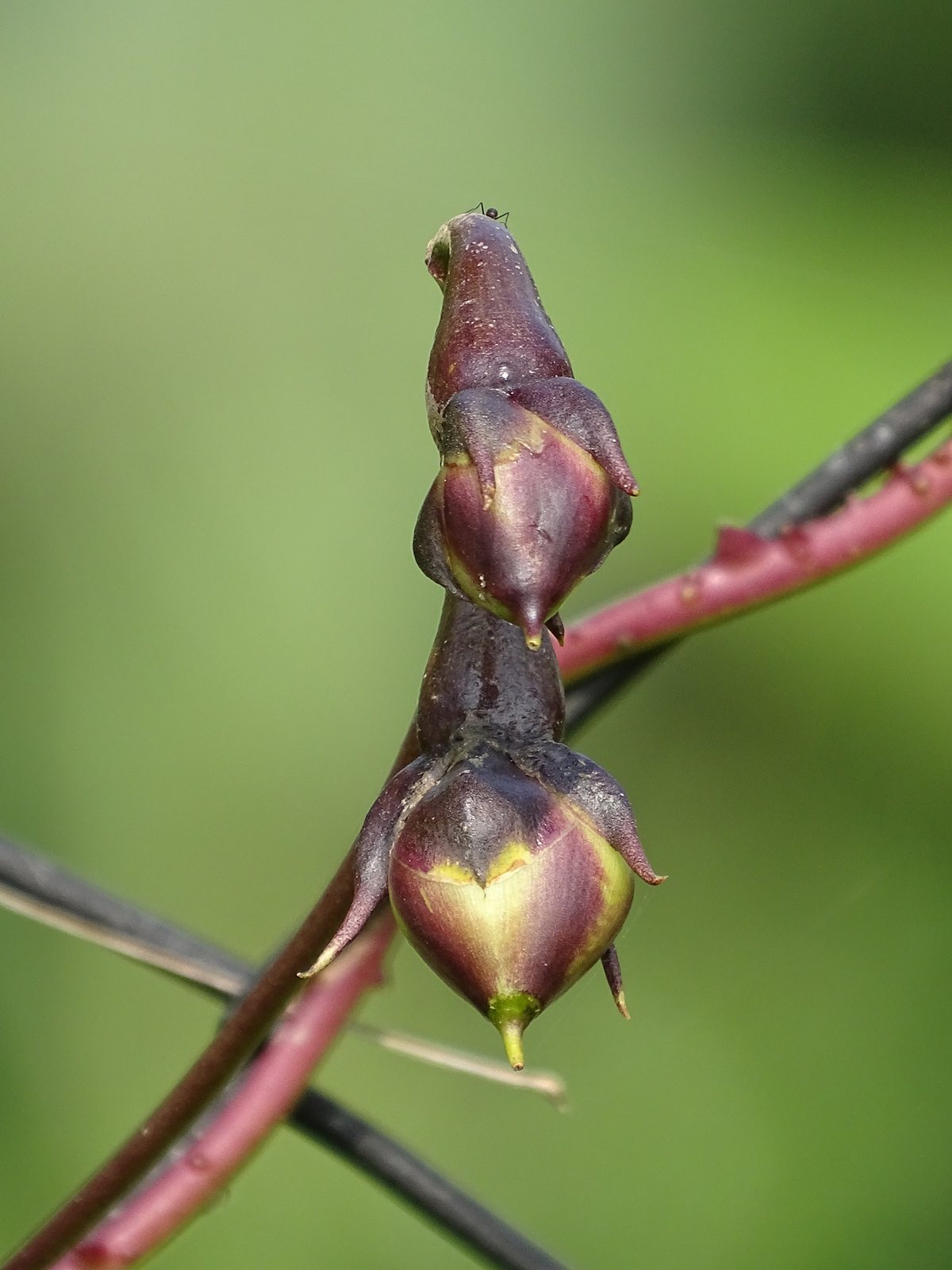
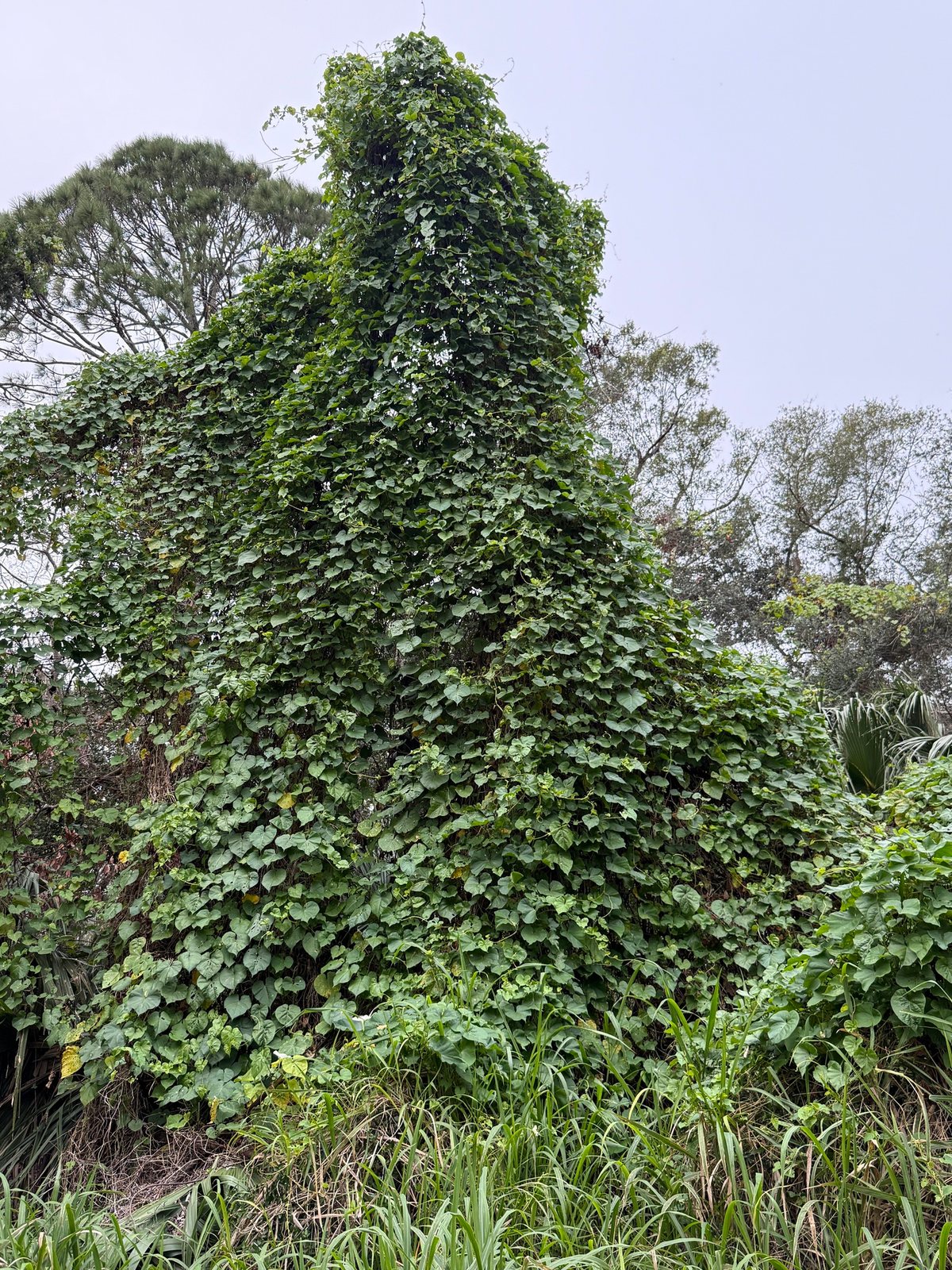
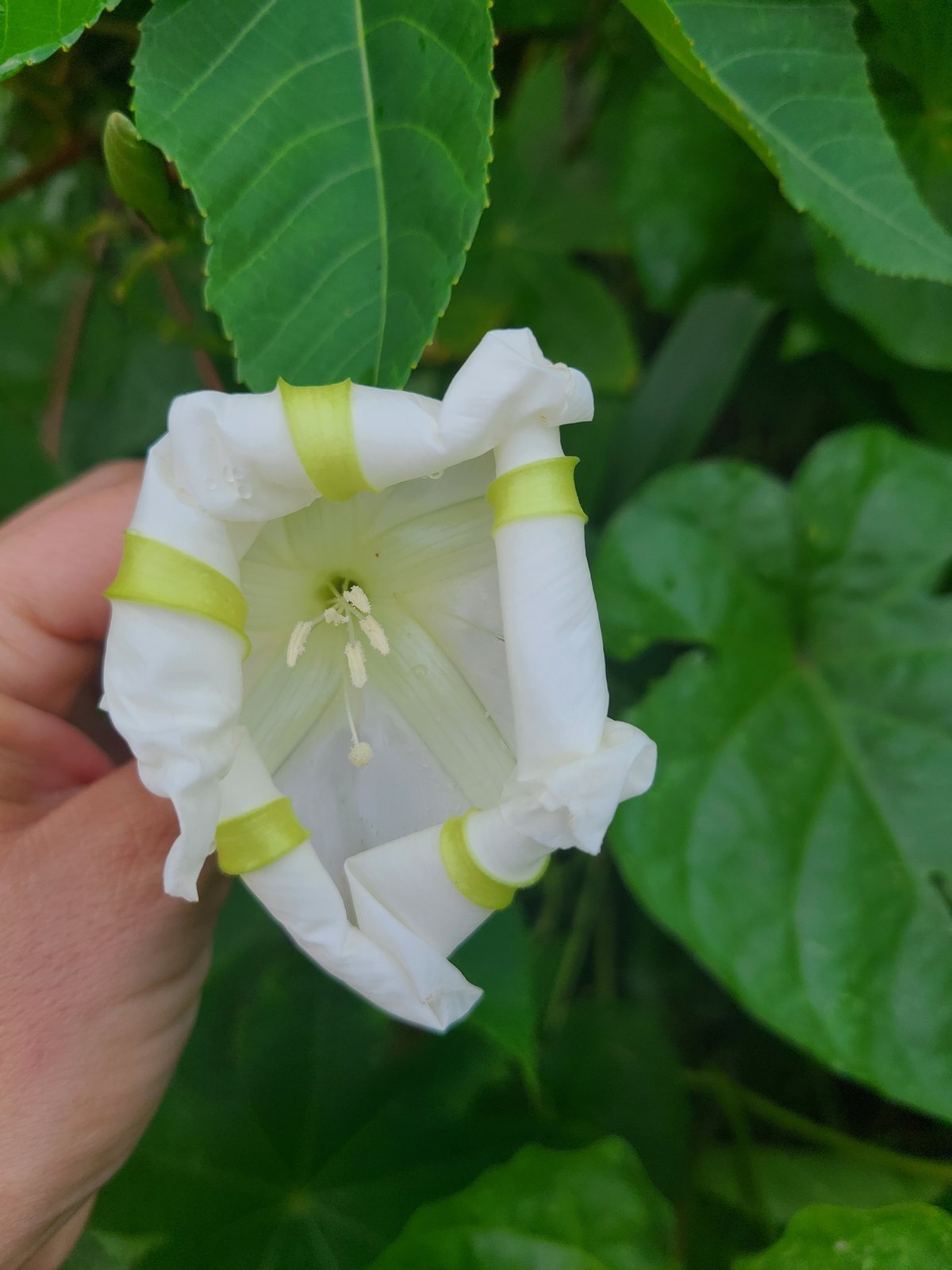
At a glance
- Sun
- Full sun; tolerates light shade in hot climates, but flowers best with plenty of direct sun.
- Water
- Water regularly while establishing, then whenever the surface soil begins to dry. Keep containers evenly moist without leaving them standing in water.
- Soil
- Fertile, well-drained soil; tolerates a range of soil textures and pH levels but dislikes waterlogging.
- Height
- 10-20 ft (3-6 m)
- Spread
- 3-6 ft (0.9-1.8 m), depending on support and training
- Flowers
- Summer to autumn, often late summer in cooler climates; large, fragrant white trumpet flowers open at dusk and close the next morning.
- Foliage
- Evergreen. Large, heart-shaped green leaves on twining stems.
- Growth
- Fast in warm weather
- Care needed
- Medium
The year at a glance
- Pollinators
- Heat tolerant
- Low allergen
- Fragrant
| J | F | M | A | M | J | J | A | S | O | N | D | |
|---|---|---|---|---|---|---|---|---|---|---|---|---|
| Flowers | ||||||||||||
| Plant |
Northern hemisphere months. In Australia, shift them by six.
- Difficulty
- Moderate
- Toughness
- Fairly tough
Will it suit your garden?
Pick your zone, country, light and whether you have pets.
Full sun is 6 or more hours of direct sun a day, part shade 3 to 6 hours, shade under 3.
How it grows
Planting day
2 ft (0.6 m)
After 1 year
3 ft (1.1 m)
After 2 years
5 ft (1.5 m)
After 3 years
6 ft (1.8 m)
full size
About 3 years to full size.
From a typical nursery size, at an average rate for this kind of plant. A rule of thumb, not a forecast.
Good to know
- Cats and dogs
- Toxic
- Native to
- the US
- Invasive in
- Australia
- In the garden
- Spreads vigorously: plan to contain it.
- Growth rate
- Fast
Care
Jobs through the year
- WaterMay–Jun, Sep, every 7 days
- Water in-ground vines when surface soil dries; new plants need closer checks.
- WaterJul–Aug, every 4 days
- Water deeply if surface soil is drying; skip after substantial rain.
- MulchJun
- Mulch warm soil to retain moisture, keeping the stem base clear.
- PruneJun
- Optionally pinch established young shoot tips for bushier coverage.
- PruneJul–Sep, every 14 days
- Trim wandering stems and remove seed capsules if self-seeding is unwanted.
- ProtectMay–Jun
- Plant only after frost, once nights are warm; provide sturdy climbing support.
- PruneOct–Nov
- Remove frost-killed vines; this tropical perennial is grown as an annual here.
- Plant outside only after frost risk has passed and the soil has warmed.
- Install a strong trellis, wires or an arbor before planting; guide young shoots onto the support.
- Water deeply during dry spells and check containers frequently in hot weather.
- Mix compost into the planting soil; avoid heavy nitrogen feeding, which encourages leaves rather than flowers.
- Mulch around the roots, keeping mulch clear of the stems.
- Remove developing seed capsules where self-seeding is unwanted.
Pruning. Pinch out young shoot tips once established if you want bushier coverage, and trim wandering stems during summer. Remove frost-killed vines at the end of the season; in frost-free gardens, shorten congested growth in spring.
Through the year
- Early spring
- In short-season climates, sow indoors in individual pots about four to six weeks before the last expected frost.
- Late spring
- Harden off seedlings and plant out after frost, once nights are consistently warm; install climbing supports.
- Early summer
- Guide stems onto supports, mulch the root area and begin regular watering.
- Summer
- Keep container plants watered and trim shoots that stray into nearby plants or paths.
- Late summer
- Remove developing seed capsules if you do not want seedlings or have concerns about children or pets reaching seeds.
- Autumn
- Remove vines after frost. Where perennial, tidy excessive growth and continue watering according to rainfall.
In the garden
- Train over an arbor beside evening seating, where the scent and opening flowers can be enjoyed.
- Cover a sunny trellis to create a seasonal leafy screen.
- Grow on a large container obelisk on a warm patio, with white-flowered bedding beneath.
- Combine with silver foliage and white flowers in a moon garden.
Garden styles it suits: Moon garden, Evening garden, White garden, Tropical, Cottage garden and Sensory garden.
Plant it with: Sweet alyssum, White petunias, Dusty miller, Verbena and Salvia.
Wildlife: The night-opening flowers attract hawkmoths and other nocturnal pollinators. Their value depends on which moth species occur locally.
Problems to watch for
- Few or no flowers: provide full sun, avoid nitrogen-rich feeding and allow time; cool weather and a short growing season can delay flowering.
- Spider mites in hot, dry conditions: rinse leaf undersides regularly and use insecticidal soap if necessary, following the label.
- Aphids on young shoots: wash off small colonies with water and preserve ladybirds and other predators.
- Yellowing or wilting in wet soil: improve drainage and let the soil surface begin to dry between waterings; badly rotted plants may need replacing.
Safety
Do not eat any part, especially the seeds. Moonflower is considered toxic if ingested by people, cats and dogs; reported effects include digestive upset and potentially serious nervous-system effects. Species-specific evidence for horses is limited, so keep it away from grazing animals. Seek medical or veterinary advice after suspected ingestion. Do not confuse it with Datura, another plant called moonflower that is highly poisonous.
Where it spreads. Can spread by seed in warm climates. It is reported as an environmental weed in parts of Queensland and New South Wales, Australia, and as invasive in Hawaii. Check local guidance before planting and prevent seed formation where escape is a concern.
Easily confused with
Sacred datura (Datura wrightii)
Also called moonflower, but forms a branching bush rather than a twining vine. Its flowers face upward, its leaves are grey-green, and its seed capsules are spiny.
Hedge bindweed (Calystegia sepium)
Has smaller white trumpets that usually open by day, arrow-shaped leaves and persistent spreading underground stems.
Common morning glory (Ipomoea purpurea)
Usually has smaller purple, pink, blue or white flowers that open in the morning rather than at dusk; stems and leaves are often noticeably hairy.
The name
Moonflower refers to its white, night-opening blooms, while the botanical epithet alba means white.
Propagation. Grow from seed. Carefully nick the hard seed coat away from the seed's attachment scar, then soak overnight and sow in warm conditions. Use individual pots to reduce root disturbance, or sow directly outdoors where the growing season is long and warm.
Checked against open data
- Accepted botanical name
- Ipomoea alba
- In the US and Canada
- Native in the lower 48 states, Puerto Rico and US Virgin Islands. Introduced in Hawaii.
- Native range
- Argentina Northeast, Argentina Northwest, Bahamas, Belize, Bolivia, Brazil North, Brazil Northeast, Brazil South, Brazil Southeast, Brazil West-Central, Central American Pac and Colombia.
Sources: GBIF (CC BY 4.0), USDA PLANTS and Trefle (CC BY 4.0). The care and design notes are LandscapeGPT's own.
See it in your own yard.
Upload a photo of your yard and see it redesigned with plants that suit your climate, each checked against your zone.